High Court
Delhi HC orders Government to implement CAS within four weeks

NEW DELHI / MUMBAI: In a decision that could have major ramifications for the Indian television industry, the Delhi High Court has ordered the government to enforce the rollout of addressability in cable pay television (conditional access system or CAS) in India within four weeks.
Delivering its verdict on a writ petition filed by a bunch of MSOs, after reserving the judgement for several months, the court also directed the government to pay damages worth Rs 100,000 to the petitioners. The court has ordered the government to make haste on the report of the Telecom Regulatory Authority of India (Trai), which has been pending before it since October 2004.
The court has ordered the government to revoke its notification of 27 February 2004 that scrapped the rollout of CAS in the three metros of Mumbai, Delhi and Kolkata in phases (it eventually got implemented only in Chennai). This in effect will revive the notification of 10 July 2003 which provided for partial CAS in these three metros.
The Delhi HC also said that the government cannot denotify an earlier notification on CAS and keep the issue in limbo. The government has the right to appeal against the order in Delhi HC and Supreme Court.
No immediate reaction, however, was available from the government as information and broadcasting ministry officials said that the court verdict is being “studied in its entirety.”
The court gave the order in response to a writ petition filed by MSOs in response to the government’s decision to withdraw CAS. The petitioners include Hathway, INCablenet and RPG’s cable company that was bought over by Siti Cable last year.

Reacting to the court direction on CAS, MSO Alliance president Ashok Mansukhani said that their viewpoint stands vindicated. “The verdict is a clear direction to the government to start the process of CAS, which will help bring transparency in the market and choice to consumers.”
Added Hathway Cable & Datacom CEO K Jayaraman: “We will cooperate wholeheartedly with the government to roll out CAS.”
But with Tata Sky preparing to launch in June, is the timing too close for cable to have an advantage over direct-to-home (DTH)? “The deployment of digital cable is going to be in a phased manner as directed by the court in line with the last notification. It will evolve first in the notified areas of the metros specified, like south Mumbai and Delhi. Besides, cable networks who can offer value additions to subscribers like data and telephony will stand to gain. Also, analogue cable will be available,” said Siticable CEO Jagjit Kohli.
Will supply of boxes at such a short notice be a matter of concern? Cable Operators’ Federation of India head Roop Sharma brushes aside such criticisms saying, “The cable industry has enough stock of set-top boxes.”
Welcoming the judgement, Sharma further said, “This would break the monopoly of broadcasters and bring respite to consumers also.”
However, National Cable and Telecom Association president and owner of Delhi’s Home Cable Network Vikki Chowdhry was more cautious in his reaction, saying the full text of the court order has to be seen before jumping to any conclusion.
According to Chowdhry, if the court order pertains to CAS rollout in only south zones of some cities, as once had been discussed earlier, then the impact would be neutralised and “create legal and operational problems.”
Chowdhry added that if the south zone formula was implemented by the government, then his company would appeal against it to higher authorities, including the Supreme Court.
The court dismissed the government’s contention that implementation of CAS was unjustifiable. The government has been ordered to compensate the MSOs for losses incurred due to the non implementation of CAS to the tune of Rs 100,000.
In January, information and broadcasting secretary SK Arora appeared before the court and sought three months time to implement CAS in the country. The request was rejected by Justice Vikramjit Sen. Petitioner Hathway Cable Datacom’s counsel Indu Malhotra submitted that the government was only buying time to delay the implementation of CAS.
Additional solicitor general PP Malhotra, who appeared for the government, had submitted that the issue of CAS had been decided by another division bench of the High Court in December 2003.
CAS rollout plan as originally envisaged in 2003:
* Initial 15-day period will be used primarily for creating consumer awareness about CAS, procurement of set-top boxes by cable operators and MSOs, and for broadcasters of pay channels to conduct promotional campaigns.
* Each of the three notified metro cities (Delhi, Mumbai, and Kolkata) would be divided into four zones for the purpose of staggered rollout of the addressable system of transmission of pay channels.
* After the initial 15-day period, within a one-month time frame, in Zone A in each metro, pay channels can be watched only with the use of STBs. Pay channel consumers in this zone will be charged, in addition to the price of the basic tier plus taxes, only for the individual channels of their choice as per the pre-announced rates set for them.
Consumers of free-to-air (FTA) channels, who will not need an STB, will be charged only the basic FTA channel package charge plus taxes. In zones B, C, and D, cable operators will charged only for the basic tier plus taxes for all channels, including all available pay channels.
* From Day 1 of the second month onwards, CAS will take effect in Zone B in each metro, while in zones C and D subscribers will pay only for the basic tier plus taxes for all channels.
* And so it follows in Zone C from Day 1 of the third month onwards and Zone D from Day 1 of the fourth month onwards.






High Court
Delhi HC quashes tax notices against Prannoy Roy & Radhika Roy, fines department Rs 2 Lakh
NEW DELHI: In a sharp rap on the knuckles for tax overreach, the Delhi High Court has told the Income Tax Department that it cannot keep knocking on the same door hoping for a different answer, especially when it has already been opened, inspected and firmly shut.
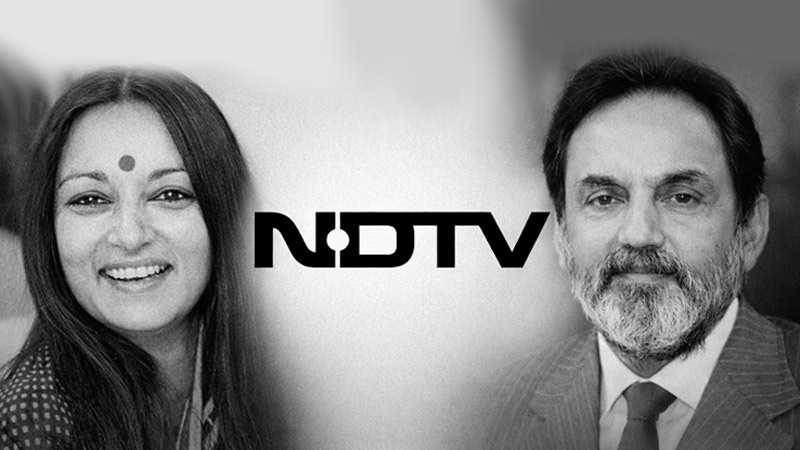
Quashing reassessment notices issued to veteran broadcaster Prannoy Roy and media professional Radhika Roy, the court on January 19 ruled that the tax authorities had acted without jurisdiction, reopening a settled assessment on nothing more than a change of opinion. To underline its displeasure, the court imposed a token cost of Rs 1 lakh each, Rs 2 lakh in total, on the department, payable to the Roys.
The case, like a badly written sequel, centred on Assessment Year 2009–10, an old chapter the tax department tried to reread years later.
Radhika Roy had filed her income tax return for AY 2009–10 on July 31, 2009, declaring an income of Rs 1.66 crore. The return was processed and accepted under Section 143(1), with the intimation issued on February 22, 2011.
Then came the first knock. In July 2011, the department reopened the assessment under Sections 147 and 148, citing transactions involving shares of New Delhi Television Ltd (NDTV) between the Roys and their holding company, RRPR Holding Pvt Ltd. The reassessment culminated in an order dated March 30, 2013, assessing Radhika Roy’s income at Rs 3.17 crore. This included a major addition of Rs 1.30 crore as short-term capital gains, along with smaller additions of Rs 20.74 lakh as house property income and Rs 2,750 relating to Section 80G.
Crucially, during these proceedings, the assessing officer had specifically examined interest-free loans received by the Roys from RRPR. A show-cause notice issued on March 6, 2013 proposed treating these loans as “deemed dividends” under Section 2(22)(e). After examining RRPR’s audited books, balance sheets and shareholding pattern, the officer dropped the proposal. No addition was made on this count.
Three years later, on March 31, 2016, the department reopened the same assessment yet again, issuing fresh notices under Section 148 to both Prannoy Roy and Radhika Roy. This time, the department leaned on “complaints” and an internal review of RRPR’s records, arguing that interest-free loans given to the Roys should be taxed as “deemed income” under Section 2(24)(iv).
The figures were hefty. RRPR had borrowed Rs 375 crore from ICICI Bank in October 2008 at an interest rate of 19 per cent per annum. From this loan, it extended interest-free advances of Rs 20.92 crore to Prannoy Roy and Rs 71 crore to Radhika Roy. According to the department, RRPR suffered interest costs of nearly Rs 35 crore in that year, and an estimated Rs 6.79 crore of “benefit” had accrued to Radhika Roy alone due to non-charging of interest.
A bench of justices Dinesh Mehta and Vinod Kumar held that the so-called “new information” was neither new nor hidden. The interest-free loans were already disclosed, examined and consciously accepted during the earlier reassessment proceedings.
“Section 147/148 powers are an exception, not a licence for repeated harassment,” the court observed, noting that the same transaction cannot be reopened merely because a different officer believes another legal provision should have been applied.
Calling Sections 2(22)(e) and 2(24)(iv) “two sides of the same coin”, the court said the department had every opportunity in 2013 to tax the alleged benefit if it believed it was taxable. Revisiting the issue years later was nothing but a change of opinion, a settled no-go zone in tax law.
The court also rejected the department’s attempt to invoke the extended six-year limitation period by alleging failure to disclose material facts. The Roys, it said, had disclosed all primary facts, including RRPR’s audited accounts, which explicitly recorded the interest-free loans. Drawing on Supreme Court precedents, the bench reiterated that an assessee is not required to disclose inferences or help the tax officer draw conclusions.
Allowing both writ petitions, the High Court quashed the 2016 notices and all consequential proceedings. While noting that “no amount of cost can be treated enough” for such cases, it imposed Rs 1 lakh as cost in each petition, a symbolic but pointed message.
Beyond the Roys, the ruling sends a wider signal. Reassessment powers are not a rewind button. Once the taxman has examined the facts, applied his mind and passed an order, he cannot keep returning with fresh labels for the same transaction.
In short, the court told the department to stop re-editing old tapes, especially when the credits have already rolled.

MUMBAI: When Europe needs to explain itself, it’s turning to a familiar accent. Havas has been selected under the new Framework Contract of the European Commission, securing a five-year mandate to support strategic communication assignments for EU institutions across Member States and beyond.
The appointment positions Havas as the only France-based European communications group chosen under the framework, reinforcing its standing as a go-to player for pan-European institutional communication. The contract builds on previous mandates handled by the group for the Commission and underlines its growing influence at a continental level.
At a time when Europe’s message must travel across borders, cultures and political climates, the brief is as much about nuance as scale. Havas will deliver an integrated model coordinated by its Paris teams, combining Europe-wide strategic coherence with local execution through its network of agencies across the EU. The aim: to make European initiatives more relatable, intelligible and relevant to citizens in their everyday lives.
Havas Paris CEO Julien Carette said Europe’s diversity demands communication that connects institutions with people, not just policies with paperwork. The group’s approach, he noted, is rooted in translating complex ideas into clear narratives that resonate locally while aligning centrally.
The mandate will see Havas supporting communication around major European public policies spanning employment, justice, health, defence and economic and social transition, alongside issues such as civil liberties, shared values and the rule of law. In a fragmented media environment marked by misinformation and scepticism, the focus will be on clarity, pedagogy and dialogue grounded in facts.
Havas’ integrated structure is central to the win. Its H/Advisors platform will play a key role in reputation, influence and public diplomacy, while the group’s Converged.AI strategy brings advisory, creative and media teams together to deliver measurable outcomes. Havas Creative Europe CEO Raphaël de Andréis said institutions increasingly seek partners who can turn complexity into accessible storytelling, a space where Havas believes it has a competitive edge.
The contract also highlights Havas’ European DNA. Headquartered in Paris, listed in Amsterdam and embedded across the continent’s economic and cultural ecosystems, the group positions itself as European by both culture and structure capable of operating at scale while remaining sensitive to national realities.
Havas Group, chairman of H/Advisors and executive vice president Stéphane Fouks described the mandate as a responsibility as much as a recognition, one that reflects Europe’s values of dialogue, democracy and openness at a time when competing governance models are gaining ground.
For Havas, the Brussels nod is more than a contract win. It is a signal of trust from one of the world’s most complex institutions and a reminder that in Europe’s crowded conversation, choosing the right voice still matters.

NEW DELHI: If you received a WhatsApp message promising stock market riches from someone claiming to represent Moneycontrol, congratulations—you were being fleeced. The Delhi high court has now pulled the plug on a sprawling scam that hijacked the trusted financial news platform’s name to separate gullible investors from their cash, according a livelaw.in report.
Justice Manmeet Pritam Singh Arora handed down a permanent injunction on 19 December, ordering that several individuals be restrained from misusing the “Moneycontrol” trademark and that their WhatsApp accounts and mobile numbers stay blocked. The ruling caps a trademark infringement suit filed by Network18 Media & Investments, which runs Moneycontrol—one of India’s most popular sources for financial news, stock data, and investment information.
The con was straightforward in its audacity. Unknown individuals sent WhatsApp messages inviting recipients to join investment groups with names like “CINV The Premier Strategy Group,” promising insider stock tips and eye-watering returns. The groups had zero connection to Moneycontrol but traded shamelessly on its reputation. Unsuspecting punters, believing they were getting advice from a legitimate source, handed over substantial sums of money. They got fleeced instead.
Network18 started receiving complaints in March 2024 from confused members of the public who had been targeted by these fraudulent groups. The pattern was familiar to anyone who has spent five minutes on WhatsApp: join this exclusive group, get rich quick, send money now. The only thing exclusive about it was how thoroughly the scammers exploited Moneycontrol’s credibility.
The court was unimpressed by the defendants’ behaviour—or rather, their complete lack of it. Despite being served notice, none of the 21 individuals involved bothered to show up in court or contest the proceedings. That sort of no-show suggests either supreme confidence or the realisation that the game was up. The court went ahead anyway.
“The activities of the defendants establish a clear intention of showing a direct nexus or affiliation with the plaintiff and making a misrepresentation that its services have been licensed or approved or endorsed by the plaintiff,” Justice Arora observed. Legal-speak for: these people were pretending to be Moneycontrol, and they knew exactly what they were doing.
The court had earlier granted an interim injunction blocking the WhatsApp accounts and mobile numbers tied to the scam. Now it has made that ban permanent, with a one-year extension on the blocked numbers and a directive that they must not be reissued to the same individuals. One of the fraudulent WhatsApp groups has been permanently shut down as well.
The ruling underscores a persistent problem in India’s digital ecosystem: scammers brazenly impersonating legitimate brands on messaging platforms, counting on the fact that enforcement is patchy and victims are often too embarrassed to complain. Moneycontrol’s case is unusual only in that it reached court and resulted in a clear victory.
For Network18, the injunction is both vindication and a warning shot. Protecting a brand’s reputation in the age of WhatsApp fraud requires constant vigilance and legal firepower. For the scammers—or at least the ones daft enough to use traceable phone numbers—the message is clear: the court can and will shut you down.
As for the investors who lost money? The court order does not bring their cash back. It merely ensures that these particular fraudsters cannot keep using Moneycontrol’s name to find fresh victims. In the ruthless world of financial scams, that counts as a small mercy. Caveat emptor, as always—especially on WhatsApp.


MIB sets OTT accessibility rules, mandates captions and audio description

Boney Kapoor acquires remake rights of Tamil political satire Thalaivar Thambi Thalaimaiyil

Netflix India names Rekha Rane director of films and series marketing

Zabeen signs off from TV9 after shaping the network’s public voice

Dhawan steps up to bat for Delhi’s grassroots sports push

Orient Beverages pops the fizz with steady Q3 gains and rising profits

Cheekatilo shines in the dark with record debut on Prime Video

These ’90s fashion trends are making a comeback in 2017
The final 6 ‘Game of Thrones’ episodes might feel like a full season

Swiggy Instamart’s GOV surges 103 per cent year on year to Rs 7,938 crore
According to Dior Couture, this taboo fashion accessory is back
The old and New Edition cast comes together to perform
Phillies’ Aaron Altherr makes mind-boggling barehanded play
Uber and Lyft are finally available in all of New York State
MIB sets OTT accessibility rules, mandates captions and audio description
Boney Kapoor acquires remake rights of Tamil political satire Thalaivar Thambi Thalaimaiyil
Netflix India names Rekha Rane director of films and series marketing
Zabeen signs off from TV9 after shaping the network’s public voice
Dhawan steps up to bat for Delhi’s grassroots sports push
Orient Beverages pops the fizz with steady Q3 gains and rising profits
Cheekatilo shines in the dark with record debut on Prime Video
-
 e-commerce3 weeks ago
Swiggy Instamart’s GOV surges 103 per cent year on year to Rs 7,938 crore
-

 News Headline2 months ago
From selfies to big bucks, India’s influencer economy explodes in 2025
-

 News Broadcasting2 weeks ago
Mukesh Ambani, Larry Fink come together for CNBC-TV18 exclusive
-
 iWorld5 months ago
Billions still offline despite mobile internet surge: GSMA
-

 News Headline2 months ago
2025: The year Indian sports saw chaos, comebacks, and breakthroughs
-

 News Headline2 months ago
Game on again as 2025 powers up a record year and sets the stage for 2030
-
 MAM2 years ago
Costa Coffee becomes official coffee partner of Olympic Games Paris 2024
-

 Applications2 months ago
28 per cent of divorced daters in India are open to remarriage: Rebounce