
Cable TV
DAS & the LCO fightback for survival

It’s the festival of lights. And for many the festival of noise courtesy exploding fireworks. In the hope of reducing the number of those belonging to the latter tribe, we, at indiantelevision.com, decided to put a display of firecracker articles for visitors this Diwali. We have had many top journalists reporting, analysing, over the many years of indiantelevision.com’s existence. The articles we are presenting are representative of some of the best writing on the business of cable and satellite television and media for which we have gained renown. Read on to get a flavour and taste of indiantelevision.com over the years from some of its finest writers. And have a happy and safe Diwali!
Written By Seema Singh
(Seema today is senior manager – PR & Communication at the Broadcast Audience Research Council. She wrote this article in 2013.)
Posted on : 05 Dec 2013 09:45 pm
MUMBAI: With no one giving them any guarantees about their long term survival under the government-mandated DAS regime, small time local cable operators (LCOs) are banding together as cooperatives in pockets nationally, agglomerating funds, and setting up their own headends. From Bengaluru to Kolkata to smaller towns, this is being mirrored across the country. Digitisation has spurred a new wave of entrepreneurialism in the cable TV business.
“Analogue cable TV spread like wildfire in the 80s and early 90s thanks to small time business men who invested and toiled away to deliver satellite TV via cable to homes,” says a cable TV industry observer.
“Now digitisation in its current form is designed to kill those very last mile operators, big or small,” points out Maharashtra Cable Operators Federation (MCOF) president Arvind Prabhoo.
“Some have given up and have joined hands with the MSOs, fearing the huge investments needed for digitisation and the backlash from the national MSO,” says the cable TV industry observer. “But don’t expect all the guys who have built the cable TV industry to what it is today to yield without a fight; hence the new wave of entrepreneurialism.”
Take the case of the Bengaluru boys. 70 independent cable TV operators got together to set up their own cable TV headend and distribution infrastructure in March 2013.
Explains one of the members – Sagar E Technologies’ executive director Sudhish Kumar: “There were two reasons: digitisation and revenue share. We had at several instances raised voice against the MSOs with regards to billing, ownership of set top boxes (STBs) and ownership of consumers. The TRAI suggested revenue share model showed that the revenue shared between the LCOs and MSOs will be 35:65 or 40:60. We were being given a small pie. The same was the case as far as cable TV carriage, placement fees or value added fees. We were to get nothing.”
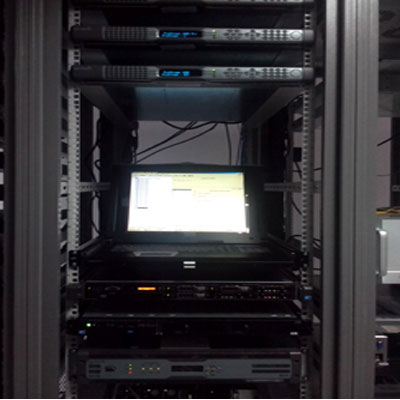
Branded as Mirai Communication, the consortium is registered as a private limited company and has 10 directors. Its headend is located in Electronics City, Bengaluru. It is through this that the operator provides feeds across Bengaluru. “In Bengaluru we cover areas like: Central Bengaluru, Central Railway Station, Whitefield and ITPL among others,” informs Kumar.
And Kumar says its headend is future-ready technologically. “We have a Harmonic headend, costing Rs 3 crore, with a carrying capacity of 500 channels.”
Some 50,000 STBs imported from DTM, China with CAS from NSTV and SMS from Magnquest, have been seeded amongst its subscribers and the plan is to take the number to one lakh soon. Since some of the LCOs in the joint venture were link operators for the major MSOs in Bengaluru, their boxes have been replaced with the Mirai Communication STBs.
“These are standard definition high quality MPEG4 boxes with one GB of DVR,” informs chief technology officer Sriram. The price tag of each box is between $16 and $19 (around Rs 1200). The final cost works out to Rs 2000- 2500. This includes CAS, cost of headend, import duty and the cost of STB.”
Issues with DAS implementation and revenue share got us together to setup our own headend says Sudhish Kumar
The company has spent close to Rs 30 crore on the whole setup, which includes infrastructural help from Tata Teleservices, using the optical fibre it has laid across the garden city. “Though we have our own hybrid fiber-coax (HFC), we are using almost 400 km of Tata Teleservices underground OFC, since maintaining the network across the city is a huge task. It has given us drops at several points across the city through which the signal is made available to homes,” says Kumar.
So what are the challenges the group has faced? “Well, the current 10 directors got along to form a team. We then proposed what we were planning to do to others in the city. It was a challenge to bring everyone to come together, but it has worked out well since,” he informs.
Each of them was asked to choose between acting as a collection agent by becoming a link operator for a national MSO becoming an owner by becoming a part of Mirai Communication. “Though it earlier seemed like a herculean task, with 70 operators coming together, we realised that we had to pay only Rs 2000-2500 per box. We were anyways paying Rs 1000-1500 to the MSOs for seeding boxes. So, now by paying extra Rs 1000-1500, we could own the STB and also keep our consumers intact,” explains Kumar.
It was the Hyderabad based Fibre Optics that offered a one-stop solution and the challenge has not yet ended. “It is an ongoing task. We have managed to get feeds from all broadcasters. We are paying them for one lakh subscribers, when currently we have 50,000 subscribers. But, we hope to seed more boxes soon,” adds Kumar.
What is the revenue share between the 70 cable ops who have formed the consortium? “Well! It is simple. The operator gets a share against the active boxes which are part of his own subscriber network,” he informs. Mirai Communication has started generating bills. “The revenue has started rolling out now,” he informs.
Bengaluru’s operators are not the only ones, who have come together to setup their own headend. Following their footsteps are the 100 cable operators from Kolkata that recently announced the setting up of ‘Bengal Broadband’. As reported by Indiantelevision.com, the new entrant will be functional from FY2015 (LCO’s form ‘Bengal Broadband’ to be effective from FY15).
Says Prabhoo, “LMOs all over India like in Bengaluru and Kolkata must group together and form a co-operative model in such a way that even the smallest LMO can survive and sustain. LMOs must register under small scale industry so that they can avail of collateral free bank loan up to Rs 1 crore.”
We have seeded standard definition high quality MPEG4 boxes with one GB of DVR, informs Sriram
While the State Bank of India already is providing such facilities, MCOF is also in talks with IDBI Bank and Canara Bank to offer the same.
“Time is running out for the MSOs and if they do not learn to act fairly soon enough then many co-operative headends will come up in most cities of India. One may find another 100-200 headends coming up with 200-300 different cooperatives formed and that will continue for a year or two and then there will be consolidation. And I see it happening. These are large cooperatives with a 500,000 or million universe,” adds Prabhoo.
Kumar points out that they are already in talks with both independent MSOs across India and also LCOs in Mumbai, Delhi, Nasik, Kerala, Chennai, Hyderabad and Gujarat for setting up more such co-operative headends. “We are in talks with independent MSOs and asking them to collectively set up one headend for the entire country,” he concludes.
Change as we say is the only constant. Even in cable TV land.












MUMBAI: When margins wobble, liquidity talks and in Q3 FY25-26, cash did most of the talking. Den Networks Limited closed the December quarter with consolidated revenue of Rs.251 crore, marginally higher than the previous quarter but down 4 per cent year-on-year, even as profitability stayed resilient on the back of strong cash reserves and disciplined cost control.
Subscription income softened to Rs.98 crore, slipping 3 per cent sequentially and 14 per cent from last year, while placement and marketing income offered some cheer, rising 15 per cent quarter-on-quarter to Rs.148 crore. Total costs climbed faster than revenue, up 7 per cent QoQ to Rs.238 crore, driven largely by higher content costs and operating expenses. As a result, EBITDA dropped sharply to Rs.13 crore from Rs.19 crore in Q2 and Rs.28 crore a year ago, pulling margins down to 5 per cent.
Yet, the bottom line refused to blink. Profit after tax stood at Rs.40 crore, up 15 per cent sequentially and only marginally lower than last year’s Rs.42 crore. A healthy Rs.57 crore in other income helped cushion operating pressure, keeping profit before tax at Rs.48 crore, broadly stable quarter-on-quarter despite the tougher cost environment.
The real headline-grabber, however, sits on the balance sheet. The company remains debt-free, with cash and cash equivalents swelling to Rs.3,279 crore as of December 31, 2025. Net worth rose to Rs.3,748 crore, while online collections accounted for 97 per cent of total receipts, underscoring strong cash discipline across operations, including subsidiaries.
In short, while Q3 showed signs of operating strain, the financial backbone remains solid. With zero gross debt, steady profits and a formidable cash war chest, the company enters the next quarter with flexibility firmly on its side proving that in uncertain markets, balance sheet strength can be the best growth strategy.
MUMBAI: In a quarter where staying connected mattered more than moving fast, Hathway Cable and Datacom kept its signal steady. The cable and broadband major reported a net profit of Rs 21.7 crore for the December 2025 quarter, marking a clear improvement from Rs 13.6 crore a year earlier, even as pressures persisted in parts of its operating portfolio.
For the quarter ended December 31, 2025, revenue from operations stood largely flat at Rs 536.6 crore, compared with Rs 511.2 crore in the same period last year. Including other income of Rs 21.1 crore, total income rose to Rs 557.7 crore, reflecting incremental gains despite a competitive media and connectivity landscape.
Profitability improved on the back of disciplined cost control and higher contribution from associates. Profit before tax increased to Rs 28.2 crore, up from Rs 19.1 crore in Q3 FY25, aided by Rs 3.9 crore in share of profit from associates and joint ventures. After tax, earnings for the quarter climbed nearly 60 per cent year-on-year.
Over the nine months ended December 31, 2025, Hathway reported a net profit of Rs 71 crore, compared with Rs 57.7 crore in the corresponding period last year. Total income for the nine months came in at Rs 1,677.3 crore, up from Rs 1,599.8 crore, while profit before tax rose to Rs 94.7 crore from Rs 84.2 crore.
A closer look at the segments shows a familiar split story. The cable television business remained under pressure, reporting a segment loss of Rs 11.4 crore for the quarter, though this narrowed sharply from the Rs 16.6 crore loss seen a year ago. In contrast, the broadband business returned to the black, delivering a modest but positive contribution of Rs 4.2 crore, helped by associate income. Dealing in securities continued to be a bright spot, generating Rs 14.7 crore in quarterly profits.
Costs stayed broadly contained. Pay channel costs, the single largest expense, rose to Rs 287.4 crore, while depreciation and amortisation stood at Rs 74 crore. Finance costs remained negligible at Rs 0.2 crore, keeping leverage risks in check.
Hathway’s earnings per share for the quarter improved to Rs 0.12, up from Rs 0.08 a year ago. The company maintained a strong balance sheet, with total assets of Rs 5,302.4 crore and total liabilities of Rs 848.9 crore as of December 31, 2025.
While structural challenges persist in the traditional cable business, the numbers suggest Hathway is slowly recalibrating its mix trimming losses where needed, leaning on associate income, and keeping the broadband engine ticking. For now, the company may not be racing ahead, but it is clearly staying tuned in to profitability.
MUMBAI: In telecom, even the strongest signals face interference and Tejas Networks Limited’s latest numbers show just how noisy the airwaves remain. The Tata Group-backed networking firm reported unaudited standalone revenue of Rs 305.72 crore for the quarter ended December 31, 2025, up sequentially from Rs 261.37 crore in the September quarter, but sharply lower compared with the Rs 2,642.05 crore clocked in the year-ago period. The topline recovery, however, was overshadowed by a pre-tax loss of Rs 303.20 crore, widening from a Rs 473.03 crore loss in the previous quarter, and reversing a Rs 211.06 crore profit reported in the December 2024 quarter.
After tax, the company posted a loss of Rs 196.89 crore for Q3 FY26, compared with a loss of Rs 307.17 crore in Q2 FY26 and a profit of Rs 165.42 crore a year earlier. For the nine months ended December 31, 2025, Tejas Networks reported revenue of Rs 769.02 crore and a loss after tax of Rs 697.97 crore, a sharp swing from a Rs 512.67 crore profit in the corresponding nine-month period last year. The numbers reflect a year marked by execution challenges rather than demand collapse.
Costs remained the dominant spoiler. Total expenses for the December quarter stood at Rs 616.50 crore, driven by elevated material costs, employee expenses and provisioning. The company also flagged several one-offs and adjustments: a Rs 9.85 crore provision linked to the implementation of new labour codes, ₹24.35 crore in warranty provisions, and reversals related to inventory obsolescence. Earlier quarters had already absorbed heavy charges tied to contract manufacturing losses, design changes and write-downs, the hangover from which continues to weigh on profitability.
Tejas reiterated that it operates as a single reportable segment focused on telecom and data networking products and services, offering little insulation from sector-wide volatility. While revenue momentum has stabilised sequentially, the contrast with the previous financial year remains stark. For context, the company closed FY25 with audited standalone revenue of Rs 8,915.73 crore and a profit after tax of Rs 450.66 crore, underscoring how sharply the operating environment has shifted in FY26.
The results were reviewed by the audit committee and approved by the board on January 9, 2026, but they leave investors with a familiar question: when does recovery turn structural rather than episodic? For now, Tejas Networks appears to be in reset mode, balancing execution clean-up with cost discipline. In a sector where margins can be as fragile as fibre strands, the next few quarters will matter as much as the signals the company sends to the market.

Mukesh Ambani, Larry Fink come together for CNBC-TV18 exclusive

Nielsen launches co-viewing pilot to sharpen TV measurement

Netflix celebrates a decade in India with Shah Rukh Khan-narrated tribute film

Delhivery chairman Deepak Kapoor, independent director Saugata Gupta quit board

Meta appoints Anuvrat Rao as APAC head of commerce partnerships

Brnd.me enters Europe as haircare brands power global expansion

TechnoSport taps quick commerce with launch on Slikk’s 60-minute platform

These ’90s fashion trends are making a comeback in 2017
The final 6 ‘Game of Thrones’ episodes might feel like a full season
According to Dior Couture, this taboo fashion accessory is back
The old and New Edition cast comes together to perform
Phillies’ Aaron Altherr makes mind-boggling barehanded play
Uber and Lyft are finally available in all of New York State
Disney’s live-action Aladdin finally finds its stars
Mukesh Ambani, Larry Fink come together for CNBC-TV18 exclusive
Nielsen launches co-viewing pilot to sharpen TV measurement
Netflix celebrates a decade in India with Shah Rukh Khan-narrated tribute film
Delhivery chairman Deepak Kapoor, independent director Saugata Gupta quit board
Meta appoints Anuvrat Rao as APAC head of commerce partnerships
Brnd.me enters Europe as haircare brands power global expansion
TechnoSport taps quick commerce with launch on Slikk’s 60-minute platform
-
 News Broadcasting2 days ago
Mukesh Ambani, Larry Fink come together for CNBC-TV18 exclusive
-
 iWorld6 days ago
Netflix celebrates a decade in India with Shah Rukh Khan-narrated tribute film
-
 iWorld12 months ago
BSNL rings in a revival with Rs 4,969 crore revenue
-
 I&B Ministry3 months ago
India steps up fight against digital piracy
-
 iWorld3 months ago
Tips Music turns up the heat with Tamil party anthem Mayangiren
-
 MAM2 days ago
Nielsen launches co-viewing pilot to sharpen TV measurement
-
 MAM3 months ago
HoABL soars high with dazzling Nagpur sebut
-

 News Broadcasting2 months ago
CNN-News18 dominates Bihar election coverage with record viewership

