
Hindi
Cut above the rest as Sreekar Prasad reveals how films truly take shape

MUMBAI: If storytelling is a symphony, then the editor is the quiet conductor making sure no note hits the wrong beat. That truth unfurled itself beautifully at the 56th International Film Festival of India in Goa, where legendary editor Sreekar Prasad, winner of multiple National Awards and one of the most prolific editors in India, delivered a masterclass that was equal parts wisdom, wit and wide-eyed revelation. Titled From Mind to Screen: Vision to Execution, the session moderated with warmth and precision by Saikat Sekhareswar Ray peeled away the mystery of a craft often hailed yet rarely understood.
Prasad’s first assertion landed with the crispness of a perfect cut: editing is not about match cuts or technical trickery, it’s about emotion. “It is not always about match cuts; it is about where the cut can go deeper into the story,” he said, arguing that the best transitions are the ones that serve the heart long before they serve the eye. Holding a shot for a second more, letting silence breathe, or cutting away exactly when a character cracks these, he said, are decisions of intuition, not instruction.
He sympathised with the editors who complain of incomplete footage or shoddy shot planning, but he minced no words, “The editor’s job is to get the best out of the footage you have.” When he began his career, he too had to work with whatever came his way. But over time, that helplessness transformed into agency. He began entering the filmmaking process earlier not after the shoot, not during the shoot, but before the shoot even existed as images.
“The best place for an editor is at the script stage,” he stressed. Today, he reads the first draft, second draft, third draft and all drafts that follow sometimes as many as ten. Being at the table from day one helps him visualise the rhythm and shape of a film’s emotional arc even before the director has locked the locations. He often spots missing scenes, misplaced details or structural weaknesses long before they become irreversible. “Even achieving 60–70 per cent of what you imagine makes for a great film,” he added, acknowledging the unavoidable chaos of production: actors, weather, budgets, logistics, egos, the whole cinematic circus.
And does he charge extra for this early labour? He laughed. “This is not a price-tagged activity. Once you commit to a film, money stops being the driver.” Editing, for him, is not mechanical assembly but emotional authorship.
Prasad then opened a rare window into his actual workflow. His process unfolds in three distinct stages, He demands daily rushes from his directors. While the film is still being shot, he is already sculpting each scene independently, selecting performances, trimming weak spots, refining energy. At this stage, transitions don’t matter; truth does.
All micro-edited scenes are stitched together. Here begins the dance between scenes: adjusting angles, fixing mismatches, smoothing flow, reinventing the rhythm. A close-up ending one scene may need reworking if the next begins with a close-up too. Logic, space, tension everything is recalibrated.
This is where Prasad becomes co-author. “Every film is rewritten in the edit room, sometimes by 10 per cent, sometimes by 60 per cent.” Redundant scenes vanish. Emotional beats shift. Two parallel storylines may be rearranged entirely. Sometimes, a character’s drunkenness is overstated in early drafts; when the visuals arrive, one strong moment is enough, so the rest is cut. “When you see it, the script feels different because films live in three dimensions.”
A clip from The Terrorist served as a live case study. Prasad explained how much of that film was constructed without a rigid screenplay, stitched together through visuals, silence and emotional intuition. He spoke about the art of silence, calling it cinema’s most overlooked strength. “You must be as comfortable with silence as you are with dialogue.” That philosophy later shaped films like Vanaprastha, where stillness wasn’t empty, it was eloquent.
From here, the masterclass plunged into one of editing’s most whispered-about virtues invisibility. Editing, Prasad argued, is supposed to vanish. “If you notice the cut, something is wrong.” Timing is everything. If two people speak and respond at just the right moment, the cut disappears; if the rhythm slips, the illusion shatters.
He dismantled the myth that editors merely enhance great performances. “Editors often spend half their time covering up bad performances,” he said with a grin. Reaction shots become tools of salvation but only when used organically. Insert them carelessly, and they scream “patchwork”. Insert them gracefully, and they deepen character.
One of the session’s most fascinating segments was Prasad’s take on parallel narratives. “It’s like driving two or three cars simultaneously,” he joked. Modern audiences are impatient; they demand pace. Intercutting parallel scenes that echo each other emotionally has become an essential tool to accelerate momentum. In real-time sequences like assassination attempts, the editor must maintain simultaneous logic, tension and coherence, a feat bordering on choreography.
Then came a revealing contrast. Editing for a big star film and editing for a festival film are not the same universe. “A star’s entry may last ten seconds because you’re waiting for the hooting.” Festival cinema, on the other hand, lives in subtle glances, restrained pauses and narrative intimacy. Switching between both worlds as he did while cutting PS2 and the international festival film simultaneously requires a mental reboot. “You must absorb the story and know exactly what the film is meant to be.”
When asked what cinema means to him after decades in the craft, Prasad turned reflective. “Cinema is a social and cultural footprint. It stays. It should not make you cringe years later.” A film may outlive its creators. An editor’s responsibility, therefore, is not just to entertain the present audience but to honour future ones.
He views cinema as both memory and message, a way to record time, emotion and society. “You tell a story only when you feel instinctively that this story must be told.”
The masterclass closed with Prasad urging young editors to practise patience, openness, resilience and relentless curiosity. Editing, he reminded them, is equal parts technique, emotion, persuasion and discovery.
And if the audience walked away believing that films are shaped by directors alone, Prasad left them with a final, invisible cut, Behind every powerful story is an editor quietly rewriting it frame by frame, silence by silence, and instinct by instinct.
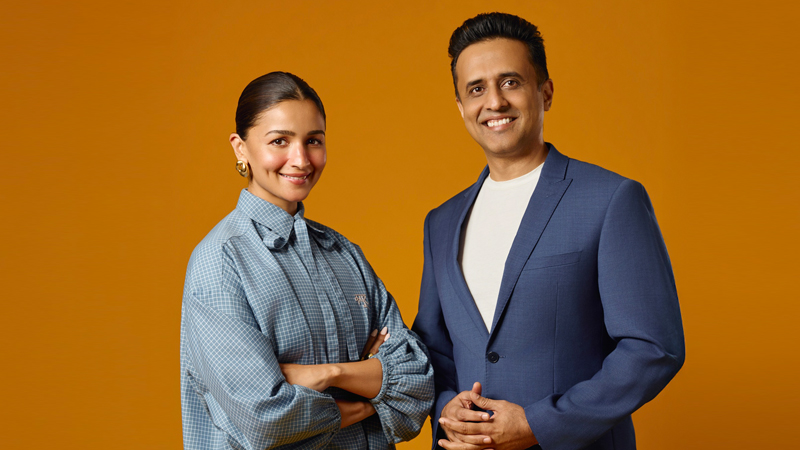
MUMBAI: Prime Video has found its next feel-good original, and it comes with a healthy dose of heart, humour and youthful chaos. The streaming platform has announced Don’t Be Shy, a coming-of-age romantic comedy produced by Alia Bhatt and Shaheen Bhatt under their banner, Eternal Sunshine Productions.
Written and directed by Sreeti Mukerji, the film follows Shyamili ‘Shy’ Das, a 20-year-old who believes her life is neatly mapped out until it suddenly is not. What follows is a relatable tumble through friendship, love and the awkward art of growing up, when plans unravel and certainty gives way to self-discovery.
The project is co-produced by Grishma Shah and Vikesh Bhutani, with music composed by Ram Sampath, adding to the film’s promise of warmth and energy. Prime Video describes the story as light-hearted yet emotionally grounded, with a strong female-led narrative at its core.
Prime Video India director and head of originals Nikhil Madhok, said the platform was delighted to collaborate with Eternal Sunshine on a story that blends sincerity with humour. He noted that the film’s fresh writing, earnest characters and infectious music make it an easy, engaging watch for audiences well beyond its young adult setting.
For Alia Bhatt, Don’t Be Shy reflects the kind of storytelling Eternal Sunshine set out to champion. She said the film stood out for its honesty, its coming-of-age perspective and Mukerji’s passion, which she felt was deeply woven into the narrative. Bhatt also praised Prime Video for supporting distinctive voices and bold creative choices.
With its breezy tone and familiar emotional beats, Don’t Be Shy aims to charm viewers whether they are rom-com regulars or simply in the mood for a warm, unpretentious story about life refusing to stick to the plan.

MUMBAI: Tips Films struggled to find its rhythm in the final quarter of 2025, as a spike in production costs and a new regulatory burden pushed the Mumbai-based outfit deeper into the red. According to results released on Tuesday, January 27, 2026, the company posted a net loss of Rs 286.87 lakh for the quarter ended 31 December, despite a modest bump in total income to Rs 456.29 lakh.
The bottom line was hit by the introduction of India’s New Labour Codes, which forced a Rs 37.37 lakh catch-up payment for employee benefits. Production costs also proved a heavy lift, gobbling up Rs 318.48 lakh during the period. On a nine-month basis, the picture looks even bleaker; the company has racked up losses of Rs 1,237.61 lakh, a sharp reversal from the Rs 1,269.17 lakh profit it managed in the same period last year.
Investors will be looking for a script change as the company enters the final stretch of the financial year, with basic earnings per share now languishing at minus Rs 6.64. For now, Tips Films remains a single-segment player, pinning its hopes entirely on the volatile world of film production and distribution.
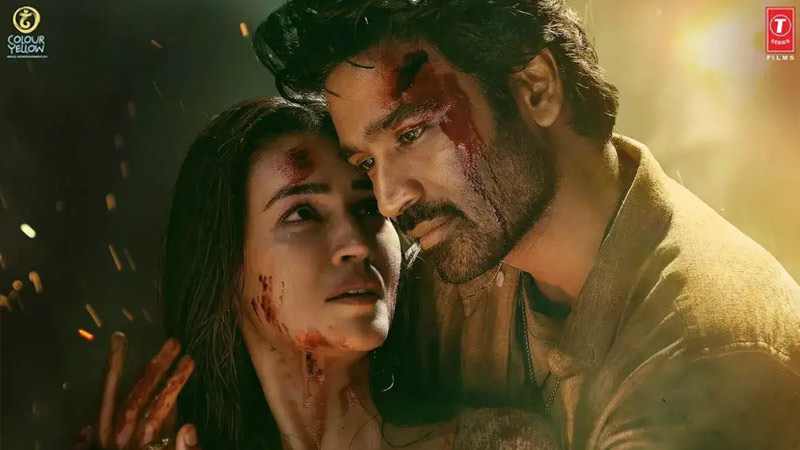
MUMBAI: Eros International Media Ltd has moved the Bombay high court against filmmaker Aanand L Rai and his production banner Colour Yellow Media Entertainment LLP, alleging unauthorised exploitation of the intellectual property of its 2013 blockbuster Raanjhanaa in the promotion and release of the 2025 film Tere Ishk Mein.
The studio is seeking damages of Rs 84 crore, claiming losses arising from what it describes as unlawful capitalisation on Raanjhanaa’s goodwill. According to a report in The Times of India, Eros has filed a commercial intellectual property suit along with an interim application, alleging trademark infringement, copyright infringement and passing off.
Eros contends that Tere Ishk Mein was deliberately marketed as a “spiritual sequel” to Raanjhanaa without authorisation. The suit names Aanand L Rai, Colour Yellow Media Entertainment LLP and Colour Yellow Productions, along with Super Cassettes Industries (T-Series), writer Himanshu Sharma and Netflix Entertainment Services India LLP, turning the dispute into a multi-party legal battle.
In its filing, Eros asserts that it is the producer and exclusive owner of all intellectual property rights in Raanjhanaa, including copyright, registered trademark rights, character rights in Kundan Shankar and Murari, and remake, prequel and sequel rights. The company alleges these rights were exploited while promoting Tere Ishk Mein, which released theatrically on November 28, 2025.
The legal action was triggered by a teaser released online in July 2025, which Eros claims used phrases such as “From the world of Raanjhanaa” and hashtags including #WorldOfRaanjhanaa. The interim application further alleges unauthorised use of footage, background score and music from Raanjhanaa, despite Eros no longer holding the film’s music rights.
Directed by Aanand L Rai, Tere Ishk Mein stars Dhanush, Kriti Sanon, Priyanshu Painyuli, Prakash Raj and Tota Roy Chowdhury. Neither Eros nor the defendants have issued an official statement so far.

Netflix celebrates a decade in India with Shah Rukh Khan-narrated tribute film

Delhivery chairman Deepak Kapoor, independent director Saugata Gupta quit board

Meta appoints Anuvrat Rao as APAC head of commerce partnerships

Brnd.me enters Europe as haircare brands power global expansion

TechnoSport taps quick commerce with launch on Slikk’s 60-minute platform

Jitendra Singh joins Reliance Industries as senior vice president, special projects

Tinder brings real-world dating experiences to North East India

These ’90s fashion trends are making a comeback in 2017
The final 6 ‘Game of Thrones’ episodes might feel like a full season
According to Dior Couture, this taboo fashion accessory is back
The old and New Edition cast comes together to perform
Phillies’ Aaron Altherr makes mind-boggling barehanded play
Uber and Lyft are finally available in all of New York State
Disney’s live-action Aladdin finally finds its stars
Netflix celebrates a decade in India with Shah Rukh Khan-narrated tribute film
Delhivery chairman Deepak Kapoor, independent director Saugata Gupta quit board
Meta appoints Anuvrat Rao as APAC head of commerce partnerships
Brnd.me enters Europe as haircare brands power global expansion
TechnoSport taps quick commerce with launch on Slikk’s 60-minute platform
Jitendra Singh joins Reliance Industries as senior vice president, special projects
Tinder brings real-world dating experiences to North East India
-
 iWorld3 months ago
Tips Music turns up the heat with Tamil party anthem Mayangiren
-
 iWorld12 months ago
BSNL rings in a revival with Rs 4,969 crore revenue
-
 I&B Ministry3 months ago
India steps up fight against digital piracy
-
 MAM3 months ago
HoABL soars high with dazzling Nagpur sebut
-
 iWorld2 days ago
Netflix celebrates a decade in India with Shah Rukh Khan-narrated tribute film
-
 News Broadcasting6 months ago
Wion marks Independence Day with global showcase of India’s spirit
-
 iWorld3 months ago
The Night Manager returns with new secrets, new spies and old scars
-
 I&B Ministry2 months ago
Centre drafts OTT rules to boost access for hearing disabled