
I&B Ministry
Copyright infringement or inspiration — it’s still a war

MUMBAI: Whenever a good movie crosses over into India, the first thought that pops up in one’s mind is — Whether it is copied or is it inspired?
The war between infringement and inspiration is not only reaching the courts of law but spicing up discussions too. Well, copying in a unique way is inspiration, but copy an original idea or a format or a script is absolute infringement, say legal experts.
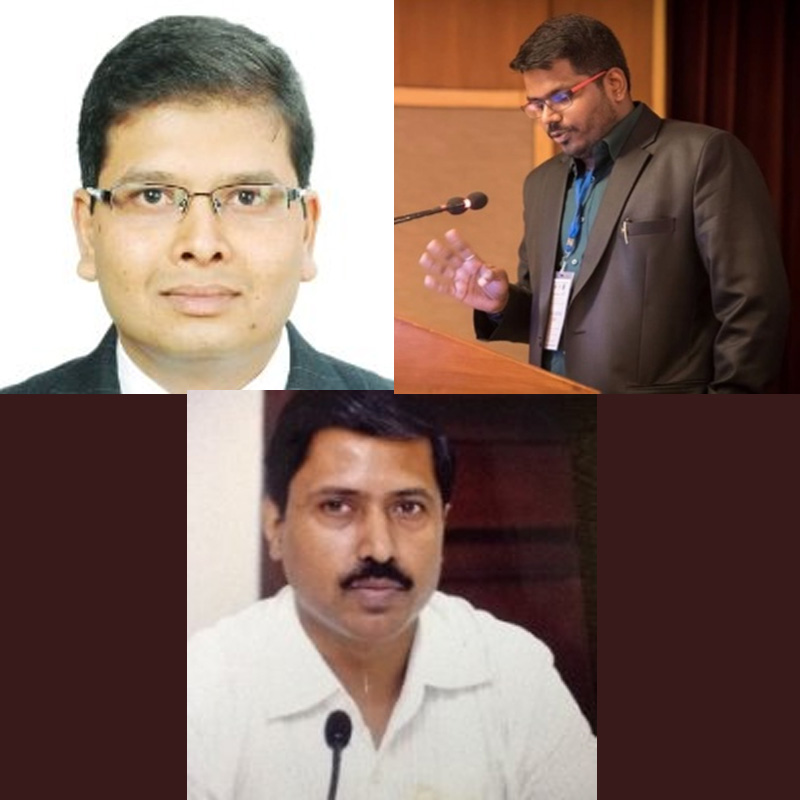
The Sixth Annual Media, Advertising and Entertainment Legal Summit 2017’s session on ‘The converged mediascape and a creative India – It’s copyright cries’ had a spicy kickstart with the panelists — Government of India joint secretary – department of justice, ministry of law and justice, Raghavender GR, Luthra & Luthra Law office partner Deepak THM, Dhir & Dhir Associates partner Siva K Gopinatham, Law Chambers of J Sai Deepak founder J Sai Deepak and Ogilvy and Mather VP and head – legal Kanan Rele.
The panel was moderated by Raymond director – legal Zameer Nathani.
Discussing the key topic ‘Infringement of copyright – copyright or mere inspiration,’ Deepak THM said, “It may not be an infringement of cinematograph film but there can be an infringement of script. To compare, certain tests needs to be applied. Substantial similarity test copyright infringement, copyright to characters and copyright to script are some tests to be done before claiming infringement.”

He added: “India’s one of the biggest blockbuster scripts, Bombay, is based on the play Cohens and Kellys. In the play, the Jewish girl and Irish boy fall in love and secretly marry. ‘Bombay’ is the film on the wrath of communal riots when a Hindu boy gets married to a Muslim girl. But, the movie was not infringed, some portions of the play were inspired and seen in the script, but the script’s elements along with the concept was depicted in a unique pattern.”
Gopinatham added that copying in a unique way was inspiration, but “in an original way” was absolute infringement.
Nathani put some light on copyright and royalty. He said, “The idea of introducing royalty cost was to understand the mathematics that if an additional figure is included in the production cost, then how to bear it, and who should bear it. Fundamentally, the exploiter is supposed to bear the royalty fee. For example, a movie was sold to Star (channel). So, every time, a song from the movie is broadcast on Star, the revenue generated from the advertisers will take out a portion for the lyricist. The portion will be decided by copyright society which is not yet decided.”
Seeing the present era, Nathani added that Facebook is engaging top 10 newspaper agencies to authenticate the news for article infringement and to stop fake news.
Raghavender spoke about 2012 amendment which was in line with WCT and WPP. He said, “WIPO Copyright Treaty (WCT), introduced in 1996, is a special agreement under the Berne Convention that deals with the protection of works and the rights of their authors in the digital environment. But, there is divergence in convergence because the Digital Millennium Copyright Act 1998 is slightly different from the way we have done it because of the copy control provisions that are there and access control techniques used. Flexibilities, however, are included in WPP and WCT provision.”
He added: “The concept of flexibility expanded the tricks to protect the interest of the technological, administrative, financial, socio-cultural conditions of the developing countries under Article 6 and 66 Paragraph 1.”
Kanan, talking about the misery faced by her company owing to the Copyright Amendment Act, said, “I am from the advertising industry, and we are facing two issues due to this amendment. Our employees directly work for us but they are also entitled to royalty. But, there is no society-firm from where these royalties can be collected. The second issue we faced is that Section 18 gives protection to authors that they are not supposed to waive the rights to receive royalty. So, if an author wants to collect money for example an X amount as his lifetime royalty, he has no right under the Copyright Amendment Act to receive that.”
On consolidated royalty, Raghavender added, “There is a continuous exploitation based on revenue of author-writers in terms of consolidated royalty. And also, s/he is needed to be a member of IPRS as far as royalty rights are concerned.”
Raghvender briefly explained the reasons of delay in statutory licensing for broadcasting. He said, “Section 31D under the Copyright Amendment Act was introduced for the radio industry, which was later extended to television broadcasters. The purpose of having the statutory licensing provision was to entitling the radio broadcasters to play sound recordings seamlessly, without going through the extortion of negotiations for broadcast by paying a prefixed consideration for such usage.”
“Earlier, a radio broadcaster had to take three voluntary licenses before exploiting a song either for promotion or for commercial purpose. But, after the denial by the radios for paying high copyright amount demanded by the owner, voluntary licence was denied as per the Berne Convention provisions and statutory license were made. Under statutory licence, the rates of royalty for radio broadcasters shall be different from television broadcasting, and the government shall decide the rate which will be later fixed by the Copyright Board separately for radio broadcasting and television broadcasting. It is restricted to television and radio, and does not apply on webcasting.”
Kanan shared the key takeaway from the Delhi High Court case of Suneet Varma Design vs Jas Kirat Singh Narula. It was a 2006 case of copyright infringement on Yashraj’s film “Bunty Aur Babli,” using a creation from the designer Suneet’s 2003 collection to dress up an actress in the film — Rani Mukerji. Narula said that he had not designed but purchased the same from a retail shop named Baby Bell in a shopping mall in Mumbai. Based on the provisions of Section 51-52 of the Indian Copyright Act, 1957, the case was dismissed.
Kanan said, “There are certain guidelines that filmmakers, photographers, etc. need to be given certain liberties as far as creative expression is concerned. Because, it is very difficult to take approval for each and every product or material that is used in the artistic representation of the film.”
On India’s position at WIPO Broadcasting Treaties, Raghavender said, “At present, the planning committee at WIPO is discussing the numbers, and it has been a point of discussion since the last 15 years. Since then, the WCT and WPP provisions came, the understanding among the stakeholders has increased to 191 in rival states, raised last week by WIPO panel and the reason behind the difference is technology.”
He added: “In 2005, WIPO rushed with their final round with consensus of rival states on diplomatic content. On one clause of transferring the rights, with the lack of consensus, it took 11 years to revive.”
“India has denied having implicit webcasting treaty,” he said.
“In the 20th association, the knowledge data market value, the international norms will be done in the standing committee on copyrights and royalty rights where countries give proposals which become an agenda, and discuss whether there should be a treaty or not. On the basis of all the proposals, a final document is prepared. In the committee, textual negotiations are also discussed. The inclusion of comma and column in language took two days to finalise whether India opposed the proposal, but later, it was sorted out.”
J. Sai Deepak said: “The Copyright Board should be merged with the Intellectual Property Appellate Board (IPAB), which is a good step, but unfortunately the existing provisions of Copyright Board (Section 11) does not support this, it needs amendments.” IPAB seeks to amend the Copyright Act so as to transfer the functions of the Copyright Board to IPAB, which as of now deals only with matters relating to trademarks, patents and geographical indications.”
ALSO READ:
Copyright Board may become part of Intellectual Property Appellate Board
Star-Vijay Copyright case hearing next week, TRAI to file counter
Star – TRAI copyright case: In dramatic turn, Madras HC judges withdraw





I&B Ministry
MIB sets OTT accessibility rules, mandates captions and audio description
Platforms get three years to add features for hearing and visually impaired
NEW DELHI: The government has asked OTT platforms to make their shows easier to watch and hear. A new set of accessibility guidelines from the Ministry of Information and Broadcasting requires streaming services to add features for viewers with hearing and visual impairments.
The move follows the Rights of Persons with Disabilities Act, 2016, and is meant to bring streaming closer to the promise of equal access. In simple terms, if a film or series is coming to an OTT platform, it should not arrive empty-handed. It should come with captions for those who cannot hear well and audio descriptions for those who cannot see clearly.
The guidelines ask platforms to provide at least one accessibility feature each for hearing-impaired and visually-impaired viewers. That could be closed captions, open captions, Indian Sign Language interpretation, or audio description. The aim is to make content understandable without turning the viewing experience into a technical chore.
There is, however, a long runway. Platforms have up to thirty six months from the date of the guidelines to ensure that all newly released content carries these accessibility features. Older titles in their libraries are not under strict timelines, but companies are encouraged to add features gradually.
The rules also go beyond the show itself. User interfaces, whether on mobile apps, smart TVs or websites, must be designed to work with assistive technologies. Accessibility labels such as CC for captions, AD for audio description and ISL for sign language must be displayed clearly so viewers know what to expect before pressing play.
Some content types get a free pass. Live events, music, podcasts, and short form content like ads are exempt because of practical challenges in real time captioning and description.
OTT publishers will also need to file accessibility conformance reports. The first report is due three years from now, followed by quarterly updates. Complaints from viewers will follow a three tier system, starting with the platform itself, moving to self-regulatory bodies, and finally reaching a government monitoring committee if needed.
For the streaming industry, the message is clear. Accessibility is no longer a nice extra tucked away in settings. It is fast becoming part of the main feature, and in a country where streaming audiences run into the hundreds of millions, that could make a very big difference to who gets to enjoy the show.
NEW DELHI: If 2025 was India’s year to make waves, the ministry of information and broadcasting (I&B) was its chief surfboard maker. Prime minister Narendra Modi’s call to “create in India, create for the world” wasn’t just ministerial hot air—it triggered a tsunami of creative dealmaking that swept from Melbourne to Madrid, generating Rs 4,334 crores in potential business discussions and putting Indian creators on every continent’s radar.
The centrepiece was Waves 2025, the World Audio Visual and Entertainment Summit, which drew over 90 countries, 10,000 delegates, and roughly 1 lakh punters through its doors. Modi himself dropped by to glad-hand young creators, describing the event as a “wave of culture, creativity and universal connectivity”—and for once, the hyperbole wasn’t entirely unwarranted.
The summit’s CreatoSphere platform, which sounds like something from a sci-fi novel but is actually a hub for film, VFX, animation, gaming, and digital media, launched the Create in India Challenges. Season one attracted over 1 lakh entries from more than 60 countries across 33 categories. Winners weren’t just handed certificates and sent packing—they performed at Melbourne, exhibited at Tokyo Game Show, and pitched at Toronto International Film Festival. I&B minister Ashwini Vaishnav handed out gongs to 150 creators, cementing the government’s commitment to nurturing what it calls the “creative economy.”
WaveX, the startup arm, proved equally industrious. It coaxed over 200 startups into its embrace, enabled 30 to pitch to Microsoft, Amazon, and Lumikai, and somehow got two of its charges—VYGR News and VIVA Technologies—onto Shark Tank India, where they presumably dodged the usual mauling. The initiative’s KalaaSetu and BhashaSetu challenges, focused on AI-driven video generation and real-time translation respectively, attracted over 100 startups and picked ten for collaboration with government media units.
Waves Bazaar, the “craft-to-commerce” global e-marketplace, went on a roadshow between August and December, hitting 12 international events across four continents and four domestic jamborees. The numbers are eye-watering: over 9,000 B2B meetings, 10 memoranda of understanding signed, three more proposed, and the launch of creative corridors with Japan, Korea, and Australia. The ministry claims Rs 4,334 crores in potential deals—potential being the operative word, though in India’s booming content market, optimism often precedes reality by only a few quarters.
On the bricks-and-mortar front, the Indian Institute of Creative Technology opened its temporary Mumbai campus in July with Rs 391.15 crores in budgetary support. The public-private partnership with Ficci and CII has enrolled over 100 students across 18 courses, incubated eight startups, and signed memoranda with Google, Meta, Nvidia, Microsoft, Apple, Adobe, and WPP—a who’s who of tech giants keen to tap India’s creative reserves. A permanent 10 acre campus at Film City, Goregaon, complete with an immersive AR/VR/XR studio, is in the works.
Elsewhere, the ministry set up a Live Events Development Cell to position India’s concert economy as a growth driver. A single-window clearance system is being built on the India Cine Hub platform to expedite permissions for fire, traffic, and municipal approvals—addressing the red-tape nightmares that have long plagued event organisers. Meanwhile, an inter-ministerial committee is tackling digital piracy, that perennial thorn in the creative economy’s side.
State broadcaster Doordarshan snagged the Election Commission’s media award for voter awareness during the 2024 Lok Sabha elections, presented by the president on National Voters’ Day. Community radio added 22 new stations, bringing the total to 551, with workshops and a national sammelan held during Waves to strengthen local broadcasting.
The 56th International Film Festival of India in Goa screened over 240 films from 81 countries, threw in the country’s first AI Film Festival, and staged a grand parade through Panaji that turned the event into a street-level celebration. The accompanying Waves Film Bazaar drew over 2,500 delegates from 40-plus countries and showcased 320 projects—making it one of South Asia’s largest film markets.
The Central Board of Film Certification modernised too, launching a multilingual certification module that allows multiple language versions under a single application, and mandating 50 per cent women’s participation on examining and revising committees. Digital signatures replaced wet ink, and certificates became downloadable—small victories in the fight against bureaucratic inertia.
India’s I&B ministry ended 2025 having turned content creation into something resembling an industrial policy. Whether Rs 4,334 crores in “potential” business materialises remains to be seen, but the ministry has built the infrastructure, corralled the startups, and put Indian creators on international stages. As Modi might say, the wave has been ridden. Now comes the hard part: keeping the momentum going when the cameras stop rolling.
MUMBAI: The Centre has inched closer to making India’s streaming universe easier to watch, hear and enjoy for everyone. The Ministry of Information and Broadcasting has released draft guidelines that aim to standardise accessibility on OTT platforms, ensuring that viewers with hearing and visual impairments are no longer left out of the country’s digital entertainment boom.
Issued on 7 October and now open for public consultation, the draft rules arrive with constitutional and global backing. Minister of State for Information and Broadcasting L. Murugan told the Rajya Sabha that the framework draws from Article 14, the UN Convention on the Rights of Persons with Disabilities and the Rights of Persons with Disabilities Act, 2016. It also mirrors the Code of Ethics under the IT Rules, 2021.
At the heart of the proposal is a two-phase rollout of mandatory accessibility tools such as same-language closed captions and audio descriptions. The ministry said penalties and enforcement steps will be shaped after the consultation, but compliance will be tracked through progressive targets for OTT content libraries.
Parliament was also reminded that the broadcast sector has walked this path before. In 2019, the government notified accessibility standards for television programming, starting with Prasar Bharati and eventually extending them to private broadcasters.
With OTT viewership climbing across urban and small-town India, the draft rules attempt to bring streaming giants in step with a wider vision of inclusive media. The government hopes the move will help millions of Indians with disabilities press play without barriers.


MIB sets OTT accessibility rules, mandates captions and audio description

Boney Kapoor acquires remake rights of Tamil political satire Thalaivar Thambi Thalaimaiyil

Netflix India names Rekha Rane director of films and series marketing

Zabeen signs off from TV9 after shaping the network’s public voice

Dhawan steps up to bat for Delhi’s grassroots sports push

Orient Beverages pops the fizz with steady Q3 gains and rising profits

Cheekatilo shines in the dark with record debut on Prime Video

These ’90s fashion trends are making a comeback in 2017
The final 6 ‘Game of Thrones’ episodes might feel like a full season
According to Dior Couture, this taboo fashion accessory is back
The old and New Edition cast comes together to perform
Phillies’ Aaron Altherr makes mind-boggling barehanded play
Uber and Lyft are finally available in all of New York State
Disney’s live-action Aladdin finally finds its stars
MIB sets OTT accessibility rules, mandates captions and audio description
Boney Kapoor acquires remake rights of Tamil political satire Thalaivar Thambi Thalaimaiyil
Netflix India names Rekha Rane director of films and series marketing
Zabeen signs off from TV9 after shaping the network’s public voice
Dhawan steps up to bat for Delhi’s grassroots sports push
Orient Beverages pops the fizz with steady Q3 gains and rising profits
Cheekatilo shines in the dark with record debut on Prime Video
-

 News Broadcasting2 weeks ago
Mukesh Ambani, Larry Fink come together for CNBC-TV18 exclusive
-
 News Headline1 month ago
From selfies to big bucks, India’s influencer economy explodes in 2025
-
 iWorld5 months ago
Billions still offline despite mobile internet surge: GSMA
-

 Applications2 months ago
28 per cent of divorced daters in India are open to remarriage: Rebounce
-

 iWorld2 weeks ago
Netflix celebrates a decade in India with Shah Rukh Khan-narrated tribute film
-
 Hollywood1 week ago
The man who dubbed Harry Potter for the world is stunned by Mumbai traffic
-
 News Headline2 months ago
Game on again as 2025 powers up a record year and sets the stage for 2030
-
 I&B Ministry3 months ago
India steps up fight against digital piracy
