
Fiction
Content India summit sets stage for global romp

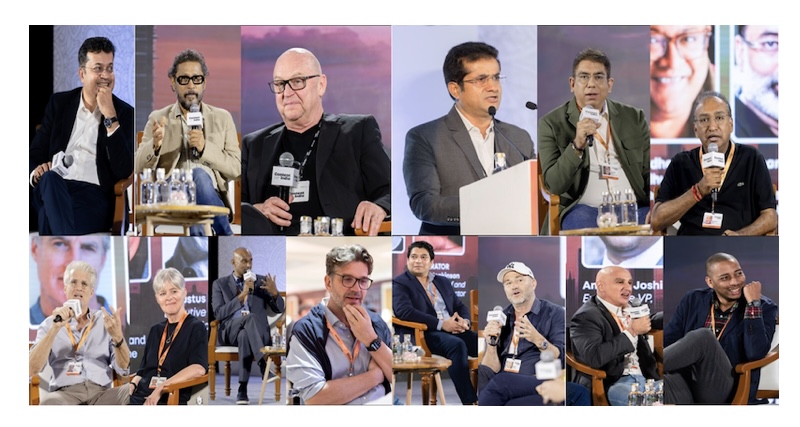
MUMBAI: India’s entertainment moguls have their sights set on world domination—and they’re not being coy about it. The inaugural Content India Summit 2025 wrapped up two days ago with grand ambitions and plenty of showbiz swagger, positioning itself as the launching pad for Indian content’s international conquest.
The summit, a partnership between DTH platform Dish TV India and C21 Media, brought together industry heavyweights to tackle the thorny question of how to make Indian entertainment as globally irresistible as its cuisine. Conversations probed everything from audience consumption patterns (binge-watching included) to the commercial scalability of Bollywood’s finest exports.
Dish TV’s chief executive Manoj Dobhal didn’t mince words about the company’s ambitions: ” Our vision with Content India is to build a dynamic content eco-system that connects each and every constituent of Content creation in India with global opportunities. The Content India Summit 2025 marks the beginning of a transformative journey—one that fosters long-term collaborations, drives industry innovation, and expands market potential. With Indian storytelling gaining global acclaim, this is the moment to amplify international partnerships and position India as a content powerhouse.”
C21Media’s managing director David Jenkinson chimed in with his own dose of enthusiasm, trumpeting India’s “undeniable influence” on the global content market. Said he: “Content India Summit is a crucial step toward shaping the future of Indian entertainment in a globally connected landscape. This event has brought together the brightest minds in the industry to address key challenges and unlock new opportunities for collaboration. India’s influence on the global content market is undeniable, and this summit lays the foundation for meaningful partnerships that will drive the industry forward.As we look ahead to the full Content India conference in 2026, our mission remains clear—to create a platform where ideas, talent, and business come together to define the next chapter of entertainment. This is just the beginning of an exciting journey for India on the world stage.”
The gathering wasn’t all champagne and canapés, though. Sessions delved into India’s creative advantages—its talent pool, technical prowess, and budget-friendly production costs—while also wrestling with the delicate balance of preserving cultural authenticity while making content palatable for international viewers.

Simon Mirren of Case Closed offered perhaps the most sobering advice: “Understanding the local culture is key to success in the Indian market. Many creators try to make TV for the West, which is a mistake. The focus should be on telling great stories that resonate here.”
For those eagerly awaiting the industry’s new playbook, a report titled The Future of the Indian Entertainment Business Debate is set to drop within four weeks, promising to reveal how Bollywood and beyond plan to seduce global audiences.
With streaming platforms hungry for fresh content and international viewers increasingly open to subtitles, India’s entertainment industry appears ready for its close-up—and Content India seems determined to direct the scene.










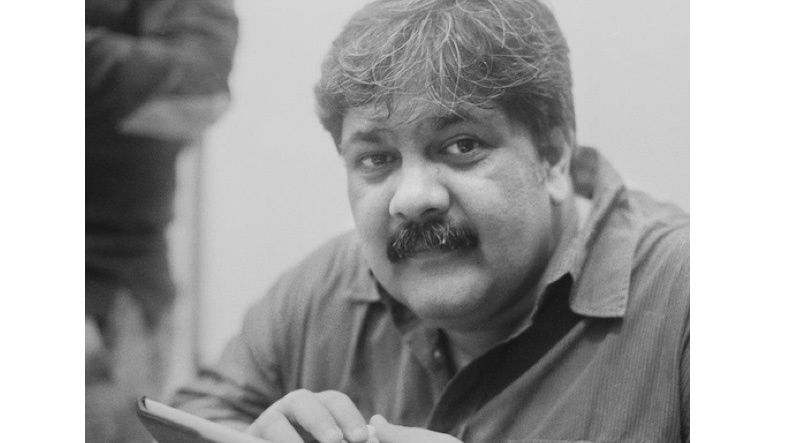
MUMBAI: On Christmas morning, whilst most of Mumbai slept off festive cheer, Satyam Tripathi’s heart gave out. 25 December proved cruelly ironic for a man who’d spent his career crafting drama—this time, there would be no second take. He was only 57.
Tripathi was a scriptwriter’s scriptwriter. Within India’s chaotic television industry, where writers are treated rather like spare parts, he’d carved out something rare: respect. For years, he sat on the executive committee of the Screen Writers Association, helping transform along with other leaders, what was once a talking shop into an organisation with teeth. When writers’ rights were little more than punchlines, Tripathi helped pen a different ending.
His credits read like a greatest hits of Indian telly: Hitler Didi, 12/24 Karol Bagh, Ek Mutthi Aasman, Parvarrish Kuchh Khattee Kuchh Meethi. Millions laughed, cried and switched channels to his work. He also championed the association’s Screen Writing Awards, ensuring that good writing didn’t go unnoticed in an industry obsessed with ratings and revenue.
Those who knew him speak of an affable soul, generous with time and advice. In a cut-throat business, Tripathi was that rarest of creatures: genuinely helpful.
His remains were cremated the same evening in the presence of industry associates and friends. The credits rolled quickly. But his final script—a better deal for India’s writers—continues to play out. That’s the sort of ending he’d have appreciated.
(Scriptwriters, producers and friends will be getting together to honour Satyam Kumud Tripathi’s memory and to hold a prayer meeting on 29 December. The location: Shri Guru Singh Sabha Gurudwara, 4 Bungalows, Andheri West, Mumbai. The time: between 3:30 PM and 5:00 PM.)
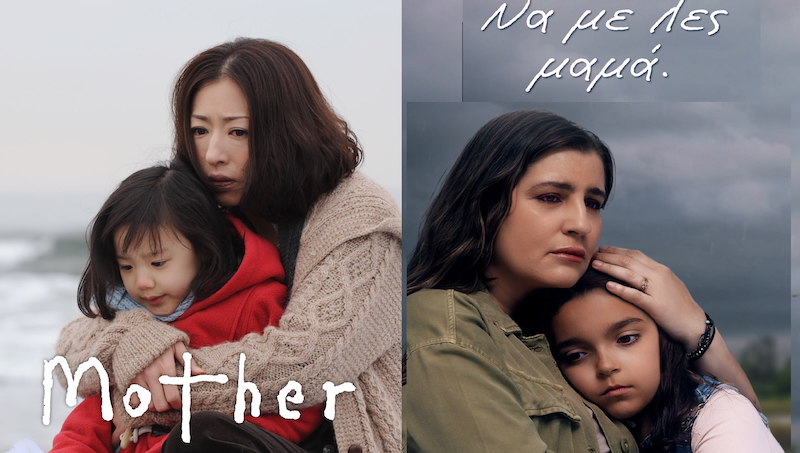
ATHENS: Greece has become the latest country to embrace one of Japan’s most emotionally charged television dramas. Mother, a series that tackles the harrowing subject of child abuse through the story of a teacher who kidnaps her student to save her from domestic violence, premiered on Alpha TV on September 25th.
The Greek adaptation, titled Na me les mama (Call me mom), marks the 11th international remake of the Nippon TV original—making it the most globally adapted Asian scripted format on record. Filmiki, the Greek production company behind the series, worked closely with Nippon TV to maintain the show’s emotional core whilst adapting it for local audiences.
“Mother is a story that has transcended cultures,” said Nippon TV scripted format sales and licensing executive Sally Yamamoto. The series has already conquered markets across Asia, Europe and the Middle East, with versions airing in South Korea, Turkey, Ukraine, Thailand, China, France, Spain, Saudi Arabia, Mongolia and the Philippines.
The original Japanese drama follows a woman in her mid-thirties who lives an apathetic existence until she discovers one of her pupils is being abused at home. Unable to understand her own impulses, she kidnaps the child and attempts to raise her as her own daughter whilst on the run from authorities.
Alpha TV programme director Christos Kompos described the series as “one of these stories that we feel really honoured to share with our audience.” The adaptation will stream simultaneously on Alpha TV’s HbbTV platform.
The show’s unflinching examination of society’s tendency to ignore child abuse has struck a chord with international audiences, proving that some stories need no translation to resonate across cultural boundaries.
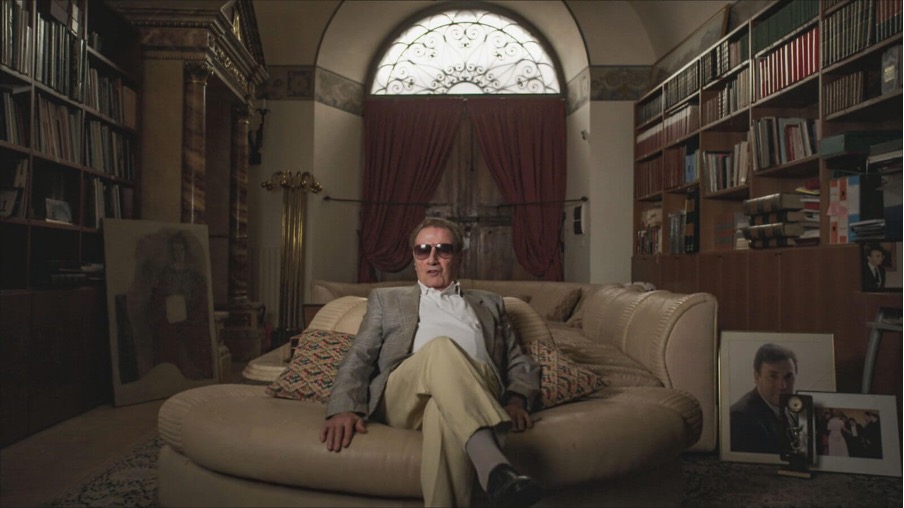
VENICE: Television’s finest have been crowned at the Venice TV Awards 2025, with productions from 32 countries proving that quality programming knows no boundaries. The ceremony, backed by the Association of Commercial Television and Video on Demand Services in Europe, the International Music + Media Centre, and the European Group of Television Advertising, celebrated another bumper year for the box.
Britain emerged as a standout performer, claiming four categories including the coveted documentary prize for The Man Who Definitely Didn’t Steal Hollywood from Wonderhood Studios and the BBC. The corporation also triumphed in comedy with Ludwig, starring David Mitchell, whilst securing wins in performing arts and children’s programming.
Japan flexed its creative muscles with three victories, including the television film award for Driving into the Storm and animation honours for Luka and the Flower of the Sun. The country’s technical prowess shone through in the cinematography category with Deep Ocean: Kingdom of the Coelacanth.
Canada’s Empathy from Trio Orange took the series crown, whilst South Korea’s Couple Palace dominated light entertainment. France claimed both sport and technology categories, with Canal+’s Giroud and TF1’s innovative 8 May 1945 respectively.
The awards spanned 18 categories, from traditional documentary and news coverage to cutting-edge cross-platform content and branded entertainment. America’s CBS News won recognition for its Red Sea reporting, whilst NBCUniversal’s Peacock platform scored with its Paris Olympics coverage.
Smaller television markets also punched above their weight. Finland’s Queen of Fucking Everything earned the direction prize, whilst Germany’s film school production If I could fly claimed the new talent award.
The ceremony underscored television’s resilience and creativity in an increasingly fragmented media landscape. As streaming platforms continue to reshape viewing habits, traditional broadcasters and digital natives alike demonstrated that compelling storytelling remains the industry’s beating heart.
With productions ranging from hard-hitting documentaries to frothy entertainment, the winners reflected television’s remarkable breadth and ambition in 2025.


MIB sets OTT accessibility rules, mandates captions and audio description

Boney Kapoor acquires remake rights of Tamil political satire Thalaivar Thambi Thalaimaiyil

Netflix India names Rekha Rane director of films and series marketing

Zabeen signs off from TV9 after shaping the network’s public voice

Dhawan steps up to bat for Delhi’s grassroots sports push

Orient Beverages pops the fizz with steady Q3 gains and rising profits

Cheekatilo shines in the dark with record debut on Prime Video

These ’90s fashion trends are making a comeback in 2017
The final 6 ‘Game of Thrones’ episodes might feel like a full season
According to Dior Couture, this taboo fashion accessory is back
The old and New Edition cast comes together to perform
Phillies’ Aaron Altherr makes mind-boggling barehanded play
Uber and Lyft are finally available in all of New York State
Disney’s live-action Aladdin finally finds its stars
MIB sets OTT accessibility rules, mandates captions and audio description
Boney Kapoor acquires remake rights of Tamil political satire Thalaivar Thambi Thalaimaiyil
Netflix India names Rekha Rane director of films and series marketing
Zabeen signs off from TV9 after shaping the network’s public voice
Dhawan steps up to bat for Delhi’s grassroots sports push
Orient Beverages pops the fizz with steady Q3 gains and rising profits
Cheekatilo shines in the dark with record debut on Prime Video
-

 News Broadcasting1 week ago
Mukesh Ambani, Larry Fink come together for CNBC-TV18 exclusive
-

 iWorld2 weeks ago
Netflix celebrates a decade in India with Shah Rukh Khan-narrated tribute film
-
 I&B Ministry3 months ago
India steps up fight against digital piracy
-

 Hollywood4 days ago
The man who dubbed Harry Potter for the world is stunned by Mumbai traffic
-
 MAM3 months ago
HoABL soars high with dazzling Nagpur sebut
-
 iWorld12 months ago
BSNL rings in a revival with Rs 4,969 crore revenue
-
 iWorld3 months ago
Tips Music turns up the heat with Tamil party anthem Mayangiren
-

 MAM1 week ago
Nielsen launches co-viewing pilot to sharpen TV measurement
