
News Broadcasting
CNBC TV-18’s expertise and specialization on tracking, analyzing and decoding the Budget has consistently evolved over the past 25 years: Shereen Bhan


Mumbai: Finance minister Nirmala Sitharaman’s seventh budget is anticipated to navigate delicately between stimulating consumption and boosting investment. While there might be a focus on immediate results through consumption-driven economic growth, achieving sustainable long-term prosperity demands a prioritization of investment. Investment not only fosters innovation and enhances infrastructure but also generates lasting employment opportunities, thereby fortifying economic resilience.
CNBC-TV18, India’s leading English Business news brand, under their Budget special “Go For Growth” theme and campaign, launched a special initiative called the ‘CNBC-TV18 Budget Box – Share Your Budget Wishlist for the FM’, that aims to resonates with the nation’s sentiment, providing a platform for citizens to express their expectations leading up to Budget 2024.
The Budget Box journeyed to multiple locations across Mumbai and Delhi, including various PVR cinema venues, prominent colleges such as KJ Somaiya Institute, Welingkar Institute of Management, New Delhi Institute of Management, JIMS, New Delhi, and 7/11 convenience stores. This extensive outreach also aims to engage with viewers in real-time, encouraging them to voice their budget wishlist.
Additionally, their virtual budget box on the website allowed their social media followers to participate by sharing their wishlist for this budget. People also had the opportunity to interact with CNBC-TV18 by using an interactive AR filter, thus enhancing their engagement. Through these efforts, they have successfully garnered over 3000 responses as part of the audiences’ budget wishlist from diverse demographics across cities.
Indiantelevision.com reached out to CNBC-TV18’s Managing Editor Shereen Bhan where she shared her insights, excerpts, and details on what one can expect from the upcoming union budget.
Edited excerpts
On CNBC-TV18 preparing for the upcoming budget and witnessing any significant changes in terms of tax policies or fiscal measures
Our preparation remains the same, ensuring we deliver timely and comprehensive analysis to our viewers in real-time. We decode the fine print and its implications with top voices and expert analysis, which continues to be our unique selling proposition (USP). We also ensure a diverse range of influential opinion makers from industry, policy, and politics contribute to our platform.
Regarding the upcoming budget, I do not anticipate any significant deviation in terms of fiscal math present during the interim budget. If anything, the government may improve the fiscal deficit number, buoyed by robust tax collections and substantial RBI dividends. While there’s speculation about populist schemes, we believe this expectation is somewhat exaggerated. Instead, the government is likely to introduce measures aimed at alleviating sector-specific challenges. Overall, we do not foresee a deviation presented during the interim budget by the government.
Key portfolios remain in the hands of the same ministers, signaling a consistent direction. This theme of continuity is expected to extend into the upcoming budget. Specific states like Andhra Pradesh and Bihar, crucial allies seeking assistance, may receive special considerations. With important elections in Maharashtra and Haryana looming, political factors could also influence budgetary decisions. Moreover, enhancing manufacturing and improving the ease of doing business are likely focal points for this budget.
On sectors you think will receive the most allocation in the budget
In recent years, the government has notably been specific with the investment in infrastructure through increased public spending, reaching historic highs. Expectations are high for this trend to continue, with calls from bodies like CII for even more substantial allocations than those in the interim budget. Manufacturing remains a key focus area, especially with existing PLI schemes in place. Anticipations include potential new policies aimed at attracting investments, particularly in sectors like medical device manufacturing. Overall, the government is set to prioritize further developments in the manufacturing sector.
Regarding consumption, industry stakeholders are urging the government to increase disposable income for consumers, possibly through tax relief—a move not recently seen. Whether such measures will feature in this post-election budget remains uncertain. Overall, stability and continuity are expected, with a renewed focus on established priority sectors such as semiconductors and initiatives like the AI roadmap. The allocation for electric vehicle mobility is eagerly awaited, highlighting key areas to watch in the upcoming budget.
On the budget addressing the common citizen’s concerns related to inflation and cost of living
The prices of goods, which are now more influenced by GST rather than the budget. However, expectations are high for the government to provide tax relief or revise tax slabs, offering benefits to taxpayers. Industry recommendations include increasing installments under schemes like PM Kisan Yojna for farmers. Overall, there is consensus that the budget must address the overarching issue of stimulating growth. A robust growth rate of 8-8 per cent or higher is seen as pivotal in addressing various economic challenges. Both industry and government messages emphasize a commitment to fostering growth, encapsulated within CNBC-TV18’s Budget special theme of “Go for Growth.” It is hoped that the budget will sustain and enhance the current growth momentum, leveraging India’s relative economic strength amidst global uncertainties.
On salaried class keeping high expectations from the budget over the years since last few budgets have been quite disappointing in terms of opportunities to optimise tax and potential for long term savings with higher returns
Considering historical trends, expectations for substantial tax relief should be moderated. The government has highlighted a shift away from exemptions towards a cleaner and simpler tax regime, possibly with lower tax rates. However, the challenge lies in convincing taxpayers to embrace these new schemes enthusiastically. The upcoming budget may aim to address this by introducing measures that make the new tax regime more appealing. This strategic approach reflects the government’s goal of encouraging widespread adoption of the revamped tax framework.
On the budget addressing issues related to foreign investment and global market integration
Once more, the government aims for continuity, particularly through initiatives like the PLI scheme, to integrate Indian industries into the global supply chain. The objective is to attract foreign direct investment, capitalising on the global trend of diversifying away from China. India seeks to position itself as a viable alternative, appealing to global companies looking to mitigate risks. Efforts will likely focus on bolstering specific industries based on recommendations, reinforcing India’s attractiveness for both manufacturing and servicing, and emphasising its role in global supply chains.
On the evolution of CNBC TV18′ approach to analysing critical areas of the budget
Our expertise and specialisation on the Budget have consistently evolved over the past 25 years, I think we have institutionalised the Budget coverage in the country. With vast experience garnered and muscle memory developed from covering numerous budgets, we bring real-time analysis that adds immediate value to our viewers. While others may publish insights hours later, our ability to provide timely perspective sets us apart. With our team collectively amassing hundreds of years of experience in live event tracking, particularly in budget analysis, we offer a unique and comprehensive perspective.
Every year we try to do something different. Every time we try to scale up our efforts. So through innovation, even the look and feel of our budget coverage has also evolved and transformed over the years. We don’t want to be another channel that covers the budget. We want to be the nation’s Budget Headquarters and we have been. If you look at our ratings in the last many years, you can see an unprecedented 90 per cent+ kind of dominance share and so we continue to take that job of bringing the budget headquarters to our audience very seriously and put our best put forward on air as well as off air.






News Broadcasting
Mukesh Ambani, Larry Fink come together for CNBC-TV18 exclusive
Reliance and BlackRock chiefs map the future of investing as global capital eyes India

MUMBAI: India’s capital story takes centre stage today as Mukesh Ambani and Larry Fink sit down for a rare joint television conversation, bringing together two of the most powerful voices in global business at a moment of economic churn and opportunity.
The Reliance Industries chief and the BlackRock boss will speak with Shereen Bhan, managing editor of CNBC-TV18, in an exclusive interaction airing from 3:00 pm on February 4. The timing is deliberate. Geopolitics are tense, technology is disruptive and capital is choosier. India, meanwhile, is pitching itself as a long-term bet.
The pairing is symbolic. Reliance straddles energy transition, digital infrastructure and consumer growth in the world’s fastest-expanding major economy. BlackRock, the world’s largest asset manager, oversees more than $14 tn in assets and sits at the nerve centre of global capital flows. When the two talk, markets tend to listen.
Fink’s appearance marks his third India visit, a signal of the country’s rising strategic weight for the Wall Street-listed firm, which carries a market value above $177 bn. His earlier 2023 trips included an October stop in New Delhi, where he met both Ambani and Narendra Modi.
India is now central to BlackRock’s expansion plans, notably through its joint venture with Jio Financial Services. Announced in July 2023, the 50:50 venture, JioBlackRock, commits up to $150 mn each from the partners to build a digital-first asset-management platform aimed at India’s swelling investor class.
The backdrop is robust. BlackRock ended 2025 with record assets under management of $14.04 tn, helped by $698 bn in net inflows, including $342 bn in the fourth quarter alone. Scale gives Fink both heft and a long lens on where money is moving.
He has been openly bullish on India. At the Saudi-US Investment Summit in Riyadh last year, Fink argued that the “fog of global uncertainty is lifting”, with capital returning to dynamic markets such as India, drawn by reforms, demographics and durable return potential.
Expect the conversation to range beyond balance sheets, into technology’s role in finance, access to capital and the mechanics of sustainable growth in a fracturing world order. For investors and policymakers alike, it is a snapshot of how big money is thinking about India.
At a time when capital is cautious and growth is contested, India wants to be the exception. When Ambani and Fink share a stage, it is less a chat and more a signal. The world’s money is still looking for its next big story, and India intends to be it.
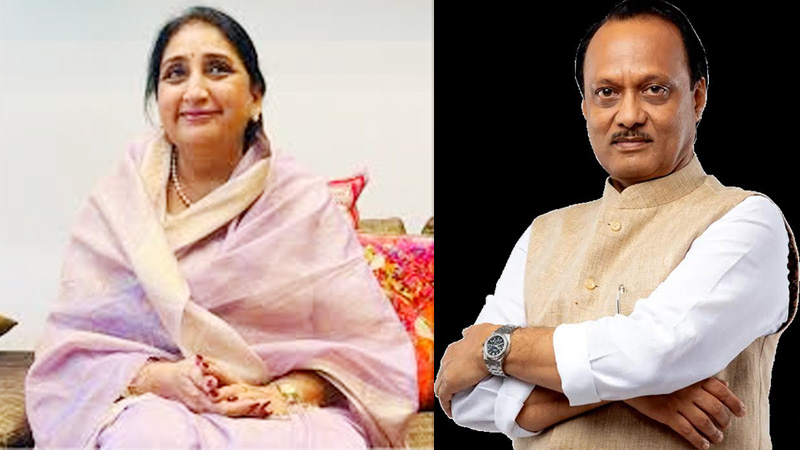
MUMBAI: Sunetra Pawar, wife of the late Ajit Pawar, will take oath as Maharashtra’s deputy chief minister on Saturday, media reports say, two days after his death in a plane crash.
According to reports, the Nationalist Congress Party (NCP) has summoned a legislature party meeting at 2pm on Saturday, where Sunetra Pawar, a Rajya Sabha member, is expected to be elected as leader. She is then likely to be sworn in as deputy chief minister at around 5pm at Raj Bhavan, as preparations are underway at the governor’s residence.
Ajit Pawar, Maharashtra’s deputy chief minister and a veteran NCP leader, died when a chartered Learjet 45 carrying him and four others crashed near Baramati on 28 January. The aviation regulator confirmed that all on board were killed when the aircraft burst into flames during a second landing attempt.
The sudden loss of one of Maharashtra’s most experienced politicians has prompted swift consultation among NCP leaders. Party figures, including working president Praful Patel, have been involved in talks on succession and organisational continuity. Reports suggest that several senior leaders support Sunetra Pawar’s elevation, viewing it as a unifying choice at a fraught moment.
According to party allies, Sunetra Pawar may also be considered for additional responsibilities within the state government. Some sources indicate that she would oversee portfolios such as excise and sports, while the finance brief could move to chief minister Devendra Fadnavis. Observers see this as a pragmatic division of duties intended to balance governance and political stability.
The transition unfolds against the backdrop of wider speculation over the future of the NCP, including talks about reconciling rival factions that split in recent years. Close aides of Ajit Pawar had been exploring avenues to bring the party’s different strands back together before his death, and that conversation may now gain fresh impetus.
Ajit Pawar’s demise has left a notable vacuum in Maharashtra politics. As a long-serving deputy chief minister, he had overseen key portfolios, including finance and planning, and played a central role in the state’s coalition government. His unexpected death has triggered intense reflection among allies and critics alike on both his legacy and the path ahead.
As Maharashtra prepares for Sunetra Pawar’s swearing-in, the NCP faces its most urgent test in years: turning tragedy into cohesion and navigating a new chapter in state leadership.
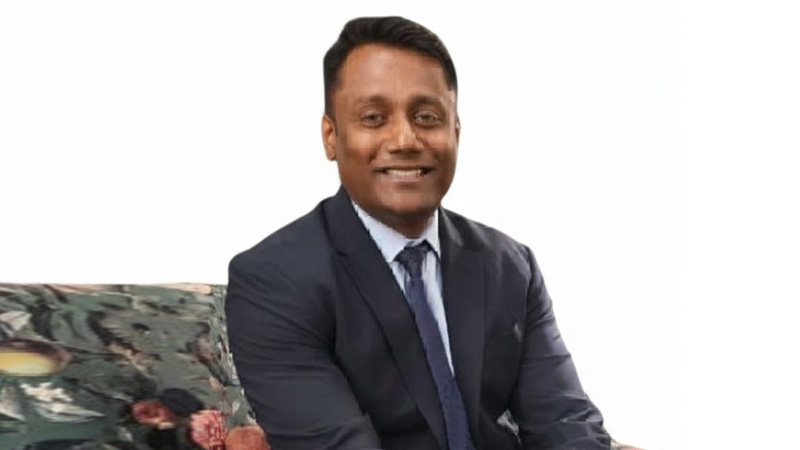
NEW DELHI: According to media reports, Firstpost has appointed senior journalist Binoy Prabhakar as its new chief content officer, bringing seasoned editorial expertise on board as the digital news platform embarks on its next phase of growth.
Prabhakar joins from Hindustan Times, where he spent nearly three years as chief content officer, shaping editorial strategy and guiding content for a rapidly evolving digital audience.
Earlier, he served as editor at Moneycontrol and CNBCTV18.com, and spent over a decade at The Economic Times in senior editorial roles. His career also includes leadership positions at Network18, The Indian Express and The Times of India.
A fellow of the Tow Knight Center for Entrepreneurial Journalism in New York, Prabhakar combines newsroom experience with a keen understanding of digital storytelling.
At Firstpost, he is expected to strengthen editorial depth, sharpen the platform’s voice, and drive content innovation as readers increasingly look for clarity in a crowded news landscape.

Mukesh Ambani, Larry Fink come together for CNBC-TV18 exclusive

Nielsen launches co-viewing pilot to sharpen TV measurement

Netflix celebrates a decade in India with Shah Rukh Khan-narrated tribute film

Delhivery chairman Deepak Kapoor, independent director Saugata Gupta quit board

Meta appoints Anuvrat Rao as APAC head of commerce partnerships

Brnd.me enters Europe as haircare brands power global expansion

TechnoSport taps quick commerce with launch on Slikk’s 60-minute platform

These ’90s fashion trends are making a comeback in 2017
The final 6 ‘Game of Thrones’ episodes might feel like a full season
According to Dior Couture, this taboo fashion accessory is back
The old and New Edition cast comes together to perform
Phillies’ Aaron Altherr makes mind-boggling barehanded play
Uber and Lyft are finally available in all of New York State
Disney’s live-action Aladdin finally finds its stars
Mukesh Ambani, Larry Fink come together for CNBC-TV18 exclusive
Nielsen launches co-viewing pilot to sharpen TV measurement
Netflix celebrates a decade in India with Shah Rukh Khan-narrated tribute film
Delhivery chairman Deepak Kapoor, independent director Saugata Gupta quit board
Meta appoints Anuvrat Rao as APAC head of commerce partnerships
Brnd.me enters Europe as haircare brands power global expansion
TechnoSport taps quick commerce with launch on Slikk’s 60-minute platform
-
 News Broadcasting1 day ago
Mukesh Ambani, Larry Fink come together for CNBC-TV18 exclusive
-
 iWorld5 days ago
Netflix celebrates a decade in India with Shah Rukh Khan-narrated tribute film
-
 I&B Ministry3 months ago
India steps up fight against digital piracy
-
 iWorld3 months ago
Tips Music turns up the heat with Tamil party anthem Mayangiren
-
 MAM1 day ago
Nielsen launches co-viewing pilot to sharpen TV measurement
-
 iWorld12 months ago
BSNL rings in a revival with Rs 4,969 crore revenue
-
 MAM3 months ago
HoABL soars high with dazzling Nagpur sebut
-

 News Broadcasting2 months ago
CNN-News18 dominates Bihar election coverage with record viewership