
News Broadcasting
British PM Tony Blair on MTV’s global forum

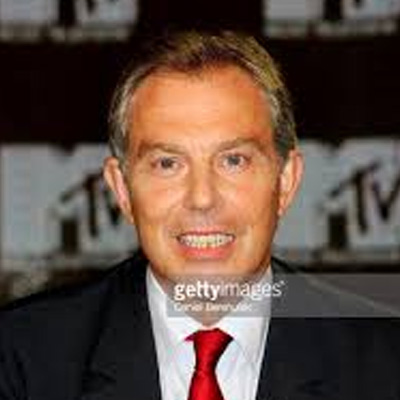
LONDON: MTV’s global forum has chosen British prime minister Tony Blair to field questions from 40 young people hailing from Europe, the Middle East and the United States during the hour-long programme.
MTV Networks Europe will produce the special titled “An MTV Forum with Tony Blair: Is war the answer?” It is scheduled to begin airing on MTV channels in Australia, Asia, Latin America, the Middle East and the United States starting 7 March 2003. The forum will be hosted by Trevor Nelson of MTV Base.
The forum will likely follow the same format and tone as last year’s “Be heard: an MTV global discussion with Colin Powell,” in which young people from around the world spoke with the US secretary of state Powell about the threat of terrorism and the United States’ military action in Afghanistan.
A digitalsky report adds that Viacom, MTVNE’s parent company, says that the audience will reflect a “balanced cross-section” of MTV’s 16-24 target demographic.
MTV Networks Europe president and CEO Brent Hansen says: “MTV Europe’s philosophy is to offer young people from all over Europe the opportunity for open dialogue on a number of issues, regardless of race, religion or political standpoint. This forum will not be a vehicle for any political message; instead, we wish to offer an open and unscripted dialogue between Prime Minister Tony Blair and young people in Europe. MTV’s European audience are particularly attuned to the issue of war and an MTV forum will offer a lively debate with a truly pan-European perspective.”

Tony Blair: a profile
At the age of 43 , Tony Blair became the youngest Prime Minister since Lord Liverpool in 1812. The son of a barrister and lecturer, Blair was born in Edinburgh, but spent most of his childhood in Durham. At the age of 14 he returned to Edinburgh to finish his education at Fettes School. He studied law at Oxford, and went on to become a barrister himself.
After standing unsuccessfully for the Labour Party in a by-election, Blair went on to win the seat of Sedgefield in the 1983 General Election, aged 30.
Blair made a speedy rise through the ranks, being promoted first to the shadow Treasury front bench in 1985. He subsequently served as a trade and industry spokesman, before being elected to the shadow cabinet in 1988 where he was made shadow secretary of state for Energy. In 1989 he moved to the employment brief.
After the 1992 election Labour’s new leader, John Smith, promoted Blair to shadow home secretary. It was in this post that Blair made famous his pledge that Labour would be tough on crime, tough on the causes of crime.
Blair immediately launched his campaign for the modernisation of the Labour Party, determined to complete the shift further towards the political centre which he saw as essential for victory. The debate over Clause 4 of the party’s constitution was considered the crucial test of whether its members would commit to Blair’s project. He removed the commitment to public ownership, and at this time coined the term New Labour.
The Labour Party won the 1997 General Election by a landslide, after 18 years in Opposition.
The government began to implement a far-reaching programme of constitutional change, putting the question of devolution to referendums in Scotland and Wales.
An elected post of Mayor of London was established at the head of a new capital-wide authority, and all but 92 hereditary peers were removed from the House of Lords in the first stage of its reform. The government has also implemented an investment programme of ?42 billion in its priority areas of health and education.
Blair was re-elected with another landslide majority in the 2001 General Election.
Blair is married to the barrister Cherie Booth QC, and they have four children. Their youngest, Leo, was the first child born to a serving prime minister in over 150 years.
One hopes that the Indian audiences will also get a chance to view the proceedings of the MTV Global Forum live from 10 Downing Street.






KERALA: A forensic audit commissioned by the Broadcast Audience Research Council (BARC) India has emerged as the centrepiece of the government’s response to fresh allegations of television rating point manipulation involving a regional news channel in Kerala, with both the audit findings and a parallel police investigation still awaited.
Replying to a query in the Lok Sabha, minister of state for information and broadcasting L Murugan, said Barc had appointed an independent agency to conduct a forensic probe into the conduct of senior personnel allegedly linked to the case.
The move followed media reports claiming that a Barc employee had accepted bribes to manipulate viewership data in favour of a regional television news channel.
“The report from BARC is still awaited,” Murugan told Parliament, signalling that the forensic exercise remains ongoing.
Industry specialists say forensic audits are crucial in alleged TRP fraud cases, as they examine internal controls, data access trails, panel household integrity, staff communications and financial transactions. The outcome could determine whether the alleged manipulation was an isolated breach or a deeper systemic weakness in India’s television measurement framework.
Running alongside the audit, the Kerala Police has formed a special investigation team to probe the allegations. The ministry has sought a preliminary report from the state’s director general of police, including details of action taken on the first information report. That report, too, is yet to be submitted.
The episode has revived long-standing concerns over the vulnerability of India’s TRP system, particularly in regional news markets where competition for ratings is fierce and advertising revenues hinge on weekly viewership rankings.
India’s sole television audience measurement body Barc, has faced scrutiny before, most notably during the nationwide TRP controversy involving news channels in 2020. While tighter compliance norms were introduced in the aftermath, the latest allegations suggest enforcement challenges may persist.
On regulatory consequences, the government said any punitive action against television channels, including suspension or cancellation of uplinking and downlinking permissions, would be governed by the Policy Guidelines for Uplinking and Downlinking of Television Channels issued in November 2022, and would depend on investigation outcomes and due process.
The ministry also pointed to ongoing efforts to overhaul the ratings ecosystem. Television measurement continues to be regulated under the Policy Guidelines for Television Rating Agencies, 2014. Draft amendments were released for public consultation in July 2025, followed by a revised version in November 2025, aimed at tightening audit mechanisms and improving transparency and representativeness.
In November 2025, Barc said it had taken note of allegations aired by Malayalam news channel Twenty-Four, which linked an internal employee to irregularities in audience measurement. The council said it had engaged a “reputed independent agency” to conduct a comprehensive forensic audit, underscoring the seriousness of the claims.
The ratings system sits at the heart of India’s broadcast advertising economy, shaping billions of rupees in annual ad spends. With trust in audience data once again under strain, advertisers, broadcasters and regulators are closely watching the outcome of the investigations.
Barc has urged industry stakeholders and media organisations to exercise restraint while the probe is underway, calling for an end to “unverified or speculatory claims” and reiterating its commitment to integrity and accountability.
Until the forensic audit and police findings are submitted and reviewed, the government said it would refrain from drawing conclusions.
News Broadcasting
Rajat Sharma defamation row: Delhi court summons Congress leaders Ragini Nayak, Pawan Khera and Jairam Ramesh
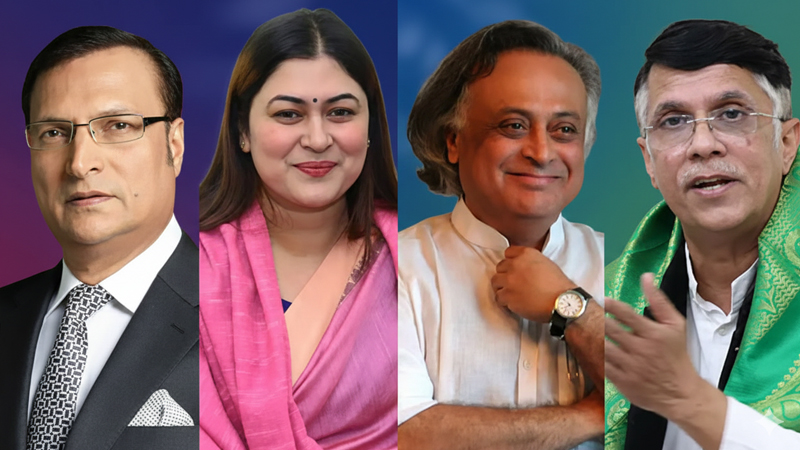
NEW DELHI: A Delhi court has ordered the summoning of senior Congress leaders Ragini Nayak, Pawan Khera and Jairam Ramesh in a criminal case filed by veteran journalist Rajat Sharma, sharpening a legal battle over alleged defamation and doctored digital content.
The order was passed on Monday by Devanshi Janmeja, judicial magistrate first class at Saket Courts, after the court found prima facie grounds to proceed under multiple sections of the Indian Penal Code, including forgery, creation of false electronic records and defamation.
Sharma, chairman and editor-in-chief of India TV, had approached the court over allegations made in June 2024 that he had used derogatory language against Congress spokesperson Ragini Nayak during a live television debate. He denied the charge, claiming it was fuelled by a manipulated video circulated online.
According to the complaint, a clipped version of the broadcast carrying superimposed captions, which were not part of the original programme, was first shared on social media platform X by Nayak and later amplified through retweets and public statements by Khera and Ramesh. Sharma said the viral spread caused serious reputational harm and personal distress.
The court took note of forensic science laboratory findings that pointed to visible post-production alterations in the video, including added titles and captions. It also cited witness testimonies from those present during the live broadcast, who stated that no abusive or objectionable language had been used.
In a related civil matter, the Delhi High Court had earlier observed a prima facie absence of abusive remarks and directed the removal of the disputed social media posts.
With criminal proceedings now set in motion, the case adds to mounting scrutiny around political messaging, digital manipulation and accountability on social media platforms.
News Broadcasting
Mukesh Ambani, Larry Fink come together for CNBC-TV18 exclusive
Reliance and BlackRock chiefs map the future of investing as global capital eyes India

MUMBAI: India’s capital story takes centre stage today as Mukesh Ambani and Larry Fink sit down for a rare joint television conversation, bringing together two of the most powerful voices in global business at a moment of economic churn and opportunity.
The Reliance Industries chief and the BlackRock boss will speak with Shereen Bhan, managing editor of CNBC-TV18, in an exclusive interaction airing from 3:00 pm on February 4. The timing is deliberate. Geopolitics are tense, technology is disruptive and capital is choosier. India, meanwhile, is pitching itself as a long-term bet.
The pairing is symbolic. Reliance straddles energy transition, digital infrastructure and consumer growth in the world’s fastest-expanding major economy. BlackRock, the world’s largest asset manager, oversees more than $14 tn in assets and sits at the nerve centre of global capital flows. When the two talk, markets tend to listen.
Fink’s appearance marks his third India visit, a signal of the country’s rising strategic weight for the Wall Street-listed firm, which carries a market value above $177 bn. His earlier 2023 trips included an October stop in New Delhi, where he met both Ambani and Narendra Modi.
India is now central to BlackRock’s expansion plans, notably through its joint venture with Jio Financial Services. Announced in July 2023, the 50:50 venture, JioBlackRock, commits up to $150 mn each from the partners to build a digital-first asset-management platform aimed at India’s swelling investor class.
The backdrop is robust. BlackRock ended 2025 with record assets under management of $14.04 tn, helped by $698 bn in net inflows, including $342 bn in the fourth quarter alone. Scale gives Fink both heft and a long lens on where money is moving.
He has been openly bullish on India. At the Saudi-US Investment Summit in Riyadh last year, Fink argued that the “fog of global uncertainty is lifting”, with capital returning to dynamic markets such as India, drawn by reforms, demographics and durable return potential.
Expect the conversation to range beyond balance sheets, into technology’s role in finance, access to capital and the mechanics of sustainable growth in a fracturing world order. For investors and policymakers alike, it is a snapshot of how big money is thinking about India.
At a time when capital is cautious and growth is contested, India wants to be the exception. When Ambani and Fink share a stage, it is less a chat and more a signal. The world’s money is still looking for its next big story, and India intends to be it.



MIB sets OTT accessibility rules, mandates captions and audio description

Boney Kapoor acquires remake rights of Tamil political satire Thalaivar Thambi Thalaimaiyil

Netflix India names Rekha Rane director of films and series marketing

Zabeen signs off from TV9 after shaping the network’s public voice

Dhawan steps up to bat for Delhi’s grassroots sports push

Orient Beverages pops the fizz with steady Q3 gains and rising profits

Cheekatilo shines in the dark with record debut on Prime Video

Swiggy Instamart’s GOV surges 103 per cent year on year to Rs 7,938 crore

These ’90s fashion trends are making a comeback in 2017
The final 6 ‘Game of Thrones’ episodes might feel like a full season
According to Dior Couture, this taboo fashion accessory is back
The old and New Edition cast comes together to perform
Phillies’ Aaron Altherr makes mind-boggling barehanded play
ATN International brings ATN Bangla to Canada
MIB sets OTT accessibility rules, mandates captions and audio description
Boney Kapoor acquires remake rights of Tamil political satire Thalaivar Thambi Thalaimaiyil
Netflix India names Rekha Rane director of films and series marketing
Zabeen signs off from TV9 after shaping the network’s public voice
Dhawan steps up to bat for Delhi’s grassroots sports push
Orient Beverages pops the fizz with steady Q3 gains and rising profits
Cheekatilo shines in the dark with record debut on Prime Video
-
 e-commerce1 month ago
Swiggy Instamart’s GOV surges 103 per cent year on year to Rs 7,938 crore
-
 iWorld1 year ago
Kuku TV transforms India’s OTT space with vertical microdrama boom
-
 News Headline1 year ago
TRAI puts a ‘stop’ to unsolicited calls and messages
-

 News Headline2 months ago
From selfies to big bucks, India’s influencer economy explodes in 2025
-
 Comedy2 years ago
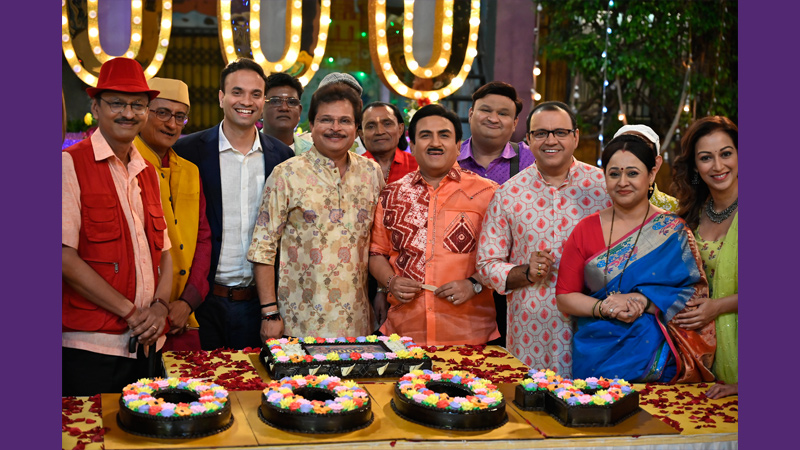
Taarak Mehta Ka Ooltah Chashmah celebrates 4,000 episodes
-
 MAM2 years ago
OpenAI joins C2PA steering committee
-
 News Headline2 years ago
Odisha to host Ultimate Kho Kho Season 2 from December 24
-
 News Headline1 year ago
Abhishek Bachchan joins as co-owner of European T20 Premier League


