
International
BookMyShow announces A24’s ‘Civil War’ as the opening film for Red Lorry Film Festival

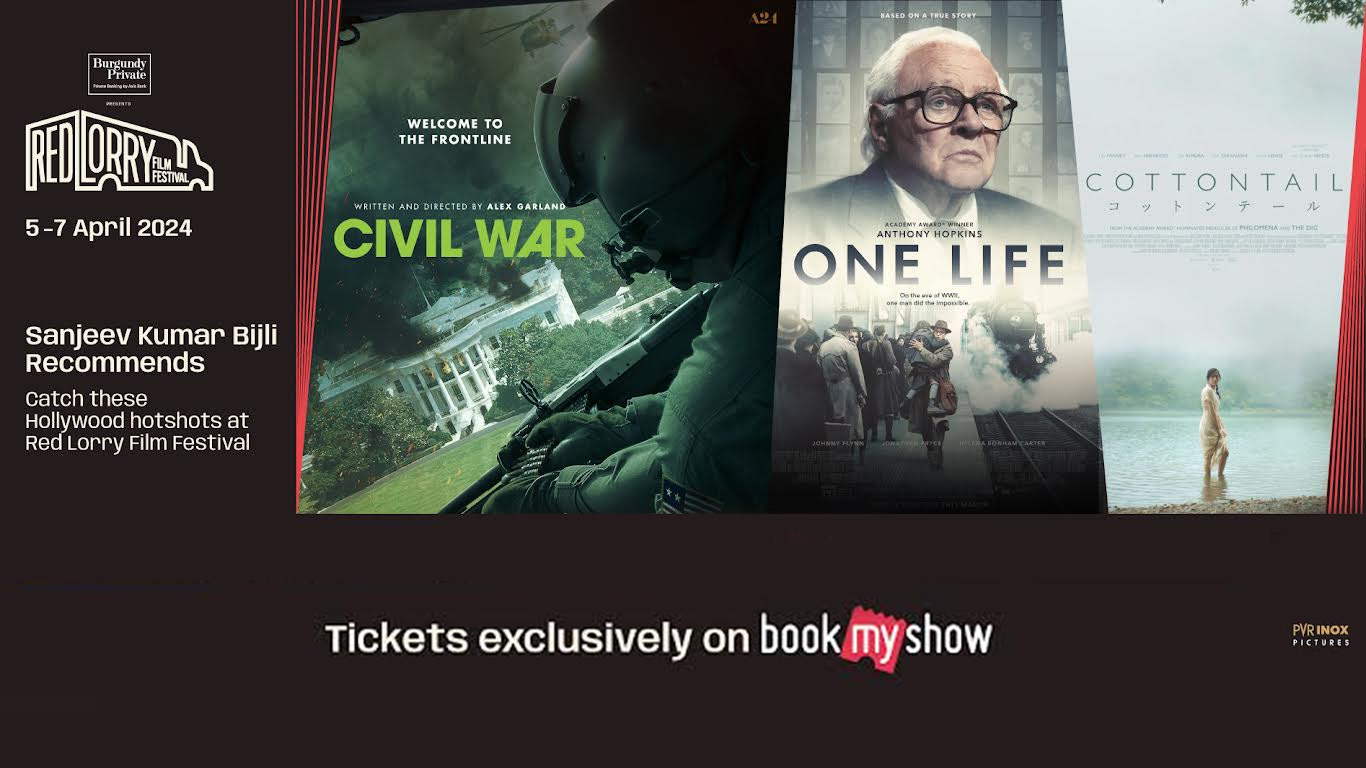
Mumbai: BookMyShow, India’s leading entertainment destination today announced Alex Garland directed ‘Civil War’ from A24 as the opening film of the entertainment platform’s Red Lorry Film Festival. Official ambassador of the Film Festival, Sanjeev Kumar Bijli, executive director of PVR INOX Ltd recommends the film amidst his top three from Red Lorry Film Festival’s exciting slew of titles and is a part of the films that he has personally curated for the Festival.
Bringing a dystopian future America, in the guise of the exhilarating, heart-pounding and much-awaited political thriller to Indian shores, BookMyShow’s Red Lorry Film Festival offers attendees a chance to be a part of the exclusive premiere of ‘Civil War’, before its global release. The film sees a small team of military-embedded journalists traveling the United States as the country is embroiled in its first Civil War since the 1800s, where the states of California and Texas have seceded from the nation to form the Western Forces.
The film, released by PVR INOX Pictures in India, boasts of a star-studded cast including the Cannes Award-winning actress, Kirsten Dunst, Wagner Moura who grew to fame after his lead role as Pablo Escobar in ‘Narcos’, celebrated actor and comedian Nick Offerman and the ‘Dune’ starrer Stephen McKinley Henderson.
Critics commend lead actress Dunst, in one of the most-anticipated adrenaline-filled films this year, for her terrific depiction of a photojournalist documenting the end of democracy. Quoting Deadline, “Civil War presents itself as a road movie with a dark twist, focusing on the lengths to which journalists will go to uncover and document the horrors of war. This premise is an exploration of journalistic integrity, the cost of truth and the human spirit’s resilience.”
Upon announcing Civil War as the opening film for Red Lorry Film Festival, BookMyShow COO – cinemas Ashish Saksena said, “We are thrilled to present ‘Civil War’ as the opening film of Red Lorry Film Festival. From its visually stunning poster to its high production value, this film is a testament to the excellence of cinema. With impeccable sound design, cinematography of A+ quality and critics debating if it’s Alex Garland’s finest work, ‘Civil War’ promises an unforgettable cinematic experience. Its gripping narrative and sheer brilliance across every cinematic sphere ensure that watching this film on the big screen will be an experience you won’t want to miss!”
BookMyShow introduced Red Lorry Film Festival, a curated cinematic universe featuring over 100 titles from across the globe, all under one roof from 5 to 7 April 2024 at state-of-the-art cinemas Maison INOX at Jio World Plaza and Maison PVR at Jio World Drive, Bandra Kurla Complex (BKC), Mumbai.
Red Lorry Film Festival ambassador, Sanjeev Kumar Bijli, executive director, PVR INOX Ltd has carefully curated a select few titles for this International Film Festival, harbouring a soft touch for emotional dramas that one can relate to. Sanjeev Kumar Bijli said, “We’re excited to join forces with BookMyShow as they celebrate their 25th anniversary with the Red Lorry Film Festival, featuring an eclectic selection of titles from around the globe that are sure to strike a chord with audiences. Drama has always been a popular genre among film enthusiasts, evolving over time to reflect shifts in society and culture. Finding the right balance of drama and emotion is crucial for a film’s success, captivating audiences and keeping them engaged with the storyline. We are confident that three emotional dramas showcased will captivate viewers with their compelling narratives and characters. This collaboration between PVR INOX and BookMyShow brings together the finest in entertainment, promising an unforgettable cinematic experience for cinephiles.”
Misfortune and tragedies are no stranger to history and movies about victory, loyalty, friendship and redemption speak of that hard-hitting truth bringing poignant moments of moral learning, strong principles and ethical values to light.
In addition to the highly-anticipated exclusive premiere of ‘Civil War’ as the opening film with its dark twists and turns, here are two other impactful and poignant movies to watch at Red Lorry Film Festival which are personally handpicked by Sanjeev Kumar Bijli:
- One Life: It is based on the true story of British humanitarian Sir Nicholas Winton as he looks back on his past efforts to help groups of Jewish children in German-occupied Czechoslovakia to hide and flee in 1938–39, just before the beginning of World War II. The film stars one of Britain’s most recognisable and prolific actors Anthony Hopkins in the lead role as Sir Nicholas, with the award-winning Jonathan Pryce and Helena Bonham Carter in supporting roles.
- Cottontail: A widower from Japan travels with his estranged son to England in order to fulfil his late wife’s dying wish. Fulfilling a last wish is the start of the road of reconciliation for a father and son in Patrick Dickinson’s sensitive family drama, which is delicately composed and elevated by a touching performance from Lily Franky.
As the curtains rise on Red Lorry Film Festival, movie lovers are in for a treat with hand-picked titles from across the world, promising to deliver thrills, chills, dark, teary and dreary delights. So, book your tickets here, mark your calendars and watch out for more. Starting at just Rs 1499/-, Red Lorry Film Festival is going to be the best indoor experience this summer!
As BigTree Entertainment Pvt Ltd, the parent company of BookMyShow, commemorates a significant milestone of 25 years in reshaping India’s entertainment landscape, its profound expertise, nuanced comprehension of audience preferences and spotlighting of the enduring and evolving tastes of Indian cinephiles have converged in a momentous celebration which was marked by the launch of the new intellectual property, Red Lorry Film Festival.











LOS ANGELES: Acting has never been an easy profession, but in recent years, it has acquired a new existential anxiety. Artificial intelligence can now mimic faces, clone voices and, in theory at least, speak any language it is fed. The fear that actors may soon be replaced by algorithms no longer belongs exclusively to science fiction. And yet, despite the rise of digital inauthenticity, some performers remain stubbornly resistant to replacement. The reason is not celebrity, nor even talent. It is language.
On paper, this should not be a problem. AI can translate. It can imitate accents. It can string together grammatically correct sentences in dozens of languages. But acting, inconveniently, is not about grammatical correctness. It is about meaning, and meaning is where AI still falters.
Machine translation offers a cautionary tale. Google Translate, now powered by neural AI, has improved markedly since its debut in 2006. It can manage menus, emails and airport signage with impressive efficiency. What it struggles with, however, are the moments that matter most: idioms, metaphors, irony, and cultural shorthand. Ask it to translate a joke, a threat disguised as politeness, or a line heavy with emotional subtext, and it begins to unravel. Acting lives precisely in those gaps.
This matters because film language is rarely literal. Scripts, particularly in independent cinema, rely on figurative speech and symbolism to convey what characters cannot say outright. Pedro Almodóvar’s Volver is a useful example. The film’s recurring use of red operates on multiple levels: grief, desire, repression, liberation, and memory. These meanings are inseparable from the Spanish cultural context and emotional cadence. A translation may convey the words, but not the weight they carry. An AI-generated performance might replicate the sound, but not the sense.
This is where multilingual actors gain their edge. Performers such as Penélope Cruz and Sofía Vergara do not simply switch between languages; they move between cultural logics. Their fluency allows them to inhabit characters without flattening them for international consumption. Language, for them, is not an accessory but a structuring force.
Beyond European cinema, this becomes even more pronounced. Languages such as Hindi, Arabic and Mandarin are spoken by hundreds of millions of people and underpin vast cinematic traditions. As global audiences grow more interconnected, the demand for authenticity increases rather than diminishes. Viewers can tell when a performance has been filtered through approximation. Subtle errors, misplaced emphasis, and an unnatural rhythm break the illusion.
There is also a practical dimension. Multilingualism expands opportunity. Sofía Vergara has spoken openly about how learning English enabled her to work beyond Colombia and access Hollywood roles. But this movement is not a one-way export of talent into English-speaking cinema. Multilingual actors carry stories, styles and sensibilities back with them, enriching multiple industries at once.
Cinema has always thrived on such hybridity. Denzel Washington’s performances, for instance, draw on the cultural realities of growing up African American in the United States, while also reflecting stylistic influences from classic Hollywood and Westerns. His work demonstrates how identity and influence intersect on screen. Multilingual actors extend this intersection further, embodying multiple cultural frameworks simultaneously.
At times, linguistic authenticity is not merely artistic but ethical. Films that confront historical trauma, such as Schindler’s List, rely on language to anchor their moral seriousness. When Jewish actors perform in German, the choice is not incidental. Language becomes a site of memory and confrontation. It is difficult to imagine an automated voice carrying that responsibility without hollowing it out.

This is why claims that AI heralds the death of language miss the point. Language is not just a delivery system for information. It is a repository of history, humour, power and pain. Fluency is not only about knowing what to say, but when to hesitate, when to understate, and when to let silence do the work. These are not technical problems waiting to be solved; they are human instincts shaped by lived experience.
AI may one day improve its grasp of metaphor and nuance. It may even learn to sound convincing. But acting is not about sounding convincing; it is about being convincing. Until algorithms can acquire memory, cultural inheritance and emotional intuition, multilingual actors will remain irreplaceable. AI may learn to speak. But it cannot yet learn to mean.
In an industry increasingly tempted by shortcuts, language remains stubbornly resistant to automation. And for actors who can move between worlds, linguistic, cultural, and emotional, that resistance is not a weakness, but a quiet, enduring advantage.
MUMBAI: As 2026 kicks off, cultural authority feels increasingly dispersed. First-time novelists sit alongside literary mainstays, while actors, influencers, and playwrights all compete for cinematic attention. In this environment, the old question resurfaces with urgency: why do some books translate so effectively to film, while others are dismissed as unadaptable?
We already know the canonical successes. Harry Potter, The Lord of the Rings, Normal People. But as attention spans shorten and viewing habits fragment, can interior, structurally difficult novels still hold an audience? And should cinema even try?
The following books suggest that it should.
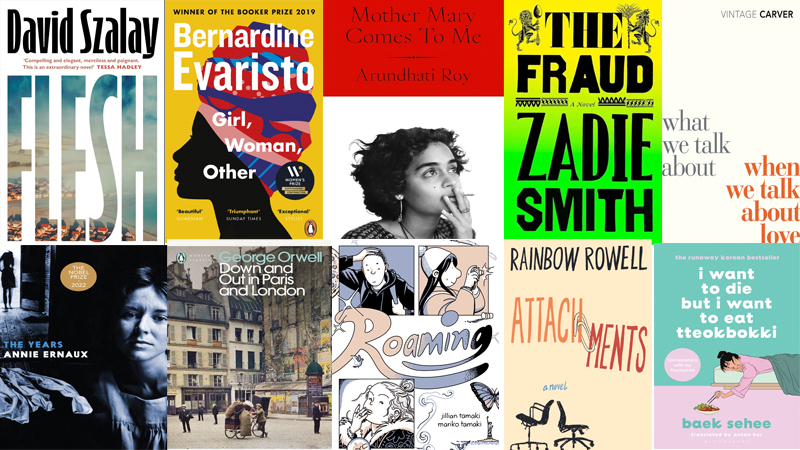
1. Flesh by David Szalay

Szalay’s novel follows a male protagonist drifting through sex, work, and power with an emotional blankness that becomes its own diagnosis. The book is an anatomy of masculine passivity, entitlement, and quiet self-destruction.
Seen against the rise of online masculinity discourse and figures emerging from the so-called manosphere, Flesh offers a far more unsettling portrait. It neither redeems nor condemns its subject. A film adaptation would succeed only if it preserved this moral discomfort, forcing viewers to sit inside a masculinity that does not announce itself as a problem.
Adaptation status: no announced screen adaptation.
2. I Want to Die, but I Want to Eat Tteokbokki by Baek Se-hee

First published in 2018, this book documents therapy sessions addressing depression, medication, and stigma in South Korea. Baek Se-hee has unfortunately passed away, yet the book’s popularity has endured.
Its appeal lies in its ordinariness. There is no narrative breakthrough, only repetition and honesty. A restrained film adaptation could offer a rare depiction of mental health that avoids both melodrama and uplift, while also opening a culturally specific conversation rarely shown on screen.
Adaptation status: no confirmed adaptation.
3. Attachments by Rainbow Rowell

Despite the current enthusiasm for romantic adaptations, this novel has yet to be adapted for the screen. Told largely through monitored workplace emails, it follows an IT employee who falls in love with someone he has never met.
It is a romance shaped by surveillance, distance, and ethical unease. In an era of digital intimacy and algorithmic proximity, this would make a sharp, contemporary romantic film that understands how affection now develops indirectly.
Adaptation status: previously optioned, not produced.
4. What We Talk About When We Talk About Love by Raymond Carver

This short story collection is built on silence, miscommunication, and emotional failure. Its minimalism is cinematic rather than literary, relying on what is withheld rather than explained.
A film adaptation in vignette form could capture this accumulation of small disappointments. It would resist plot in favour of mood and implication, demanding patience rather than rewarding it.
Adaptation status: individual stories adapted; no definitive feature adaptation of the collection.
5. The Fraud by Zadie Smith

Published in 2023, this is Zadie Smith’s first historical novel. Set around the Victorian Tichborne Trial, it examines race, class, authorship, and credibility in a society obsessed with legitimacy.
Though intellectually dense, it has a strong narrative frame and vivid historical texture. A film adaptation could streamline its arguments while preserving its central concern: who gets believed, and why.
Adaptation status: no announced adaptation.
6. Roaming by Jillian Tamaki and Mariko Tamaki

This graphic novel follows three university friends as they drift through New York, capturing the emotional slackening that defines early adulthood.
Its visual language and episodic structure already resemble cinema. A film adaptation could thrive as a quiet coming-of-age story focused on atmosphere rather than transformation.
Adaptation status: no announced adaptation.
7. The Years by Annie Ernaux

Ernaux’s collective autobiography rejects traditional narrative, moving instead through memory, photographs, and shared cultural experience.
A recent stage adaptation showed that the book can survive translation across forms. A film version would need to embrace fragmentation and essayistic techniques, but the result could be formally daring and emotionally precise.
Adaptation status: stage adaptations exist; no major film announced.
8. Girl, Woman, Other by Bernardine Evaristo

This polyphonic novel traces the interconnected lives of Black British women across generations. Its modular structure suits screen adaptation, particularly ensemble formats.
While television may be the natural home, a carefully constructed film could foreground its thematic coherence without flattening difference.
Adaptation status: a screen adaptation has been announced and is in development.
9. Mother Mary Comes to Me by Arundhati Roy

Published in 2024, this memoir explores Roy’s relationship with her mother, politics, faith, and personal history. It is intimate, uncompromising, and formally loose.
A film adaptation would need to avoid biopic conventions in favour of reflection and contradiction. It would appeal to audiences comfortable with ambiguity rather than narrative closure.
Adaptation status: no announced adaptation.
10. Down and Out in Paris and London by George Orwell

Orwell’s account of poverty and precarious labour remains unsettlingly current. Its depiction of invisible work and social indifference resonates strongly in an age of gig economies and housing insecurity.
A modern adaptation could retain its period setting while making its relevance unmistakable. Darkly comic and ethically sharp, it is overdue for a serious cinematic reimagining.
Adaptation status: adapted previously; no recent major adaptation announced.
Books that adapt well are not necessarily plot-driven but structurally honest. They trust audiences to tolerate discomfort, ambiguity, and silence. If cinema is serious about reflecting contemporary life, fractured, anxious, plural, these are exactly the stories it should be brave enough to attempt.
* Note: These books are not in any particular order

MUNICH: When cinema’s gold standard collides with live television’s breakneck pace, something’s got to give. ARRI, the century-old German camera maker beloved by Hollywood directors, is betting it doesn’t have to be image quality.
The company has named The HELM, a Sydney-based live production specialist, as its first global live solution partner—a move that formalises years of collaboration and signals ARRI’s serious push into real-time broadcasting.
The partnership puts ARRI’s Alexa 35 Live multicam system, which marries the firm’s celebrated colour science with live workflow demands, into productions worldwide as a managed service.
For The HELM, founded just two years ago but staffed by veterans with 80 years of combined experience, the deal is both validation and accelerant. The outfit has already deployed Alexa 35 Live cameras across high-profile gigs: Canelo Álvarez’s pay-per-view boxing bout in Riyadh, the TikTok Creator Awards broadcast, Troye Sivan’s concert tour, and various corporate affairs.
Now it becomes ARRI’s go-to integrator for anyone wanting cinematic visuals without the usual headaches of wrangling film-grade kit into live environments.
“We’re empowering broadcast and event producers to deliver the unmistakable ARRI look in real time,” says Chris Richter, managing director at ARRI.
Translation: no more choosing between the lush imagery of cinema and the unforgiving demands of live television.
Co-founder and chief executive of The HELM, Josh Moffat, calls it “the natural evolution” of a relationship built on countless productions. The firms will now collaborate on marketing, technical development, training and pilot projects—essentially turning The HELM into ARRI’s live production laboratory.
The logic is straightforward. ARRI’s cameras have collected 20 scientific and technical awards from the Academy of Motion Picture Arts and Sciences, but live broadcasting is a different beast: tighter deadlines, zero room for error, crews that need plug-and-play solutions. By handing integration to The HELM, ARRI lowers the barrier to entry whilst offloading operational risk.
The arrangement also gives productions a single point of contact for global solutions, from concert touring to major sporting broadcasts. Think of it as cinema-quality-as-a-service, with The HELM doing the heavy lifting on connectivity, technical design and operational delivery across continents.
For an industry perpetually chasing sharper pictures and faster turnarounds, it’s a marriage of convenience that could reshape live production. Hollywood looks are going live. And going global.

Mukesh Ambani, Larry Fink come together for CNBC-TV18 exclusive

Nielsen launches co-viewing pilot to sharpen TV measurement

Netflix celebrates a decade in India with Shah Rukh Khan-narrated tribute film

Delhivery chairman Deepak Kapoor, independent director Saugata Gupta quit board

Meta appoints Anuvrat Rao as APAC head of commerce partnerships

Brnd.me enters Europe as haircare brands power global expansion

TechnoSport taps quick commerce with launch on Slikk’s 60-minute platform

These ’90s fashion trends are making a comeback in 2017
The final 6 ‘Game of Thrones’ episodes might feel like a full season
According to Dior Couture, this taboo fashion accessory is back
The old and New Edition cast comes together to perform
Phillies’ Aaron Altherr makes mind-boggling barehanded play
Uber and Lyft are finally available in all of New York State
Disney’s live-action Aladdin finally finds its stars
Mukesh Ambani, Larry Fink come together for CNBC-TV18 exclusive
Nielsen launches co-viewing pilot to sharpen TV measurement
Netflix celebrates a decade in India with Shah Rukh Khan-narrated tribute film
Delhivery chairman Deepak Kapoor, independent director Saugata Gupta quit board
Meta appoints Anuvrat Rao as APAC head of commerce partnerships
Brnd.me enters Europe as haircare brands power global expansion
TechnoSport taps quick commerce with launch on Slikk’s 60-minute platform
-
 News Broadcasting1 day ago
Mukesh Ambani, Larry Fink come together for CNBC-TV18 exclusive
-
 iWorld5 days ago
Netflix celebrates a decade in India with Shah Rukh Khan-narrated tribute film
-
 I&B Ministry3 months ago
India steps up fight against digital piracy
-
 iWorld3 months ago
Tips Music turns up the heat with Tamil party anthem Mayangiren
-
 MAM1 day ago
Nielsen launches co-viewing pilot to sharpen TV measurement
-
 iWorld12 months ago
BSNL rings in a revival with Rs 4,969 crore revenue
-
 MAM3 months ago
HoABL soars high with dazzling Nagpur sebut
-
 News Broadcasting2 months ago
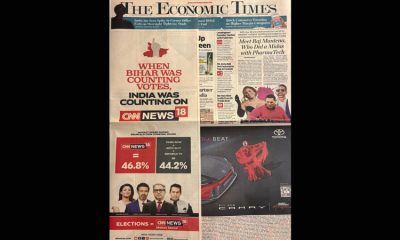
CNN-News18 dominates Bihar election coverage with record viewership