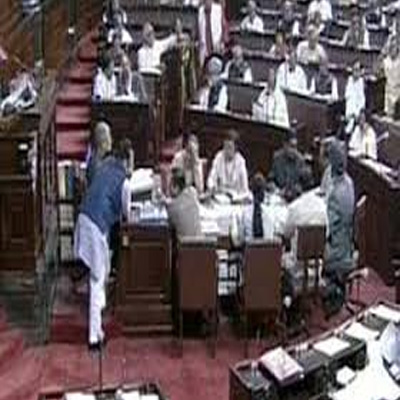
NEW DELHI: Introducing a Bill making it mandatory for private broadcasters to share the feed of live telecast of sports events with Prasar Bharati, Information and Broadcasting Minister Priyaranjan Dasmunsi told the Lok Sabha the legislation was aimed at replacing an ordinance promulgated last month in the interest of millions of viewers who had the facility of only terrestrial or free-to-air channels to enjoy live sports events of national and international importance.
The Sports Broadcasting Signals (Mandatory Sharing with Prasar Bharati) Bill 2007 will have retrospective effect from November 2005 when the Uplinking and Downlinking Guidelines had been issued.
The Bill is expected to come up for consideration and passing towards the end of next week, after the Lok Sabha finishes discussion on the Motion of Thanks to the President to the Joint Sitting of both Houses on the opening day of the Budget session.
The ordinance was promulgated after Nimbus Communications refused to share live feed of the India-West Indies one-day series with Doordarshan after the Delhi High Court passed an order for a seven-minute deferred telecast signal to the public broadcaster and live broadcast on All India Radio.
Dasmunsi, in a statement giving reasons for promulgation of the Ordinance, said the government was only reiterating an earlier order making sharing of live feed of sports events with Doordarshan mandatory.
The statement of objects and reasons appended to the Bill said the public broadcaster Doordarshan covered 98 per cent of the population and was the only network having terrestrial rights of broadcasting.
Distribution of broadcasting signals of sporting events of public interest in India is characterised by a few dominant exclusive rights holders or broadcasters and distribution platforms. “The end result is that a large number of listeners and viewers in India, especially those who do not have access to satellite and cable TV and most of which are in rural areas are denied access to these events,” the Bill states.
Under the Bill, television channels that fail to comply would have to pay a penalty up to Rs 10 million and also face possible revocation or suspension of license. It has also been stipulated that no action of the government would be challenged in any court of law.
The Guidelines for downlinking of TV channels had been issued on 11 November, 2005 and the Uplinking Guidelines had been issued on 12 December, 2005.
These Guidelines are already the subject matter of the petition in the Delhi High Court by Nimbus Communications on the Indo-West Indies series telecast.
Nimbus, which owns Neo Sports channel, had expressed apprehensions that the government may resort to coercive methods for sharing their exclusive feed.
The Bill provides for a revenue sharing formula between private and public broadcasters. Advertisement sharing between private and the public broadcasters would be in the ratio of 75:25 in case of TV coverage in favour of the rights holder and 50:50 in case of radio coverage.
Leave a Reply