
GECs
Bigg Boss creators unpack how the 800-day juggernaut rules screens nationwide

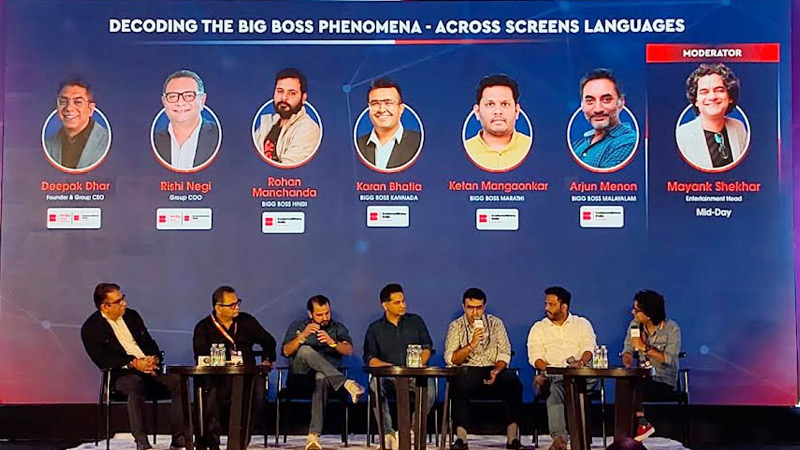
MUMBAI: If reality TV had a heartbeat, Bigg Boss would be the one thundering at 800 beats a year. And yes, you read that right 800 days of Bigg Boss in a 365-day calendar. Even its own creators admit they have to repeat that number because investors assume they misheard. But as Deepak Dhar, founder and group CEO of Banijay Asia & EndemolShine India, told a packed room at the Vidnet Summit 2025, the goal now is even more outrageous: “We want to hit 1,000 days, we’re not stopping.”
At the Masterclass titled Decoding the Bigg Boss Phenomena – Across Screens & Languages, Dhar traced a journey that began in 2005 with raised eyebrows and raised temperatures. “People thought I was mad,” he laughed, remembering being told Bigg Boss was “sleaze” and “semi-porn” when he flew to Amsterdam to buy the format. The original versions from the UK, US and Australia were “really out there,” so his mission was clear: Indianise it before India rejected it.
The first battle was the name. “I told them I’m not calling it Big Brother, I’m calling it Bigg Boss,” Dhar said. The Amsterdam executives, baffled at losing their precious title fee, gave in. Months later he called again: “My Bigg has a double G.” A bigger shock, an extra G and the birth of a phenomenon that would redefine Indian reality TV.
From there, localisation became the backbone. Sets, hosts, housemates, tasks everything looked Indian, felt Indian and sounded like someone’s mother, chachi or maasi would happily watch it at 9 pm. Dhar calls this approach “making the global format walk in local shoes”.
Moderator Mayank Shekhar, who once spent 24 hours inside the Bigg Boss house with 39 journalists, declared the show a “huge, huge social experiment”. “By the end of the day, we were all fighting,” he said. “There’s something in the goddamn format. You can’t script that.”
Rishi Negi, Group COO, explained the philosophy that has kept the format fresh across two decades and six major languages: evolve endlessly, but never touch the core.
Isolation stays isolation. No interference stays no interference. Whether it’s Hindi or Malayalam, Bigg Boss follows its commandments “to the T”.
Negi revealed that 24×7 live streams, once an experiment at midnight in 2008 are now a fandom ritual. “You’ll be surprised how many people watch it. Viewership even peaks at 12 or 1 am when people return from parties and start discussing Bigg Boss.” A 20-minute delay keeps out the language that shouldn’t escape to air.
Today the format reaches a staggering 500 million viewers annually, nearly half of India’s TV universe. And the multilingual versions are no less dramatic.
Mudit Vinayak (Bigg Boss Telugu) broke it down: the real magic is the casting. “Get your casting right and you’ve got a hit show.” Telugu audiences, he said, want balance emotion, comedy, drama and action, “not too much fighting”.
Karan Bhatia (Bigg Boss Kannada) said Karnataka treats the show like a state festival. “Even the DCM tweets about it,” he said, adding the audience loves rooted heartland characters who evolve over the season.
Ketan Mangaonkar (Bigg Boss Marathi) called Maharashtra “a difficult market” because viewers also watch the Hindi version and expect Marathi shows to match its glamour but with local soul. Casting becomes a cultural chessboard, juggling Mumbai, Pune, Vidarbha, Khandesh and Western Maharashtra, each with its own dialect and attitude. “People want national Marathi celebrities with regional flavour,” he said.
Across the table, Arjun Menon (Bigg Boss Malayalam) nodded each region has its own appetite. In Malayalam, it’s debates. Lots of them. That becomes part of the show’s signature.
Meanwhile, in Hindi, Rohan Manchanda said what matters most is the arc. “It’s the journey and the story inside the house. Some contestants just resonate more.”
Salman Khan in Hindi. Mohanlal in Malayalam. Kichcha Sudeep in Kannada. Nagarjuna in Telugu. Ritesh Deshmukh in Marathi.
Each brings a regional swagger, not just celebrity wattage.
Kichcha watches every second of the live feed, said Bhatia. Nagarjuna is the “pole star” in Telugu, guiding housemates through their weekly moral compass. Ritesh, Mangaonkar said, is “Bhau”, soft-spoken but firm, a total contrast to Mahesh Manjrekar’s “Dada” energy from earlier seasons.
When asked about favourite contestants, Dhar didn’t name winners. He named stories. Imam Siddiqui, “the terror of the house”; Sunny Leone, whose stint launched a Bollywood career. Negi cited Rakhi Sawant and Shehnaaz Gill icons born inside those walls. Mudit and Rohan added Gautam Gulati, Siddharth Shukla, MC Stan, Elvish stories that “bare it all”.
Because in the end, Bigg Boss isn’t only a show. It’s India’s loudest mirror.
Across languages, across screens, across sensibilities, the show has transformed into a 1,000-day ambition, a cultural beast that feeds on region, character, audience and chaos.
Or as the panel joked, “Half the country says they don’t watch Bigg Boss which is exactly how you know they absolutely do.”





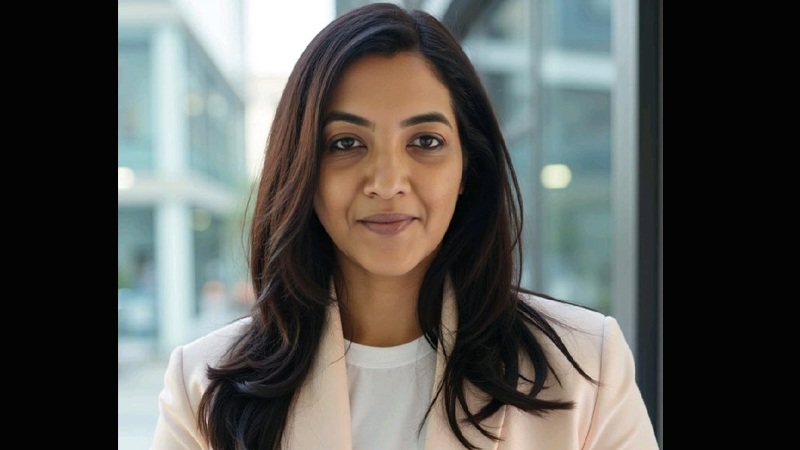
MUMBAI: Zee Entertainment Enterprises Limited has appointed Aparna Ramachandran as EVP and head of network digital, signalling a sharper focus on strengthening its digital and streaming ecosystem.
Ramachandran joins Zee from Balaji Telefilms, where she served as head of digital originals, leading content strategy and production for the company’s digital platforms. She announced the move on LinkedIn, marking a new chapter in her career spanning more than 15 years across media, entertainment and technology.
Her professional journey includes senior roles at Viacom18 Media, Viu, FremantleMedia, Miditech, BigSynergy, BBC Worldwide, CNBC-TV18 and Bloomberg UTV. She began her career in 2005 as a software engineer at Infosys before transitioning into media and digital content leadership.
With experience across streaming media, broadcast television, content development, digital strategy, project management and video production, Ramachandran is expected to play a key role in shaping Zee’s network-wide digital growth and content innovation.
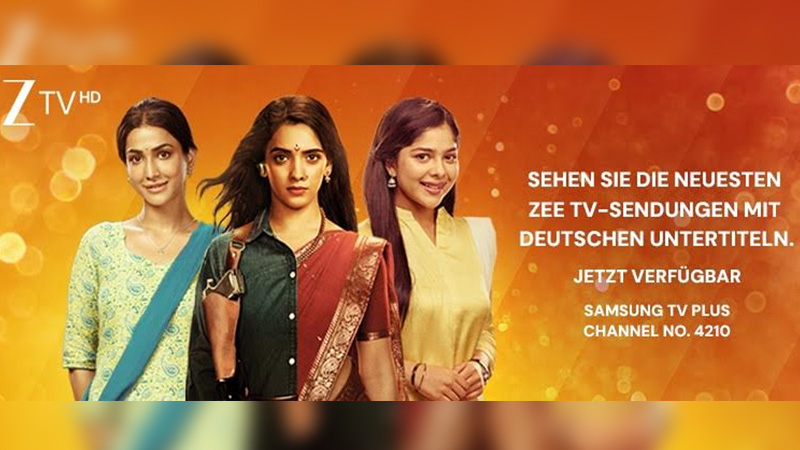
London: Zee Entertainment has launched its flagship Zee TV as a live FAST channel on Samsung TV Plus across Germany, Austria and Switzerland, marking a first for South Asian television in Europe with round-the-clock live German subtitles.
The move takes Zee TV beyond its core diaspora audience and into the German-speaking mainstream, offering dramas, reality shows and family entertainment without subscriptions or language barriers. For FAST platforms, it sets a new benchmark in accessibility and scale.
Amit Goenka, president, international and digital businesses at Zee Entertainment, said the launch marked a turning point in the company’s global strategy.
“Zee TV Germany is a flagship launch and a defining moment in our journey to make entertainment truly borderless. By going live on Samsung TV Plus with 24/7 German subtitles, we are breaking language barriers and setting a new international benchmark for FAST streaming,” he said, adding that the partnership reflects Zee’s ambition to lead the FAST revolution through innovation and technology.
The rollout builds on the strong regional presence of Zee One and Zee5, both of which have cultivated loyal audiences across the DACH markets. The live FAST model now closes long-standing access gaps, particularly for younger diaspora viewers and first-time German-speaking audiences.
Samsung TV Plus said the partnership deepens its content portfolio in the region. Benedict Frey, country lead DACH and Benelux at Samsung TV Plus, said the addition strengthens its South Asian offering while widening appeal.
“Launching flagship Zee TV on Samsung TV Plus brings even more premium South Asian entertainment to our customers. Making this content available with live German subtitles is a meaningful step in serving diverse audiences and enriching the viewing experience,” he said.
Samsung TV Plus is Samsung’s free ad-supported streaming service, offering hundreds of live channels and on-demand titles across Samsung TVs, Galaxy devices and smart monitors.
Zee already commands a strong digital following across Germany, Austria and Switzerland, with social platforms engaging hundreds of thousands of viewers. The live FAST launch is expected to amplify reach and drive appointment viewing at scale.
Zee TV is now available exclusively on Samsung TV Plus in Germany on channel 4210. With this launch, Zee TV Germany becomes the group’s ninth channel in Europe.
The signal is clear: FAST has gone mainstream—and Zee has arrived early, translated and ready to scale.
MUMBAI: Sri Adhikari Brothers Television Network has formally adopted a new corporate identity, rechristening itself Aqylon Nexus Limited after receiving clearance from the ministry of corporate affairs.
The company has informed the Bombay Stock Exchange that the MCA has approved the change of name, with effect from January 23, 2026. The update was disclosed in compliance with Regulation 30 of the Securities and Exchange Board of India’s Listing Obligations and Disclosure Requirements Regulations, 2015.
Confirming the approval, the company said the ministry had cleared the transition from Sri Adhikari Brothers Television Network Limited to Aqylon Nexus Limited following the necessary regulatory process.
Aqylon Nexus said it has begun the formal exercise of replacing the old name across statutory filings and regulatory records. The broadcaster added that it is coordinating with relevant authorities and departments to complete the transition.
Under Section 12 of the Companies Act, 2013, the MCA has directed the company to continue displaying its former name alongside the new one for a period of two years.
Founded in 1994 and based in Mumbai, the company has been a long-standing presence in India’s television and content ecosystem. The rebrand reflects a repositioning effort as the media and entertainment sector undergoes rapid consolidation and structural change.
The legacy name remains on paper—for now. The business, however, is clearly turning the page.

Netflix celebrates a decade in India with Shah Rukh Khan-narrated tribute film

Delhivery chairman Deepak Kapoor, independent director Saugata Gupta quit board

Meta appoints Anuvrat Rao as APAC head of commerce partnerships

Brnd.me enters Europe as haircare brands power global expansion

TechnoSport taps quick commerce with launch on Slikk’s 60-minute platform

Jitendra Singh joins Reliance Industries as senior vice president, special projects

Tinder brings real-world dating experiences to North East India

These ’90s fashion trends are making a comeback in 2017
The final 6 ‘Game of Thrones’ episodes might feel like a full season
According to Dior Couture, this taboo fashion accessory is back
The old and New Edition cast comes together to perform
Phillies’ Aaron Altherr makes mind-boggling barehanded play
Uber and Lyft are finally available in all of New York State
Disney’s live-action Aladdin finally finds its stars
Netflix celebrates a decade in India with Shah Rukh Khan-narrated tribute film
Delhivery chairman Deepak Kapoor, independent director Saugata Gupta quit board
Meta appoints Anuvrat Rao as APAC head of commerce partnerships
Brnd.me enters Europe as haircare brands power global expansion
TechnoSport taps quick commerce with launch on Slikk’s 60-minute platform
Jitendra Singh joins Reliance Industries as senior vice president, special projects
Tinder brings real-world dating experiences to North East India
-
 iWorld3 months ago
Tips Music turns up the heat with Tamil party anthem Mayangiren
-
 iWorld12 months ago
BSNL rings in a revival with Rs 4,969 crore revenue
-
 I&B Ministry3 months ago
India steps up fight against digital piracy
-
 MAM3 months ago
HoABL soars high with dazzling Nagpur sebut
-
 News Broadcasting4 days ago
Palki Sharma leaves Firstpost: Reports
-
 iWorld2 days ago
Netflix celebrates a decade in India with Shah Rukh Khan-narrated tribute film
-
 News Broadcasting6 months ago
Wion marks Independence Day with global showcase of India’s spirit
-
 iWorld3 months ago
The Night Manager returns with new secrets, new spies and old scars