
e-commerce
Beyond 3D: What virtual commerce industry expects from technology

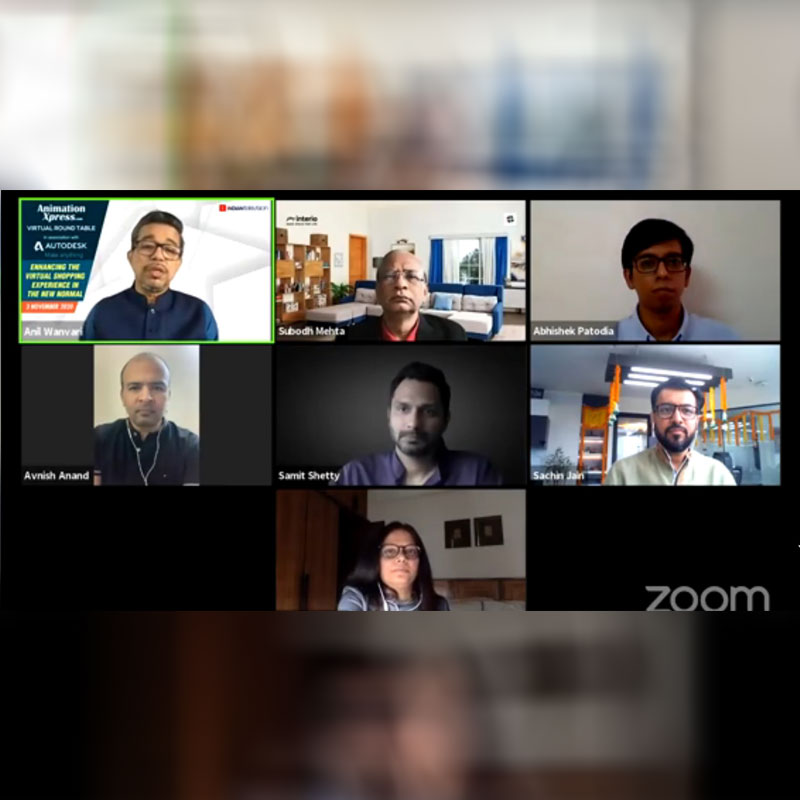
NEW DELHI: The new-age Indian consumer wants the ease of shopping coupled with the element of traditional look and feel. To cater to this, technology players need to curate solutions that can seamlessly merge the online and offline worlds, as per industry leaders at AnimationXpress.com’s virtual roundtable in association with Autodesk.
Moderated by Indiantelevision.com founder, CEO, and editor-in-chief Anil Wanvari, the panel discussed how to enhance the virtual shopping experience in the new normal and comprised stalwarts like Carwale SVP (used cars) Abhishek Patodia, Caratlane co-founder and online head Avnish Anand, Hometown CMO Medha Tawde, De Beers India MD Sachin Jain, Autodesk India senior technical sales specialist – media and entertainment Samit Shetty, and Godrej Interio SVP (B2C) Subodh Mehta.
Tawde noted that in the furniture industry, it is very important to help consumers visualise the pieces in physical spaces and that’s where the mock rooms in their stores are playing a key role in conversions. She is expecting the technology will bring these visual experiences to life virtually.
Mehta suggested, “I would like to tell the technology players that if you really want to create the best virtual experiences, you need to chart out a platform-agnostic customer journey, including the physical experiences, and then pick up those touch-points and create a similar virtual experience. For example, we have store walkthroughs and we have noticed that people themselves like to touch and feel the furniture, they want to open the drawers themselves and see how much space is in there; so we need to replicate it virtually too. The control should be in the hands of the customer.”
He added that ultra-advanced technologies like scanning physical spaces to take measurements and then using 3D imagery to show how a particular piece of furniture would look in that area, whether it will fit or not, etc, need to be taken care of.

Speaking about the jewellery industry, Anand observed that the stumbling block they encounter is how to maintain the authenticity of size and material when using 3D rendering. This is the area where he is counting on some support from tech players.
Elaborating the pain points, he said, “It is hard to shoot jewellery because it is shiny. You have to manually edit each piece to make it look hard and the problem with that is that it starts looking fake. Another issue, especially for brands like us operating in the sub-30 category, is with the size of the jewellery. We sell very small pieces but in imagery, it has to be made to look bigger. And that’s also one of the biggest reasons why the return-rate is high in this segment because people are expecting some other size. That is the fundamental problem that needs to be addressed today.”
However, what has been working really well for the e-commerce industry is the video feature that has solved a lot of problems for the sellers as well as the buyers.
Patodia shared that they recently introduced the option for sellers of second-hand cars to upload a video of the vehicle on their platform, which has driven up their number of online consumers.
Anand and Tawde also agreed that video calling features and assistance has helped them greatly in scaling their businesses online, especially during the Covid2019 lockdown.
Taking cognisance of all the suggestions coming from e-commerce players, Shetty stated that Autodesk is already working on enhancing the experience of virtual selling for both the buyers and the sellers. He highlighted that their focus remains on maintaining and improving the speed and efficiency of their solutions.
“To give you an example, we are working with a jewellery client abroad, who is using our solutions to tweak the design of a particular piece virtually, helping customers to customise their piece and see in real-time how it will look,” he stated.
During the lockdown, there have been a number of interventions from Autodesk to support the virtual commerce community and Shetty is further trying to improve on those aspects as well. “We made our group conversation tool Shotgun free for all our clients who were working from home to accelerate the communication process. Then, our software like Maya and Max are helping a lot of our clients in real-time 3D rendering processes. We are continuously trying to improve on those offerings,” he concluded.



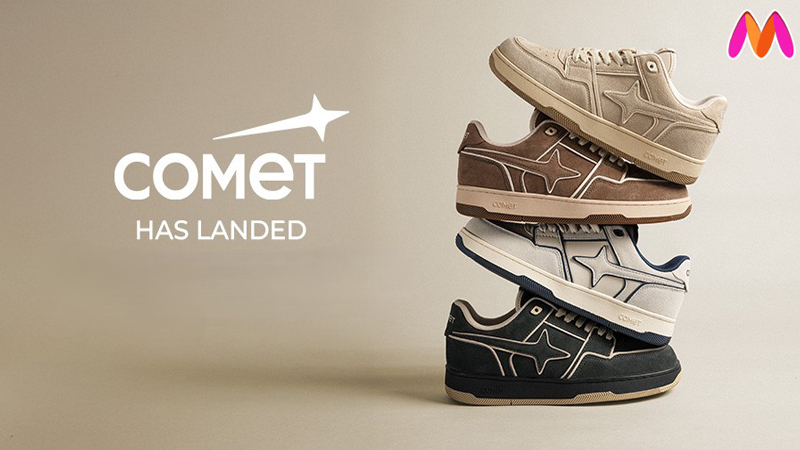
BENGALURU: Culture-first sneaker label Comet has entered Indian e-commerce with its debut on Myntra, bringing over 40 footwear styles to the fashion platform’s 75 million monthly active users. The move marks Comet’s first online retail partnership as it looks to scale beyond its direct-to-consumer roots.
The launch features the brand’s popular ranges including X Lows, Aeon V2 and Alter, alongside an exclusive new design, X Lows Polaris, available only on Myntra. The collaboration strengthens Myntra’s growing sneaker portfolio aimed at Gen Z and millennial consumers drawn to streetwear culture and design-led brands.
Myntra head of category and revenue Ritesh Mishra, said Comet’s sharp design language and community-driven approach aligned with the platform’s focus on trend-forward labels shaping India’s contemporary sneaker culture.
Comet co-founders Utkarsh Gupta and Dishant Daryani said the partnership would help the brand reach a wider audience while staying rooted in its product-first philosophy and close customer engagement.
Built on the ethos “Never shy, never sorry”, Comet has gained traction for bold silhouettes, vibrant colourways and limited-edition drops inspired by cultural nostalgia and storytelling. The Myntra debut signals the brand’s next phase of growth in India’s fast-evolving sneaker and streetwear market.

SEATTLE: Amazon has closed 2025 with robust fourth-quarter growth across its core businesses, even as spending on sales, marketing and infrastructure continued to climb. The company reported a 14 per cent rise in Q4 net sales to $213.4 billion, driven by solid momentum in North America, International markets and a sharp acceleration at AWS.
Sales and marketing expenses rose 8.7 per cent year on year to $14.3 billion in the quarter, reflecting sustained investment in customer acquisition and brand reach. For the full year, the bill climbed 7.3 per cent to $47.1 billion.
AWS remained the standout performer, with revenue jumping 24 per cent to $35.6 billion in the quarter, its fastest pace in more than three years. North America sales grew 10 per cent to $127.1 billion, while International revenues climbed 17 per cent to $50.7 billion, aided partly by favourable currency movements.
Operating income rose to $25.0 billion in Q4, up from $21.2 billion a year earlier, though the figure was weighed down by special charges linked to tax settlements in Italy, severance costs and asset impairments tied largely to physical stores. Excluding these, operating profit would have reached $27.4 billion.
Net income increased to $21.2 billion, or $1.95 per share, compared with $20.0 billion a year ago.
For the full year 2025, Amazon posted 12 per cent growth in net sales to $716.9 billion. AWS revenues climbed 20 per cent to $128.7 billion, while North America and International segments grew 10 per cent and 13 per cent respectively. Operating income expanded to $80.0 billion, with AWS contributing more than half of the total.
Cash generation strengthened, with operating cash flow rising 20 per cent to $139.5 billion. Free cash flow, however, fell sharply to $11.2 billion as capital spending surged, largely reflecting heavy investment in artificial intelligence infrastructure.
President and chief executive officer Andy Jassy, said demand across cloud services, advertising, retail and emerging technologies such as AI chips, robotics and low-earth-orbit satellites remained strong. He added that Amazon plans to invest around $200 billion in capital expenditure in 2026 to support long-term growth.
The company also pointed to a wave of new AWS partnerships, spanning clients such as OpenAI, Visa, the NBA, BlackRock, Salesforce, Adobe, HSBC and the London Stock Exchange Group, underscoring cloud demand across industries.
e-commerce
Flipkart elevates Aditya Maheshwari as head of category and P and L for toys, stationery and babycare
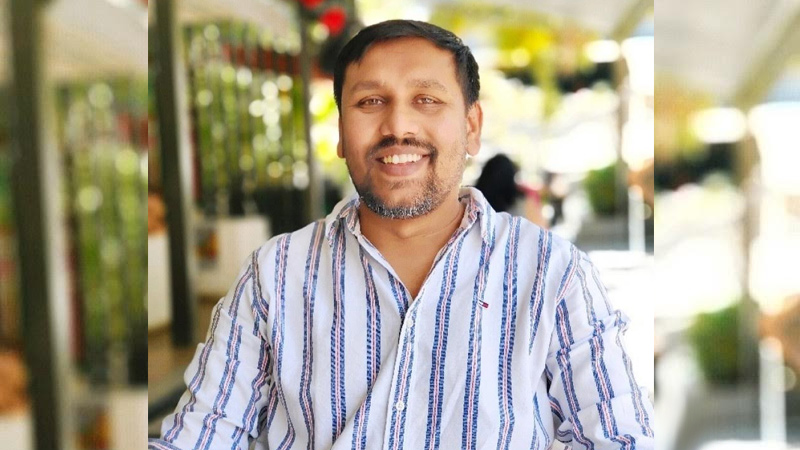
BENGALURU: Flipkart has elevated Aditya Maheshwari to head of category and P and L for toys, stationery and babycare, placing him in charge of end-to-end business strategy and financial performance across the high-growth segments.
The move follows a four-year stint at the e-commerce major, where Maheshwari served as category head for toys and stationery and associate director for beauty and personal care. During this period, he played a key role in strengthening Flipkart’s position across multiple consumer categories through scale-driven portfolio management.
Maheshwari brings deep experience across India’s startup and e-commerce ecosystem. Prior to his current elevation, he previously worked at Flipkart as a category manager and business development lead in the early phase of his career.
He is also the co-founder of Packflea.com and has held leadership roles including head of alliances at Xoxoday and head buyer at Gozefo.com. His early experience in procurement and sourcing spans platforms such as Giftxoxo.com and buytheprice.com.
With a strong track record of managing large P&Ls and building scalable category businesses, Maheshwari is now set to spearhead Flipkart’s strategic expansion in toys and babycare.


MIB sets OTT accessibility rules, mandates captions and audio description

Boney Kapoor acquires remake rights of Tamil political satire Thalaivar Thambi Thalaimaiyil

Netflix India names Rekha Rane director of films and series marketing

Zabeen signs off from TV9 after shaping the network’s public voice

Dhawan steps up to bat for Delhi’s grassroots sports push

Orient Beverages pops the fizz with steady Q3 gains and rising profits

Cheekatilo shines in the dark with record debut on Prime Video

These ’90s fashion trends are making a comeback in 2017
The final 6 ‘Game of Thrones’ episodes might feel like a full season
According to Dior Couture, this taboo fashion accessory is back
The old and New Edition cast comes together to perform
Phillies’ Aaron Altherr makes mind-boggling barehanded play
Uber and Lyft are finally available in all of New York State
Disney’s live-action Aladdin finally finds its stars
MIB sets OTT accessibility rules, mandates captions and audio description
Boney Kapoor acquires remake rights of Tamil political satire Thalaivar Thambi Thalaimaiyil
Netflix India names Rekha Rane director of films and series marketing
Zabeen signs off from TV9 after shaping the network’s public voice
Dhawan steps up to bat for Delhi’s grassroots sports push
Orient Beverages pops the fizz with steady Q3 gains and rising profits
Cheekatilo shines in the dark with record debut on Prime Video
-

 News Broadcasting1 week ago
Mukesh Ambani, Larry Fink come together for CNBC-TV18 exclusive
-

 News Headline1 month ago
From selfies to big bucks, India’s influencer economy explodes in 2025
-
 iWorld5 months ago
Billions still offline despite mobile internet surge: GSMA
-

 Applications2 months ago
28 per cent of divorced daters in India are open to remarriage: Rebounce
-

 iWorld2 weeks ago
Netflix celebrates a decade in India with Shah Rukh Khan-narrated tribute film
-

 Hollywood6 days ago
The man who dubbed Harry Potter for the world is stunned by Mumbai traffic
-
 I&B Ministry3 months ago
India steps up fight against digital piracy
-
 MAM3 months ago
HoABL soars high with dazzling Nagpur sebut
