
Hollywood
Actor Peter OToole dies after prolonged sickness

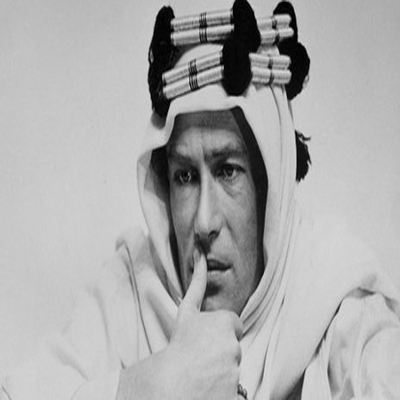
Renowned actor Peter O’Toole who hit the international scene with his 1962 film epic Lawrence of Arabia, died over the weekend in a London hospital.
He was 81. His death, which was confirmed by his agent, came after a prolonged, unspecified illness. He is survived by his children Kate O’Toole, Lorcan O’Toole, and Patricia O’Toole.
During his long career, O’Toole received eight Academy Award nominations. However, he didn’t win any. In 2003, he settled for an honorary Oscar, which he accepted with customary relish.

“Always a bridesmaid, never a bride. My foot,” he said, clutching the Oscar for lifetime achievement.
His first Oscar nomination was for his portrayal of T.E. Lawrence, the British archaeologist, soldier and adventurer who led Arab tribesmen against the Ottoman Turks during World War I. The legend that grew up around Lawrence’s exploits became a perfect creative vehicle for filmmaker David Lean.
O’Toole, who at 6-foot-2 was almost a foot taller than the enigmatic Lawrence, nevertheless seemed to capture perfectly the tortured inner life of a charismatic but conflicted rebel leader.
The film’s sublime cinematography rendered its star as a towering, gaunt Anglo-Saxon outlier who has a chiseled beauty and piercing, azure eyes. O’Toole’s acting helped make the film a classic and placed the actor in a pantheon of beloved, roguish British and Irish actors of the postwar era.
Apart from Lawrence, he received Oscar nominations for his leading roles in Becket (1964), “he Lion in Winter (1968), Goodbye, Mr. Chips (1968), The Ruling Class (1972), The Stunt Man (1980) and My Favorite Year (1982). His final Oscar nomination came in 2006, when he played an aging lothario in Venus.
Perhaps the nadir of his professional career came with a 1980 production of Macbeth that was panned so roundly it drew audiences to see how bad it was. Overwrought and hammy, his performance prompted one critic to write that Mr. O’Toole “delivers every line with a monotonous tenor bark.” Another Shakespearean actor accused Mr. O’Toole of “not trusting the author, in one of his greatest plays.”
O’Toole never fully embraced the Hollywood culture and was identified instead with a flamboyant, theatrical and hard-drinking cohort of stage and screen stars who included Richard Burton, Richard Harris and Peter Finch. O’Toole spoke with exquisite diction and careful delivery — every word seemed to have been savored.
He told The Washington Post in a 1978 interview that “my passion is language. The most satisfying thing for me is having worked with fine writers.” His voice evoked a very cultured British manner, although he was claimed by Ireland as a favorite son, and he identified himself as an Irishman. Peter Seamus O’Toole was born Aug. 2, 1932, although where is not definitively known; he said Peter Seamus O’Toole was born Aug. 2, 1932, although where is not definitively known; he said his birthplace was either Connemara in the western part of Ireland or the northern English city of Leeds, where he grew up. His father, Patrick “Spats” O’Toole, was an Irish bookmaker, and his mother, Constance Jane Eliot, a Scottish nurse.
As a teenager in the 1940s, O’Toole worked as a copy boy for an evening newspaper, but soon left and worked in the civic theater in Leeds before fulfilling his compulsory military service as a Royal Navy signalman.
As a teenager in the 1940s, O’Toole worked as a copy boy for an evening newspaper, but soon left and worked in the civic theater in Leeds before fulfilling his compulsory military service as a Royal Navy signalman.
His marriage to actress Sian Phillips ended in divorce. He is survived by two daughters from that marriage, Pat O’Toole and Kate O’Toole, and by his son, Lorcan O’Toole, by Karen Brown.
He later studied at the Royal Academy of Dramatic Arts in London and joined the Old Vic Theatre in Bristol, where he became noticed as an actor of extraordinary presence in spite of his youth and inexperience.



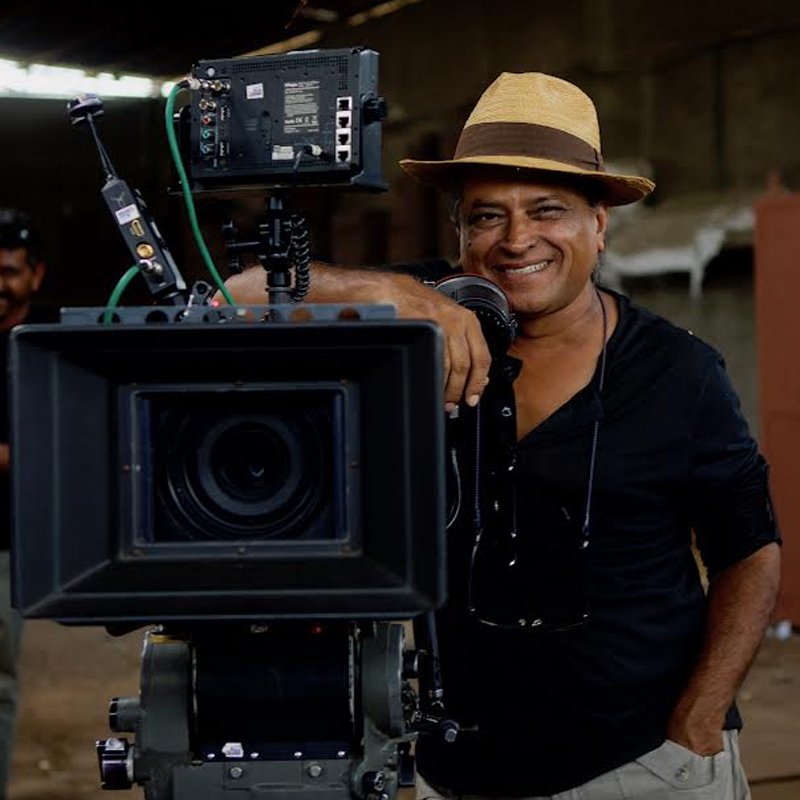



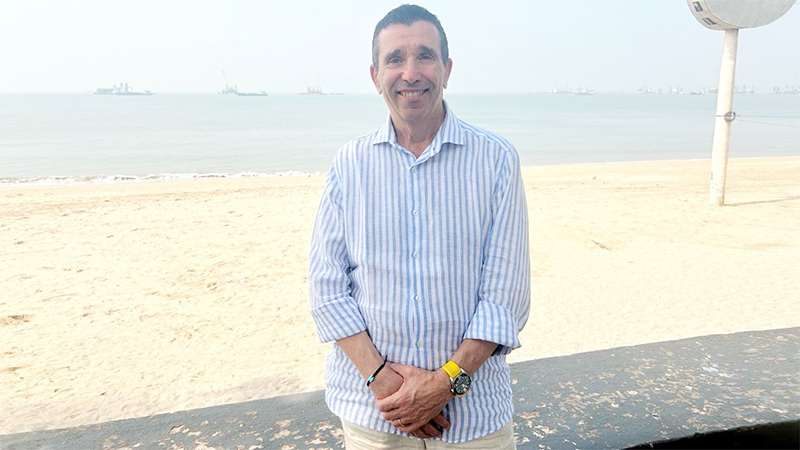
MUMBAI: Jacques Barreau has spent two decades helping Hollywood speak the world’s languages. From The Lord of the Rings to Harry Potter, the dubbing specialist at TransPerfect Media has built a career on making stories travel seamlessly across borders. Yet nothing in his global playbook quite prepared him for Mumbai’s streets.
On his first trip to India, Barreau is not sightseeing but sprinting between workshops and conferences, evangelising the craft of localisation. “I’m not enjoying it at all; I’m just working,” he says cheerfully. “Work, work, work. But I’m very happy and excited to share my knowledge. I just have to come back to discover more of India.” For now, India remains largely unseen beyond studios and seminar rooms.
The culture shock, however, has arrived in full force, on the roads.
“What surprises me is how people don’t get killed every day while riding their motorcycles in the traffic,” he says, still sounding incredulous. He has seen congestion in Vietnam, Rio de Janeiro and São Paulo. Mumbai, he insists, is another league. “Everybody is crossing in all directions. I’ve never seen anything like it in my life.”
Food, at least, poses no such puzzle. Barreau approaches Indian cuisine the way he approaches dubbing: as variation on a universal theme. “Indian food is just a local variation of world cuisines,” he shrugs. “It’s all the same with different variations. Overall, it’s all good.”
That instinct for finding common structure beneath surface difference runs through his philosophy of sound and storytelling. As a classically trained musician and jazz player, Barreau leans on ideas from The Golden Number, a book on proportion he studied at the conservatory. The same ratios, he argues, shape concertos, paintings and even a snail’s shell. Art, at its core, follows patterns.
“Proportions are very important. They’re very similar across different art forms all over the world,” he says. A concerto has an introduction, development and conclusion; so does a well-built story. The principle travels.
Voice acting, in his view, is no different from music. The task is to grasp the creator’s intent, then reinterpret it without betrayal. “I understand how a character works, then I adapt it to my language, to my culture,” he explains. Indians, Chinese and Italians do the same for their audiences. Local flavour, global skeleton.
Barreau’s mission in India is to pass on that thinking to a new generation of voice talent. The Taj Mahal remains on his wish list, deferred to a future trip. For now, the classroom calls louder than the tourist trail.
He may help films cross borders for a living, but Mumbai has reminded him that some crossings, especially at rush hour, demand more courage than craft.

MUMBAI: When the music keeps playing but fewer listeners stay on the dancefloor, it’s hard not to notice. Sony Group Corporation’s latest financial disclosures point to a sharp slowdown in paid subscriber momentum across its platform businesses, tempering an otherwise steady revenue performance.
At Sony Pictures Entertainment (SPE), operating income fell 11 per cent year on year to Rs 1,635 crore, down from Rs 1,850 crore a year earlier. Quarterly sales declined 12 per cent to Rs 19,050 crore, compared with Rs 21,740 crore in the same period last year, reflecting softer performance across films and television.
The pressure was most visible in motion pictures. Revenue from theatrical, home entertainment and streaming slid 7 per cent to Rs 6,575 crore, down sharply from Rs 9,200 crore a year earlier. While Sony released five theatrical titles during the quarter, the comparison was weighed down by the absence of a breakout hit like Venom: The Last Dance, which alone generated roughly Rs 3,970 crore in the corresponding quarter last year.
Television production revenues also weakened. The TV unit posted sales of Rs 5,960 crore, a 10 per cent decline from Rs 6,620 crore a year ago, despite a steady pipeline of scripted shows and long-running broadcast staples such as Jeopardy! and Wheel of Fortune. The numbers underline a broader challenge facing global studios: strong content output does not automatically translate into subscriber growth or retention.
The media networks business offered some relief, with revenue rising 10 per cent year on year to Rs 6,430 crore. Sony ended calendar 2025 with 535.2 million subscribers across its television channels, but the latest quarter signalled slower paid subscriber momentum across platforms, as audiences increasingly reassess subscription value amid rising costs and abundant choice.
The same theme echoed in Game & Network Services. Operating income rose 19 per cent to Rs 11,080 crore, helped by higher software sales and currency benefits. However, segment revenue dipped 4 per cent, and PlayStation 5 hardware sales fell to 8 million units, down from 9.5 million units a year earlier, a notable drop in what is typically the strongest quarter for console sales. While PlayStation Network monthly active users climbed to 132 million, up from 129 million, engagement growth has yet to fully offset softer paid conversion and hardware momentum.
In contrast, Sony’s music division struck a stronger chord. Quarterly sales climbed 13 per cent to Rs 42,320 crore, while operating income rose 9 per cent to Rs 8,300 crore, driven by robust streaming and catalogue performance across global artists. Music once again emerged as the group’s most resilient entertainment pillar.
Yet beneath the topline, Sony acknowledged a material drop in paid subscribers across parts of its networked and digital entertainment platforms, reflecting tougher consumer choices and intensifying competition.
The impact was most visible in Sony’s Game & Network Services and Pictures segments, where growth in digital services revenue was partly offset by slower subscriber additions and higher churn. While digital software and network services revenue still grew, hardware sales declined and platform engagement softened, signalling pressure on recurring subscription income
Sony’s filings show that although network services revenue rose during the period, the pace lagged earlier quarters, underlining the challenge of retaining paid users in a market increasingly crowded by global streaming, gaming and short-form content alternatives. In the Pictures business, direct-to-consumer revenues were weighed down by weaker subscriber traction, even as traditional media networks delivered modest gains.
The broader backdrop is changing consumer behaviour. With price hikes, subscription fatigue and a flood of competing platforms, users are becoming more selective about what they pay for and what they drop. Sony’s results suggest it is not immune to this shift, even as it continues to invest in content, technology and platform upgrades.
That said, Sony’s diversified portfolio offered a cushion. The Music segment posted solid growth, supported by streaming and publishing revenues, while Imaging & Sensing Solutions delivered one of the strongest performances of the year, helped by demand from smartphone and automotive customers
For now, the message is clear, Sony’s engines are still running, but the subscription gears need tightening. In an era where loyalty is rented month-to-month, even the biggest platforms are learning that keeping users paying can be harder than getting them to sign up in the first place.
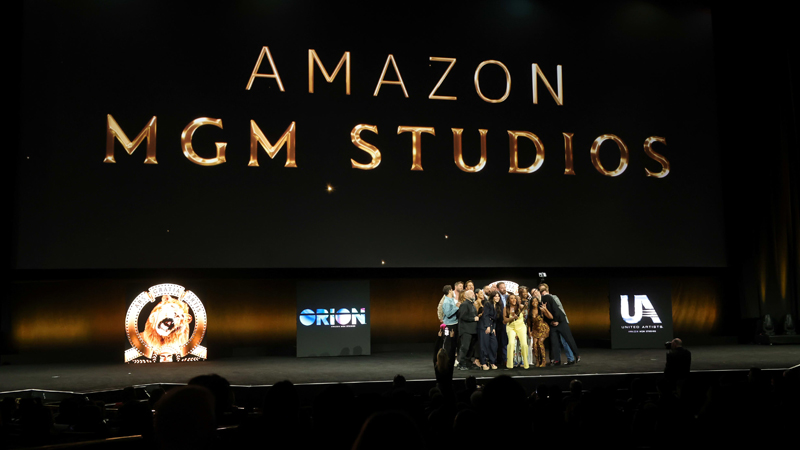
SEATTLE: Amazon is rolling out a new artificial intelligence initiative at Amazon MGM Studios to accelerate film and television production, as soaring budgets squeeze output and the entertainment industry braces for disruption.
The company has set up an internal unit dubbed AI Studio, led by Albert Cheng, a veteran entertainment executive, to develop tools designed to cut costs and fast-track creative processes. A closed beta programme will launch in March with selected industry partners, with early results expected by May.
Cheng described the unit as a small, agile “startup” operating under founder Jeff Bezos’s “two pizza team” philosophy, made up largely of product engineers and scientists alongside a smaller creative and business group.
Amazon is publicly embracing AI to tackle the rising expense of producing shows and films, which has limited the number of projects studios can fund. Cheng said the technology would accelerate production but not replace human creativity, stressing that writers, directors, actors and designers would remain involved at every stage.
The move comes amid growing unease in Hollywood, with leading actors voicing fears that AI could erode jobs and reshape the industry.
Amazon has also been pushing AI adoption across its businesses following the largest layoffs in its history, cutting around 30,000 corporate roles since October, including positions at Prime Video. The company pointed to productivity gains from AI as one factor behind the restructuring.
At Amazon MGM Studios, the AI team is focusing on tools that bridge the gap between consumer AI applications and the precision required for cinematic production, including improving character consistency across scenes and integrating with industry-standard creative software.


MIB sets OTT accessibility rules, mandates captions and audio description

Boney Kapoor acquires remake rights of Tamil political satire Thalaivar Thambi Thalaimaiyil

Netflix India names Rekha Rane director of films and series marketing

Zabeen signs off from TV9 after shaping the network’s public voice

Dhawan steps up to bat for Delhi’s grassroots sports push

Orient Beverages pops the fizz with steady Q3 gains and rising profits

Cheekatilo shines in the dark with record debut on Prime Video

These ’90s fashion trends are making a comeback in 2017
The final 6 ‘Game of Thrones’ episodes might feel like a full season
According to Dior Couture, this taboo fashion accessory is back
The old and New Edition cast comes together to perform
Phillies’ Aaron Altherr makes mind-boggling barehanded play
Uber and Lyft are finally available in all of New York State
Disney’s live-action Aladdin finally finds its stars
MIB sets OTT accessibility rules, mandates captions and audio description
Boney Kapoor acquires remake rights of Tamil political satire Thalaivar Thambi Thalaimaiyil
Netflix India names Rekha Rane director of films and series marketing
Zabeen signs off from TV9 after shaping the network’s public voice
Dhawan steps up to bat for Delhi’s grassroots sports push
Orient Beverages pops the fizz with steady Q3 gains and rising profits
Cheekatilo shines in the dark with record debut on Prime Video
-

 News Broadcasting2 weeks ago
Mukesh Ambani, Larry Fink come together for CNBC-TV18 exclusive
-

 News Headline1 month ago
From selfies to big bucks, India’s influencer economy explodes in 2025
-
 iWorld5 months ago
Billions still offline despite mobile internet surge: GSMA
-

 Applications2 months ago
28 per cent of divorced daters in India are open to remarriage: Rebounce
-

 News Headline1 week ago
JioStar announces biggest ever talent line-up for an ICC event
-

 iWorld2 weeks ago
Netflix celebrates a decade in India with Shah Rukh Khan-narrated tribute film
-
 News Headline2 months ago
Game on again as 2025 powers up a record year and sets the stage for 2030
-

 News Headline1 month ago
2025: The year Indian sports saw chaos, comebacks, and breakthroughs
