
News Headline
2025: the year AI hardwired itself into Indian media

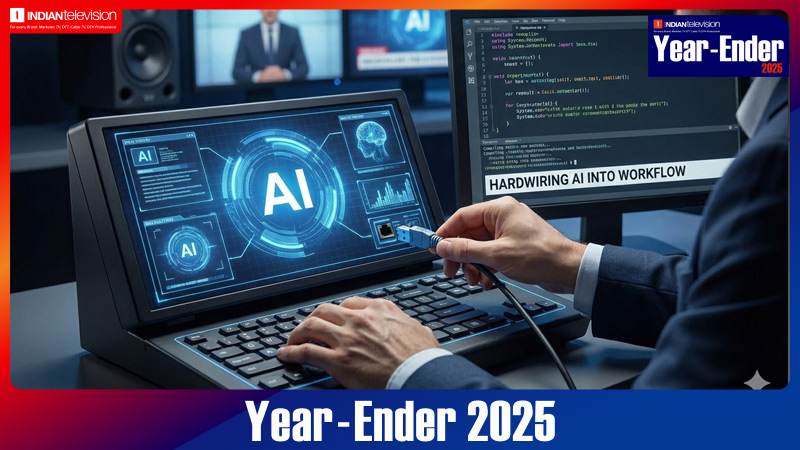
MUMBAI: The revolution didn’t announce itself with fanfare. No dramatic unveiling, no watershed moment when everything changed overnight. Instead, 2025 became the year artificial intelligence stopped being discussed in Indian media boardrooms and started quietly running the machinery-editing videos at 3 am, personalising advertisements for 360 million users, recommending content with 83 per cent accuracy, and generating marketing copy that humans no longer needed to touch.
Welcome to the AI mainstreaming: India’s media and entertainment sector embedded generative intelligence into every layer of the value chain, from content ideation to audience engagement to monetisation. The market, valued at Rs 8,534 crore in 2024, is charging toward Rs 67,183 crore by 2030 a staggering 42 per cent compound annual growth rate that reflects not hype but adoption, not experimentation but infrastructure.
By year’s end, approximately half of Indian media companies had implemented generative AI, whilst the remaining half planned adoption within 12 months. The technology delivered over 10 per cent revenue growth and 15 per cent efficiency gains, adding an estimated Rs 45,000 crore in value. EY research suggests India could capture disproportionate gains potentially $15-20 billion impact rivalling the domestic media and entertainment sector’s entire size.
Mediasmart’s chief growth officer, Nikhil Kumar, quoted “If 2025 is about AI-driven optimization, 2026 will be about AI-led orchestration”. He also added that creative intelligence would take centre stage in 2026, with AI-led dynamic creative optimisation enabling advertising to evolve in real time by adapting messaging, sequencing and formats based on context, screen and user behaviour.
The buzz didn’t disappear in 2025. It simply ceased being the most interesting part of the story. What mattered wasn’t what AI could do everyone already knew but how efficiently it had become plumbing: indispensable, integrated, invisible, and no longer optional.
Generative AI’s most visible and contentious impact landed squarely on content production. Across broadcasting, OTT platforms, advertising agencies, and production houses, AI tools transformed how stories are conceived, scripts written, videos edited, music scored, and advertisements produced.
Scriptwriting and storyboarding saw dramatic acceleration. Studios and OTT platforms deployed AI to generate story treatments, dialogue variations, and narrative outlines not to replace writers, but to compress development cycles from months to weeks. A regional Indian short film created partially with AI won Kerala State Film Awards experimental category in 2024, signalling growing acceptance. By 2025, OpenAI’s Sora assisted storyboarding across Bollywood and regional cinema, whilst music labels like T-Series experimented with AI for film scoring.
The creative output wasn’t entirely smooth. Coca-Cola faced backlash for “soulless” AI-generated holiday commercials, whilst Paramount Pictures drew criticism for using AI scripting and narration in film promotions. The lesson crystallised quickly: audiences crave human imperfection and authenticity. AI excels at scale and efficiency; humans deliver soul and nuance. The winners in 2025 were those who blended both using AI to handle repetitive tasks whilst preserving human creativity for moments that matter.
In November 2025, Pakistan’s leading daily Dawn inadvertently published an internal ChatGPT editing prompt at the end of a business report, triggering widespread attention on social media. The slip appeared in a story titled Auto sales rev up in October, published on November 12, where the final paragraph in the print edition and early digital versions included an unmistakably AI-generated line offering to create a “snappier front-page style” rewrite with punchy statistics and an infographic-ready layout. The error was later corrected, but not before screenshots of the passage circulated widely online, reigniting debate around newsroom workflows and the growing use of AI-assisted editing tools in journalism.

Video production and editing underwent wholesale transformation. AI-powered tools automated editing workflows, generated b-roll footage, applied colour grading, and even created “UGC-style” videos featuring AI avatars discussing products. Platforms like Koro turned product URLs into hundreds of ad variations within minutes, solving the “creative fatigue” problem plaguing performance marketers. What once required Rs 5,000 per month agency fees now cost pennies in compute time, with budgets redirected into media spend.
Top performance marketers generated 50-plus unique Shorts daily using AI, whilst manual editors struggled to output three per week. The bottleneck in 2025 advertising wasn’t buying media, it was producing enough high-quality, diverse creative assets to feed hungry algorithms on Instagram Reels, YouTube Shorts, and TikTok (before regulatory uncertainties clouded its future). Successful brands deployed “agentic AI” to autonomously research, generate, and test ad variations, with continuous loops monitoring return on ad spend, detecting creative fatigue, and autonomously replacing tired assets.
Multilingual content and dubbing benefited enormously. AI-powered subtitling and dubbing tools like DeepDub and Resemble AI created real-time, high-quality translations and voiceovers across India’s 22 scheduled languages. Generative AI produced content in regional languages for media, entertainment, and e-commerce, expanding digital accessibility beyond English and Hindi. For OTT platforms targeting tier-two and tier-three cities, AI-driven localisation became a competitive advantage Netflix, Disney+, and homegrown platforms like JioHotstar deployed AI to make global content feel local.
Automated journalism advanced cautiously in newsrooms. Before generative AI’s mainstream explosion, Indian media organisations used machine learning for social media monitoring, data analysis, and content archiving. By 2025, AI assisted with breaking news alerts, sports summaries, financial reports, and data-driven investigations. Tools like Google’s Fact Check Explorer and Logically combated misinformation, a growing challenge in India’s diverse digital ecosystem.

However, newsrooms approached automation with wariness. The convergence of AI and journalism, discussed extensively at Wan-Ifra’s February 2025 Bangalore AI Forum, emphasised balancing efficiency with editorial integrity. “We should be careful replacing authentic voices and real intent of storytelling with something that just saves time,” warned Ezra Eeman, AI expert at NPO Netherlands. “It’s about balancing newsroom autonomy with AI agents.” The consensus: AI is a tool, not a replacement empowering journalists whilst preserving fundamental values of journalistic integrity, transparency, and public trust.
The advertising and marketing sectors underwent perhaps the most profound AI transformation in 2025. The shift wasn’t merely adopting AI tools, it was redesigning entire workflows around algorithmic optimisation.
Creative personalisation at scale became table stakes. Brands deployed AI to generate ad copy, social media content, and personalised marketing campaigns, improving efficiency and engagement dramatically. According to McKinsey, 63 per cent of organisations utilised generative AI to create text outputs, with over one-third generating images and more than a quarter producing computer code. In India, a PwC survey revealed 70 per cent of CEOs anticipated generative AI would significantly transform value creation in personalised marketing and customer experience within three years.
EY’s “The AIdea of India: 2025” report projected productivity boosts of 41-45 per cent in content and marketing functions due to generative AI, with 71 per cent of Indian retailers planning adoption within a year. The returns proved tangible: generative AI-powered campaigns delivered 32 per cent higher ROI according to industry reports, whilst creative production costs plummeted.
WPP’s Open platform exemplified the shift toward integrated AI-marketing infrastructure. Combining strategy, creative, production, media, and analytics into unified systems, WPP Open delivered 14 extra hours back weekly for teams of four translating to 90 days saved annually. A global technology brand reduced strategy and creative development time from four weeks to three hours using the platform. The promise wasn’t just efficiency, it was better-informed creative ideas delivered faster, at scale, and lower cost.
Dynamic ad insertion and programmatic advertising reached new sophistication. AI analysed user behaviour, viewing habits, demographics, and real-time context to deliver hyper-relevant advertisements. A viewer watching travel documentaries received ads for vacation deals; fitness series viewers saw workout accessories. Same content, different ads powered by AI. According to eMarketer, OTT ad spend in 2025 exceeded $247 billion globally, with AI-driven personalisation contributing over 60 per cent of growth.
Publicis Media South Asia CEO Lalatendu Das noted that 2025 saw AI application across creative personalisation, content production at scale, consumer research, competitive analysis, data interpretation, and media optimisation. “We believe AI will not only unlock efficiency but drive significant effectiveness,” Das explained to storyboard18. The network initiated focused projects to reimagine end-to-end business processes through agentic AI whilst upskilling talent for the AI age.
From assistive to agentic marked the year’s defining transition. Assistive AI tools that help write, design, or edit gave way to agentic AI systems that act as autonomous employees. An AI agent doesn’t wait for prompts; it monitors return on ad spend, detects creative fatigue, and autonomously generates fresh variations to replace underperforming assets. This continuous loop of monitor-generate-test became 2025’s defining characteristic of modern marketing stacks.
The shift was mathematical and unavoidable. Manual ad management across Meta, Google, YouTube, and Amazon simultaneously exceeds human capacity. Algorithms make millions of calculations per second; humans cannot compete. By year’s end, marketers still manually adjusting bids or resizing images one by one were fighting losing wars against machines.
Yet despite widespread claims about autonomous agents, in practice most marketers kept AI task-based and supervised. True autonomy remained rare, with organisations preferring human oversight for risk, governance, and accountability. The appetite existed; the trust hadn’t quite caught up.
Adomantra Digital India Pvt Ltd’s founder and chief executive officer, Dr Vikas Katoch, argued that despite growing automation, the most impactful campaigns continued to rely on human influence. He said micro-influencers and local content creators remained the real connectors, delivering authenticity, cultural relevance and trust that AI could not replicate. This human presence, he added, was increasingly vital as nearly 95 per cent of consumers in smaller cities preferred regional-language content, where effective storytelling lifted conversion rates by 60–65 per cent.
India’s booming OTT sector with over 50 streaming platforms commanding hundreds of millions of subscribers became AI’s proving ground for hyper-personalisation and content discovery.

Recommendation engines dominated the viewer experience. Netflix reported that AI-powered recommendations drove 80 per cent of content watched on its platform, a level of precision built on years of algorithmic refinement. Over 80 per cent of streaming watch time globally came from AI recommendations, demonstrating personalisation’s critical role in retention. Platforms without AI-driven discovery saw engagement rates lag 50 per cent behind competitors.

The technology analysed micro-behaviours: how long users hovered over thumbnails, whether they skipped intros, viewing duration, device type, time of day, and even emotional responses at frame level. Machine learning built hyper-personalised feeds, whilst real-time adaptation adjusted recommendations instantly based on behaviour. For smaller Indian OTT players competing with global giants, adopting AI recommendations became a survival strategy keeping users engaged longer, reducing churn, and maximising catalogue coverage.
Content acquisition and production decisions benefited from AI predictive analytics. Platforms forecasted viewership for new releases based on historical data, analysed social media chatter to predict viral hits, and measured content fatigue to know when audiences might disengage. Disney+ used AI to decide release timing for Marvel series by analysing audience peaks from past launches. JioHotstar born from February 2025’s merger of JioCinema and Disney+ Hotstar deployed AI across its 100-plus channels and millions of subscribers to optimise programming schedules and content investments.
Emotional metadata analysis emerged as breakthrough innovation. Companies like Vionlabs identified emotional patterns and audience responses at frame level, unlocking niche catalogue assets previously buried by generic metadata. This increased recommendation accuracy up to 83 per cent, directly protecting platforms’ bottom lines by surfacing “dark” assets content that exists but never gets watched due to poor discoverability.
Adaptive streaming and quality optimisation relied heavily on AI. Buffering, lag, and pixelated streams are engagement killers. AI addressed this through adaptive bitrate streaming that adjusts quality automatically, predictive network optimisation detecting when internet may drop, and AI video compression reducing file sizes whilst maintaining quality. For OTT platforms in India where data costs matter and connectivity varies dramatically AI-driven quality optimisation proved essential for user retention.
Content moderation deployed AI to detect nudity, violence, hate speech, and policy violations using multi-modal analysis. Risk scoring models mapped violations across regions, ensuring compliance and user safety at scale. Live-stream safeguards included AI delay buffers, escalation workflows, and audit trails for transparent decision-making. The balance remained delicate: minimise harmful content exposure without stifling creative freedom.
Regional content discovery posed unique challenges. In India’s regional cinema market, discovery isn’t just about language it’s about cultural sentiment and celebrity-driven engagement. Platforms that failed to prioritise intelligence from sovereign content hubs in India, Saudi Arabia, and Brazil effectively ignored the fastest-growing subscription markets. AI-powered discovery systems that understood regional nuances delivered competitive advantage.
Traditional broadcasters faced an existential question in 2025: embrace AI transformation or risk obsolescence. Most chose to embrace, albeit cautiously.
Ficci Frames, an Indian media and entertainment gathering celebrating its 25th anniversary, placed artificial intelligence centre stage. Sessions on “The AI-Powered Media Revolution” and “AI & The Creator Economy” featured leaders from Meta, Google, Autodesk, and JioStar examining AI’s impact on content personalisation and interactive storytelling. The consensus: AI would reshape broadcasting’s entire workflow, but human judgment remained irreplaceable for editorial decisions, investigative journalism, and storytelling that resonates emotionally.
Broadcast workflows adopted AI for tasks like automated captioning, real-time translation, content tagging, and metadata enrichment. AI-generated multilingual summaries, keywords, and descriptors made shows more searchable and discoverable across regions. Sports broadcasters experimented with AI-generated commentary and real-time highlight reels, though purists questioned whether algorithms could capture the poetry of great commentary.
News channels approached AI with particular caution. Misinformation, deepfakes, and algorithmic bias posed existential threats to credibility. Indian news organisations invested in AI-powered fact-checking tools whilst maintaining human editorial oversight. The lesson from global controversies including criticisms of AI-generated “thought leadership” lacking depth and originality reinforced that trustworthiness cannot be automated.
Ethical concerns loomed large. Job displacement fears, copyright questions around AI-generated content, and authenticity worries prompted industry-wide discussions. The Advertising Standards Council of India enforced stricter guidelines around AI-generated content, whilst over 70 per cent of marketers and 50 per cent of creators supported mandatory content disclosures. Transparency became non-negotiable.
India’s creator economy is projected to reach $5.9 billion by 2032 experimented with AI-generated virtual influencers, though results proved mixed.
Kyra, India’s first CGI creator from Futr Studios, secured brand tie-ins with Amazon Prime Video, boAt, and others. Radhika Subramaniam, a Tamil-English AI travel influencer, blended technology with emotional storytelling for young Indian travellers. These programmable personalities offered brands full control over messaging, consistency, and availability of tantrums, scandals, or scheduling conflicts.
Yet the backlash emerged swiftly. Some 46 per cent of social media users felt uncomfortable with AI-generated “influencers,” craving human imperfections and realness. Gen Z especially rejected polished, generic perfection, demanding behind-the-scenes chaos, unfiltered rants, and creators who occasionally mess up. When 85 per cent of followers will unfollow influencers perceived as inauthentic, virtual influencers faced uphill battles winning trust.
The lesson: AI works brilliantly for efficiency and scale, but audiences still crave human connection. Balance automation with authenticity, or risk alienating the very demographics driving the creator economy. The most successful 2025 campaigns blended AI tools (editing, optimisation, distribution) with human creators (authenticity, relatability, emotional resonance).
India’s AI media revolution required massive infrastructure investment. Companies like Google, Microsoft, IBM, Meta, OpenAI, Amazon Web Services, Adobe, NVIDIA, and Salesforce drove advancements, whilst Indian IT giants HCL Technologies, Infosys, Tata Consultancy Services, Wipro, Tech Mahindra integrated AI capabilities into media platforms.
Cloud-native AI services, predictive analytics, and AI-powered design tools contributed to competitive landscapes. Startups specialising in AI-driven content automation and music composition gained traction, offering cost-effective, scalable solutions. The market witnessed strategic partnerships, acquisitions, and investments aimed at enhancing AI capabilities in media production and distribution.
Northern and western India with media hubs like Delhi and Mumbai led AI integration in journalism, OTT platforms, and digital marketing. Southern India, especially Bengaluru and Hyderabad, contributed through AI research and development, fostering innovation in automated media solutions. Eastern India emerged as a growing market, supported by government initiatives and expanding digital infrastructure.
The Indian government announced a Rs 8,545 crore fund to foster content creators, innovation, and reach recognition that AI-powered media represented not just industry evolution but national economic opportunity.
Not everything glittered. AI adoption brought genuine challenges that tempered enthusiasm.
Job displacement fears proved partially founded. Routine tasks: basic video editing, simple copy generation, data entry faced automation. However, new roles emerged: AI prompt engineers, synthetic media specialists, algorithm auditors, ethical AI consultants. The net employment effect remained unclear, though evidence suggested skilled workers adapted whilst low-skill roles contracted.
Quality and authenticity concerns plagued AI-generated content. Critics derided “AI slop” low-quality, generic, soulless content flooding platforms. Coca-Cola’s holiday commercials, Paramount’s AI-scripted promotions, and countless brand campaigns faced backlash for feeling inauthentic. Audiences proved surprisingly adept at detecting AI-generated content and punishing brands that over-relied on it.
Copyright and intellectual property questions remained unresolved. Who owns AI-generated content? When AI trains on copyrighted material, does output infringe? Indian courts and regulators grappled with questions that lacked clear precedent. Media organisations proceeded cautiously, implementing AI with legal oversight whilst awaiting clearer frameworks.
Algorithmic bias and misinformation posed ongoing threats. AI systems trained on biased datasets perpetuated those biases. Deepfakes and synthetic media enabled sophisticated disinformation campaigns. The solution required constant vigilance: diverse training data, transparent algorithms, human oversight, and robust fact-checking infrastructure.
Over-reliance and loss of craft worried veterans. Would AI-dependent creators lose fundamental skills? If algorithms wrote scripts, edited videos, and composed music, would human creativity atrophy? The concern wasn’t hypothetical younger creators increasingly defaulted to AI for tasks previous generations mastered manually.
By 2025’s close, artificial intelligence had completed its journey from experimental novelty to essential infrastructure across India’s media and entertainment sector. The Rs 67,183 crore market projected by 2030 reflected not speculative hype but measured adoption, proven ROI, and irreversible integration.
The year’s defining characteristic wasn’t breakthrough, it was consolidation. AI proved its value not by replacing humans or rewriting strategy, but by compressing time, scaling execution, and clarifying what actually drives outcomes. Creative professionals who learned to wield AI tools amplified their productivity exponentially; those who resisted found themselves competing with enhanced humans, not just machines.
The media industry’s AI adoption followed distinct patterns: content creation saw 92 per cent adoption for development, product design reached 69 per cent, and customer engagement hit 65 per cent. These weren’t experiments, they were operational realities, with approximately half of companies having implemented generative AI and the remainder planning adoption within 12 months.
Platform dynamics shifted decisively. Instagram commanded over 50 per cent of brand allocations for influencer campaigns, powered by AI-driven content recommendations. YouTube doubled down on AI-powered community features and extended Shorts to three minutes, bridging viral clips with deeper engagement. OTT platforms worldwide reported that 80 per cent of viewing came from AI recommendations rather than manual search, validating years of investment in personalisation algorithms.

The advertising and marketing transformation proved most dramatic. From creative personalisation and content production to consumer research, competitive analysis, data interpretation, and media optimisation, AI touched every function. WPP Open’s 14 extra hours saved weekly per team, translating to 90 days annually, demonstrated tangible efficiency gains. Publicis Media’s agentic AI approach and Saurabh Saksena’s launch of SAULV India’s first generative AI-led integrated communications agency signalled that AI infrastructure had become a competitive necessity, not a differentiator.
The challenges remained real: job displacement concerns, authenticity questions, copyright uncertainties, algorithmic bias risks, and over-reliance dangers. But the trajectory seemed irreversible. Manual processes couldn’t compete with AI-enhanced workflows; human-only teams couldn’t match productivity of human-AI collaborations; platforms without personalisation couldn’t retain users demanding Netflix-grade recommendations.
India’s distinctive position, young tech-savvy population, rapid digital adoption, diverse linguistic needs, booming creator economy, massive OTT market created fertile ground for AI innovation. The blend of necessity (multilingual content at scale) and opportunity (360 million Instagram Reel users) drove adoption faster than many predicted.
The rapid adoption of artificial intelligence has brought growing attention to its environmental footprint, particularly the energy intensity of training and running large AI models. Modern AI systems rely on vast data centres packed with high-performance processors, which consume significant amounts of electricity around the clock. Training a single large model can require energy comparable to that used by hundreds of households over a year, while everyday inference at scale adds a continuous load. In regions where grids still depend heavily on fossil fuels, this demand translates directly into higher carbon emissions, prompting concerns about whether AI’s productivity gains are being offset by its climate cost.
Less visible, but equally significant, is AI’s water footprint. Data centres use enormous volumes of water for cooling servers to prevent overheating, either directly through evaporative cooling or indirectly through power generation. In water-stressed regions, this can place additional pressure on already scarce local resources. As AI use accelerates across industries, the environmental challenge is no longer just about smarter algorithms, but about cleaner energy sourcing, more efficient hardware and water-conscious infrastructure design, making sustainability a critical part of AI’s next phase of growth rather than an afterthought.
Looking ahead, the industry faces evolution, not revolution. AI capabilities will improve incrementally better recommendations, faster editing, more accurate translations, subtler personalisation. Truly autonomous AI agents may arrive, though 2025 proved that humans prefer supervised AI rather than unleashing fully autonomous systems. Emotional metadata analysis, biometric content adaptation, and real-time narrative modification hint at futures where content morphs to viewer moods and preferences.
But the fundamental lesson of 2025 was simpler: AI graduated from buzzword to baseline. It stopped being the story and became the infrastructure enabling better stories. Media professionals who mastered AI tools thrived; those who dismissed them as hype found themselves outpaced by competitors who’d already moved on from debating AI’s merits to perfecting its application.
2025 wasn’t the year AI transformed Indian media. It was the year Indian media recognised AI had already transformed it quietly, relentlessly, irreversibly. The revolution wasn’t televised, nor streamed, nor headlined. It simply became operational reality, embedded in every workflow, powering every platform, optimising every campaign.
The hype faded. The work continued. And the plumbing once visible and contentious disappeared into walls, doing its job so efficiently that nobody noticed anymore. That’s not failure. That’s infrastructure. And that’s how revolutions end: not with bang, but with seamless integration into systems we can no longer imagine living without.
Note: The images used in this article are AI-generated and are for representational purposes only.









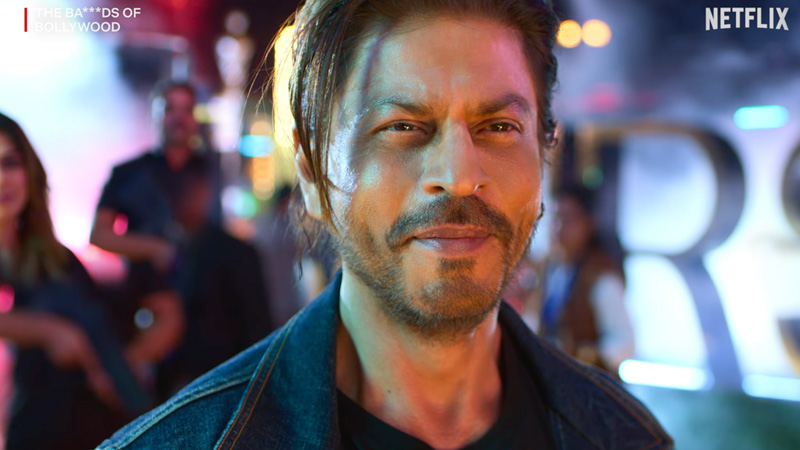
MUMBAI: Netflix is celebrating ten years in India with a slick anniversary film voiced by Shah Rukh Khan, a nostalgic sprint through a decade that rewired how the country watches stories. The campaign doubles as both tribute and reminder: streaming did not just enter Indian homes, it quietly rearranged them.
Roll back to 2016 and television still dictated schedules. Viewers waited weeks, sometimes months, for favourite films to appear on prime time. Family-friendly filters narrowed options further, and piracy often filled the gaps. Then Netflix arrived, softly but decisively, carrying a catalogue of international titles rarely seen in Indian theatres and placing them a click away. Old blockbusters and new releases suddenly coexisted on the same digital shelf.
The platform’s real inflection point came in 2018 with Sacred Games, a breakout series that refused to dilute India’s grit for global comfort. Audiences embraced its unvarnished tone, signalling readiness for stories that did not need box-office validation or censorship compromises. What followed was a steady procession of relatable narratives. Competitive-exam anxiety fuelled Kota Factory. College relationships unfolded in Mismatched. Everyday pressures, not grand spectacle, proved bankable.
Language barriers thinned as foreign series arrived with Hindi, Tamil and Telugu dubbing, expanding viewership beyond urban English-speaking pockets. Marketing mirrored the shift. For global releases such as Squid Game, Netflix leaned on regional creators and influencers to localise buzz and make international content feel native.
The library widened beyond fiction. Documentaries stepped out of festival circuits into living rooms. Stand-up comedians found scale. Established filmmakers, including Sanjay Leela Bhansali with Heeramandi, embraced the platform’s long-form canvas. Subscriber numbers swelled to 12.37 million in India, according to Demandsage, and behaviour followed suit. Late-night binges became routine. Friday release rituals loosened. Watch parties turned solitary screens into social events.
Economics demanded adjustment. Early subscription pricing carried a premium aura that deterred many households. Over time, Netflix recalibrated plans to align with Indian spending sensibilities, conceding that accessibility is as critical as content. To extend momentum around marquee titles, the platform also experimented with split-season releases, stretching anticipation and watch time.
The anniversary film, narrated by Shah Rukh Khan, captures the linguistic shift that mirrors the cultural one: from “Netflix pe kya dekha?” to “Netflix pe kya dekhein?” The question moved from recounting the past to planning the next binge. In ten years, Netflix morphed from foreign entrant to familiar fixture, exporting Indian stories abroad while importing global ones home. The remote no longer waits; it chooses, clicks and moves on. In the streaming age, patience is out, playlists are in, and the next episode is always one tap away.

Gurugram: Delhivery’s boardroom is being reset. Deepak Kapoor, chairman and independent director, has resigned with effect from April 1 as part of a planned board reconstitution, the logistics company said in an exchange filing. Saugata Gupta, managing director and chief executive of FMCG major Marico and an independent director on Delhivery’s board, has also stepped down.
Kapoor exits after an eight-year stint that included steering the company through its 2022 stock-market debut, a period that saw Delhivery transform from a venture-backed upstart into one of India’s most visible logistics platforms. Gupta, who joined the board in 2021, departs alongside him, marking a simultaneous clearing of two senior independent seats.
“Deepak and Saugata have been instrumental in our process of recognising the need for and enabling the reconstitution of the board of directors in line with our ambitious next phase of growth,” said Sahil Barua, managing director and chief executive, Delhivery. The statement frames the exits less as departures and more as deliberate succession, a boardroom shuffle timed to the company’s evolving scale and strategy.
The resignations arrive amid broader governance recalibration. In 2025, Delhivery appointed Emcure Pharmaceuticals whole-time director Namita Thapar, PB Fintech founder and chairman Yashish Dahiya, and IIM Bangalore faculty member Padmini Srinivasan as independent directors, signalling a tilt towards consumer, fintech and academic expertise at the board level.
Kapoor’s tenure spanned Delhivery’s most defining years, rapid network expansion, public listing and the push towards profitability in a bruising logistics market. Gupta’s presence brought FMCG and brand-scale perspective during a period when ecommerce volumes and last-mile delivery economics were being rewritten.
The twin exits, effective from the new financial year, underscore a familiar corporate rhythm: founders consolidate, veterans rotate out, and fresh voices are ushered in to script the next chapter. In India’s hyper-competitive logistics race, even the boardroom does not stand still.
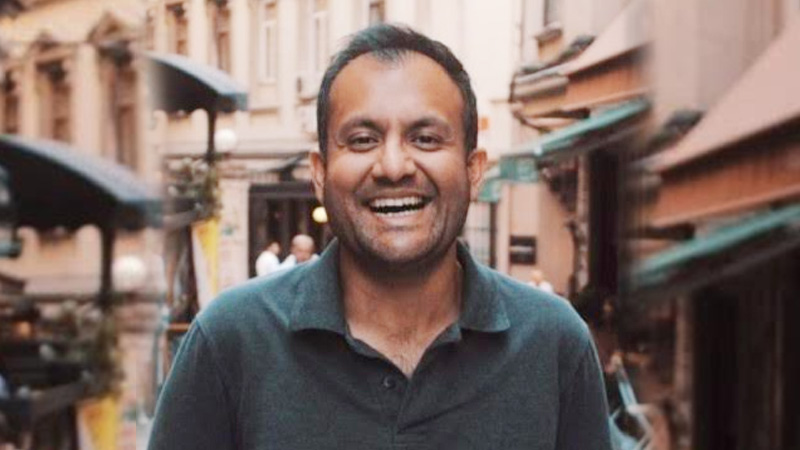
At Locofy.ai, Rao helped convert a three-year free beta into a paid engine, clocking 1,000 subscribers and 15 enterprise clients within ten days of launch in September 2024. The low-code startup, backed by Accel and top tech founders, is famed for turning designs into production-ready code using proprietary large design models.
Before that, Rao founded generative AI venture 1Bstories, which was acquired by creative AI platform Laetro in mid-2024, where he briefly served as managing director for APAC. Alongside operating roles, he has been an active investor and advisor since 2020, backing startups such as BotMD, Muxy, Creator plus, Intellect, Sealed and CricFlex through a creator-economy-led thesis.
Rao spent over eight years at Google, holding senior partnership roles across search, assistant, chrome, web and YouTube in APAC, and earlier cut his teeth in strategy consulting at OC&C in London and investment finance at W. P. Carey in Europe and the US.

Netflix celebrates a decade in India with Shah Rukh Khan-narrated tribute film

Delhivery chairman Deepak Kapoor, independent director Saugata Gupta quit board

Meta appoints Anuvrat Rao as APAC head of commerce partnerships

Brnd.me enters Europe as haircare brands power global expansion

TechnoSport taps quick commerce with launch on Slikk’s 60-minute platform

Jitendra Singh joins Reliance Industries as senior vice president, special projects

Tinder brings real-world dating experiences to North East India

These ’90s fashion trends are making a comeback in 2017
The final 6 ‘Game of Thrones’ episodes might feel like a full season
According to Dior Couture, this taboo fashion accessory is back
The old and New Edition cast comes together to perform
Phillies’ Aaron Altherr makes mind-boggling barehanded play
Uber and Lyft are finally available in all of New York State
Disney’s live-action Aladdin finally finds its stars
Netflix celebrates a decade in India with Shah Rukh Khan-narrated tribute film
Delhivery chairman Deepak Kapoor, independent director Saugata Gupta quit board
Meta appoints Anuvrat Rao as APAC head of commerce partnerships
Brnd.me enters Europe as haircare brands power global expansion
TechnoSport taps quick commerce with launch on Slikk’s 60-minute platform
Jitendra Singh joins Reliance Industries as senior vice president, special projects
Tinder brings real-world dating experiences to North East India
-
 iWorld3 months ago
Tips Music turns up the heat with Tamil party anthem Mayangiren
-
 iWorld12 months ago
BSNL rings in a revival with Rs 4,969 crore revenue
-
 I&B Ministry3 months ago
India steps up fight against digital piracy
-
 MAM3 months ago
HoABL soars high with dazzling Nagpur sebut
-
 iWorld2 days ago
Netflix celebrates a decade in India with Shah Rukh Khan-narrated tribute film
-
 News Broadcasting6 months ago
Wion marks Independence Day with global showcase of India’s spirit
-
 iWorld3 months ago
The Night Manager returns with new secrets, new spies and old scars
-

 I&B Ministry2 months ago
Centre drafts OTT rules to boost access for hearing disabled