
Hindi
WGA, Hollywood producers stalemate continues

MUMBAI: It is going to be a depressing Christmas for Hollywood.
Talks between the Writers Guild of America (WGA) and Alliance Of Motion Picture and Television Producers (AMPTP) broke down last Friday. There has been no indication so far as to when talks will resume.
The WGA went on strike over a month back. They want a better share in new media revenues. The breakdown came after eight days of talks in which not much was achieved.
In a statement the AMPTP says that it is puzzled and disheartened by an ongoing WGA negotiating strategy that seems designed to delay or derail talks rather than facilitate an end to this strike. “Union negotiators in our industry have successfully concluded 306 major agreements with the AMPTP since its inception in 1982. The WGA organisers sitting across the table from us have never concluded even one industry accord.”
The WGA, meanwhile, says that the AMPTP on Friday abruptly ended negotiations by once again walking out and leaving its negotiators alone at the table.
“They are holding to their offer of a $250 fixed residual for unlimited one year streaming after a six-week window of free use. They still insist on the DVD rate for Internet downloads. They refuse to cover original material made for new media. This offer was accompanied by an ultimatum: the AMPTP demands we give up several of our proposals, including Fair Market Value (our protection against vertical integration and self-dealing), animation, reality, and, most crucially, any proposal that uses distributor’s gross as a basis for residuals.
“This would require us to concede most of our Internet proposal as a precondition for continued bargaining. The AMPTP insists we let them do to the Internet what they did to home video.”
The WGA says that it rejected the idea of an ultimatum. “Although a number of items we have on the table are negotiable, we cannot be forced to bargain with ourselves. The AMPTP has many proposals on the table that are unacceptable to writers, but we have never delivered ultimatums.
” We remain ready and willing to negotiate, no matter how intransigent our bargaining partners are, because the stakes are simply too high. We were prepared to counter their proposal tonight, and when any of them are ready to return to the table, we’re here, ready to make a fair deal.”
The AMPTP says that besides betraying a fundamental misunderstanding of the economics of new media, such as a streaming proposal that would require producers give writers more money than they make themselves, the WGA organisers are on an ideological mission far removed from the interests of their members.
“Their Quixotic pursuit of radical demands led them to begin this strike, and now has caused this breakdown in negotiations. We hope that the WGA will come back to this table with a rational plan that can lead us to a fair and equitable resolution to a strike that is causing so much distress for so many people in our industry and community.”
The AMPTP says that WGA demands full control over reality television and animation. “In other words, they want us to make membership in their union mandatory to work in this industry – even though thousands of people in reality and animation have already chosen not to join the WGA.”
The AMPTP further argues that the WGA‘s proposal for Internet compensation could actually cost producers more than they receive in revenues, thereby dooming the Internet media business before it ever gets started.
It is not just writers and producers that are affected. Many service providers to the entertainment industry are starting to feel the pinch. Production workers rallied in downtown Los Angeles on Sunday to urge the two parties to strike a deal.
The ‘Strike A Deal‘ march and rally was the result of “a spontaneous grass-roots outgrowth of the concern and desire and below-the-line industry professionals and vendors whose jobs, livelihoods and futures hang in the balance,” according to a statement posted on its blog, Strikeadeal.blogspot.com.
Reports state that 15,000 jobs have already been lost. California‘s economy is said to be losing over $20 million each day.

Hindi
Boney Kapoor acquires remake rights of Tamil political satire Thalaivar Thambi Thalaimaiyil
Strong word-of-mouth turns Pongal satire into remake pick
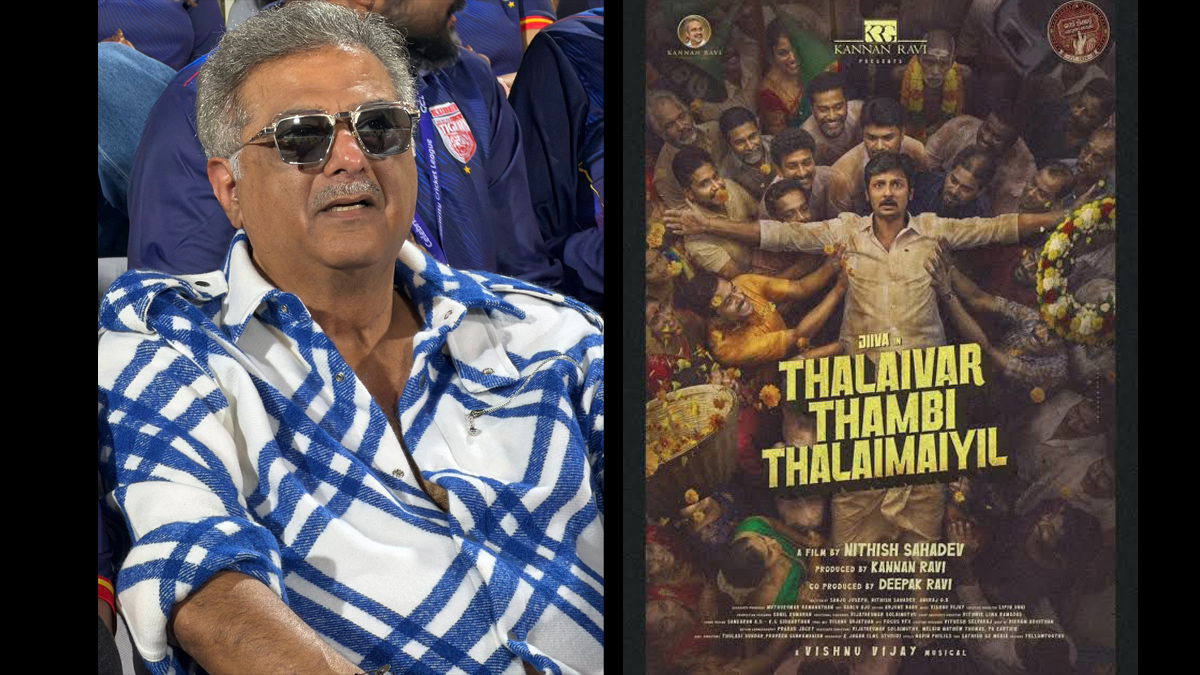
MUMBAI: A Pongal release, a village satire and a theatre visit in Coimbatore have turned into Boney Kapoor’s latest acquisition. The producer has secured the remake rights to the Tamil political satire Thalaivar Thambi Thalaimaiyil (TTT), a film that has been enjoying a strong theatrical run powered by word-of-mouth and praise for its sharp, rooted writing.
Set in a rural milieu, the story follows a panchayat leader thrown into disarray when a wedding and a funeral land on the same day. What unfolds is a swirl of satire and humour that skewers local politics, power games, bruised egos and family tensions, all anchored in the textures of everyday village life.
Kapoor first encountered the film earlier this year while in Coimbatore for the Celebrity Cricket League. With time to spare, he caught a screening at a local theatre. That viewing proved decisive. According to sources, the narrative style, performances and the film’s balance of political commentary and comedy caught his attention.
Interest quickly turned into intent. Kapoor reached out to the producers soon after to explore a remake. Talks gathered pace over the following weeks and came to a head last Friday at the film’s success party in Chennai, where Kapoor joined the celebrations and continued negotiations with the makers.
By the end of the evening, the deal was sealed, with Kapoor formally acquiring the remake rights.
For an industry constantly mining regional cinema for the next crossover story, the move is telling. A small-town satire with local flavour has found a national backer. And if Kapoor’s instincts hold, a tale born in one village may soon echo far beyond it.
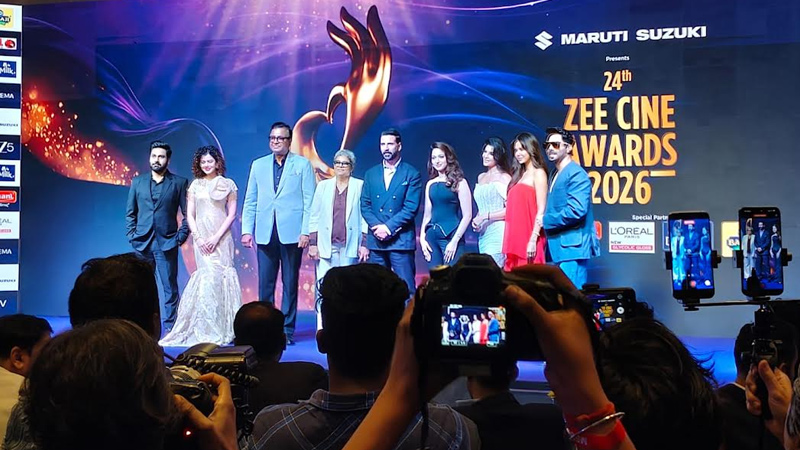
MUMBAI: When the applause gets louder than the dialogue, you know the fans have taken over. That was the unmistakable mood as Zee formally announced the Zee Cine Awards 2026, flipping the script to celebrate not just cinema’s stars, but the people who cheer them on the loudest.
The 24th edition of the awards marks a fresh chapter in Zee’s long-standing relationship with Hindi cinema, anchored in its fan-first philosophy, Fantertainment. This year’s theme, ‘Yeh Pal Hai Fans Ka’, reinforces a simple idea: cinema’s most powerful moments are shaped as much by audiences as by actors on screen. Presented by Maruti Suzuki, the awards aim to turn fandom into the main event.
The announcement, held in Mumbai, was anything but a routine press conference. Bollywood stars Akshay Kumar, Tamannaah Bhatia, Jacqueline Fernandez, Sonam Bajwa, Aparshakti Khurana, composer Mithoon and singer Palak Muchhal joined fans to kick off the celebrations, turning the launch into a high-voltage, participative spectacle.
Staying true to the theme, fans didn’t just watch the announcement, they drove it. Akshay Kumar took the lead, pulling fellow stars on stage and energising the room, before the unveiling of a live LED Fan Meter. Powered purely by audience cheers, the rising meter culminated in the reveal of the Zee Cine Awards 2026 ground event date, announced in unison with fans, blurring the line between performer and spectator.
The momentum continued as Tamannaah Bhatia, Jacqueline Fernandez, Sonam Bajwa and Aparshakti Khurana recreated iconic hook steps, joined by Mithoon and Palak Muchhal for music-led interactions. Games, spontaneous performances and playful banter kept the focus firmly on shared moments, underscoring the evolving bond between cinema and its audience.
Beyond the launch, the awards will roll out as a multi-platform journey across television, digital, print and fan-led experiences. The aim is sustained engagement from the first announcement to awards night cementing fandom as a cultural force rather than a footnote.
Commenting on the milestone edition Zee head of advertisement revenue, broadcast & digital Laxmi Shetty said the 24th Zee Cine Awards continue to draw strength from the network’s omni-channel ecosystem, reflecting how audiences consume content today across TV, digital and social platforms. She noted that long-standing brand associations, including Maruti Suzuki’s three-year partnership and support from brands such as Hell Energy, underline the platform’s scale, trust and cultural relevance.
As Zee Cine Awards 2026 gathers pace, one thing is clear: this year, the loudest cheers won’t just echo in the auditorium, they’ll shape the show itself.
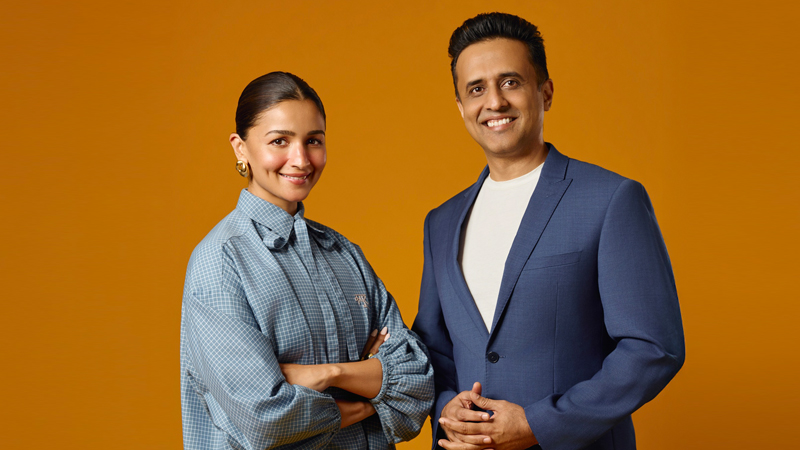
MUMBAI: Prime Video has found its next feel-good original, and it comes with a healthy dose of heart, humour and youthful chaos. The streaming platform has announced Don’t Be Shy, a coming-of-age romantic comedy produced by Alia Bhatt and Shaheen Bhatt under their banner, Eternal Sunshine Productions.
Written and directed by Sreeti Mukerji, the film follows Shyamili ‘Shy’ Das, a 20-year-old who believes her life is neatly mapped out until it suddenly is not. What follows is a relatable tumble through friendship, love and the awkward art of growing up, when plans unravel and certainty gives way to self-discovery.
The project is co-produced by Grishma Shah and Vikesh Bhutani, with music composed by Ram Sampath, adding to the film’s promise of warmth and energy. Prime Video describes the story as light-hearted yet emotionally grounded, with a strong female-led narrative at its core.
Prime Video India director and head of originals Nikhil Madhok, said the platform was delighted to collaborate with Eternal Sunshine on a story that blends sincerity with humour. He noted that the film’s fresh writing, earnest characters and infectious music make it an easy, engaging watch for audiences well beyond its young adult setting.
For Alia Bhatt, Don’t Be Shy reflects the kind of storytelling Eternal Sunshine set out to champion. She said the film stood out for its honesty, its coming-of-age perspective and Mukerji’s passion, which she felt was deeply woven into the narrative. Bhatt also praised Prime Video for supporting distinctive voices and bold creative choices.
With its breezy tone and familiar emotional beats, Don’t Be Shy aims to charm viewers whether they are rom-com regulars or simply in the mood for a warm, unpretentious story about life refusing to stick to the plan.



MIB sets OTT accessibility rules, mandates captions and audio description

Boney Kapoor acquires remake rights of Tamil political satire Thalaivar Thambi Thalaimaiyil

Netflix India names Rekha Rane director of films and series marketing

Zabeen signs off from TV9 after shaping the network’s public voice

Dhawan steps up to bat for Delhi’s grassroots sports push

Orient Beverages pops the fizz with steady Q3 gains and rising profits

Cheekatilo shines in the dark with record debut on Prime Video

These ’90s fashion trends are making a comeback in 2017

Swiggy Instamart’s GOV surges 103 per cent year on year to Rs 7,938 crore
The final 6 ‘Game of Thrones’ episodes might feel like a full season
According to Dior Couture, this taboo fashion accessory is back
The old and New Edition cast comes together to perform
Phillies’ Aaron Altherr makes mind-boggling barehanded play
Uber and Lyft are finally available in all of New York State
MIB sets OTT accessibility rules, mandates captions and audio description
Boney Kapoor acquires remake rights of Tamil political satire Thalaivar Thambi Thalaimaiyil
Netflix India names Rekha Rane director of films and series marketing
Zabeen signs off from TV9 after shaping the network’s public voice
Dhawan steps up to bat for Delhi’s grassroots sports push
Orient Beverages pops the fizz with steady Q3 gains and rising profits
Cheekatilo shines in the dark with record debut on Prime Video
-
 e-commerce4 weeks ago
Swiggy Instamart’s GOV surges 103 per cent year on year to Rs 7,938 crore
-
 iWorld1 year ago
Kuku TV transforms India’s OTT space with vertical microdrama boom
-

 News Headline2 months ago
From selfies to big bucks, India’s influencer economy explodes in 2025
-
 News Headline2 years ago
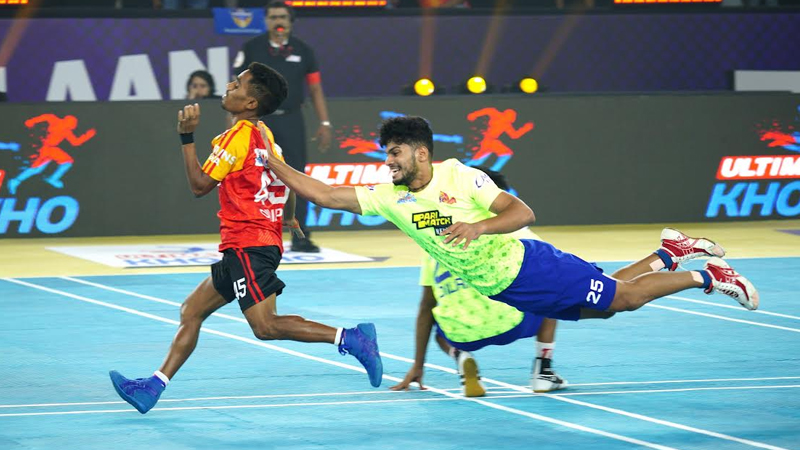
Odisha to host Ultimate Kho Kho Season 2 from December 24
-
 News Headline2 months ago
Game on again as 2025 powers up a record year and sets the stage for 2030
-

 News Headline2 months ago
2025: The year Indian sports saw chaos, comebacks, and breakthroughs
-
 News Headline1 year ago
Abhishek Bachchan joins as co-owner of European T20 Premier League
-
 MAM2 years ago
OpenAI joins C2PA steering committee


