
Hindi
‘Dilwale:’ A fair entertainer


Rohit Shetty and Shah Rukh Khan’s Red Chillies Entertainment join hands again to come up with Dilwale and make what Shetty makes best, an entertainer!
Shetty sticks to his proven track of comedy, action, blown-up cars flying high and some romance. To their credit, the makers have used many checks and balances; in script as well as casting. For instance, Khan doing traditional romance would not be readily palatable so his love story is about a past romance rekindled. And, who better than Kajol, his love in the legendary, Dilwale Dulhaniya Le Jaayenge? This has definitely generated interest in people and was also handy to plot the film’s promotion.
The other balancing move is to also cast a young romantic pair, Varun Dhawan and Kriti Sanon, to cater to the youth, which contribute to a great extent in making such a film successful.
Khan is the adopted son of don, Vinod Khanna. He is at loggerheads with another don, Kabir Bedi. Both operate out of Bulgaria. They play cat and mouse games, outwitting and stealing each other’s consignments. Khan is the star of Khanna gang and manages to steal a huge consignment of gold belonging to Bedi. The enmity only deepens.
On one of his outings with members of his gang following him in various cars, Khan’s car knocks down Kajol. He is charmed and gradually falls in love with her. The song and dance routine follows and soon both are ready to tie the knot. Before that, it is Kajol’s birthday and she wants him to be present. However, he has to ferry the gold he stole from Bedi across the border to Romania. She is upset till he promises to be back in time for her birthday celebrations. But, that is not to be as Khan is attacked while on his mission and injured badly.

He recovers. In fact, there are recoveries of all kinds, emotional as well. Khanna readily accepts Khan’s wish to marry Kajol and eventually, so does Bedi. Khanna and Khan are invited over to Bedi’s place. While Khanna is willing to forget the enmity, Bedi has other ideas. He wants to stop the wedding as well as settle the scores by killing his guests. A shoot out follows. While Khan is busy shooting the rookies, Khanna and Bedi shoot each other a la Duel At OK Corral, both shooting at each other from few feet apart. Both die.

Kajol steps in as the shootings are over only to see Bedi killed and thinks Khan did it. She shoots at him but Khan is a survivor.
Kajol has now left town with her kid sister to tend to her. Khan wants to clear her misunderstanding but she is untraceable. Khan and his two loyals decide to exit the business of don-giri and live a normal life. His men start a restaurant while Khan decides to take up remodeling of cars. The kid brother, who grows up to Dhawan, is brought back from the hostel where he was housed to keep him away from the life of violence.
It is Dhawan’s time to fall in love. A new migrant in his town from Bengaluru, Sanon, is stalled because her Scooty would not move. She has to rush to the local authorities to seek a license for a restaurant. Dhawan happens to pass by and is ready to help. After that, he stalks her, fills her with lies about his tyrant brother and his pitiable life. Self-pity stories usually work with girls. It works on her too. The couple is in love and it is time to talk to their respective parents/ guardians.
Khan is invited to Sanon’s house to meet her sister, her guardian. When Khan goes to meet her, there is a shock awaiting him; the sister is none other than Kajol who rejects the proposal for her sister. And, as has been her habit, warns Khan: “Next time I see you, I will kill you.” She always carries a firearm. The film plays like a family drama for a while till the misconceptions of Kajol are cleared and, while Dhawan – Sanon romance gets the green signal to bloom, that of Khan – Kajol is rekindled.
It is a usual Shetty script. The events may jump from one to another and from present to past but, on the whole, they keep you entertained. It follows the logic or lack of it of classic Manmohan Desai and David Dhawan films. Shetty is among very few directors who believes in entertainment. His casting is creditable. While the goons and lackeys in his films are also recognised faces, even for small roles he has cast Khanna and Bedi. And, for lighter moments, there are Boman Irani, Johnny Lever, Sanjay Mishra and the likes who all fit the bill aptly.
What also works is the music with some popular numbers: the Gherua song is a much played number already, Janam janam and Tujhse pyar… are soothing while Manma emotion jaage… has total youth appeal. In short, the music works for the film.
Choreography has appeal. Photography captures the pleasant locations well. Editing is rarely satisfying ever and the same applies here.
As for acting, the Khan – Kajol pairing may not be all that it used to be, but both try their best. Acting wise, both do well. Dhawan is fine in both silly scenes as well as emotional ones, Sanon makes her presence felt.
Dilwale is sure to get better opening day as well as the weekend footfalls as its opposition is a different genre film, which is not universally popular in India.
The film caters to both, the Khan and Kajol fans as well as new, youth following of Dhawan. The fatwa against Khan andDilwale by various groups may affect the film for a day or so, so would the extreme cold wave in the country, especially in the North. However, the film will also enjoy a three week open run including the Christmas and the New Year week until when there is no new release in sight. And by that time the fatwas would have passed their expiry dates.
Producer: Gauri Khan
Director: Rohit Shetty
Cast: Shah Rukh Khan, Kajol, Varun Dhawan, Kriti Sanon, Varun Sharma, Vinod Khana, Kabir Bedi, Johnny Lever, Boman Irani, Mukesh Tiwari, Pankaj Tripathi, Sanjay Mishra
‘Bajirao Mastani:’ Insipid grandeur

For decades, ambitious filmmakers have announced or expressed their desire a film on Bajirao Mastani. Finally, Sanjay Leela Bhansali decides to go ahead with the legend — or was it a folktale? — of the great love story of the brave warrior from Pune, Bajirao Peshwa and Mastani, the valiant daughter of the Rajput ruler of Bundelkhand and his Muslim wife.
Historical films in India have had poor track record mainly because our history chapters are basically full of losers. Whatever battles the regional rulers fought were usually on the Indian land and never with invaders at borders.
Some media or PR machines are busy making comparisons between Bajirao Mastani and Mughal-e-Azam. That is sacrilege. A Mughal-e-Azam happens, you cannot set out to make it. Also, Mughal-e-Azam was a fictional love story: Anarkali never existed, she was created, a myth. With Bajirao Mastani, sadly, Bhansali attempts to make a fiction out of a real-life warrior, Bajirao’s account. He takes too many liberties using the disclaimer in the title scroll!
The elder Peshwa has passed away, Shahu Chhatrapati of Satara, Mahesh Majrekar, has called his court to decide on the next Peshwa, who will answer to the Shahu Chhatrapati and lead his army. Aditya Pancholi, the Shahu court Prime Minister, is the claimant but Bajirao, played by Ranveer Singh, the son of the late Peshwa, finds more takers in the court. He has to pass a bravery test as well as a general knowledge test. Obviously, he does. Ranveer is the new Peshwa who operates from Pune, annihilating all of Shahu and Maratha’s enemies, mainly Mughal knights.
Bajirao is said to have many battles but the film being a love story of Bajirao and Mastani, it deals mainly with one, the attack on Bundlekhand by Mughals.
One fine day, a female warrior barges into Bajirao’s abode despite being told that he is too busy to meet her. She fights Bajirao’s guards and is about to subdue them when Bajirao, who has been coolly watching the scene, decides to intervene and neutralises the invading warrior. Floored by Bajirao’s assault, her helmet falls off and that warrior turns out to be, Deepika Padukone aka Mastani, the daughter of the Bundelkhand ruler. She has come to seek help from Bajirao to save her kingdom, which has been surrounded by a Mughal leader.
Impressed with her fighting prowess, Bajirao agrees to go along. He takes the invaders of Bundelkhand by surprises and defeats them; Padukone is as much a part of the battle as him. She also saves Bajirao’s life during the attacks. Love has happened! And, it is mutual and it does not matter that Bajirao has a wife, Priyanka Chopra, at home with whom he has been siring children on a regular basis.
But, Bajirao has gifted his dagger to Padukone, which in Bundelkhand means marital bond! So, she already considers herself married to Bajirao though the same ritual may not be valid in Pune. After convincing her royal parents, she embarks on a trip to her sasural in Pune.
Once in Pune, the battles of Bajrao are kept aside for his twin romances: with his wife, Chopra, and his paramour, Padukone. Add to that the palace intrigues, involving Bajirao’s mother, Tanvi Azmi. No way would she accept a girl born out of a Muslim mother as her son’s woman. First, she tries to convert her into a court dancer and later to kill her.
Bajirao was a rare Brahmin warrior and, in his palace, the writ of the Brahmin priests runs large. Also, Bajirao may be the man of the house, but his mother, Tanvi, rules the palace! Chopra only learns much later of her husband’s indulgence. Initially distanced from Padukone, she is willing to do a song and dance with her when the director connives such a situation! (After all, the similar situation worked in Devdas, so why not try again?)
Time comes when Bajirao has been dethroned form his Peshwa-ship by Tanvi because of his affair with Padukone. But, soon, there is a threat from the Nizam from Hyderabad to the Shahus and Bajirao is convinced also to take back his job. Things get a bit funny after this.
Bajirao plans to invade the Nizam before he does. The Nizam is ready with his 20,000 strong army to invade Shahus, which counts its army in 10,000. Milind Soman, Singh’s advisor, warns him about the inequality about numbers. But, Singh plays a dialogue from some gangster enmity movie: We know we have half their army, Nizam does not! And one thought NIzams were not fools and like all rulers, they too had their spies, known as guptchars, in that era.
Next, Singh walks into the Nizam’s camp and gives him a hull (a Marathi slang meaning a false threat), that Shahu’s army of 40,000 is placed right behind Nizam’s army to finish his reign. The Nizam is scared enough to agree to all terms of Bajirao. Those are to not invade Shahus while Bajirao is away invading the Mughal throne in Delhi! This is really stretching the cinematic liberty.
After that side show with Nizam, Singh is back to facing the family hassles as the film gets more banal.
Bhansali seems to have bitten more than he can chew with Bajirao Mastani. For one thing, this was always a regional subject and Bhansali has gone ahead and made it more so by using Marathi tunes, Marathi language and many actors identified mainly with Marathi stage or cinema. (A similar trick worked in Ramleela, with him using some Gujarati words and music, but you can’t push your luck forever.)
Bhansali also takes many liberties and goes ahead with discrepancies and the war scenes are just not appealing. Dialogue is good at places but at other times, it tries to be too deep, which means it is not for the mass. While Bhansali crams the film with songs, none have appeal. His idea of music seems to be gathering crowds without faces for song picturization. Filling the screen is not enough. Photography is okay but shooting to camouflage sets passing for locations forces the makers shoot in low light and that is depressing. Editing is missing. Only plus for the film are the colourful sets and, at times, visuals.
Performance wise, two names that stand out are Padukone and Azmi. Padukone is good generally but excels in some scenes. Azmi plays, probably, her first negative role, and is great. Chopra hardly fits the sad second fiddle to not only Singh but also in casting. As for Singh, he is cast in a role too huge for his standing as well as acting abilities. Rest of the cast has no scope as such.
Bajirao Mastani has had a weak opening, may not appeal to the youth and is rather too costly to be a safe bet at the box office only on the strength of grandeur.
Producer: Sanjay Leela Bhansali
Director: Sanjay Leela Bhansali
Cast: RanveerSingh, Pryanka Chopra, Deepika Padukone, Tanvi Azmi, Milind Soman, Mahesh Manjrekar, Aditya Pancholi








Hindi
Boney Kapoor acquires remake rights of Tamil political satire Thalaivar Thambi Thalaimaiyil
Strong word-of-mouth turns Pongal satire into remake pick
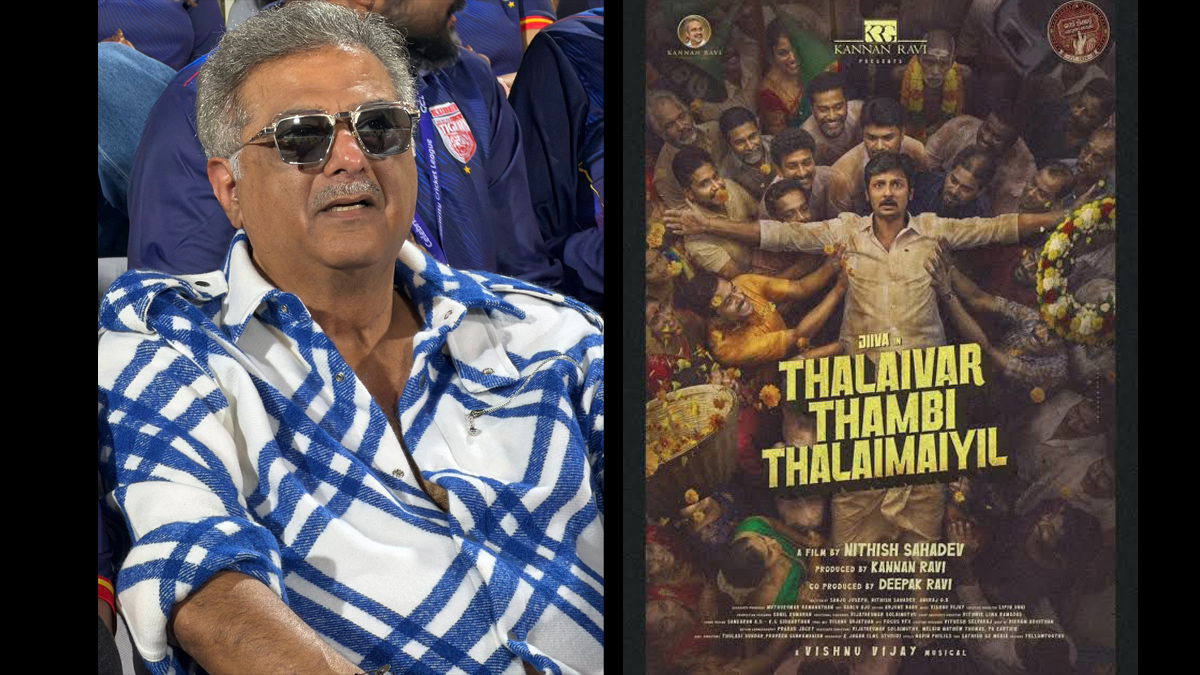
MUMBAI: A Pongal release, a village satire and a theatre visit in Coimbatore have turned into Boney Kapoor’s latest acquisition. The producer has secured the remake rights to the Tamil political satire Thalaivar Thambi Thalaimaiyil (TTT), a film that has been enjoying a strong theatrical run powered by word-of-mouth and praise for its sharp, rooted writing.
Set in a rural milieu, the story follows a panchayat leader thrown into disarray when a wedding and a funeral land on the same day. What unfolds is a swirl of satire and humour that skewers local politics, power games, bruised egos and family tensions, all anchored in the textures of everyday village life.
Kapoor first encountered the film earlier this year while in Coimbatore for the Celebrity Cricket League. With time to spare, he caught a screening at a local theatre. That viewing proved decisive. According to sources, the narrative style, performances and the film’s balance of political commentary and comedy caught his attention.
Interest quickly turned into intent. Kapoor reached out to the producers soon after to explore a remake. Talks gathered pace over the following weeks and came to a head last Friday at the film’s success party in Chennai, where Kapoor joined the celebrations and continued negotiations with the makers.
By the end of the evening, the deal was sealed, with Kapoor formally acquiring the remake rights.
For an industry constantly mining regional cinema for the next crossover story, the move is telling. A small-town satire with local flavour has found a national backer. And if Kapoor’s instincts hold, a tale born in one village may soon echo far beyond it.
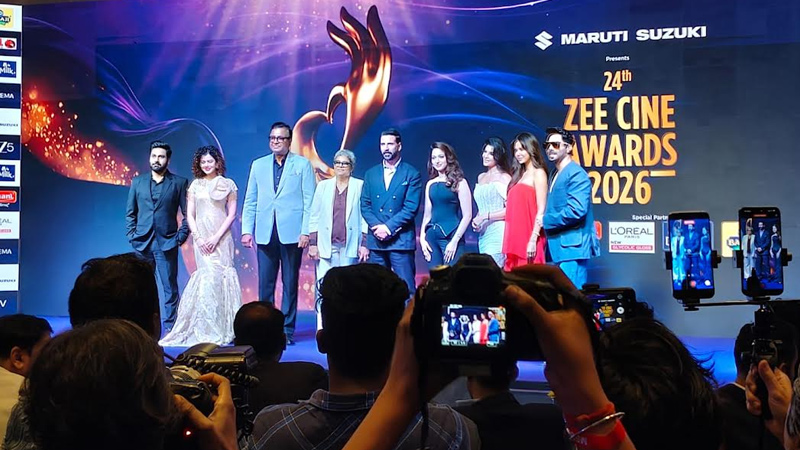
MUMBAI: When the applause gets louder than the dialogue, you know the fans have taken over. That was the unmistakable mood as Zee formally announced the Zee Cine Awards 2026, flipping the script to celebrate not just cinema’s stars, but the people who cheer them on the loudest.
The 24th edition of the awards marks a fresh chapter in Zee’s long-standing relationship with Hindi cinema, anchored in its fan-first philosophy, Fantertainment. This year’s theme, ‘Yeh Pal Hai Fans Ka’, reinforces a simple idea: cinema’s most powerful moments are shaped as much by audiences as by actors on screen. Presented by Maruti Suzuki, the awards aim to turn fandom into the main event.
The announcement, held in Mumbai, was anything but a routine press conference. Bollywood stars Akshay Kumar, Tamannaah Bhatia, Jacqueline Fernandez, Sonam Bajwa, Aparshakti Khurana, composer Mithoon and singer Palak Muchhal joined fans to kick off the celebrations, turning the launch into a high-voltage, participative spectacle.
Staying true to the theme, fans didn’t just watch the announcement, they drove it. Akshay Kumar took the lead, pulling fellow stars on stage and energising the room, before the unveiling of a live LED Fan Meter. Powered purely by audience cheers, the rising meter culminated in the reveal of the Zee Cine Awards 2026 ground event date, announced in unison with fans, blurring the line between performer and spectator.
The momentum continued as Tamannaah Bhatia, Jacqueline Fernandez, Sonam Bajwa and Aparshakti Khurana recreated iconic hook steps, joined by Mithoon and Palak Muchhal for music-led interactions. Games, spontaneous performances and playful banter kept the focus firmly on shared moments, underscoring the evolving bond between cinema and its audience.
Beyond the launch, the awards will roll out as a multi-platform journey across television, digital, print and fan-led experiences. The aim is sustained engagement from the first announcement to awards night cementing fandom as a cultural force rather than a footnote.
Commenting on the milestone edition Zee head of advertisement revenue, broadcast & digital Laxmi Shetty said the 24th Zee Cine Awards continue to draw strength from the network’s omni-channel ecosystem, reflecting how audiences consume content today across TV, digital and social platforms. She noted that long-standing brand associations, including Maruti Suzuki’s three-year partnership and support from brands such as Hell Energy, underline the platform’s scale, trust and cultural relevance.
As Zee Cine Awards 2026 gathers pace, one thing is clear: this year, the loudest cheers won’t just echo in the auditorium, they’ll shape the show itself.
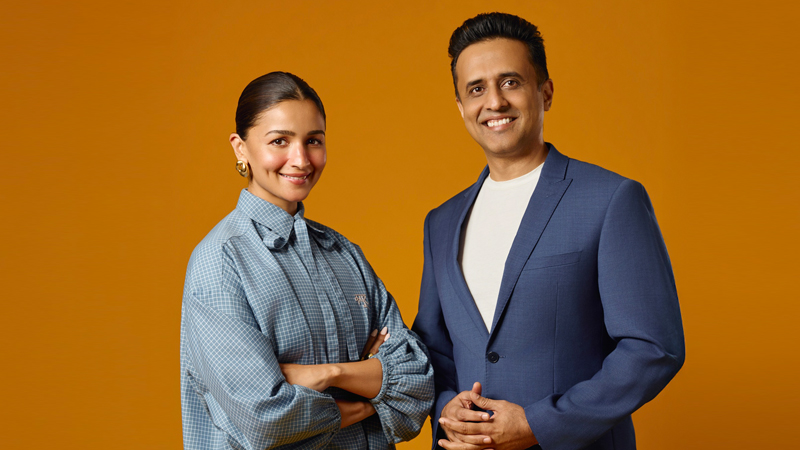
MUMBAI: Prime Video has found its next feel-good original, and it comes with a healthy dose of heart, humour and youthful chaos. The streaming platform has announced Don’t Be Shy, a coming-of-age romantic comedy produced by Alia Bhatt and Shaheen Bhatt under their banner, Eternal Sunshine Productions.
Written and directed by Sreeti Mukerji, the film follows Shyamili ‘Shy’ Das, a 20-year-old who believes her life is neatly mapped out until it suddenly is not. What follows is a relatable tumble through friendship, love and the awkward art of growing up, when plans unravel and certainty gives way to self-discovery.
The project is co-produced by Grishma Shah and Vikesh Bhutani, with music composed by Ram Sampath, adding to the film’s promise of warmth and energy. Prime Video describes the story as light-hearted yet emotionally grounded, with a strong female-led narrative at its core.
Prime Video India director and head of originals Nikhil Madhok, said the platform was delighted to collaborate with Eternal Sunshine on a story that blends sincerity with humour. He noted that the film’s fresh writing, earnest characters and infectious music make it an easy, engaging watch for audiences well beyond its young adult setting.
For Alia Bhatt, Don’t Be Shy reflects the kind of storytelling Eternal Sunshine set out to champion. She said the film stood out for its honesty, its coming-of-age perspective and Mukerji’s passion, which she felt was deeply woven into the narrative. Bhatt also praised Prime Video for supporting distinctive voices and bold creative choices.
With its breezy tone and familiar emotional beats, Don’t Be Shy aims to charm viewers whether they are rom-com regulars or simply in the mood for a warm, unpretentious story about life refusing to stick to the plan.


MIB sets OTT accessibility rules, mandates captions and audio description

Boney Kapoor acquires remake rights of Tamil political satire Thalaivar Thambi Thalaimaiyil

Netflix India names Rekha Rane director of films and series marketing

Zabeen signs off from TV9 after shaping the network’s public voice

Dhawan steps up to bat for Delhi’s grassroots sports push

Orient Beverages pops the fizz with steady Q3 gains and rising profits

Cheekatilo shines in the dark with record debut on Prime Video

These ’90s fashion trends are making a comeback in 2017
The final 6 ‘Game of Thrones’ episodes might feel like a full season
According to Dior Couture, this taboo fashion accessory is back
The old and New Edition cast comes together to perform
Phillies’ Aaron Altherr makes mind-boggling barehanded play
Uber and Lyft are finally available in all of New York State
Disney’s live-action Aladdin finally finds its stars
MIB sets OTT accessibility rules, mandates captions and audio description
Boney Kapoor acquires remake rights of Tamil political satire Thalaivar Thambi Thalaimaiyil
Netflix India names Rekha Rane director of films and series marketing
Zabeen signs off from TV9 after shaping the network’s public voice
Dhawan steps up to bat for Delhi’s grassroots sports push
Orient Beverages pops the fizz with steady Q3 gains and rising profits
Cheekatilo shines in the dark with record debut on Prime Video
-

 News Broadcasting2 weeks ago
Mukesh Ambani, Larry Fink come together for CNBC-TV18 exclusive
-

 e-commerce3 weeks ago
Swiggy Instamart’s GOV surges 103 per cent year on year to Rs 7,938 crore
-

 News Headline1 month ago
From selfies to big bucks, India’s influencer economy explodes in 2025
-
 iWorld5 months ago
Billions still offline despite mobile internet surge: GSMA
-

 News Headline1 month ago
2025: The year Indian sports saw chaos, comebacks, and breakthroughs
-

 Applications2 months ago
28 per cent of divorced daters in India are open to remarriage: Rebounce
-

 News Headline1 week ago
JioStar announces biggest ever talent line-up for an ICC event
-

 iWorld2 weeks ago
Netflix celebrates a decade in India with Shah Rukh Khan-narrated tribute film
