
AD Agencies
WPP and Google forge $400m AI alliance to turbocharge marketing campaigns


CALIFORNIA: WPP and Google have announced a five-year expansion of their partnership that represents nothing short of a full-throated embrace of artificial intelligence as the defining competitive advantage in modern marketing. The creative powerhouse will pour $400m into Google technologies—cloud infrastructure, generative models, cutting-edge AI systems—betting that the combination can compress months of campaign planning, creative development and media buying into days, and unlock growth that conventional efficiency drives could never reach.
The deal, cemented at Google’s Mountain View headquarters with WPP chief executive Cindy Rose, Google Cloud chief Thomas Kurian, and senior leadership from both organisations gathered around the table, aims to fundamentally revolutionise how brands connect with customers at scale. Rather than simply speeding up existing processes or squeezing more productivity from existing workflows, the partners plan to enable something far more radical: real-time personalisation for millions of people simultaneously, powered by bespoke AI models that learn, adapt and optimise on the fly.
The ambition is extraordinary. WPP will receive preferred early access to Google’s latest generative models—Veo for video generation, Imagen for image creation, and a suite of others still in development—all integrated directly into WPP Open, the firm’s proprietary AI platform for marketing. The practical impact is already staggering. Campaign-ready creative assets that would traditionally take weeks to produce can now be generated in days. Efficiency gains are reaching 70 per cent. Asset utilisation is accelerating 2.5 times over. For one global retailer pilot, these aren’t abstract metrics: they translated to 98 per cent accuracy in audience targeting and an 80 per cent boost in operational efficiency, freeing entire marketing teams to focus on strategy rather than execution.
WPP Media, the group’s media planning and buying division, will deploy bespoke audience models powered by Google DeepMind’s AI products through a new solution called Open Intelligence. The promise: build custom audience segments and deploy hyper-targeted campaigns across all channels—including Google Ad Platforms—with unprecedented speed and precision. For a multinational energy company, this looked like developing a custom AI Marketing Agent that automatically generates comprehensive marketing briefs, connects stakeholders to a single point of contact, and draws on a library of best-practice documents, past campaign performance and proven playbooks. The system works in real time, adapting to local challenges across multiple markets.
The partnership extends into the creative layer itself. AKQA, WPP’s design and innovation company, is developing a new generation of AI-powered experiences that transform static websites into intelligent, generative platforms. The live AKQA Generative Store recreates the experience of personalised luxury retail service digitally—dynamically adapting product visuals, messaging and recommendations for each customer in real time. AKQA Generative UI, launching imminently, will instantly generate tailored, on-brand pages for users across enterprise and B2B contexts, with no manual intervention required.
Privacy and data security thread through the entire architecture. Using InfoSum’s Bunkers technology, now integrated into WPP Open and available on Google Marketplace, WPP can enforce secure data collaboration without physically moving sensitive customer data. This allows brands to harvest deeper, richer insights for AI marketing whilst maintaining ironclad privacy protection—a crucial advantage in an era of tightening data regulation and consumer scrutiny.
The talent dimension is equally ambitious. WPP’s Creative Technology Apprenticeship programme, which has placed more than 50 early-career technologists across WPP agencies since 2022, will expand dramatically with Google joining as the primary curriculum partner. The goal is audacious: train over 1,000 creative technologists by 2030 in a world-leading curriculum covering creative coding, generative AI and robotics. These apprentices will work on real-world challenges from major clients—L’Oréal, Unilever and others—building the next generation of marketing talent fluent in machine learning, AI prompt engineering and algorithmic thinking.
Beyond client work, Google AI will also transform WPP’s internal operations. Automated data analysis, intelligent resource allocation and instant access to global insights will flow through WPP’s workflows, accelerating the development of solutions, sharpening team responses and ultimately delivering superior speed and value to clients worldwide. The logic is clear: make the machine fast enough and the organisation responds like an organism, not a bureaucracy.
There is a feedback loop built into the model that gives WPP an unusual advantage. New solutions are collaborated on, tested and validated first within Google’s own marketing operations—real-world testing grounds where ideas either survive or die quickly. The insights flow back to WPP clients, who receive solutions already battle-tested against the toughest marketing challenges. In a rapidly evolving AI landscape crowded with noise and overpromise, that’s a rare competitive edge.
Rose called it a redefinition of what’s possible for clients. Kurian framed it as harnessing generative and agentic AI to transform business outcomes. Google global marketing senior vice-president Lorraine Twohill spoke of exploring what marketing and storytelling look like in a new era.
But beneath the corporate language lies a harder truth: the pace of marketing innovation just accelerated dramatically, and the winners will be those organisations—agencies, brands, technologists—that can think and move at machine speed. Everyone else faces a widening gap between aspiration and execution.











DELHI: India is staring down a junk food epidemic, and the government wants to fight back with an advertising ban. The Economic Survey, tabled in the Lok Sabha on Thursday, has pitched a radical proposal: prohibit ultra-processed food advertisements from 6am to 11pm across all media platforms.
The timing is hardly coincidental. India has become one of the world’s fastest-growing markets for ultra-processed foods: those calorie-laden concoctions of burgers, noodles, pizza and soft drinks that increasingly dominate Indian diets. The consequences are written in the waistlines of a growing number of Indians.
Excess weight among children under five has jumped from 2.1 per cent in 2015-16 to 3.4 per cent in 2019-21, the survey notes. More troubling still, over 3.3 crore children in India were obese in 2020, with projections suggesting that figure will balloon to 8.3 crore children by 2035.
The numbers for adults paint an equally grim picture. According to the 2019-21 National Family Health Survey, 24 per cent of Indian women and 23 per cent of Indian men are overweight or obese. Among women aged 15-49 years, 6.4 per cent are obese, whilst among men, 4 per cent are overweight, the survey said.
The pre-budget document doesn’t mince words about the scale of the challenge. To tackle ultra-processed foods, it advocates front-of-pack nutrition labelling for high-fat, sugar and salt foods, with warnings that restrict marketing to children and ensure trade agreements don’t undermine public health policy.
The survey also suggests restrictions on marketing infant and toddler milk and beverages, whilst flagging growing obesity among children.
The proposed marketing ban would run from 0600 hours to 2300 hours across all media, with mandatory enforcement of restrictions on marketing infant and toddler milk and beverages.
India isn’t treading new ground here. The survey points to Chile, which has integrated such laws, along with Norway and the UK, where advertisement restrictions are already in place for ultra-processed foods.
Britain recently banned junk food advertising before 9pm on television and online to reduce children’s exposure and curb childhood obesity. Further action on other marketing activities, including school and college sponsorship of events by ultra-processed food manufacturers, can be designed, the survey said.
Yet India’s regulatory landscape remains muddled. Rule 7 of the Advertisement Code prohibits misleading, unverified, or unhealthy advertisements but doesn’t define “misleading” with measurable or nutrient-based criteria, leaving interpretation subjective and inconsistent.
Similarly, the Central Consumer Protection Authority guidelines for prevention of misleading advertisements (2022) mandate that advertisements must not exaggerate health benefits or exploit children.
Yet they lack clear nutrient thresholds or a framework for identifying misleading claims in food marketing, the survey said, adding that this regulatory ambiguity allows companies marketing ultra-processed foods to continue making vague health, energy, or nutrition cues without violating any clearly defined standard, highlighting a critical policy gap that needs reform.
The stakes couldn’t be higher. India is one of the fastest-growing markets for ultra-processed food sales, contributing to chronic diseases worldwide and widening health inequalities.
The survey lays bare the commercial triumph of junk food in India. Sales of ultra-processed foods grew more than 150 per cent between 2009 and 2023. Retail sales surged from $0.9 billion in 2006 to nearly $38 billion in 2019, a 40-fold rise. It is during the same period that obesity has nearly doubled in both men and women, the survey said.
The document advocates a multi-pronged approach to tackle the rising consumption of ultra-processed foods (popularly known as junk foods), which includes burgers, noodles, pizza, soft drinks, and the like, warning it is contributing to chronic diseases worldwide and widening health inequalities.
Improving diets cannot depend solely on consumer behaviour change, the survey argues. It will require coordinated policies across food systems that regulate ultra-processed food production, promote healthier and more sustainable diets and marketing.
The gauntlet has been thrown. Whether India’s policymakers have the stomach to take on the junk food industry remains to be seen.
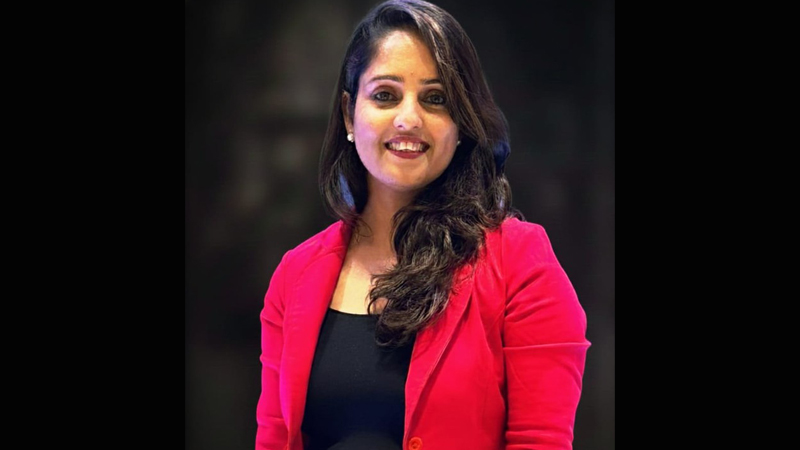
MUMBAI: PHD Media has appointed Vinita Shrivastav as vice president – business planning, taking charge of the agency’s Marico portfolio and reinforcing its strategic leadership bench. The move signals the agency’s commitment to delivering future-ready, high-impact solutions for one of India’s most iconic FMCG brands.
Vinita brings over 17 years of experience across brand strategy, integrated marketing, media planning, research, and business leadership. Recognised as Best South Asian Strategic Planner of the Year by Campaign Asia, she is known for building insight-led, scalable growth platforms across categories.
She started her career with a research foundation at TAM Media, before taking on leadership roles across Reliance and Zee. She later joined Mindshare’s core strategy team, led the marketing vertical at IN10 Media, and most recently drove the L’Oréal business at Wavemaker, delivering integrated, high-impact media and brand-building solutions across markets.
In her new role, Vinita will steer the Marico mandate, focusing on strategic innovation, business growth, and integrated, future-ready media solutions. She will collaborate closely with both Marico and PHD Media leadership to build scalable, impactful brand platforms that deliver long-term business value.
“This appointment strengthens our strategic leadership and reinforces PHD Media’s commitment to insight-led planning and execution excellence. Vinita brings the analytical depth, commercial acumen, and strategic vision to drive innovation and growth for one of India’s most respected FMCG brands,” said a spokesperson for PHD Media.
Vinita said, “I am excited to join PHD Media and lead the Marico portfolio. In today’s dynamic market, building scalable, insight-driven brand platforms is critical. I look forward to collaborating with the teams at PHD Media and Marico to deliver strategic, high-impact solutions that drive long-term business value.”
With this appointment, PHD Media underscores its focus on category-defining brand partnerships and intelligence-led planning, ensuring the agency remains at the forefront of strategic media innovation.
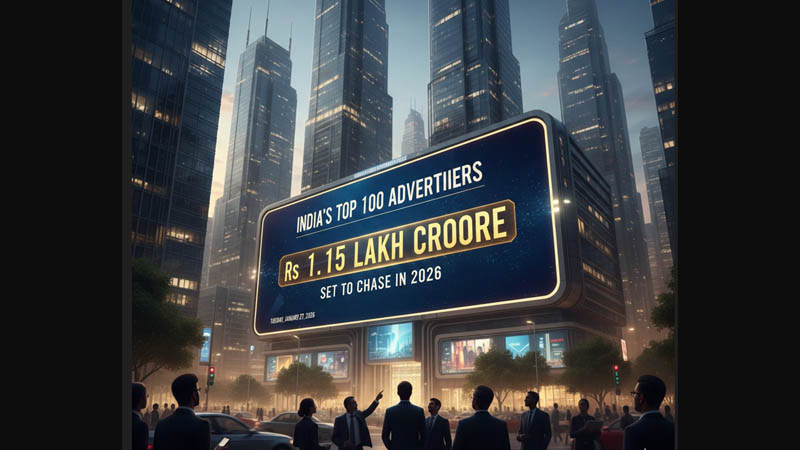
New Delhi: India’s biggest advertisers are gearing up for a spending spree. Fresh Adex estimates show marketing spends crossing Rs 1.15 lakh crore in 2026, with digital accounting for more than half of total outlays and the top 100 brands tightening their grip on the market.
Data tracking ad spends across 2024 and projected growth through 2025 suggests rising concentration at the top. Around 35 per cent of total adex is expected to come from just the top 50 marketers, underscoring the growing clout of a handful of deep-pocketed brands.
India crossed the Rs 1,00,000 crore advertising milestone in 2025, posting over 10 per cent year-on-year growth, making it the fastest-growing major ad market globally. The pace shows little sign of easing.
At the summit, FMCG remains unshakeable. Unilever continues to lead the pack, with Procter & Gamble, Reckitt, Mondelēz International, Godrej Consumer Products, ITC, Coca-Cola, PepsiCo, L’Oréal, Amul, Nestlé and Colgate-Palmolive showing no appetite for budget cuts.
Reliance Industries is expected to overtake India’s second-largest advertiser, closing in on Unilever at the top of the table. Autos are the next big battleground, with at least 25 new car and two-wheeler launches pushing Maruti Suzuki, Hyundai, Honda and Hero MotoCorp to step up spending.
Digital-first brands are now firmly entrenched among the heavyweights. Amazon, Google and Flipkart sit alongside quick commerce players Swiggy, Zomato and Zepto, reflecting a decisive shift in where the money follows attention.
Fintech is emerging as the fastest-growing category. Groww, NPCI and Angel One are scaling spends rapidly, filling the vacuum left by gaming firms, which saw the sharpest pullback in 2025.
India’s home-grown stalwarts—LIC, Asian Paints, UltraTech Cement and Havells—continue to deploy capital steadily, while pan masala advertisers remain reliably aggressive, indifferent to cycles or sentiment.
Behind the numbers lies a structural shift. Television budgets are steadily moving towards connected TV, OTT platforms, digital video and OOH screens as advertisers chase sharper targeting and measurable returns.
The conclusion is blunt: the chase for India’s top 100 advertisers will be brutal in 2026—but the real opportunity may lie just beyond them. In a slowing global economy, India’s ad engine is still accelerating.


Mukesh Ambani, Larry Fink come together for CNBC-TV18 exclusive

Nielsen launches co-viewing pilot to sharpen TV measurement

Netflix celebrates a decade in India with Shah Rukh Khan-narrated tribute film

Delhivery chairman Deepak Kapoor, independent director Saugata Gupta quit board

Meta appoints Anuvrat Rao as APAC head of commerce partnerships

Brnd.me enters Europe as haircare brands power global expansion

TechnoSport taps quick commerce with launch on Slikk’s 60-minute platform

These ’90s fashion trends are making a comeback in 2017
The final 6 ‘Game of Thrones’ episodes might feel like a full season
According to Dior Couture, this taboo fashion accessory is back
The old and New Edition cast comes together to perform
Phillies’ Aaron Altherr makes mind-boggling barehanded play
Uber and Lyft are finally available in all of New York State
Disney’s live-action Aladdin finally finds its stars
Mukesh Ambani, Larry Fink come together for CNBC-TV18 exclusive
Nielsen launches co-viewing pilot to sharpen TV measurement
Netflix celebrates a decade in India with Shah Rukh Khan-narrated tribute film
Delhivery chairman Deepak Kapoor, independent director Saugata Gupta quit board
Meta appoints Anuvrat Rao as APAC head of commerce partnerships
Brnd.me enters Europe as haircare brands power global expansion
TechnoSport taps quick commerce with launch on Slikk’s 60-minute platform
-
 iWorld4 days ago
Netflix celebrates a decade in India with Shah Rukh Khan-narrated tribute film
-
 I&B Ministry3 months ago
India steps up fight against digital piracy
-
 iWorld3 months ago
Tips Music turns up the heat with Tamil party anthem Mayangiren
-
 iWorld12 months ago
BSNL rings in a revival with Rs 4,969 crore revenue
-
 MAM3 months ago
HoABL soars high with dazzling Nagpur sebut
-
 News Broadcasting2 months ago
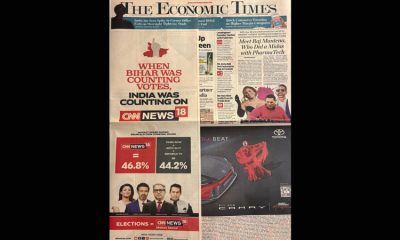
CNN-News18 dominates Bihar election coverage with record viewership
-
 News Broadcasting11 hours ago
Mukesh Ambani, Larry Fink come together for CNBC-TV18 exclusive
-

 MAM3 months ago
Kapil Sethi joins Network18 as head of technology