Ad Campaigns
Women portrayal: Better days are emerging


MUMBAI: The debate over portrayal of women in our advertisements and soaps is ever going. Remember the recent Airtel advertisement which created a furor as people debated if a working woman should cook or not? Or even the last year’s Ford Figo advertisement, which saw people from creative agency JWT being asked to leave and not to forget the deodorant ads.
Many blame that the sexist or regressive portrayal of women in advertisements, soaps and movies is the reason behind the way they are treated in real life. While others say it just reflects the changing morals and values of the generation that consumes it. The advertising industry has been faced with a piquant situation, for many years now.
However, over time, steps have been taken to apply a healthy amalgam of scientific temper and good intentions to pursue the goal of gender equality.
Advertising is known to reflect societal norms and should be a torch bearer of change. Does advertising showcase the changes in women’s roles? The question is answered in a survey, of key personnel in advertising and marketing in the report titled, Changing Gender Frames.
In today’s connected and networked times, the role of media in shaping and forming public opinion and perceptions has been well documented. One such area is that of gender stereotyping. So, one of the ways to change the attitude towards women could be through the change in portrayal of women in media and advertising.
The research, included marketing and advertising professionals spread across Delhi, Mumbai and Chennai, to assess and understand the status of gender stereotypes, the perceptions of the portrayal of women in advertising and an understanding of the effect of communication that challenges gender stereotypes.
In the research, professionals resoundingly endorsed that it is education and financial independence that is empowering women, giving them more decision making power and helping them enter public spaces and conversations.

There was almost unanimous agreement that gender roles are less clearly defined these days, and stereotyping and accompanying social pressures are on the wane, especially for aspects like women working out of the house and men doing housework, both of which have become acceptable. But women still feel that children are more their responsibility than that of the father.
However, there is some ambiguity on the whole sexuality or body image aspect. Women still report that men normally judge them on the basis of beauty and sex appeal.
Professionals are of the opinion that in advertising today women are being portrayed more as energetic, confident and modern multi-taskers than as ‘homely’. This then leads to the question of whether a new stereotype of supermom has arrived.
While most professionals feel that the changing trend is sustainable, it rests on the fact that marketers now look at women as a potential segment which will facilitate growth; thereby making it important to tap the potential of this segment which is now experiencing independence on the financial as well as decision making front.
Using women ‘provocatively’, in advertising is seen as a sure shot way to grab attention even today by both men and women.
The research also flagged advertising that has been noticed for its challenging of gender stereotypes. Airtel with the wife as boss, the remarriage story of Tanishq and the mother who trains her child in the Bournvita commercial, have emerged as examples of moving to the new gender conversation with style.
However, there is still a majority feeling that advertising has not been able to portray the actual status of women in society. While there seems to be a change in the portrayal of women in advertising due to her newer roles, there still seems to be a lot of opportunity to explore various facets of women and showcase them in advertising.
Click here to read the full report












NATIONAL: Amazon Ads has laid out a sharply tech-led vision for the advertising industry in 2026, arguing that artificial intelligence, streaming TV and creator partnerships will combine to turn brand building into a more precise, performance-driven business.
At the heart of the shift, the company says, is the fusion of AI with Amazon’s vast trove of shopping, browsing and streaming signals, allowing advertisers to move beyond blunt reach metrics to campaigns designed around real customer behaviour.
“The future of advertising is not about reaching more people, but the right people with messages that resonate,” said Amazon Ads India head and vice president Girish Prabhu. “By combining AI with deep customer insights, we help brands move from broadcasting campaigns to having meaningful conversations wherever audiences spend their time.”
One of the biggest changes, according to Amazon Ads, will be the collapse of the wall between media planning and creative development. Retail media, powered by first-party data, is increasingly shaping everything from brand discovery to final purchase, pushing marketers to design campaigns around audience insight rather than internal instinct.
AI is also moving from a support tool to a creative engine. Agentic AI, which automates and accelerates production, is expected to make high-quality creative accessible even to small businesses, compressing weeks of work into hours and giving challengers the ability to compete with larger brands on speed and scale.
Behind the scenes, AI-driven analytics will take on a bigger role in campaign optimisation, identifying patterns, spotting opportunities and recommending actions that would previously have required teams of analysts.
Streaming TV is another big battleground. With India’s video streaming audience now above 600 million and connected TV users at 129.2 million in 2025, advertisers are set to treat streaming not just as a branding channel but as a performance engine, measured increasingly by sales, sign-ups and bookings rather than just reach.
Finally, Amazon Ads sees creators and contextual advertising reshaping how brands tell stories. Creators will act less like influencers and more like long-term partners, while scene-aware ads on streaming platforms will allow brands to insert hyper-relevant offers into the flow of what viewers are watching.
Taken together, Amazon Ads argues, these shifts mark a move towards advertising that is both more human and more measurable, where AI handles the complexity, and creativity does the persuading.
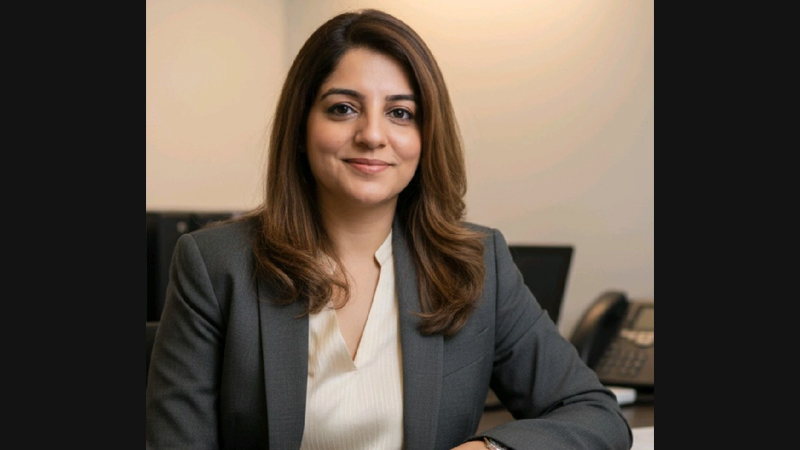
MUMBAI: Publicis Groupe India has appointed Sonal Verma as managing director of Arc Worldwide India, handing the reins of its experiential and shopper marketing business to a leader steeped in live brands and real world storytelling.
Arc Worldwide, the Groupe’s specialist arm focused on experiences that nudge consumers from curiosity to checkout, sits at the intersection of creativity, commerce and culture. Verma’s mandate is to sharpen that edge as brands grapple with shorter attention spans and more complicated buying journeys.
Verma joins from Cheil India, where she spent nearly five years building and leading the brand experience practice, most recently as senior vice president and head of brand experience. Her career reads like a tour of India’s experiential landscape, with leadership roles at Momentum Worldwide, Percept D Mark, Blockkbuster Events and Showtime Events.
She has also held senior activation roles at Radio City and The Times of India, giving her a rare mix of agency, media and on-ground execution experience. The common thread has been simple: turning big ideas into moments people remember and talk about.
At Arc Worldwide India, Verma will focus on expanding the agency’s experiential and shopper capabilities, strengthening client partnerships and keeping the work firmly rooted in consumer behaviour rather than buzzwords.
With Verma at the helm, Arc Worldwide is expected to double down on ideas that live beyond screens and closer to everyday life. For an industry obsessed with clicks and scrolls, this is a reminder that sometimes the strongest connections still happen face to face.
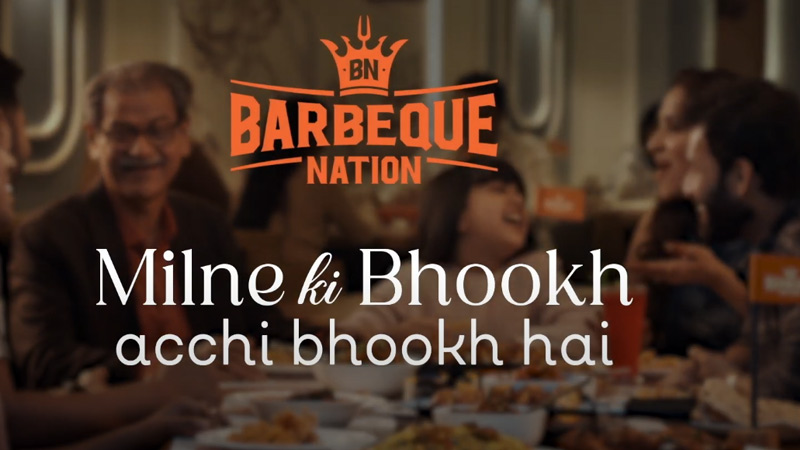
BENGALURU: Barbeque Nation is ringing in the new year with a reminder that some cravings cannot be ordered online. The casual dining chain has rolled out a new film campaign, milne ki bhookh, pitching its restaurants as places to meet, reconnect and linger over food.
Set against a world of constant messages and missed meet-ups, the campaign leans into a simple truth: dining out remains one of the few rituals that still brings people together. Barbeque Nation positions itself as the excuse and the setting for real conversations, shared plates and unhurried moments.
Nakul Gupta, cmo at Barbeque Nation, says the brand has long been about shared celebrations. As the year turns, milne ki bhookh captures what he calls a growing hunger to meet, connect and spend time together, with food at the centre of that experience.
Created by Makani Creatives, the campaign comprises three films built around Barbeque Nation’s signature grills and desserts. The storytelling is deliberately sensorial, designed to spark cravings while nudging diners to step out and meet in person.
Pavan Punjabi, chief integration officer at Makani Creatives, says the idea stems from a familiar contradiction. People are constantly connected, yet meetings with loved ones are endlessly postponed. Milne ki bhookh, he says, is a gentle push to make time for real-life catch-ups, using food as the reason to come together, share a meal and create memories.
The campaign breaks on December 25 with the grilled prawns film and will run for two months, amplified across digital platforms. As the new year begins, Barbeque Nation is betting that the strongest appetite of all is not for food alone, but for each other.


MIB sets OTT accessibility rules, mandates captions and audio description

Boney Kapoor acquires remake rights of Tamil political satire Thalaivar Thambi Thalaimaiyil

Netflix India names Rekha Rane director of films and series marketing

Zabeen signs off from TV9 after shaping the network’s public voice

Dhawan steps up to bat for Delhi’s grassroots sports push

Orient Beverages pops the fizz with steady Q3 gains and rising profits

Cheekatilo shines in the dark with record debut on Prime Video

These ’90s fashion trends are making a comeback in 2017
The final 6 ‘Game of Thrones’ episodes might feel like a full season
According to Dior Couture, this taboo fashion accessory is back

Swiggy Instamart’s GOV surges 103 per cent year on year to Rs 7,938 crore
The old and New Edition cast comes together to perform
Phillies’ Aaron Altherr makes mind-boggling barehanded play
Uber and Lyft are finally available in all of New York State
MIB sets OTT accessibility rules, mandates captions and audio description
Boney Kapoor acquires remake rights of Tamil political satire Thalaivar Thambi Thalaimaiyil
Netflix India names Rekha Rane director of films and series marketing
Zabeen signs off from TV9 after shaping the network’s public voice
Dhawan steps up to bat for Delhi’s grassroots sports push
Orient Beverages pops the fizz with steady Q3 gains and rising profits
Cheekatilo shines in the dark with record debut on Prime Video
-
 e-commerce3 weeks ago
Swiggy Instamart’s GOV surges 103 per cent year on year to Rs 7,938 crore
-

 News Headline2 months ago
From selfies to big bucks, India’s influencer economy explodes in 2025
-

 News Broadcasting2 weeks ago
Mukesh Ambani, Larry Fink come together for CNBC-TV18 exclusive
-
 iWorld5 months ago
Billions still offline despite mobile internet surge: GSMA
-

 News Headline2 months ago
2025: The year Indian sports saw chaos, comebacks, and breakthroughs
-

 Applications2 months ago
28 per cent of divorced daters in India are open to remarriage: Rebounce
-
 MAM2 years ago
Costa Coffee becomes official coffee partner of Olympic Games Paris 2024
-

 News Headline2 months ago
Game on again as 2025 powers up a record year and sets the stage for 2030