
Brands
Will fairness brands bid adieu?


NEW DELHI: After beauty standards and the flawed idea of "fair is beautiful" caught the limelight amid the #BlackLivesMatter protests in the US, brands have taken a much-needed step across countries. Just yesterday, Hindustan Unilever (HUL) announced that it will be dropping the word 'fair' from its infamous skin whitening product Fair & Lovely and soon announce a new name.
Supporting the #BlackLivesMatter cause, American multinational giant Johnson & Johnson also decided to stop selling its skin lightening products range globally. Clear & Clear will no longer be sold in India and Neutrogena will not be available in the Asian and Middle Eastern markets.
The fairness cream market in India is dominated by HUL, P&G, Garnier, L’Oreal and many others. Brands over the years have played on and perpetuated the idea that fair skin is everything and have been criticised for provoking thoughts which encourage discrimination on the basis of colour.
Fair & Lovely, endorsed by actress Yami Gautam, is considered to be one of HUL's best-selling products, unhampered by criticism.
According to a recently published report, "India Fairness Cream & Bleach Market Overview, 2018-2023", the women's fairness cream category is anticipated to achieve market revenues of more than Rs 5000 crore by the year 2023.

While Johnson&Johnson recently called it quits from the fairness cream market, could we see other brands, especially Indian ones, taking the same route or revise their way of communicating to viewers?
Dentsu Impact VP planning Krittika Chakraborty shares, “The Indian fairness cream market is dominated by HUL whose Fair & Lovely has an 80 per cent share. It is, of course, very much possible that brands like Fair & Lovely may stop advertising during this time as this debate boils over in the international arena. Ad spends might be affected in the short to medium term in India but it is doubtful whether it would directly impact demand for these products.”
Commwiser Consultants co-founder Aman Abbas says that the fetish for fair skin in India is deep-rooted and centuries old. Therefore, it will take many decades of active campaigns and a lot of education for this to start fading off.
There has been a heated debate against such advertisements, as a result, the ministry of health and family welfare finalised drugs and magic remedies (objectionable advertisements) (amendment) Bill, 2020 under which the proposed draft amendment bans advertisements of products that promote fairness creams, enhance sexual performance, cure premature aging and greying of hair, improvement in height of children or adults, among others. The violators will face a penalty up to Rs 50 lakh and can be served prison time for five years.
"Interestingly, the laws are more focused on the ‘misleading claims’, which means whether the creams are actually making one fair or not and whether the ingredients are safe. There is little focus on the very concept of it," Abbas points out.
He also adds, “Global brands like J&J have taken the right step and it must be lauded. But there may be many local players who would view J&J’s exit as an opportunity and move in to fill the gap."
Over the years brands have diversified their business to the male fairness segment as well with leading actors as brand ambassadors including Shah Rukh Khan, Hrithik Roshan, Varun Dhawan and Kartik Aaryan. Indian cricket team captain Virat Kohli was also a former brand ambassador but from 2017, he has refused to endorse fairness brands and others that he doesn't personally use.
Chakraborty says that even if the marketing angle changes, the promise of the product stays the same and that needs to be addressed.
“An answer might lie in ranges and narratives that talk about healthy skin with an equal celebration of all skin tones and face types, not just the ones that fit our prevailing notions of beauty,” she says.
Echoing the same perspective Abbas shares, “The reality is that the society would still ‘need’ fairness creams for the age-old ‘approval’ to look beautiful. So, the products will exist and sold in the market. The brands have an image to keep, appear sensitive to the environment and say the right things. In the days of social media activism that impact the brand image and even sales directly, brands may ‘respond’ to the environment and change the communication to something subtle.”
Chakraborty strongly opines that such products should not exist as they reinforce a dangerous and regressive stereotype.While it's desirable to believe that a change in marketing tactics may cut down demand, she says it's wishful thinking.
“While multinationals might take global calls to end the glorification of light skin or certain beauty standards through their products and advertising, the majority of Indians will still continue to hold light skin in high regard," she says.
Experts believe that the recent backlash will not negatively impact any Indian brand and they will not stop selling such products as they clock huge revenue.










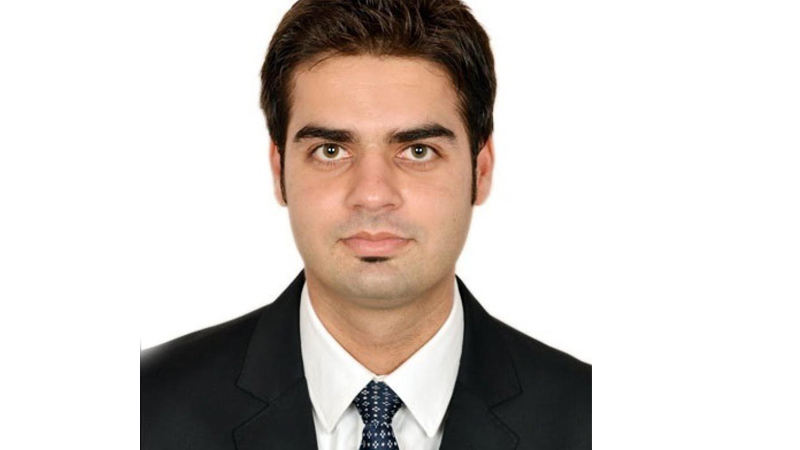
MUMBAI: Zepto has elevated Ahmad Muneeb to vice president – HR centre of excellence, placing him at the helm of the company’s total rewards, executive compensation and organisational effectiveness as the quick-commerce firm powers through a high-growth phase.
The move follows his stint as senior director of the HR COE, where he played a central role in preparing the company for IPO readiness while scaling its people analytics capabilities. During this period, Muneeb helped align complex performance management structures with more streamlined and scalable employee experience frameworks.
In his new role, he will steer the design of total rewards strategies, executive compensation planning and organisational design, while also overseeing performance management, employee experience initiatives and people analytics programmes.
Before joining Zepto, Muneeb spent nearly three years at Meesho, where he held multiple rewards and HR business partner roles. Earlier in his career, he worked as a senior rewards consultant at Mercer, advising high-tech clients on compensation benchmarking, pay structures and talent-focused reward frameworks.
He began his hr journey at Cognizant, where he supported compensation programmes for nearly two lakh employees across India and worked on m&a compensation alignment and skill-based pay initiatives. Prior to moving into HR, Muneeb started his career as a software engineer at Netcracker, bringing a technical grounding to his people strategy work.
With a mix of consulting rigour, start-up agility and enterprise-scale experience, Muneeb’s elevation signals Zepto’s continued focus on building robust people systems as it races towards its next phase of growth.

INDIA: Dell Technologies is doubling down on artificial intelligence in marketing. The company has elevated Aishwarya Sudhakar to director of marketing measures and intelligence engineering, tasking her with building an enterprise-wide framework for AI-led measurement and customer intelligence.
In the role, Sudhakar will oversee unified data strategy, advanced modelling and context engineering: areas increasingly central to how large technology firms link marketing performance to business outcomes. Her remit includes shaping scalable systems that support Dell’s next phase of AI deployment across marketing functions.
Sudhakar steps into the position after holding a series of senior roles at Dell, including AI lead for marketing orchestration, senior manager, and senior data scientist in customer insights. Across these roles, she led global teams working on large-scale machine learning models, data pipelines and customer analytics.
Before joining Dell, she began her career at Tata Consultancy Services as a systems engineer and later founded Oclor, a shopping discovery start-up, where she built end-to-end technology platforms. The combination of enterprise-scale data work and entrepreneurial experience has shaped her focus on product-led, engineering-first innovation.
As technology companies seek sharper attribution and intelligence in an AI-saturated market, Dell’s move underscores the growing importance of marketing measurement as an engineering discipline rather than a reporting function.
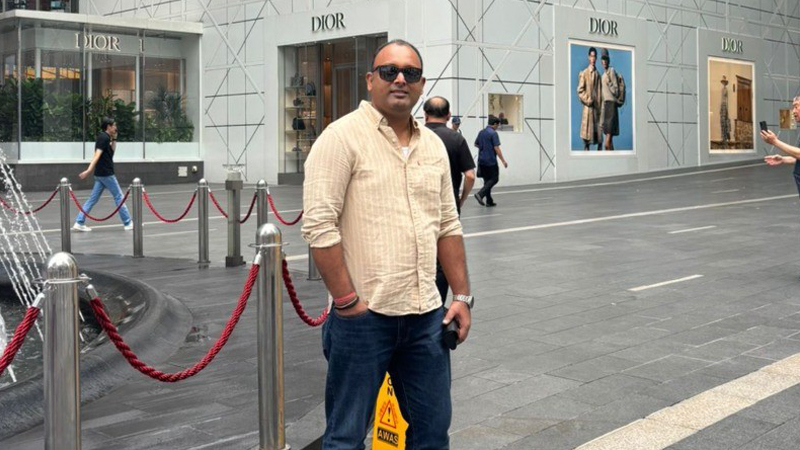
GURUGRAM: Adidas has appointed Gaurav Pathak as director of key and field accounts, bringing back an executive who began his leadership career at the company.
In the role, Pathak will be responsible for deepening strategic partnerships and expanding key, field and export accounts, with a mandate to accelerate growth across the Indian market. The appointment marks a return to Adidas after nearly a decade across premium retail and footwear brands.
Pathak most recently served as head of retail and business development at Ecco, where he focused on partner-led growth, market risk mitigation and operational scale. Before that, he spent eight years at House of Anita Dongre Limited, rising to general manager and leading regional operations across western and southern India.
His earlier career includes a stint as regional sales manager for Karnataka at United Colors of Benetton India and a six-year run at Adidas, where he held sales leadership roles.
With competition intensifying in India’s lifestyle and footwear market, Pathak’s brief will centre on strengthening field execution while aligning large accounts with Adidas’s broader commercial priorities.


Hamdard honours changemakers at Abdul Hameed awards

Why the Best Campaigns Today Start With Insights, Not Ideas

Ahmad Muneeb elevated to VP – HR centre of excellence at Zepto

Fans Take Centre Stage as Zee Cine Awards Turns the Spotlight Around

GUEST COLUMN: How content leaders decide what gets greenlit

The man who dubbed Lord of the Rings in 50 languages is stunned by Mumbai traffic

Dell names Aishwarya Sudhakar director of marketing intelligence

These ’90s fashion trends are making a comeback in 2017
The final 6 ‘Game of Thrones’ episodes might feel like a full season
According to Dior Couture, this taboo fashion accessory is back
The old and New Edition cast comes together to perform
Phillies’ Aaron Altherr makes mind-boggling barehanded play
Uber and Lyft are finally available in all of New York State
Disney’s live-action Aladdin finally finds its stars
Hamdard honours changemakers at Abdul Hameed awards
Why the Best Campaigns Today Start With Insights, Not Ideas
Ahmad Muneeb elevated to VP – HR centre of excellence at Zepto
Fans Take Centre Stage as Zee Cine Awards Turns the Spotlight Around
GUEST COLUMN: How content leaders decide what gets greenlit
The man who dubbed Lord of the Rings in 50 languages is stunned by Mumbai traffic
Dell names Aishwarya Sudhakar director of marketing intelligence
-

 News Broadcasting5 days ago
Mukesh Ambani, Larry Fink come together for CNBC-TV18 exclusive
-
 I&B Ministry3 months ago
India steps up fight against digital piracy
-

 iWorld1 week ago
Netflix celebrates a decade in India with Shah Rukh Khan-narrated tribute film
-
 iWorld3 months ago
Tips Music turns up the heat with Tamil party anthem Mayangiren
-
 MAM3 months ago
HoABL soars high with dazzling Nagpur sebut
-
 iWorld12 months ago
BSNL rings in a revival with Rs 4,969 crore revenue
-
 MAM5 days ago
Nielsen launches co-viewing pilot to sharpen TV measurement
-

 Film Production1 week ago
UFO Moviez rides high on strong Q3 earnings
