
Brands
Why does Dairy Milk continue to remain India’s favourite chocolate?


MUMBAI: Go to any store in India and ask the person to hand you a Cadbury. You are for sure to get a bar of Dairy Milk, wrapped in purple cover, in your hand. Such has been the company’s branding that chocolate has become synonymous with Cadbury, although it is a brand with many candies.
Cadbury Dairy Milk (CDM) was the first chocolate bar to have higher milk content than earlier ones when it was launched in the UK in 1905. By 1914, it had become Cadbury’s bestseller. But how did it become India’s favourite?
Cadbury India, now known as Mondelez India, began its operations here right after independence, in 1948, by importing chocolates.

In the land of gulab jamun and rasgulla, chocolate was an alien and expensive. Dairy Milk turned out to be a rather failed launch for the company. None but the crème de la crème could afford to buy an imported chocolate. Also, in the 70’s and 80’s, the brand was only available in certain areas and its ads usually showcased a working man coming back home with a chocolate bar in his pocket for his child. Dairy Milk was relegated as a product for children only.
In the 80’s, Cadbury decided to manufacture Dairy Milk in India just to ensure that the production cost comes down and it’s available at a cheaper price point for Indians. But, other chocolate makers were still selling at lower prices. With sales dipping, the team was desperate for a communication strategy.
India’s ad-man Piyush Pandey from Ogilvy & Mather came to the brand’s rescue in 1991. He suggested that the brand needed a revamped identity and target the younger generation and adults. Ogilvy created the first iconic campaign for Cadbury titled, “Kuch meetha ho jaaye” in 1993 which continues to remain the favourite jingle of every 90s kid.
The campaign worked like a charm and Dairy Milk soon became every youth’s favourite chocolate. Suddenly, all these grownups — these responsible, serious grownups — had CDM bars in their hands. Batsmen, referees, grandfathers, policemen, teachers, pregnant women, college friends, lovers— the target group for Cadbury had changed and it was okay for adults to indulge now and that too in public.
There was no looking back. Since then, Dairy Milk has continued to remain every Indian’s go-to chocolate.
Through the years, Dairy Milk has been known for its loveable advertisements that make you want to sing along and do a little jig yourself. In the last decade, Dairy Milk has been positioned as something ‘meetha’ (sweet) — a strategy to counter traditional Indian sweets and the reach of local sweet shops. It comes as no surprise that Cadbury Dairy Milk is the most sold chocolate during festivals and special occasions.

Mondelez attributes the company’s strategy of constant innovation and evolving with Indian consumers as reasons for its growth. “In the beginning, we were just trying to say that chocolate is a nice treat for kids but today Dairy Milk is a mass brand and it is a part of everyone’s heart. We have made a huge change in communication right from talking to kids to being occasion specific to now a casual consumption product,” says Mondelez International associate director for chocolate equity, India and South East Asia Nitin Saini.
According to a recent market research report titled Branded Chocolate Market in India, the chocolate market is projected to grow at a CAGR of 17.8 per cent between FY 2017 to FY 2022. In the branded chocolate segment, Mondelez India has a whopping 65 per cent market share and its closest competitor is Nestle with 20 per cent market share.
Another aspect that works in favour of CDM is that it has few competitors in its category. Mars Inc’s Galaxy is the closest you can get but while CDM is available for Rs 10, Galaxy starts at Rs 25. The product’s success has even spawned cheap imitation chocolates at lower prices.
In the early 2000s, the company roped in star Amitabh Bachchan to promote it. Very soon, news about worms in CDM packets started leaking out and the company saw a 30 per cent dip in sales. The company lost no time in launching an aggressive campaign for its new tighter packaging which cost 10-15 per cent higher but did not hike the rates. It didn’t take long for consumer confidence to be back.
Mondelez has a strong distribution network in India and it is only growing every year. You visit a chemist shop, a drug store, a general store, supermarket, airport or a small pan-bidi shop, they all have a dedicated set of CDM bars to offer. In 2017, the chocolate giant had over 1000 distributors and 7000 sub-stockists who distributed products to small general stores and other retailers. Rural sales contributed about one-fifth of Mondelez’s sales in the same year which was 10 per cent higher than a year before. Mondelez currently has 350,000 outlets in 40,000 villages and sees the next phase of growth coming from hinterlands.
Though Dairy Milk cuts across all age groups and class, that seems to be changing now as chocolate and hazelnut confectionery, Ferrero Rocher, has come to be the latest favourite of the young and elite. Priced at Rs 430 for 12 pieces, the company faces a stiff competition from Dairy Milk that is India’s favourite festive gifting option. Come Diwali or Raksha Bandhan, and we see television and digital screens filled with Cadbury ads about making relationships stronger with something ‘meetha’.
Not only has CDM managed to break into a difficult market but has even maintained its lead. Riding on the back of extensive marketing, communication and distribution networks, it will take a gigantic effort to dethrone it.




Gurugram: Delhivery’s boardroom is being reset. Deepak Kapoor, chairman and independent director, has resigned with effect from April 1 as part of a planned board reconstitution, the logistics company said in an exchange filing. Saugata Gupta, managing director and chief executive of FMCG major Marico and an independent director on Delhivery’s board, has also stepped down.
Kapoor exits after an eight-year stint that included steering the company through its 2022 stock-market debut, a period that saw Delhivery transform from a venture-backed upstart into one of India’s most visible logistics platforms. Gupta, who joined the board in 2021, departs alongside him, marking a simultaneous clearing of two senior independent seats.
“Deepak and Saugata have been instrumental in our process of recognising the need for and enabling the reconstitution of the board of directors in line with our ambitious next phase of growth,” said Sahil Barua, managing director and chief executive, Delhivery. The statement frames the exits less as departures and more as deliberate succession, a boardroom shuffle timed to the company’s evolving scale and strategy.
The resignations arrive amid broader governance recalibration. In 2025, Delhivery appointed Emcure Pharmaceuticals whole-time director Namita Thapar, PB Fintech founder and chairman Yashish Dahiya, and IIM Bangalore faculty member Padmini Srinivasan as independent directors, signalling a tilt towards consumer, fintech and academic expertise at the board level.
Kapoor’s tenure spanned Delhivery’s most defining years, rapid network expansion, public listing and the push towards profitability in a bruising logistics market. Gupta’s presence brought FMCG and brand-scale perspective during a period when ecommerce volumes and last-mile delivery economics were being rewritten.
The twin exits, effective from the new financial year, underscore a familiar corporate rhythm: founders consolidate, veterans rotate out, and fresh voices are ushered in to script the next chapter. In India’s hyper-competitive logistics race, even the boardroom does not stand still.
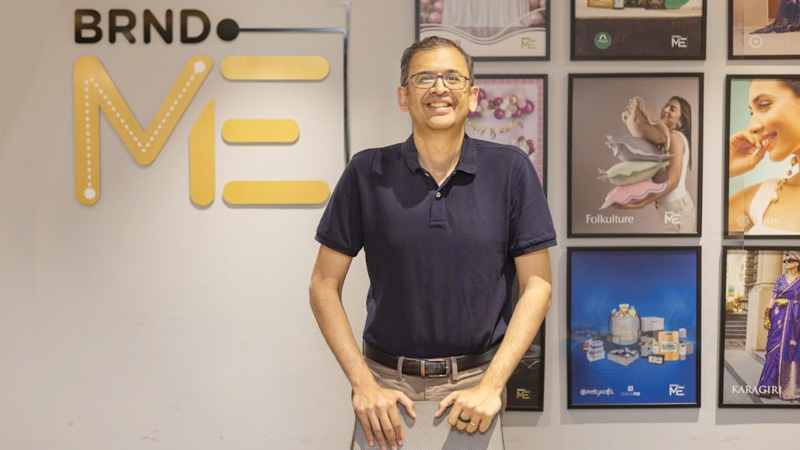
Bengaluru: Brnd.me, the global consumer brands company formerly known as Mensa Brands, has entered the European market following strong momentum across the Middle East, the United States and Canada.
The company has launched across the UK, Germany, France and Spain, with plans to expand into Italy, the Netherlands and Poland over the next year. The push is being led by its haircare and aromatherapy brands, Botanic Hearth and Majestic Pure, marking Brnd.me’s first structured expansion into Europe.
The European beauty market represents a total addressable opportunity of over $4 billion across haircare and aromatherapy, supported by high digital adoption and demand for accessible, performance-led products.
Brnd.me’s hair care and aromatherapy business currently operates at an annual run rate of around $6 million, with Botanic Hearth and Majestic Pure delivering roughly 10 per cent month-on-month growth, driven by expansion and rising repeat demand.
To support regional growth, the company has appointed a general manager based in Germany and is evaluating investments in warehousing and local team expansion.
Early traction has been strong. Within weeks of launch, Botanic Hearth’s rosemary hair oil ranked among the top five hair oils in Germany, signalling strong consumer pull in a competitive market.
Brnd.me founder and chief executive officer Ananth Narayanan, said Europe represents the next phase of the company’s international strategy. He added that the European business is expected to scale to a $10 million annual run rate by the end of 2026, with long-term ambitions to reach $60 million over the next six years.
The company’s Europe strategy centres on digital-first distribution, repeat demand and TikTok-led discovery, alongside direct-to-consumer expansion to strengthen brand equity and margins.
The move also aligns with growing EU–India trade engagement, supporting long-term sourcing and cross-border supply chains.

NATIONAL: TechnoSport has launched on Slikk, the ultra-fast fashion app offering 60-minute delivery, as the activewear brand accelerates its push into quick commerce to capture Gen Z and young millennial shoppers.
The debut brings more than 150 high-performance styles to Slikk’s platform, with an average selling price of Rs 450, expanding TechnoSport’s reach across over 80 pin codes.
The partnership follows strong momentum for TechnoSport across Q-commerce channels, where the brand has recorded around 60 per cent volume growth over the past six months. The company expects quick commerce to contribute nearly 20 per cent of its revenue in the coming years as hyperlocal delivery gains scale.
Slikk, which recently raised $3.2 million in seed funding led by Lightspeed, has rapidly gained popularity among youth consumers seeking speed, trend relevance and impulse-led shopping experiences.
Activewear remains one of Slikk’s fastest-growing categories, driven by shoppers increasingly treating fitness-led fashion as an everyday essential. The platform has reported a 30-fold year-on-year increase in items sold, reflecting rising demand for performance wear that blends comfort with style.
TechnoSport chief executive officer Puspen Maity, said the collaboration would help the brand engage more closely with young consumers whose fashion choices are shaped by instant needs and lifestyle aspirations. He added that rapid delivery bridges the gap between intent and purchase, allowing shoppers to access activewear exactly when they want it.

Mukesh Ambani, Larry Fink come together for CNBC-TV18 exclusive

Nielsen launches co-viewing pilot to sharpen TV measurement

Netflix celebrates a decade in India with Shah Rukh Khan-narrated tribute film

Delhivery chairman Deepak Kapoor, independent director Saugata Gupta quit board

Meta appoints Anuvrat Rao as APAC head of commerce partnerships

Brnd.me enters Europe as haircare brands power global expansion

TechnoSport taps quick commerce with launch on Slikk’s 60-minute platform

These ’90s fashion trends are making a comeback in 2017
The final 6 ‘Game of Thrones’ episodes might feel like a full season
According to Dior Couture, this taboo fashion accessory is back
The old and New Edition cast comes together to perform
Phillies’ Aaron Altherr makes mind-boggling barehanded play
Uber and Lyft are finally available in all of New York State
Disney’s live-action Aladdin finally finds its stars
Mukesh Ambani, Larry Fink come together for CNBC-TV18 exclusive
Nielsen launches co-viewing pilot to sharpen TV measurement
Netflix celebrates a decade in India with Shah Rukh Khan-narrated tribute film
Delhivery chairman Deepak Kapoor, independent director Saugata Gupta quit board
Meta appoints Anuvrat Rao as APAC head of commerce partnerships
Brnd.me enters Europe as haircare brands power global expansion
TechnoSport taps quick commerce with launch on Slikk’s 60-minute platform
-
 iWorld4 days ago
Netflix celebrates a decade in India with Shah Rukh Khan-narrated tribute film
-
 I&B Ministry3 months ago
India steps up fight against digital piracy
-
 iWorld3 months ago
Tips Music turns up the heat with Tamil party anthem Mayangiren
-
 iWorld12 months ago
BSNL rings in a revival with Rs 4,969 crore revenue
-
 MAM3 months ago
HoABL soars high with dazzling Nagpur sebut
-
 News Broadcasting2 months ago
CNN-News18 dominates Bihar election coverage with record viewership
-
 News Broadcasting20 hours ago
Mukesh Ambani, Larry Fink come together for CNBC-TV18 exclusive
-

 MAM3 months ago
Kapil Sethi joins Network18 as head of technology