Mumbai: In the cluttered creative world, who takes the onus on the brand messaging? In the earlier days say a decade ago it was the advertising agency that was the brand custodian, but in the past few years that has changed drastically. There are too many players in the market for a single brand. There is an advertising agency, then a content writer, and then a plethora of influencers for the brand. Is this messaging in synchronisation with the agency’s message, not really.
In this scenario does the brand lose out because of the multiple messaging, or do brands feel that messaging cannot be a buffet but customised for various TG’s? The debate rages on, we asked this to a few people in the advertising industry for their thoughts.
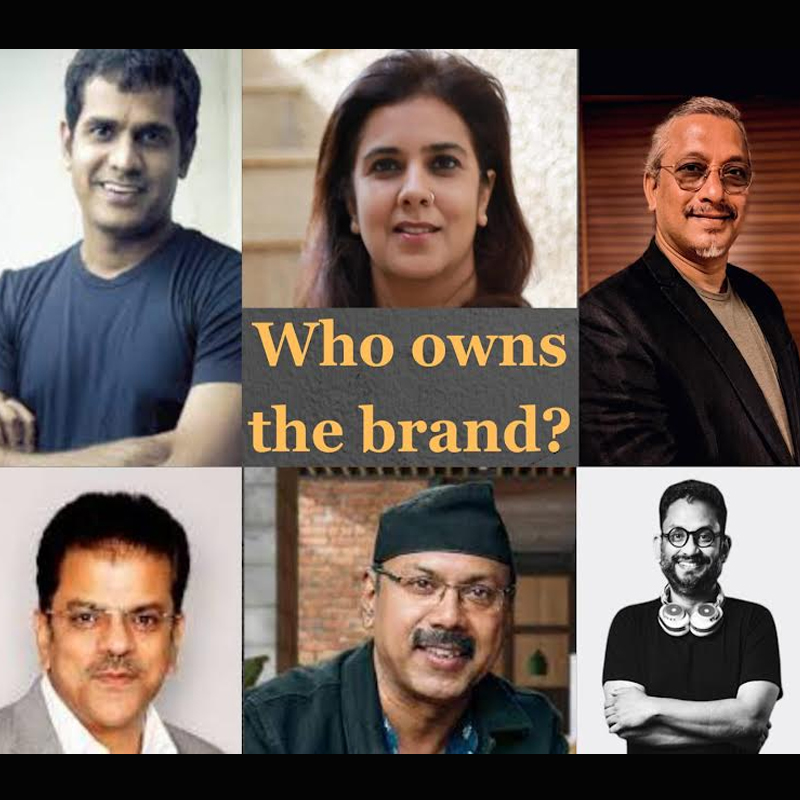
Indiantelevision.com spoke to consultant Subhash Kamath, FCB Ulka CEO Rohit Ohri, ASCI CEO and secretary general Manisha Kapoor, Wieden + Kennedy CEO Santosh Padhi, RajDeepak Das – chief creative officer and CEO. Leo Burnett, SouthAsia, India & Chairman, Creative Council, Publicis Groupe – South Asia
On the question of who is the brand custodian, an ongoing debate as to who really owns the brand as there are myriad messaging, and at times it does not sync, Kamath said, “Things have changed rapidly in recent years. Unlike in the past, where the advertising agency was usually the sole ‘brand custodian’ and partner for the client, today you have multiple stakeholders who are involved in communicating for the brand and expressing it. There is of course the creative agency, a social media agency, there are content-creating companies and finally, influencers, who are brands themselves. All of whom are communicating for the brand.”
He goes on to add, “In this scenario, the ‘orchestration’ of the brand’s messaging and maintaining its consistent personality or ‘voice’ becomes a huge challenge for the marketer. As it finally boils down to the client to orchestrate it. While all the partners may be working for the same brand, each of them has a different approach to it. A creative agency is trained to think ‘brand forward’, while a content creator thinks ‘audience forward’. And Influencers, on the other hand, think of their followers first. So the brand’s voice can seem very inconsistent at times because different partners are thinking differently.”
Kapoor when asked said, “Traditionally brand communication has been very closely guarded between the brand owner and traditionally, brand communication has been very closely guarded between the brand owner and their creative agencies. Jointly, they felt responsible for the brand and shared a sense of custodianship. This relationship offered a deep understanding of the brand, its tone and worldview, its consumers, and its messaging. The buck, though, always stopped with the brand owner or the advertiser.”
Kamath also goes on to say,” But clients need to understand that and have to put in proper processes for inducting these different partners into the brand and create a way of working where all the different partners can come together at key points and collaborate better to maintain that consistency on a brand. Sadly, looking at what I see on social platforms, very few brands have understood that well.”
Ohri mentioned, “The point is how brands and brand decision-making have happened, where previously, it was linear when something was needed, you looked for information, made a choice, and then went and bought, but today it is different. It’s a web, where you start and where you end, a dynamic thing. It’s important to be able to control all of that, FCB’s Kinnect has all those capabilities. We’re ideally hoping that we’ll be able to do a lot more of our clients which is the full funnel, so that we can input everything. Kinnect is the best influencer agency in India, they have demonstrated it through Chatpat and it was the new way of creating influencers.”
Padhi, on the other hand, said, “I will give you an example of cricket and Bollywood, two of the biggest industries of our country, in cricket there are 11 players and the captain holds the team together with his vision, strategy which binds the team and it’s a win for the team, the parallel analogy for Bollywood, the director controls the whole show, from actor to script, to music, etc. and he puts out his vision and the rest get aligned to that vision, then there is this magical three-hour movie which engages the audiences. The same thing has to happen with the brand, there can’t be too many cooks, and somebody has to take the lead. The biggest example is the brand ‘Nike’ there is one message across the board. Unfortunately today there is a dearth of everything but the focus is on nothing. The brand needs to say, let the creative agency lead, or the creative agency or the media agency depending on what the narrative is. One person has to set the vision for the brand and the CMO should lead it saying I am going to be in the center and orchestrate the entire show. This is missing today.”
Das said, ”As per me we all had a mother and a teacher and we credit both and also the society for what we are today, it is the same with the brands who are like human beings nurtured by many people together and giving a different kind of structural change and positive input to what is happening to make it change. Either it is the agency that is talking about the creative changes, or the social media influencers are today the new missionaries who travel the length and breadth of the land to spread the brand message. The days have gone when one person owned the brand today it is let us work together to make it happen.”
On the question of a consolidated pitch from the agency, Kamath said, “I don’t see that happening easily. Creative agencies, content agencies, and influencers are all different entities. None of them report to or are accountable to each other. So a client can’t ask for a consolidated pitch from only one of them. The only way it can happen is if these different people agree to collaborate and build proper processes for working together. Conceptually, it could lead to better work and more powerful brand solutions if they all came together to share their creative talents. But it’s easier said than done.”
Kapoor added to it by saying, “Today, with several creative teams and even internal teams working on brand messaging, there could be a sense of losing control. The law too now places the onus of any problems in communication on the advertiser, the agencies, as well as endorsers. The challenge really comes when everyone has their own interpretation of the brand and is able to put out communication from their point of view. Influencers, independent content creators, and social media companies are now part of the brand ecosystem, in addition to the creative agency. And this new way of working is here to stay. It is more imperative than ever, for brands to have a sharp definition, identity, and guardrails, so brand owners are able to use the skills of multiple creative teams but speak in one voice. It is a big challenge, and advertisers, with whom the buck has always stopped, need to now be the conductor of an orchestra that sings harmoniously.”
Padhi said, ”Different people have different appetites, the way it is different for food similarly same goes for the brand. At times the brand may need one single beautiful, provocative tweet, and they meet their target audience there and don’t need an integrated campaign. At times big brands like FMCG or telecom brand need multiple touch points, and their need is different from a small brand or a hyper-local brand in the interiors of India. These brands need more activation-based campaigns that meet the purpose of the brand. In India there are many brands and their needs are very different. That is why there is scope for an integrated agency, also scope for specialist agencies in creative, social, and script writing, there is a scope for everything in India and the brand need is huge, as there are different people with different appetites we as an industry should not feed the same food to everyone. As India has a huge variety when it comes to food it is the same with a brand they have a variety of needs, so please do not serve the same idea or have a common thought for everyone. It is need-based.”
“Let us talk about the medical/health industry, there are specialty hospitals for all major ailments, it is the same for a brand. They are trying to get the best people to make their messaging work and reach their TG. As an agency, our job is to work with the best partners. At times the partner could be us or someone else for a project and partner with them to make it happen,” concluded Das.
Josy sums up the whole debate beautifully, he says, “Personally speaking, I’ve always seen the client as the father and the agency as the mother. Everything else sounds so contractual.”
We also tried reaching out to a few brands, but got no responses.
Leave a Reply