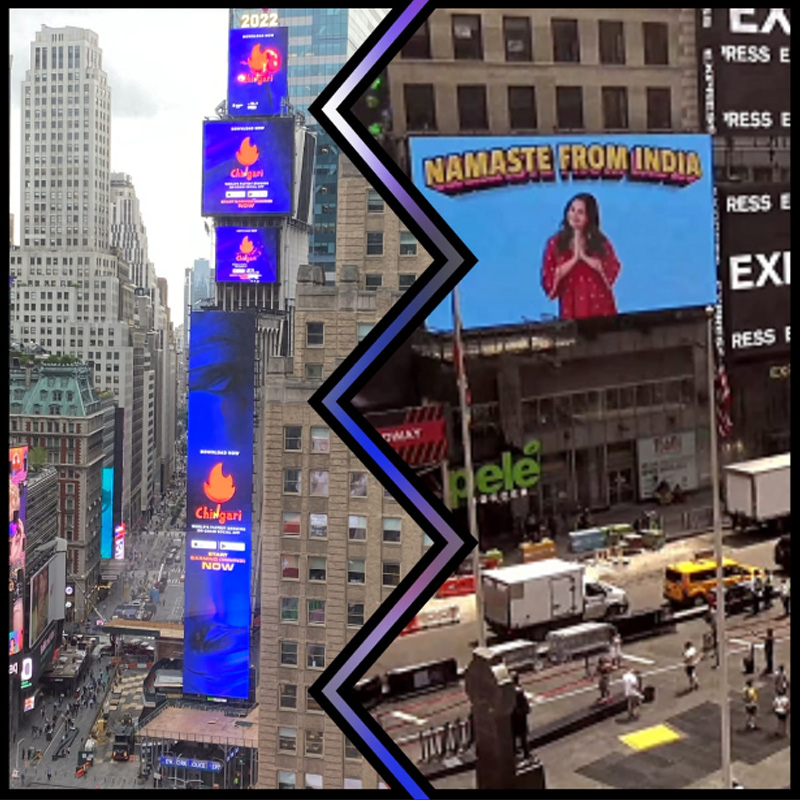
Mumbai: Many Indian brands have seen the light of the day at Times Square. The latest to join the list was Flipkart, India’s homegrown e-commerce marketplace, which celebrated its much-awaited ‘Big End of Season Sale’ shopping event at the iconic location.
Prior to this, short-video sharing social media app, Chingari, was featured on Times Square as a part of their NFT conference programme. Last year, content marketplace Pepper Content took its Series A funding celebration a notch higher with a Times Square strut. Ed-tech start-up Classplus, was seen on Times Square for their four-year anniversary celebration campaign. In October 2021, ICICI Prudential got the NASDAQ billboard to felicitate and recognise their star performers in a distinct manner.
Putting things into perspective, the first electric advertisement went up in Times Square in 1904 when the New York Times moved its headquarters to a location between Broadway and Seventh Avenue and 42nd and 43rd Streets. In 1905, the Times moved into its new headquarters, the second tallest building in the city at the time, located in what we now know as Times Square.
As per data provided publicly by Times Square, the week dated 29 May – 4 June, Times Square saw a daily average pedestrian count of 270,311, and a weekend average of 270,661.
The pedestrian counts averaged 286,961 people per day in 2022, a 65 per cent increase from 2021. Counts have risen steadily throughout the year, with July averaging nearly 370,000 daily visitors. Pedestrian counts reached a 2022 high of 445,300 people on 2 July, rising 6 per cent above the same day in 2019.
Indiantelevision.com spoke to Flipkart Fashion senior director Abhishek Maloo and Chingari App co-founder & CEO Sumit Ghosh to know more about taking their brands to Times Square, the challenges faced, lessons learned and more.

Talking about their intentions of taking Flipkart to Times Square, Maloo mentions, “Flipkart has played a pivotal role in revolutionising e-commerce landscape in India. Today, Flipkart Fashion caters to millions of customers, delivering value to the remotest regions across the country. With our Big EOSS this season, we decided to go Big with our engagement as well, and it doesn’t get bigger than taking the most-awaited fashion festival celebration to the Times Square, New York. We wanted to experiment with something innovative and create a clutter-breaking piece of content around our Big End of Season Sale. The placement was also a gesture to exhibit the pride we hold in our 10,000+ brand partners, our 200,000+ sellers and 450million+ customers, at a grand scale.”
Ghosh of Chingari discusses about their perspective. “As the world’s fastest growing Web3 social networking app, our goal in bringing Chingari to Times Square was to highlight the enormous potential and creativity of our homegrown talent on a global stage. Times Square is an iconic location that attracts millions of visitors from all over the world, making it an excellent opportunity to raise awareness about Chingari and the innovative web3 social platform we’ve created. We hoped to inspire and empower Indian creators while also capturing the attention of a diverse international audience by showcasing our brand in such a prominent and influential space. We also aimed to inspire and demonstrate the success of Indian brands in the Web3 & blockchain industry by getting our brand featured at Times Square.”
Flipkart’ Big EOSS was featured on a 31′ H X 55′ W billboard at the iconic New York Times Square attracting over 600,000 to 700,000 eyeballs every hour.
Considering the cluttered market, is the global consumer truly enthralled by an Indian brand and does it instigate purchase? “Capturing the attention and loyalty of global consumers is a challenge in today’s competitive market. However, Indian brands have proven their ability to stand out and captivate audiences all over the world. The authenticity and quality of Indian products and services, combined with the uniqueness of Indian culture, can create a compelling proposition for consumers. When an Indian brand successfully communicates its values, heritage, and innovative offerings, it has the potential to captivate global consumers and influence purchase decisions. We hope to create a memorable brand experience that resonates with consumers across borders and drives meaningful engagement and transactions by leveraging our innovative features and providing a user-friendly and engaging platform like Chingari,” explains Ghosh.
The next obvious question tends to be how easy or difficult is it to make a mark on the global consumer’s psyche as an Indian brand. Are global consumers receptive and welcoming toward Indian brands?
Ghosh is of the understanding that given the competitive landscape, making an impression on the minds of global consumers as an Indian brand can be difficult. “However, global consumers are becoming more accepting of Indian brands, recognising their uniqueness, cultural heritage, and innovative offerings. Building trust, delivering quality, and effectively communicating our brand values are critical to making a long-lasting impression.”
Execution of getting a brand on Times Square could be a mammoth task, but Flipkart seemed to have an easy ride. Maloo brings out that all parties involved were very supportive throughout the whole process, so they didn’t have to face any major challenges on the operational side. “The ad also garnered a lot of attention on Instagram with more than 2M+ plays. Our takeaway from the whole process has been very positive and we cannot wait to share more of our success stories with the world.”
Chingari had its own share of challenges and lessons learnt by going up on Times Square. “We encountered difficulties with logistics, coordination, and managing expectations during this process. The experience, however, taught us the value of careful planning, effective teamwork, and the power of strategic brand positioning. We discovered that bold initiatives, such as appearing in Times Square, can increase brand exposure and generate interest among a diverse global audience, expanding our reach and reinforcing our commitment to innovation,” concludes Ghosh.
Leave a Reply