
MAM
Weaving the Madison Magic

When you are a David in a battle of the Goliaths, you have to be that much sharper, wilier, smarter and aggressive. Sam Balsara’s Madison Media fits that description well. An Indian agency without any international affiliation or any connections globally, it has given the management of large media houses – right from the Group Ms to the Mediacoms and The Media Edges – sleepless nights. So much so that almost all agencies in the media firmament love to hate it and are loathe to acknowledge the agency in a positive light.
|
Clients
|
|
|
ABN Amro
|
Acer
|
|
Airtel
|
Asian Paints
|
|
Cadbury
|
Ceat
|
|
Coca Cola
|
Domino’s
|
|
Essel Group
|
Godrej
|
|
Hyundai
|
IFB
|
|
Indo Nissin
|
Jagran Group
|
|
Kinetic
|
P&G
|
|
Marico
|
McDonalds
|
|
Perfetti van Melle
|
Kotak Mahindra
|
|
Tata AIG
|
Tata Chemicals
|
|
Tata Tea
|
TVS
|
Listen to what some of the more nasty ones have to say.
“It is willing to shave off commissions and clients to sign a client,” was an oft heard criticism. (The agency denies this totally and all clients maintain they go strictly by the industry norms and do not undercut.)
“It even pulls the wool over the client’s ears, overbills them,” was a viewpoint from an agency head. (Clients and media owners, however, maintain that they are amongst the more transparent and honest agencies in India.)
“It pitches for every client, forget about its hoity toity statement that it is selective,” was yet another opinion. (The agency disagrees.)

Despite all these comments, however, the fact is that today, the Mumbai-hqed once-upon-a-time minnow has emerged as a major media force. With billings of Rs 9000 million and 25 clients, it is probably the second largest amongst all media agencies, straddling the industry like a colossus. Almost in total contrast to its diminutive and squeaky-voiced promoter Balsara, who is a tour de force in Indian advertising.
 |
|
Madison Communications chairman& managing director Sam Balsara
|
“Madison Media has evolved along with the Indian media industry. The last two-three years have been particularly good especially in terms of income and billings but it is significant to know that in terms of number of employees, we have grown at an even higher rate than our income or billings. So it makes me believe that we have a sustainable growth oriented organisation in place that does not get destabilised because of additional new businesses,” says the dynamic Balsara.
It was hardly 17 years ago that Balsara put in his papers at Mudra where he was in charge of the Mumbai office. With two clients in his pocket – Godrej and Nelco – a strong Tata brand in those days – and a dream in his eye, he founded Madison Communications. Madison Communications spawned Madison Media in 1994 when Procter & Gamble called it to pitch for its media business, which the aggressive Sam finally grabbed. Procter & Gamble wanted to maximise the value it got out of its advertising spends just like Lever had done when it centralised media buying under Sanjiv Gupta (until recently Coke boss) and M Suku (today Broadmind CEO), and then under Fulcrum.
 |
|
Madison Media Group CEO Punitha Arumugham
|
“In 1994, P&G was looking at consolidating media with one agency – that is having an agency of record. There were a lot of other agencies along with Madison that pitched for the business,” says Madison Media group CEO Punitha Arumugham.
Balsara probably envisioned the growth in the media-only ad business much before others did. The results are there to see: over the past two years it has snared the media business of Asian Paints, Cadburys, Marico, McDonalds, AirTel, Tata Tea, Tata AIG and TVS in quick succession.
Not only that. Balsara has also positioned the agency well in order to exploit and offer clients various services. Once a client gets into the Madison network whether for media or creative, he need not shop around for other brand communication services. Balsara has lined up enough of them in-house to woo them and stay with him, the way long standing client Godrej has.
“Hats off to the man,” says an industry observer. “He works at a frenetic pace, is ahead of his time, is a task master and is very particular about delivery. He is also responsive to the changing environment. He realised that the traditional commercial was not working as well in brand communications and in-programme and in-film brand promotion would be the future and he rushed to build this core competence, becoming just the third agency in the country to offer the service. Additionally, he has set up this matrix of services which he provides so well that clients are hooked, line and sinker.”
The Madison Network has the following services under its umbrella: PR (Madison PR), in-film promotion (through Mates), creative (Madison Creative), outdoors (Madison Outdoor Media Services – Moms), and retail promotion (Madison Retail Paradigm).
In fact, Balsara is a firm believer of the philosophy of intrapreneurship – that is treating employees as entrepreneurs and giving them responsibility and rewards as though it was their very own venture. He recently launched two sub brands of Madison Media namely Madison Media Infinity (headed by Ajit Varghese) and Madison Media Plus (headed by Basabdutta Chowdhari). The duo will report to Arumugham.
“The major reason in launching them was to give our people, who have been responsible for growing their own respective businesses, a greater sense of ownership and independence about their own work. Another reason for launching them was to institutionalise the way in which Madison operated as an independent unit,” says Balsara.
This helped in other ways, says Arumugham. Senior managers heading the two new SBUs could give clients’ brands that much more more personal attention. “Primarily they were formed to benefit our clients,” she says.
Click here for Madison Media Infinity’s clients and structure.
Click here for Madison Media Plus’ clients and structure.
Additionally, having more sub-brands or divisions under a large umbrella gives Madison the flexibility to be in a position to find a solution to a conflict of interest issue. While it does help, Balsara says it is not to such a large extent. “I think if you look at our businesses across the three units or even within a unit, conflicts have always existed,” he says.
Normally, all the three entities – Madison Media, Madison Media Infinity and Madison Media Plus – pitch for business non-competitively. Explains Arumugham: “It’s a question of who we think can handle the pitch in question in the best possible way. As a part of the pitch process Sam, Madison Media Research Center (MMRC) and I are involved. Only one Madison outfit will pitch for a particular business, which is decided by more or less the location of the client and the capability in handling the workload.”
Madison Media can boast of being the only media outfit in the country, which has the highest average billing per client and also the highest average team size per client. Also the fact remains that the agency has just 25 clients. The agency also has its own research unit MMRC, which boasts of tools like Madison Program Predictor, Madison Frequency Estimator, M Cube, Madison Town & Country, Madison Demographic Definer and M-Spectra.
 |
|
Balsara with his trusted aide Arumugham at the Madison office
|
Citing research as an important component of media buying and planning, Balsara says, “These tools are extremely important as the senior talent can work on strategic insights based on their experience and expertise and the juniors can do sophisticated analysis at the touch of a button. It also enables standardised ways of looking at a problem and ensures that hygienic analysis is done at a faster rate.”
“We don’t import any research tools from abroad unlike other agencies. The way we operate is, if a client has some problem, then we try and develop solutions around that problem at our research unit by indigenously developing new tools. So there is a problem and we try and work out a solution around it. The way MMRC works for us is quite unique,” says Arumugham.
She further adds, “Also, what we’re trying out with our businesses is that media is not just about numbers, it’s also about thinking out of the box. We’re getting more non-media professionals on our team so that they can ideate, implement and do things that we media people who are so number driven, don’t think of.”
The agency undertakes analysis of specific channels, markets and media from time to time and the findings and recommendations are fed into the planning and buying processes.
Initially Balsara’s mantra was to focus on a few big clients. More recently, he realized that it was not the right strategy to depend on two or three clients and decided to look at new businesses seriously.
 “We realized that we needed to grow not only for our learning but also to ensure that our existing clients also believed that we are successful agencies. So that’s how we moved from a handful of clients to 25 clients. We still don’t have 100 clients but we have progressed,” says Arumugham.
Outlining the success of the agency in the highly competitive environment Arumugham avers, “The reason for our success is that we’ve been choosy about the businesses that we pitch for. There are lots of times when we don’t pitch for accounts where the pitch is rate driven. Secondly, they way we are structured also chips in to our success. On every set of business, we have a team of people who are dedicated to that particular business. So even if we get larger, the attention on current businesses doesn’t suffer.”
Balsara stresses, “We pitch very selectively. There is a certain strategy we have in place for that. We don’t want to grow at any cost. We want to grow preferably on our terms. It may not always be possible but we’ll try.”
However peer agencies beg to differ on the claim that Madison is “choosy” in what it pitches for. Says an agency head: “Madison goes after too many clients and they are always there in a pitch. One has to understand that not every client is profitable. Why would an agency of that stature pitch for a Rs 40-50 million Tata Salt account? I have heard that they are getting a commission of about 1.5 to 2 per cent on that. It’s not economical for the business. They used to be choosy, but they are beginning to change their stance.”
The agency however rubbishes this and says that the Tata Salt account follows normal industry standard commissions.
Another media professional concurs, “Madison only pretends to be selective in its pitches and that is the way the management has projected the agency. No one is selective based on the clients’ volume as they can’t afford to do that. Selectivity is based on many other factors.”
Balsara stresses, “We pitch very selectively. There is a certain strategy we have in place for that. We don’t want to grow at any cost. We want to grow preferably on our terms. It may not always be possible but we’ll try.”
When asked to outline the parameters on which the agency decides which account to pitch for or not, Arumugham outlines.
The agency claims that the success ratio on pitches would be over 90 per cent and neither Balsara nor Arumugham could recall a pitch that they had lost recently.
A weakness that the media industry thinks Madison Media has is that it is very good at buying for television only. When it comes to print and the other media, it is not as good as the others.
Arumugham disagrees: “I think like every other agency, we are hooked on to television and press,” but quickly adds that “somewhere along the line, we are still more comfortable with numbers than no numbers. We need to develop the comfort with the no numbers areas just like the numbers arena.”
One view that comes across from the media community is that the agency is a one-man show – Sam Balsara. An agency head points out: “Sam Balsara is the strength and weakness of Madison. He has a huge personal equity in the industry and that works for the agency. On the other hand, he has a one-on-one relationship with his clients and they swear by him, which makes the agency vulnerable. If Sam is not there, then what?”
Another media professional is a little more charitable saying that the agency has a strong top line but is weak down the line.
Says he: “Madison Media has a natty and savvy senior management but go below to the lower runs and there are patches of weaknesses all around. There is a huge lacuna after Sam and the handful professionals around him. The agency is seen as being driven more by a group of individuals rather than as an organization as a whole,” said a media professional.
 |
|
Sam and gang!
|
However, some well deserved praise also came Madison’s way from peer agencies. “The agency is doing very well despite the fact that it has no global affiliations. They have a good leadership in Sam and are known for their innovations. Add to that an A-list client portfolio like Coca Cola, P&G, AirTel – this makes Madison strong,” says an agency head.
“Madison is a strong and positive player in the industry. They are innovative in using media and their practices are much Indianised. Also they have a handful of good people that they can boast of,” praised another professional.
When asked about the challenges that the agency was facing in the industry, Balsara says, “We face the same challenge that every other agency faces. We have to find newer ways of doing the same job better, faster, more economically so that we can grow at a faster rate and meet the growth aspirations of our people. At Madison we constantly look inwards to see what we can do better, cheaper, faster and smarter. That’s the only way. If we think that we can continue doing the same thing that we did yesterday, I don’t think we’re going to survive; forget prosper!”
“We are constantly persuading our people to find newer ways to do things. I strongly believe that people who are going to succeed or survive tomorrow are those who will be able to ride change. But people who will prosper tomorrow are those people who will drive change. Clearly, there is no other alternative,” he adds.
A point that one comes across oftentimes is that being a truly Indian agency, Madison does not have the backing of an international parent. However, that doesn’t worry Balsara. “We think we have demonstrated that being homegrown by itself is neither a strength nor a weakness. I think most intelligent clients want to deal with the best agency in town. It is incidental whether it’s an international agency or an Indian agency because they recognise that the agency’s quality of advice is a critical input for their success and therefore they can’t afford to be governed by any “isms” otherwise their survival is at stake. So the bottom line is that they want to deal with that agency which can help them meet their objective,” he says.
Arumugham adds: “Shripad Nadkarni (once Coke’s media point man) once told us that because we don’t have an international counterpart, we are fighting in a market where so many MNCs are functioning and hence we actually have to fight harder. We don’t have any one from abroad helping us out if we face a problem. It has worked for us because we have mastered the market and the dynamics of media in this market that much more because we have to learn it all on our own. It has worked for us. But that doesn’t mean that we are not open to any international tieups. I think Sam would still like to tie up with the right media partner who will help us grow.”
Bharti Tele-Ventures director mobility and group chief marketing officer Atul Bindal (whose flagship brand AirTel happens to be one of Madison’s biggest clients) says, “When we decided to associate with Madison Media last year, the ‘homegrown’ bit was the last thing on our minds. International affiliation or the lack of it was never a concern for us when we were looking for a partner. Today we are a satisfied client.”
He further adds that the agency had delivered excellent value for the brand and is like a thinking partner. “Sam is an outstanding leader and is hands-on on the business. He is extremely sensitive to the ever changing media environment and is fairly open to changes,” says Bindal.
Asian Paints general manager marketing Amit Syngle says, “We have been associated with Madison for the last two years and what they bring to the table is good media planning coupled with a huge experience they have with their existing clients. They have strong implementation vigour and a high inclination towards media innovation.”
Asked whether Madison is stronger on planning or buying, Syngle says, “Good planning is a requisite to a good buy and good rates and Madison is good at it.”
The agency’s oldest client Godrej is a satisfied one. Godrej consumer products director marketing Tanya Dubash had this to say, “We have a great relationship with them and they are very good at their job – both planning and buying.”
Madison Media, like most agencies, is open to both the fee-based and commission model. “On every client we have a set of incentives where at the end of the year he appraises us and there is an incentive grid based on which the client rewards us and that is shared among our professionals.”
There is a performance appraisal form that is mutually decided at the beginning of the year and then there are performance evaluations at the end of the year and sometimes also in the middle of the year. The client evaluates the agency on those factors and the agency also evaluates itself on what they have delivered to the client.
“We sit across the table and come to a mutually agreeable score. Let’s say at the beginning of the year we decided that on a scale of 1 – 10, if you score 3 or 4, we would be paid a certain sum… so if we do manage to get the score, then the client pays us that incentive. We have been following this practice for a long time now,” informs Arumugham.
When asked to rate the agency on a scale of 1 – 10, Arumugham modestly says, “While we were ranked the number one by the industry, I think that we still have a long way to go in terms of the kind of work other agencies are doing internationally. So if you ask me to rank us, I would say we are about 5 or 6 on the scale and there is a long long way to go before we become the best. I would like to think that we’re amongst the best agencies that are there in India but we don’t think that we are the ultimate media agency.”
“We have lots of weaknesses and we are constantly working towards overcoming them and strengthening ourselves. As I said sometime back – it’s an advantage to know that you’re at a disadvantage and that generally helps otherwise it tends to make you complacent,” stresses Balsara.
One agency head had this to say about Madison Media, “Madison is the best agency in the country as far as agency PR is concerned. Other agencies have a lot to learn from them.”
Then why are they not?








Brands
Netflix India names Rekha Rane director of films and series marketing
Streaming giant bets on a seasoned marketer who helped build Amazon and Netflix into household names
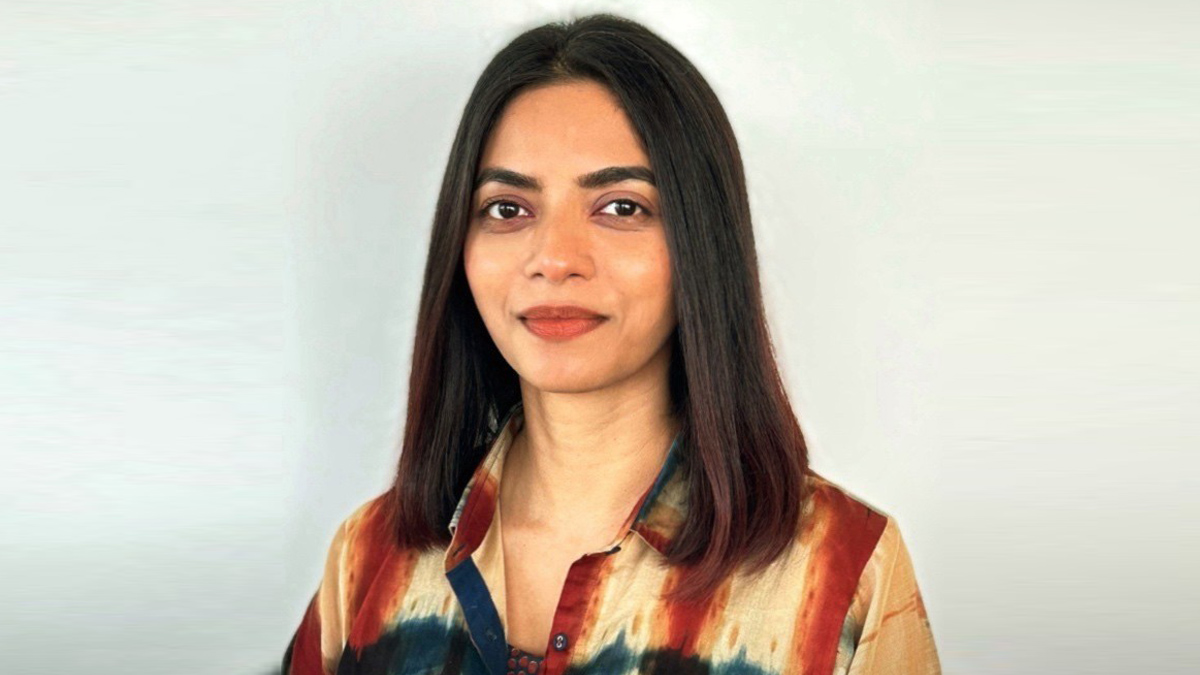
MUMBAI: Netflix has put a proven brand builder at the helm of its films and series marketing in India, naming Rekha Rane as director in a move that signals sharper focus on audience growth and cultural cut-through in one of its most hotly contested markets.
Rane steps into the role after seven years at Netflix, where she has quietly shaped how the platform sells stories to India. Her latest promotion, effective February 2026, crowns a run that spans brand, slate and product marketing across originals, licensed content and new verticals such as games.
A strategic marketing and communications professional with roughly 15 years’ experience, Rane has spent much of her career building technology-led consumer businesses and new categories, notably e-commerce and subscription video on demand. She was part of the early push that introduced Amazon.in, Prime Video and Netflix to Indian homes, then helped turn them into everyday brands.
At Netflix, she most recently served as head of brand and slate marketing for India from March 2024 to February 2026, leading teams across media and marketing for global and local content portfolios. Before that, as manager for original films and series marketing, she led IP creation and go-to-market strategy for titles including Guns and Gulaabs, Kaala Paani, The Railway Men* and The Great Indian Kapil Show, spanning both binge and weekly-release formats.
Her earlier Netflix roles covered product discovery and promotion in India and integrated campaign strategy to drive conversations around the content slate, product awareness and brand-equity metrics.
Before Netflix, Rane logged more than three years at Amazon in brand marketing roles in Bengaluru. There she handled national and regional campaigns for Amazon.in, worked on customer assistance programmes in growth geographies and contributed to the go-to-market strategy for the launch of Prime Video India.
Her career began well away from streaming. At Reliance Brands in Mumbai, she worked on retail marketing for Diesel and Superdry. A stint at Leo Burnett saw her work on primary research for P&G Tide, mapping Indian shoppers’ paths to purchase. Earlier still, at Orange in the United Kingdom, she rose from sales assistant to store manager, running a team and owning monthly P&L for a retail outlet.
The arc is telling. As global streamers fight for attention in a crowded Indian market, executives who understand both mass retail behaviour and digital habit-building are prized. Rane’s career sits at that intersection.
For Netflix, the bet is simple: in a market spoilt for choice, sharp marketing can still tilt the screen. And with Rane now leading the charge, the streamer is signalling it wants not just viewers, but fandom.
Brands
Orient Beverages pops the fizz with steady Q3 gains and rising profits
Kolkata-based beverage maker reports stronger revenues and profits for December quarter.
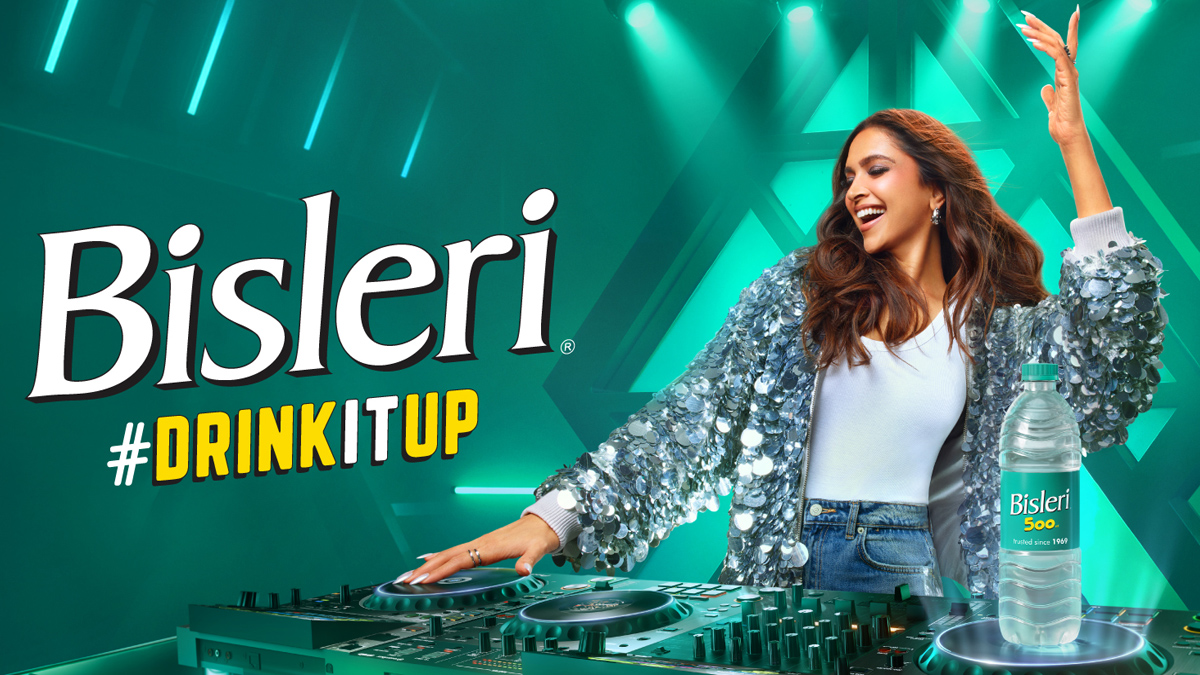
MUMBAI: A fizzy quarter with a steady aftertaste that’s how Orient Beverages Limited, the company that manufactures and distributes packaged drinking water under the brand name Bisleri closed the December 2025 period, as the Kolkata-based drinks maker reported improved revenues and a healthy rise in profits, signalling operational stability in a competitive beverage market.
For the quarter ended December 31, 2025, Orient Beverages posted standalone revenue from operations of Rs 39.98 crore, up from Rs 36.42 crore in the previous quarter and Rs 33.53 crore in the same quarter last year. Total income for the quarter stood at Rs 42.24 crore, reflecting consistent demand and stable pricing across its beverage portfolio.
Profit before tax for the quarter came in at Rs 3.47 crore, a sharp improvement from Rs 1.31 crore in the September quarter and Rs 0.39 crore a year ago. After accounting for tax expenses of Rs 0.79 crore, the company reported a net profit of Rs 2.68 crore, nearly three times the Rs 0.99 crore recorded in the preceding quarter.
On a nine-month basis, the momentum remained intact. Revenue from operations for the period ended December 31, 2025 rose to Rs 117.66 crore, compared with Rs 106.95 crore in the corresponding period last year. Net profit for the nine months climbed to Rs 5.51 crore, more than double the Rs 2.18 crore reported in the same period of the previous financial year.
The consolidated numbers told a similar story. For the December quarter, consolidated revenue from operations stood at Rs 45.06 crore, while profit after tax came in at Rs 2.06 crore. For the nine-month period, consolidated revenue touched Rs 133.57 crore, with net profit of Rs 4.49 crore, underscoring the group’s improving profitability trajectory.
Operating expenses remained largely controlled, with cost of materials, employee benefits and other expenses broadly aligned with revenue growth. The company continued to operate within a single reportable segment beverages simplifying its cost structure and reporting framework.
The unaudited financial results were reviewed by the Audit Committee and approved by the Board of Directors at its meeting held on 7 February 2026. Statutory auditors carried out a limited review and reported no material misstatements in the results.
In a market where margins are often squeezed by input costs and competition, Orient Beverages’ latest numbers suggest the company has found a reliable rhythm not explosive, but steady enough to keep the fizz alive.
MAM
Washington Post CEO exits abruptly after newsroom cuts spark backlash
Leadership change follows layoffs, protests and a bruising battle over trust.
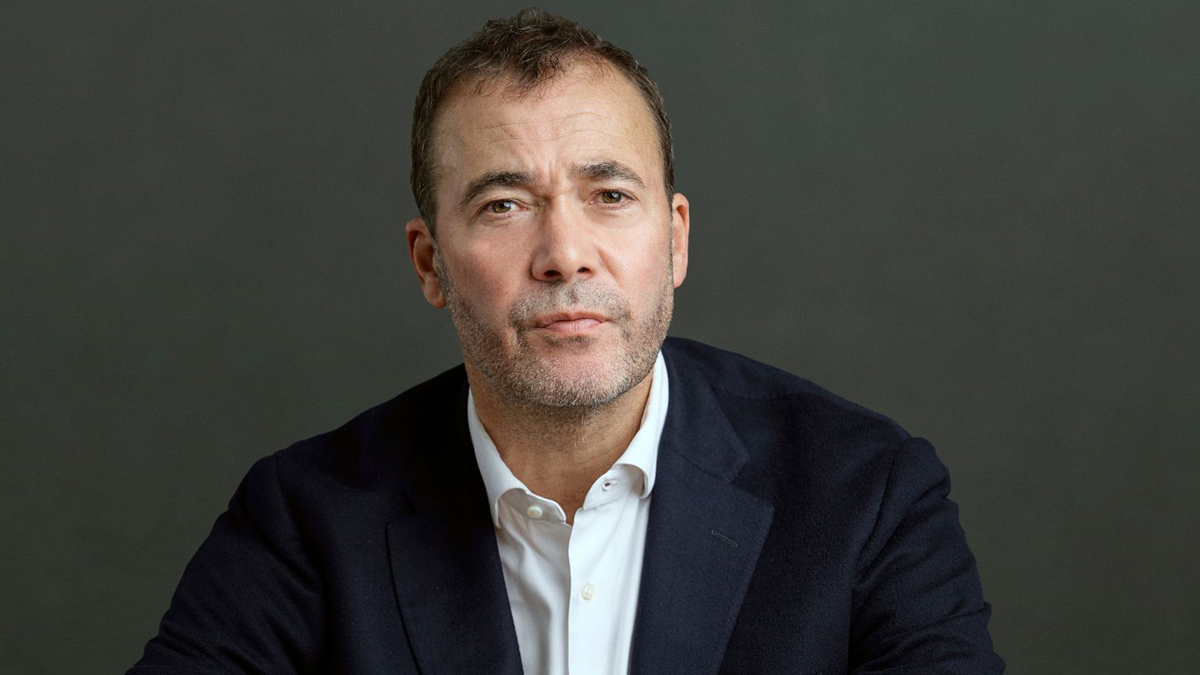
MUMBAI: When the presses are rolling but patience runs out, even the editor’s chair isn’t safe. The Washington Post announced on Saturday that its chief executive and publisher Will Lewis is stepping down with immediate effect, bringing a sudden end to a turbulent two-year tenure marked by financial strain, newsroom unrest and public backlash.
Lewis’s exit comes just days after the Bezos-owned newspaper announced sweeping job cuts that triggered protests outside its Washington headquarters and a wave of anger from readers and staff. While newspapers across the US are grappling with shrinking revenues and digital disruption, Lewis’s leadership had increasingly come under fire for how those pressures were handled.
The Post confirmed that Jeff D’Onofrio, a former Tumblr CEO who joined the organisation last year as chief financial officer, has taken over as CEO and publisher, effective immediately. In an email to staff, later shared by reporters on social media, Lewis said it was “the right time for me to step aside.”
The leadership change follows the announcement of large-scale redundancies earlier this week. While the Post did not officially confirm numbers, The New York Times reported that around 300 of the paper’s roughly 800 journalists were laid off. Entire teams were dismantled, including the Post’s Middle East bureau and its Kyiv-based correspondent covering the war in Ukraine.
Sports, graphics and local reporting were sharply reduced, and the paper’s daily podcast, Post Reports, was suspended. On Thursday, hundreds of journalists and supporters gathered outside the Post’s downtown office in protest, calling the cuts a blow to public-interest journalism.
Former executive editor Marty Baron described the moment as “among the darkest days in the history of one of the world’s greatest news organisations.”
Lewis defended his record in his farewell note, saying “difficult decisions” were taken to secure the paper’s long-term future and protect its ability to publish “high-quality nonpartisan news”. But his tenure coincided with growing scrutiny of editorial independence at the Post.
Owner Jeff Bezos faced criticism for reining in the paper’s traditionally liberal editorial page and blocking an endorsement of Democratic presidential candidate Kamala Harris ahead of the 2024 US election. The move was widely seen as breaking the long-standing firewall between ownership and editorial decision-making.
According to a Wall Street Journal report, around 250,000 digital subscribers cancelled their subscriptions after the paper declined to endorse Harris. The Post reportedly lost about $100 million in 2024 as advertising and subscription revenues slid.
While the wider newspaper industry continues to battle declining print advertising and the pull of social media, some national titles have stabilised. Rivals such as The Wall Street Journal and The New York Times have managed to build sustainable digital businesses, a turnaround that has so far eluded the Post despite its billionaire backing.
As Jeff D’Onofrio steps into the role, the challenge is stark, restore confidence inside the newsroom, win back readers who walked away, and prove that one of America’s most storied newspapers can still find its footing in a brutally competitive media landscape.



MIB sets OTT accessibility rules, mandates captions and audio description

Boney Kapoor acquires remake rights of Tamil political satire Thalaivar Thambi Thalaimaiyil

Netflix India names Rekha Rane director of films and series marketing

Zabeen signs off from TV9 after shaping the network’s public voice

Dhawan steps up to bat for Delhi’s grassroots sports push

Orient Beverages pops the fizz with steady Q3 gains and rising profits

Cheekatilo shines in the dark with record debut on Prime Video

Swiggy Instamart’s GOV surges 103 per cent year on year to Rs 7,938 crore

These ’90s fashion trends are making a comeback in 2017
The final 6 ‘Game of Thrones’ episodes might feel like a full season
According to Dior Couture, this taboo fashion accessory is back
The old and New Edition cast comes together to perform
Phillies’ Aaron Altherr makes mind-boggling barehanded play

ATN International brings ATN Bangla to Canada
MIB sets OTT accessibility rules, mandates captions and audio description
Boney Kapoor acquires remake rights of Tamil political satire Thalaivar Thambi Thalaimaiyil
Netflix India names Rekha Rane director of films and series marketing
Zabeen signs off from TV9 after shaping the network’s public voice
Dhawan steps up to bat for Delhi’s grassroots sports push
Orient Beverages pops the fizz with steady Q3 gains and rising profits
Cheekatilo shines in the dark with record debut on Prime Video
-
 e-commerce1 month ago
Swiggy Instamart’s GOV surges 103 per cent year on year to Rs 7,938 crore
-
 iWorld1 year ago
Kuku TV transforms India’s OTT space with vertical microdrama boom
-
 News Headline1 year ago
TRAI puts a ‘stop’ to unsolicited calls and messages
-

 News Headline2 months ago
From selfies to big bucks, India’s influencer economy explodes in 2025
-
 Comedy2 years ago
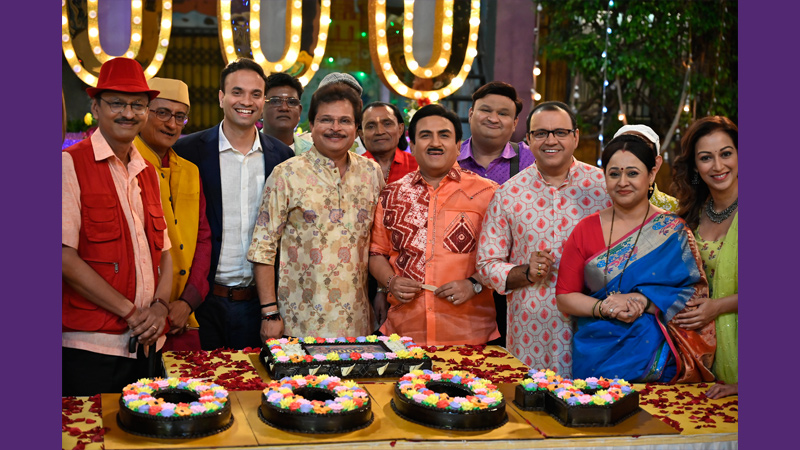
Taarak Mehta Ka Ooltah Chashmah celebrates 4,000 episodes
-
 MAM2 years ago
OpenAI joins C2PA steering committee
-
 News Headline1 year ago
Abhishek Bachchan joins as co-owner of European T20 Premier League
-
 News Headline2 years ago
Odisha to host Ultimate Kho Kho Season 2 from December 24


