
MAM
Vodafone Idea Ltd rebrands itself as ‘Vi’

NEW DELHI: Going ‘Together for Tomorrow’, Vodafone and Idea have been rebranded with a unified identity ‘Vi.’ The integration of two brands is a culmination of the largest telecom integration in the world. The announcement was made Monday noon via a virtual press conference.
Vi is built to be strong, ever-dependable, agile, intuitive, and a brand in tune with the needs of the customers, in these ever-changing times. It is future-ready and is committed to dynamically serve and enable a digital society.
The new brand identity has been designed in collaboration with Vodafone Idea Ltd’s agency Ogilvy.
Vodafone Idea Ltd MD and CEO Ravinder Takkar said, “Vodafone Idea came together as a merged entity two years ago. We have, since then focuesed on integrating two large networks, our people and processes. And today I am delighted to present Vi, a brand that will bring important meaning to lives of our customers. Indians are optimistic and want to get ahead in life. They would love a credible partner to help them on this journey. Vi’s positioning is built around this promise and will focus on meeting the customer needs to help them thrive.”
“The brand integration not only marks the completion of the largest telecom merger in the world, but also sets us on our future journey to offer world-class digital experiences to 1 billion Indians on our strong 4G network. VIL is now leaner and agile, and the deployment of many principles of 5G architecture has helped us transform into a future-fit, digital network for the changing customer needs. The new brand launch signifies our desire to not just deliver, but delight our customers, stakeholders, communities and our employees and signals our passion and commitment to be a Champion for Digital India. With Vi, we are confident of building a brand that continues to command respect and trust, and will be admired and loved by all. We look forward to your continued support as we get ready to deliver a superior Vi experience,” added Takkar.

Vodafone chief digital transformation and brand officer Kavita Nair said, “Vi leverages the strength of two of India’s most loved brands, Vodafone and Idea. Vi is vibrant, exciting and throbs with the spirit of rising India. It is committed to help every Indian move ahead in life. Vi is dynamic, flexible, fluid and always on. In the months to come Vi will continuously unpack exciting possibilities for its customers. Vi is built for the new age and for the connected ecosystem. We invite everyone to join this exciting journey as we move towards building a better tomorrow.”
The team highlighted that the rebranding is not just an identity but a new design system, which intends to leverage legacy and at the same time be transformational in its intent and signals that change. It stretches across consumers and businesses, and across all classes, geographies, urban and rural.
Nair noted, “The “i” is always punctuated with a bold mustard dot. It is confident, surprising and delightful. It reflects the throbbing and progressive pulse of India. It is unique, continuously unpacking amazing possibilities, and always putting customers at the heart of everything.”
Starting today, Vi ads will be on TV and digital platforms, followed by a high decibel intensive multi-media campaign, spread across the physical and virtual channels. The customers will get a personalised message to welcome the new brand identity and little surprises like creating a personalised ringtone from one’s phone number are at offer.










MUMBAI: For decades, creative storytelling has been the cornerstone of brand communication. The “big idea” amplified through catchy jingles, striking visuals, and memorable hooks was once the gold standard for relevance and recall. Creativity defined presence, and the loudest, boldest campaigns often won attention.
But the marketing landscape today looks very different.
Audiences are more exposed, more discerning, and far less patient. They are inundated with messages across platforms, formats, and creators, often encountering hundreds of brand touchpoints in a single day. In this environment, creativity alone especially when untethered from real consumer truths is no longer enough to move behaviour. Great ideas are abundant. Meaningful impact is not.
This is where insights matter.
The difference may seem subtle, but it is fundamental. An idea represents what a brand wants to say. An insight reflects what the audience is already thinking, feeling, or experiencing. The most effective campaigns emerge not from cleverness alone, but from the intersection of these two forces.
From creativity to relevance
As the marketing ecosystem becomes increasingly saturated, consumers are growing immune to inflated claims and surface-level storytelling. Even beautifully crafted campaigns can fail if they are disconnected from lived realities. The gap between a brand’s internal enthusiasm and the audience’s actual sentiment can be the difference between attention and indifference.
Insights help bridge this gap. They force brands to pause, listen, and observe to understand emotions, behaviours, cultural contexts, and contradictions. Instead of trying to be remembered through louder branding, insight-led campaigns allow audiences to see their own experiences reflected back at them. When a campaign articulates a problem that feels personal, relevance is created. Trust follows.
Insight is interpretation, not information
It’s important to distinguish between data and insight. Data tells us what is happening. Insight explains why it is happening. While data is measurable and structured, insights are interpretive and dynamic, shaped by real-time sentiment and human behaviour.
Modern consumers are full of contradictions. They demand authenticity while remaining deeply aspirational. They want brands to take a stand but expect nuance, not instruction. They seek transparency, yet are drawn to curated narratives. These tensions are not obstacles, they are opportunities. When understood correctly, they can shape communication that feels timely, credible, and human.
Some of the most effective campaigns today are born not in isolated brainstorm rooms, but through listening to audiences, creators, editors, online communities, and cultural signals. Insights often exist in blurred patterns, but once identified, they can redefine how a brand connects.
A recent campaign we executed for Domino’s illustrates this shift clearly. The brief wasn’t to make a pizza look bigger or louder. Instead, it was rooted in a simple behavioural truth: in Tier 2 and Tier 3 markets, sharing food is an emotional act tied to family, celebration, and value perception. The “Big Big 6-in-1 Pizza” became a canvas for this insight. The campaign leaned into regional voices and real sharing moments, allowing people to show how they experienced the product rather than being told why they should buy it. Influencers and celebrities amplified genuine usage, not scripted endorsements. The impact from engagement to footfall to sales came not from a clever idea, but from understanding how people relate to food in their everyday lives.
Shifting the starting point
Today’s consumer landscape demands a shift in perspective from “What should the brand say?” to “What does the audience need to hear right now?” This marks a move away from inward-led marketing toward communication shaped by behaviour, emotion, and cultural relevance.
Brands leading today are keen observers. They notice when perfection stops resonating. They sense when luxury shifts from aspiration to excess. They recognise when influencer content begins to feel repetitive and trust erodes.
Virality, too, is often misunderstood. It is not a strategy to chase, but an outcome. Campaigns rooted in insight do not aim to go viral; they aim to resonate. When content reflects something familiar, a shared truth, emotion, or tension, it travels organically because people see themselves in it.
Ideas attract attention. Insights build connection.
The evolving role of PR
For PR professionals, this shift has redefined success. Coverage volume alone no longer tells the full story. The more meaningful questions today are: Did the communication influence behaviour? Did it align with cultural conversations? Did it address a real consumer pain point?
Insight-first thinking allows these questions to be answered at the planning stage, rather than corrected midway through execution.
In a world where formats and platforms will continue to evolve, what remains constant is the power of authentic communication. The strongest campaigns today do not begin with a brainstorm, but with observation, interpretation, and empathy. That is not just better marketing, it is more responsible, resilient, and meaningful brand-building.

MUMBAI: Zepto has elevated Ahmad Muneeb to vice president – HR centre of excellence, placing him at the helm of the company’s total rewards, executive compensation and organisational effectiveness as the quick-commerce firm powers through a high-growth phase.
The move follows his stint as senior director of the HR COE, where he played a central role in preparing the company for IPO readiness while scaling its people analytics capabilities. During this period, Muneeb helped align complex performance management structures with more streamlined and scalable employee experience frameworks.
In his new role, he will steer the design of total rewards strategies, executive compensation planning and organisational design, while also overseeing performance management, employee experience initiatives and people analytics programmes.
Before joining Zepto, Muneeb spent nearly three years at Meesho, where he held multiple rewards and HR business partner roles. Earlier in his career, he worked as a senior rewards consultant at Mercer, advising high-tech clients on compensation benchmarking, pay structures and talent-focused reward frameworks.
He began his hr journey at Cognizant, where he supported compensation programmes for nearly two lakh employees across India and worked on m&a compensation alignment and skill-based pay initiatives. Prior to moving into HR, Muneeb started his career as a software engineer at Netcracker, bringing a technical grounding to his people strategy work.
With a mix of consulting rigour, start-up agility and enterprise-scale experience, Muneeb’s elevation signals Zepto’s continued focus on building robust people systems as it races towards its next phase of growth.
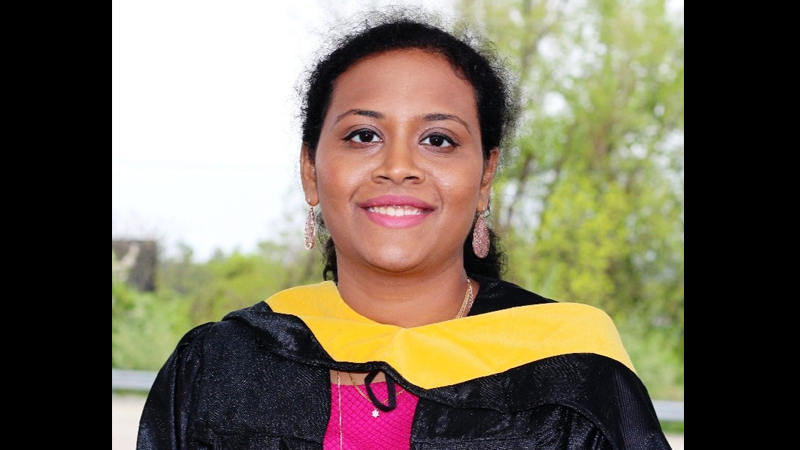
INDIA: Dell Technologies is doubling down on artificial intelligence in marketing. The company has elevated Aishwarya Sudhakar to director of marketing measures and intelligence engineering, tasking her with building an enterprise-wide framework for AI-led measurement and customer intelligence.
In the role, Sudhakar will oversee unified data strategy, advanced modelling and context engineering: areas increasingly central to how large technology firms link marketing performance to business outcomes. Her remit includes shaping scalable systems that support Dell’s next phase of AI deployment across marketing functions.
Sudhakar steps into the position after holding a series of senior roles at Dell, including AI lead for marketing orchestration, senior manager, and senior data scientist in customer insights. Across these roles, she led global teams working on large-scale machine learning models, data pipelines and customer analytics.
Before joining Dell, she began her career at Tata Consultancy Services as a systems engineer and later founded Oclor, a shopping discovery start-up, where she built end-to-end technology platforms. The combination of enterprise-scale data work and entrepreneurial experience has shaped her focus on product-led, engineering-first innovation.
As technology companies seek sharper attribution and intelligence in an AI-saturated market, Dell’s move underscores the growing importance of marketing measurement as an engineering discipline rather than a reporting function.


Hamdard honours changemakers at Abdul Hameed awards

Why the Best Campaigns Today Start With Insights, Not Ideas

Ahmad Muneeb elevated to VP – HR centre of excellence at Zepto

Fans Take Centre Stage as Zee Cine Awards Turns the Spotlight Around

GUEST COLUMN: How content leaders decide what gets greenlit

The man who dubbed Lord of the Rings in 50 languages is stunned by Mumbai traffic

Dell names Aishwarya Sudhakar director of marketing intelligence

These ’90s fashion trends are making a comeback in 2017
The final 6 ‘Game of Thrones’ episodes might feel like a full season
According to Dior Couture, this taboo fashion accessory is back
The old and New Edition cast comes together to perform
Phillies’ Aaron Altherr makes mind-boggling barehanded play
Uber and Lyft are finally available in all of New York State
Disney’s live-action Aladdin finally finds its stars
Hamdard honours changemakers at Abdul Hameed awards
Why the Best Campaigns Today Start With Insights, Not Ideas
Ahmad Muneeb elevated to VP – HR centre of excellence at Zepto
Fans Take Centre Stage as Zee Cine Awards Turns the Spotlight Around
GUEST COLUMN: How content leaders decide what gets greenlit
The man who dubbed Lord of the Rings in 50 languages is stunned by Mumbai traffic
Dell names Aishwarya Sudhakar director of marketing intelligence
-

 News Broadcasting4 days ago
Mukesh Ambani, Larry Fink come together for CNBC-TV18 exclusive
-

 iWorld1 week ago
Netflix celebrates a decade in India with Shah Rukh Khan-narrated tribute film
-
 MAM3 months ago
HoABL soars high with dazzling Nagpur sebut
-

 MAM4 days ago
Nielsen launches co-viewing pilot to sharpen TV measurement
-
 iWorld12 months ago
BSNL rings in a revival with Rs 4,969 crore revenue
-
 I&B Ministry3 months ago
India steps up fight against digital piracy
-
 iWorld3 months ago
Tips Music turns up the heat with Tamil party anthem Mayangiren
-

 Film Production1 week ago
UFO Moviez rides high on strong Q3 earnings
