
Digital
Visual search for next-level user experiences

Mumbai: Do you know that by 2027, the market for visual search is expected to have grown from its $6.66 billion valuation in 2019 to $28.47 billion? While image search and visual search share a few similarities, be informed that the two are different. The phrase “image search” is much older and allows users to search for images using text-based queries. Still, 10% of Google’s daily search traffic comes from Google Images, which was introduced in 2001. Image searches employ keywords and URLs to satisfy the search query, whereas visual search solely uses photos to search for related information.
Read further to understand how to leverage the visual search for next-level user experiences.
Understanding Visual Search
Users who perform a visual search substitute a picture for a text-based query. This picture may be a photo, screenshot from their mobile gallery, or any other captured image. This functions in two different ways:
● Visual search systems use image recognition algorithms to scan photographs that are similar to the image metadata, such as colours and forms.

● The system then retrieves results based on the visual similarities. An AI-based program uses the traits and patterns in the photographs to find related images.
By taking a picture of an item they wish to purchase and uploading it to your preferred search engine (like Google Lens or Pinterest Lens), customers can use visual search to view visually similar products that are available for purchase right away.
How To Optimize Visual Search for Top-notch User Experience
People are more likely to discover your website through photographs, even if you are not in the e-commerce industry. According to recent surveys, Google Photos accounted for 22% of all web searches, meaning more than 600 million visual searches are performed daily. As with text-based searches, you want to ensure your brand appears for the most relevant image searches. These are some pointers for making your website visually search-friendly.
1. Provide Many Pictures: When optimizing a website for visual search, provide visuals of your products or services. Companies should not depend solely on one picture or a brand logo, as that might result in leads passing on your product in favour of a rival.
2. Select Images with High Resolution: Opt for high-quality images if you want to generate leads with visual searches. If your website has high-resolution images, Google can process it to correspond with the user’s search term.
3. Conduct Keyword Analysis: Researching keywords is crucial for both search engine optimization (SEO) and visual search. Using keywords in your product image description significantly improves your searches. This will allow Google to search and display your images in the visual searches.
4. Improve the Captions and Titles of Your Images: Make sure your title is descriptive as you write it. A generic file name such as “img203.png” will not benefit Google or your readers. To improve audience comprehension of your image, ensure your title and description contain the relevant keywords. Additionally, it will ensure that your photos appear in the relevant search results.
5. Include a Substitute Text: Include an alt tag or alternative text with your image when you post it on the web. Alt text is a brief, descriptive text attribute applied to an HTML image tag. It was initially designed to provide accessibility to users with visual impairments. The alt text is crucial for Google to understand the content of your images. Google may use the information provided by alt text to match images with user queries.
6. Add Captions: A common error brands make is assuming that their image speaks for itself. Because they are confident that their audience will comprehend the context of their image, they forget to include captions. Captions make it easier for viewers to comprehend images. It can lead to better indexing and higher visibility in search results.
Conclusion
Visual search is no longer a dazzling new tech trend. It is the fundamental component of contemporary eCommerce architecture that helps improve business performance. Online shoppers can find the right products more quickly and easily with visual search than traditional text searches. In today’s era of visual searches, it is no surprise that most people will locate your image first before they actually stumble on your website. So, optimizing your website for visual searches is a fantastic new way to increase the number of leads and enhance your user experience.
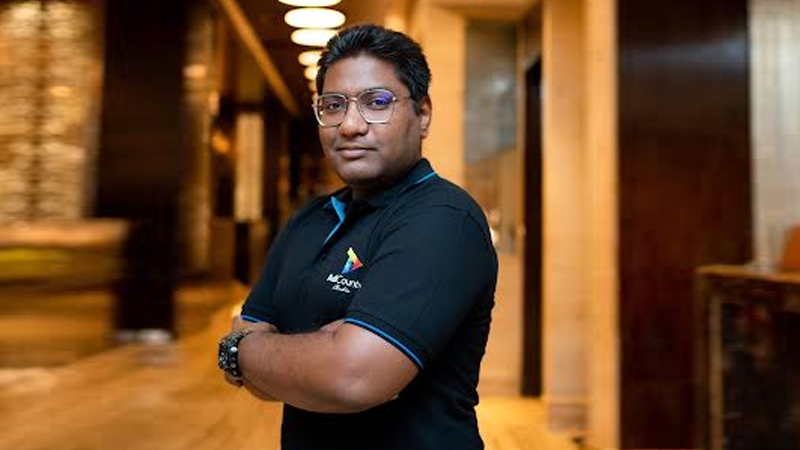
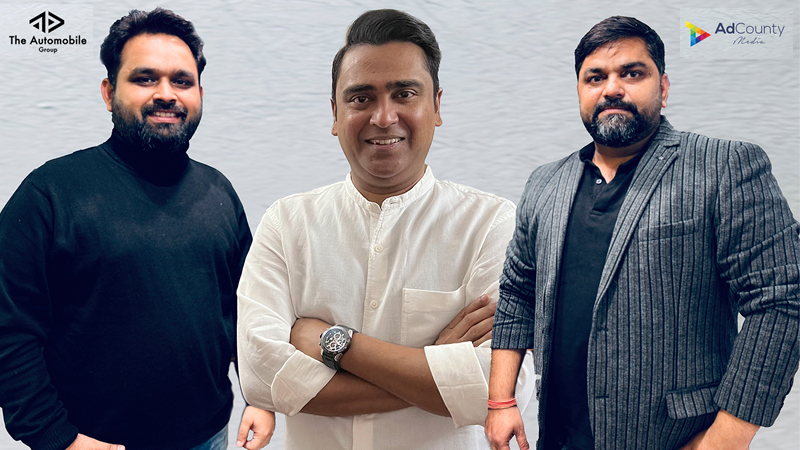
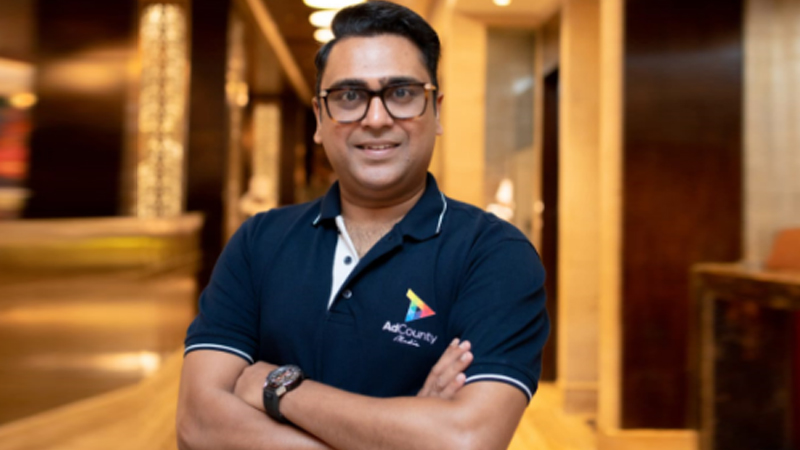
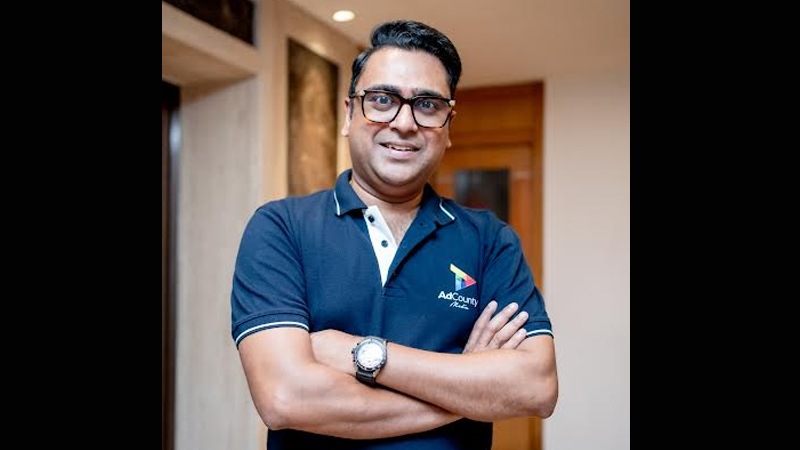
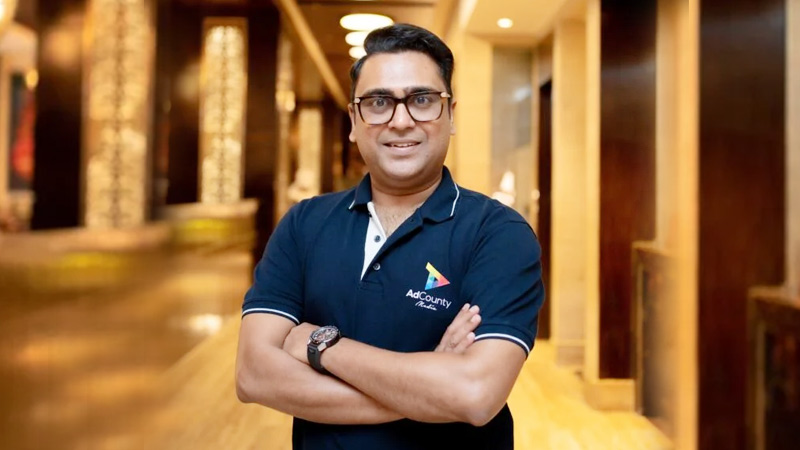
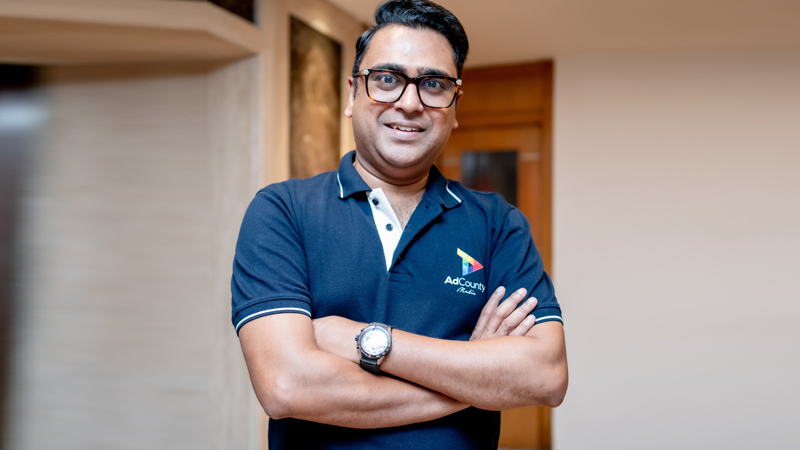
The author of this article is AdCounty Media chief strategy officer Kumar Saurav.
HYDERABAD: Bartronics India Limited is stepping up its agritech ambitions with plans to launch a voice-first, multilingual AI-powered application in March, following a successful pilot across Maharashtra and Uttar Pradesh.
The pilot phase saw strong engagement from farmers, supported by assured produce off-take through partnerships with SNN and Origo Commodities. Drawing on on-ground feedback, the company is now upgrading the platform to enable deeper interaction, data-driven intelligence and scalable adoption across rural markets.
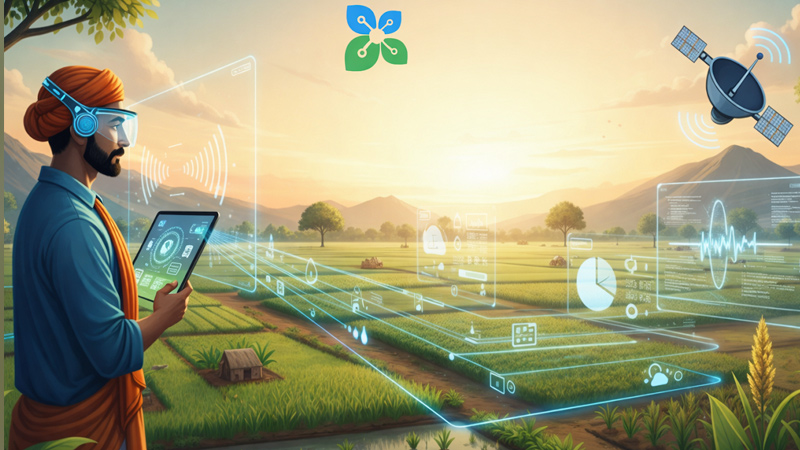
At the heart of the revamp is AI-enabled voice interaction in major regional languages, including English, Hindi, Marathi, Telugu and Kannada. The voice recognition and conversational agent framework is being developed by Ampivo Smart Technologies, aimed at transforming the app into an intuitive digital assistant for farmers.
Once launched, the platform will offer voice navigation, real-time alerts, contextual advisories, educational tools and interactive knowledge support, designed to improve decision-making across the agricultural value chain.
The application will also capture consent-led farmer data to connect users with electronic mandis and wider marketplaces, while enabling participation in sustainability-linked initiatives such as carbon credit programmes.
Bartronics India managing director Vidhya Sagar Reddy, said the voice-first approach reflects how rural communities naturally engage with technology and forms the foundation of a broader rural intelligence layer under Project Avio Agritech. The company aims to onboard 20 million farmers over the next three years.
Bartronics India currently operates across nearly 5,000 villages, delivering last-mile banking and digital financial services, and is expanding into integrated agritech and agri-trade solutions through its Project Avio platform.
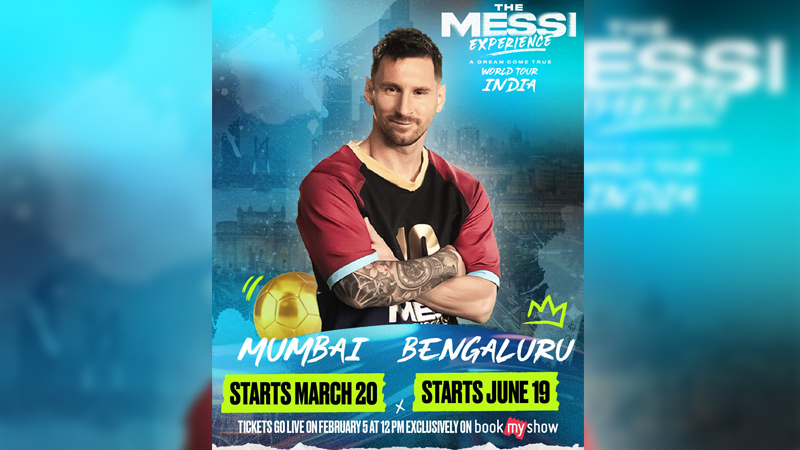
MUMBAI: When football dreams need a passport, Lionel Messi is ready to stamp it. The Messi Experience – A Dream Come True, the internationally touring immersive exhibition dedicated to one of sport’s most influential figures, is heading to India this March as part of its 2026 world tour. After successful runs across Buenos Aires, Puerto Rico, Panama, Beijing, Chicago, Mexico City, Miami, Los Angeles and São Paulo, the exhibition will make its India debut in Mumbai on March 20, 2026, before moving to Bengaluru from June 19, 2026. The shows will be staged at Century Mills in Lower Parel, Mumbai, and Bhartiya City Mall in Bengaluru.
Produced and promoted by Bookmyshow Live, the experience promises to pull fans inside Messi’s journey, not just his match highlights. “I am thrilled to see this project come to life and bring fans even closer to me both on and off the field,” Messi said, adding that the exhibition would allow Indian fans to relive the most unforgettable moments of his career.
Designed as a 75-minute, multi-sensory walkthrough, the exhibition unfolds across nine themed zones, blending artificial intelligence, immersive environments and exclusive content. Visitors can train like Messi, step into recreated match moments and explore personal stories that shaped his rise from his early days in Rosario to lifting the World Cup trophy in Qatar.
Bookmyshow chief business officer for live events Naman Pugalia said the India debut marks a milestone for football fandom in the country. He described Messi as a global cultural icon whose story transcends sport, adding that the exhibition reflects the company’s ambition to bring world-class immersive entertainment to Indian audiences.
Beyond the storytelling, the experience also features an official merchandise store and an activation zone, extending engagement beyond the exhibition halls. Whether for lifelong fans or first-time followers, The Messi Experience aims to turn football history into a walk-in memory, one that lets India play along with a living legend.
MUMBAI: When India opens up about mental health, the conversation keeps clocking in at work. A new conversation analysis by Consuma, an AI-native consumer insights platform, shows that workplace pressures are the most frequently discussed trigger in online conversations around mental health awareness in India. The study analysed 136,695 public conversations across Twitter, Reddit, Youtube and Instagram between January 1 and December 31, 2025. Within a focused subset of 20,272 conversations that explicitly discussed what triggers mental health awareness, nearly half 49.72 per cent pointed to work-related stressors, making employment the single largest trigger category online.
The findings echo concerns flagged at the policy level. India’s Economic Survey 2024–25 has already warned that hostile work environments and long working hours can hurt mental wellbeing and productivity. Online conversations suggest employees are feeling the strain long before policy catches up.
Among work-related triggers, poor work–life balance dominates the discussion at 24.37 per cent, followed by general workplace stress at 21.85 per cent and toxic work culture at 15.90 per cent. Long working hours account for 9.57 per cent of mentions, while job insecurity features in 7.50 per cent.
The numbers are backed by sharp, candid commentary. One user writes, “Most Indian employers overcomplicate employee wellness. Let people work async. Let them go for a run in the afternoon. Let them sleep in when their body needs it.”
Consuma notes that these findings apply only to conversations that explicitly discuss triggers for mental health awareness, not the entire universe of mental health discussions online.
The data shows that mental health discourse in India is overwhelmingly driven by adults in their prime working years. People aged 25–34 contribute 50.51 per cent of conversations, while those aged 35–44 account for 34.35 per cent. Together, they represent 84.86 per cent of the discussion.
Work stress, however, is not acting alone. Societal and educational pressures make up 33.98 per cent of trigger conversations, including societal expectations (14.42 per cent), academic pressure (13.92 per cent) and parental pressure (6.09 per cent). One widely echoed sentiment reads, “Indian parents will raise you with a roof over your head, food in your stomach, and shame in your soul.”
Taken together, the data points to a compounding “pressure stack” faced by working-age Indians balancing career demands alongside cultural expectations, education-linked anxiety and family pressure, all while chasing conventional life milestones.
Interestingly, the conversation is not limited to venting. Of the 26,311 conversations analysed for broader mental health themes, discussion is almost evenly split between core challenges (48.05 per cent) and solutions or support systems (43.81 per cent).
Mental health crises dominate the challenge cluster at 32.58 per cent, followed by stigma and lack of awareness at 20.27 per cent. On the solutions side, people lean towards culturally familiar, self-directed approaches rather than institutional pathways. Holistic practices such as music therapy and spiritual wisdom account for 17.34 per cent, practical stress management for 13.72 per cent, celebrity-led awareness for 7.64 per cent and government initiatives for 6.51 per cent.
The shift suggests that people are not only asking “what’s wrong?” but increasingly “what can I do?”even if the answers remain personal and decentralised.
Consuma’s analysis also zooms in on women’s health conversations, where mental wellbeing outweighs physical health topics. Among 1,934 women’s health conversations analysed, mental health accounts for 51.14 per cent, surpassing reproductive and gynaecological health at 37.07 per cent.
Younger adults dominate this space, with 18–44-year-olds contributing over 81 per cent of the discussion. In women’s health awareness triggers (3,489 conversations), societal factors lead at 45.2 per cent, closely followed by mental health drivers at 41.7 per cent.
Healthcare-related challenges appear less frequently at 7.4 per cent, but the tone is striking. Misdiagnosis and medical gaslighting recur as trust-breaking themes. One user notes: “Going to doctors is useless in India as a woman. First, they tell you to lose weight… Then they tell you that you are imagining it or that you are sensitive.”
The report was generated using Consuma’s AI-powered Rapid Research Platform. The dataset was cleaned for noise and duplicates and classified using a multi-coding methodology. Source-wise, the conversations came from Youtube (77,544), Twitter (41,121), Reddit (9,283) and Instagram (8,747).
In a digital space often crowded with noise, the findings paint a consistent picture, for India’s online audience, mental health conversations begin not in therapy rooms or hospitals, but at the workplace and the clock is still ticking.


Hamdard honours changemakers at Abdul Hameed awards

Why the Best Campaigns Today Start With Insights, Not Ideas

Ahmad Muneeb elevated to VP – HR centre of excellence at Zepto

Fans Take Centre Stage as Zee Cine Awards Turns the Spotlight Around

GUEST COLUMN: How content leaders decide what gets greenlit

The man who dubbed Lord of the Rings in 50 languages is stunned by Mumbai traffic

Dell names Aishwarya Sudhakar director of marketing intelligence

These ’90s fashion trends are making a comeback in 2017
The final 6 ‘Game of Thrones’ episodes might feel like a full season
According to Dior Couture, this taboo fashion accessory is back
The old and New Edition cast comes together to perform
Phillies’ Aaron Altherr makes mind-boggling barehanded play
Uber and Lyft are finally available in all of New York State
Disney’s live-action Aladdin finally finds its stars
Hamdard honours changemakers at Abdul Hameed awards
Why the Best Campaigns Today Start With Insights, Not Ideas
Ahmad Muneeb elevated to VP – HR centre of excellence at Zepto
Fans Take Centre Stage as Zee Cine Awards Turns the Spotlight Around
GUEST COLUMN: How content leaders decide what gets greenlit
The man who dubbed Lord of the Rings in 50 languages is stunned by Mumbai traffic
Dell names Aishwarya Sudhakar director of marketing intelligence
-

 News Broadcasting4 days ago
Mukesh Ambani, Larry Fink come together for CNBC-TV18 exclusive
-

 iWorld1 week ago
Netflix celebrates a decade in India with Shah Rukh Khan-narrated tribute film
-
 MAM3 months ago
HoABL soars high with dazzling Nagpur sebut
-

 MAM4 days ago
Nielsen launches co-viewing pilot to sharpen TV measurement
-
 iWorld12 months ago
BSNL rings in a revival with Rs 4,969 crore revenue
-
 I&B Ministry3 months ago
India steps up fight against digital piracy
-
 iWorld3 months ago
Tips Music turns up the heat with Tamil party anthem Mayangiren
-

 Film Production1 week ago
UFO Moviez rides high on strong Q3 earnings
