
Ad Campaigns
TV’s desi power play: How regional storytelling is uniting a billion hearts

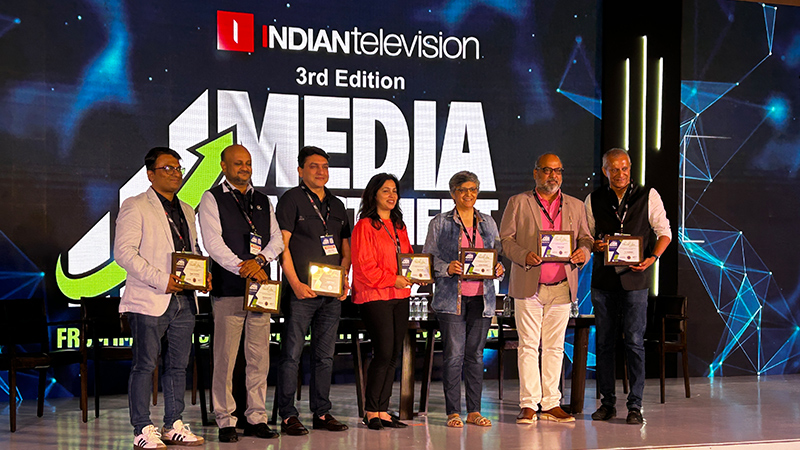
MUMBAI: At the 2025 edition of the Media Investment Summit by Indiantelevision.com, a potent mix of data, drama and desi sensibilities took centre stage. In a session titled ‘From Regional to National: How Television Unites & Influences Billions’, top executives from insurance, FMCG, media, and broadcast peeled back the layers of India’s most underrated soft power—television.
Chaired by Tam Media Research CEO L V Krishnan the panel drove home a core truth: in a country as complex as India, regional is not a stepping stone to national—it’s the soul of it.
Zee Entertainment chief growth officer Ashish Sehgal opened the session with a clear stance on storytelling. “We’re looking at a command-level segmentation exercise in a vast, culturally diverse country. The same storyline can vibrate differently across states, languages and values”, he said. The key, he noted, was not translation—but transcreation. What works in Maharashtra needs rethinking for Manipur.
Sehgal highlighted how television continues to command trust, “People spend more time watching TV in the living room than browsing online in isolation. That communal screen-time is where influence breeds”.
Britannia GM – media Riya Joseph added flavour with paint ads and biscuits. “If we use one ad template for Rajasthan and another for Karnataka, we’ve already lost the battle. Paint colours, biscuit flavours—even the tone of a jingle—need localisation”, she said. In Joseph’s world, the biscuit is serious business. “The challenge isn’t just shelf space—it’s shelf recall in a noisy media universe”, she added.
Britannia’s hyperlocal campaigns often start as social experiments and end up earning massive engagement with minimal media spends. “When we celebrated pronunciation quirks around ‘croissant’, it went viral. Because it came from their lives, not ours”, she quipped.
For insurance brands, the entry barrier isn’t price—it’s comprehension. “In a culturally vibrant and diverse country like India, where every corner celebrates its own festivals and traditions across different languages and cultures, marketers have a unique opportunity to connect deeply with consumers through festive storytelling. These festivals, rich with emotion, symbolism, and values, offer a goldmine of inspiration— but to create an impact that lasts, the story must not only reflect the festive spirit but also stay true to the brand’s core message.”, said Edelweiss Life Insurance CMO Abhishek Gupta.
Gupta pushed for story-first advertising. “Across India, every region holds real stories of loss, hope, aspiration and renewal. These aren’t fictional narratives—they’re lived realities. Marrying those with brand promise creates resonance and trust”, he said, adding that regional storytelling builds both loyalty and local advisory networks.
Shemaroo Entertainment business head – Hindi GEC Sagar Hosamani leaned into faith-based programming as a vehicle for localisation. “Every festival must reflect the cultural nuance of its origin. Devotion isn’t one-size-fits-all”, he said.
Hosamani highlighted that storytelling isn’t just about language but ritual, colour, iconography and emotional pace. “If we shoot a Navratri segment in Mumbai and call it pan-Indian, we miss the mark. It must feel local to be loved nationally”, he said.
Madison Media Sigma CEO Vanita Keswani offered a sharp media planner’s take, “There’s no ‘national vs regional’ anymore. It’s both. Every brand plan today has multi-layered targeting—regional, hyperlocal, and mass”.
Measurement, she stressed, is now possible down to the taluka level. “We can measure Sun TV’s performance in Madurai versus Chennai versus Coimbatore. From search queries to WhatsApp bot data, the tools are in place”, she added. Keswani emphasised that regional content is increasingly outperforming national content in engagement-led metrics.
Live Times founder Dilip Singh closed the discussion with a rousing pitch for television’s credibility. “There are 400-plus channels in India, yet audiences still turn to TV for breaking news. During high-stakes events, TV rooms become war rooms”, he said, citing the post-India-Pakistan strike coverage where mobile viewership dipped but TV soared.
Singh called for fact-first newsrooms. “It’s not about being the fastest. It’s about being the most accurate. Truth is our only product”, he said.
All panellists agreed that India’s complexity demands cultural fluency, not marketing convenience. As Sehgal concluded: “You speak my language, my brain listens. You speak my culture, my heart responds”.
At a time when digital fragmentation is rising, the session underscored how television—through regional storytelling—remains India’s most unifying screen.












NATIONAL: Amazon Ads has laid out a sharply tech-led vision for the advertising industry in 2026, arguing that artificial intelligence, streaming TV and creator partnerships will combine to turn brand building into a more precise, performance-driven business.
At the heart of the shift, the company says, is the fusion of AI with Amazon’s vast trove of shopping, browsing and streaming signals, allowing advertisers to move beyond blunt reach metrics to campaigns designed around real customer behaviour.
“The future of advertising is not about reaching more people, but the right people with messages that resonate,” said Amazon Ads India head and vice president Girish Prabhu. “By combining AI with deep customer insights, we help brands move from broadcasting campaigns to having meaningful conversations wherever audiences spend their time.”
One of the biggest changes, according to Amazon Ads, will be the collapse of the wall between media planning and creative development. Retail media, powered by first-party data, is increasingly shaping everything from brand discovery to final purchase, pushing marketers to design campaigns around audience insight rather than internal instinct.
AI is also moving from a support tool to a creative engine. Agentic AI, which automates and accelerates production, is expected to make high-quality creative accessible even to small businesses, compressing weeks of work into hours and giving challengers the ability to compete with larger brands on speed and scale.
Behind the scenes, AI-driven analytics will take on a bigger role in campaign optimisation, identifying patterns, spotting opportunities and recommending actions that would previously have required teams of analysts.
Streaming TV is another big battleground. With India’s video streaming audience now above 600 million and connected TV users at 129.2 million in 2025, advertisers are set to treat streaming not just as a branding channel but as a performance engine, measured increasingly by sales, sign-ups and bookings rather than just reach.
Finally, Amazon Ads sees creators and contextual advertising reshaping how brands tell stories. Creators will act less like influencers and more like long-term partners, while scene-aware ads on streaming platforms will allow brands to insert hyper-relevant offers into the flow of what viewers are watching.
Taken together, Amazon Ads argues, these shifts mark a move towards advertising that is both more human and more measurable, where AI handles the complexity, and creativity does the persuading.
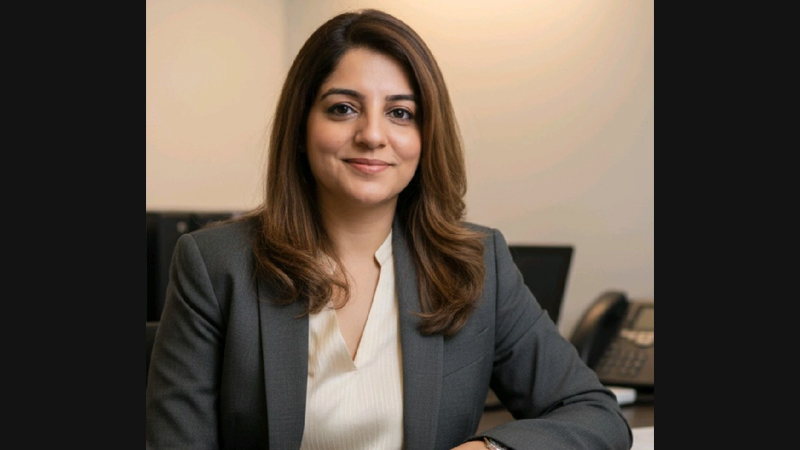
MUMBAI: Publicis Groupe India has appointed Sonal Verma as managing director of Arc Worldwide India, handing the reins of its experiential and shopper marketing business to a leader steeped in live brands and real world storytelling.
Arc Worldwide, the Groupe’s specialist arm focused on experiences that nudge consumers from curiosity to checkout, sits at the intersection of creativity, commerce and culture. Verma’s mandate is to sharpen that edge as brands grapple with shorter attention spans and more complicated buying journeys.
Verma joins from Cheil India, where she spent nearly five years building and leading the brand experience practice, most recently as senior vice president and head of brand experience. Her career reads like a tour of India’s experiential landscape, with leadership roles at Momentum Worldwide, Percept D Mark, Blockkbuster Events and Showtime Events.
She has also held senior activation roles at Radio City and The Times of India, giving her a rare mix of agency, media and on-ground execution experience. The common thread has been simple: turning big ideas into moments people remember and talk about.
At Arc Worldwide India, Verma will focus on expanding the agency’s experiential and shopper capabilities, strengthening client partnerships and keeping the work firmly rooted in consumer behaviour rather than buzzwords.
With Verma at the helm, Arc Worldwide is expected to double down on ideas that live beyond screens and closer to everyday life. For an industry obsessed with clicks and scrolls, this is a reminder that sometimes the strongest connections still happen face to face.
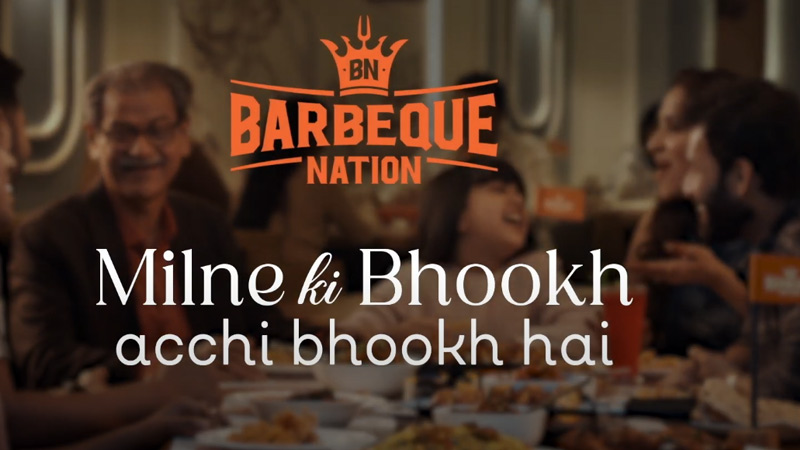
BENGALURU: Barbeque Nation is ringing in the new year with a reminder that some cravings cannot be ordered online. The casual dining chain has rolled out a new film campaign, milne ki bhookh, pitching its restaurants as places to meet, reconnect and linger over food.
Set against a world of constant messages and missed meet-ups, the campaign leans into a simple truth: dining out remains one of the few rituals that still brings people together. Barbeque Nation positions itself as the excuse and the setting for real conversations, shared plates and unhurried moments.
Nakul Gupta, cmo at Barbeque Nation, says the brand has long been about shared celebrations. As the year turns, milne ki bhookh captures what he calls a growing hunger to meet, connect and spend time together, with food at the centre of that experience.
Created by Makani Creatives, the campaign comprises three films built around Barbeque Nation’s signature grills and desserts. The storytelling is deliberately sensorial, designed to spark cravings while nudging diners to step out and meet in person.
Pavan Punjabi, chief integration officer at Makani Creatives, says the idea stems from a familiar contradiction. People are constantly connected, yet meetings with loved ones are endlessly postponed. Milne ki bhookh, he says, is a gentle push to make time for real-life catch-ups, using food as the reason to come together, share a meal and create memories.
The campaign breaks on December 25 with the grilled prawns film and will run for two months, amplified across digital platforms. As the new year begins, Barbeque Nation is betting that the strongest appetite of all is not for food alone, but for each other.

Mukesh Ambani, Larry Fink come together for CNBC-TV18 exclusive

Nielsen launches co-viewing pilot to sharpen TV measurement

Netflix celebrates a decade in India with Shah Rukh Khan-narrated tribute film

Delhivery chairman Deepak Kapoor, independent director Saugata Gupta quit board

Meta appoints Anuvrat Rao as APAC head of commerce partnerships

Brnd.me enters Europe as haircare brands power global expansion

TechnoSport taps quick commerce with launch on Slikk’s 60-minute platform

These ’90s fashion trends are making a comeback in 2017
The final 6 ‘Game of Thrones’ episodes might feel like a full season
According to Dior Couture, this taboo fashion accessory is back
The old and New Edition cast comes together to perform
Phillies’ Aaron Altherr makes mind-boggling barehanded play
Uber and Lyft are finally available in all of New York State
Disney’s live-action Aladdin finally finds its stars
Mukesh Ambani, Larry Fink come together for CNBC-TV18 exclusive
Nielsen launches co-viewing pilot to sharpen TV measurement
Netflix celebrates a decade in India with Shah Rukh Khan-narrated tribute film
Delhivery chairman Deepak Kapoor, independent director Saugata Gupta quit board
Meta appoints Anuvrat Rao as APAC head of commerce partnerships
Brnd.me enters Europe as haircare brands power global expansion
TechnoSport taps quick commerce with launch on Slikk’s 60-minute platform
-
 iWorld5 days ago
Netflix celebrates a decade in India with Shah Rukh Khan-narrated tribute film
-
 I&B Ministry3 months ago
India steps up fight against digital piracy
-
 iWorld3 months ago
Tips Music turns up the heat with Tamil party anthem Mayangiren
-
 iWorld12 months ago
BSNL rings in a revival with Rs 4,969 crore revenue
-
 News Broadcasting24 hours ago
Mukesh Ambani, Larry Fink come together for CNBC-TV18 exclusive
-
 MAM3 months ago
HoABL soars high with dazzling Nagpur sebut
-
 News Broadcasting2 months ago
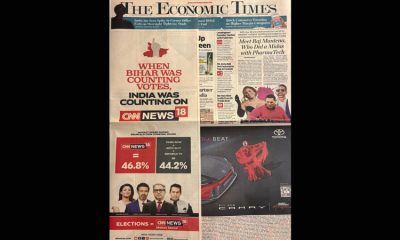
CNN-News18 dominates Bihar election coverage with record viewership
-

 MAM3 months ago
Kapil Sethi joins Network18 as head of technology