
Ad Campaigns
#Throwback2020: The year’s most controversial ads

NEW DELHI: Advertising informs. It generates awareness, entertains; less often than not – if one goes by harsh cynics – leads to a buy decision, and with even lesser frequency flies into controversy. Sometimes the storm that follows proves beneficial for the brand, especially if it is a cult product. At other times, it proves highly detrimental. 2020 was no different. The year had its fair share of brands and labels which got into the crosshairs of some activist group or other, inviting consumers' ire and even unmentionable expletives. Even though what they communicated was well-meaning, and should be considered by most to be within the norms of decency. Most of these ads will end up finding a mention in marketing case history books, detailing what transpired.
Here's our collection of some of the brands, TVCs and ads that ran into controversy.
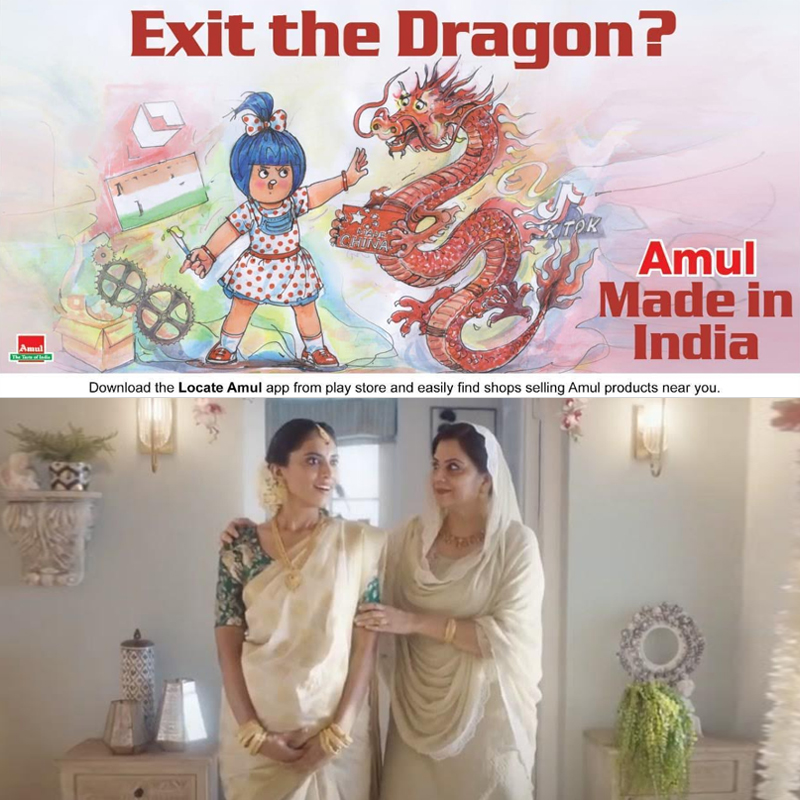
1. Tanishq – Baby Shower
The jewellery brand from Titan released a TVC on the theme of Ekatvam (Oneness) featuring a Hindu girl married in a Muslim family which is celebrating her baby shower. This ritual is customarily not a part of the Muslim culture but the ad film showcased a liberal family that was more concerned about their daughter-in-law’s happiness. The film ran into a major wrangle, as a lot OF people opposed the premise and claimed that their cultural sentiments had been hurt. They asked why advertising industry always goes for these tropes and why a Muslim girl was not featured in a Hindu environment. Allegations of promoting ‘love jihad’ were also thrown around. The backlash pushed the brand on the backfoot and it pulled the plug on the ad. However, the move was not acceptable to certain sections, who criticised Tanishq for not taking a stand. For the record, the film got a clean chit from every industry body and reviewers.
Tanishq has officially withdrawn their ad after being trolled viciously. Here's why this is a very sad state of affairs, and context from other such ads that were trolled (and some, withdrawn) https://t.co/Nb0cSiTPHX pic.twitter.com/sn3IMBqdmC
— Karthik (@beastoftraal) October 13, 2020
2. Tanishq – Ekatvam
Not happy with getting a social media caning from certain pressure groups, Tanishq’s marketing mavens decided to take a shot at being liberal in its outlook and released a TVC promoting its Ekatvam range. The film featured four artistes – Neena Gupta, Nimrat Kaur, Sayani Gupta and Alaya F – talking about the festivities. During the film, one of the actors’ spoke about not bursting firecrackers and celebrating a peaceful Diwali. While the idea was to prevent pollution, several people took it in a different light and rebuked the brand to not tell others how to celebrate the festival of lights. The brand was stalked by trolls for the second time in a month. Again, Tanishq was forced to withdraw the ad.
On both occasions, trollers pointed that the ad had hurt Hindu sentiments.

3. Kent RO
This year, several brands tried to cash In on the pandemic by communicating how they could help in the fight against pathogens, especially the Coronavirus. While some brands came out with effective ads, some made exaggerated claims even as others tried to be extra cautious in their communication. One such company which took such a tack was the maker of water purification system Kent RO. In an advertisement, Kent cautioned against letting the househelp knead flour in case “her hands might be infected,” which served as the plug for the company’s product. Featuring Hema Malini and her daughter Esha Deol as celebrity endorsers, the TVC got thrashed black and blue on social media. Some even complained to the Advertising Standards Council of India (ASCI). Their reasoning: the TVC was insensitive towards the domestic helps who were already facing discrimination from housing societies across the country. The film was pulled off Kent’s social media handles and the brand issued an apology and promised to investigate its advertising procedures and deploy corrective measures.

4. Amul – Exit the Dragon
During June this year, tensions between India and China were at its peak. Starting with the tiff in Galwan valley, where PLA soldiers were pushed back while trying to enter Indian territory, to boycotting Chinese brands and products with a call for Atmanirbhar Bharat, the dairy brand Amul, famed for its on point topicals, came up with a creative titled ‘Exit the Dragon’. The creative showcased the iconic Amul Girl telling the dragon to exit – an oblique reference to Chinese products. The powerful creative clearly communicated the message in regards to boycott of goods manufactured in China. Shortly after the cartoon was posted, the Twitter account of Gujarat Milk Marketing Federation (which owns Amul) was blocked. Twitterati accused the social networking platform of having a bias against India and #Amul became a top trend. The account was restored soon after.
#Amul Topical: About the boycott of Chinese products… pic.twitter.com/ZITa0tOb1h
— Amul.coop (@Amul_Coop) June 3, 2020
5. WhiteHat Jr
The ed-tech brand certainly caught the pulse of the nation when it was acquired by Byju’s for a staggering $300 million. Post that, the brand went on a new audience acquisition spree on the back of a huge marketing campaign. However, as many as seven WhiteHat Jr ads fielded complaints for being misleading. Out of these, complaints regarding five ads were upheld by ASCI, which directed them to be pulled down. It used messages such as “TedX Speaker at the age of seven,” among other inflated, unverified claims.
The brand also used the images of global leaders such as Elon Musk, Sundar Pichai, Steve Jobs and others to convey a message that joining WhiteHatJr will turn kids into tech geniuses like them.
6. ISL Mohun Bagan
The ad, meant to create hype for the ISL 2020-21 season among Bengali football enthusiasts, wreaked havoc instead. Mohun Bagan loyalists objected to a scene where a team jersey is dipped into a washing machine along with an ATK jersey. The narration of the ad also mentioned a "six-year-old emotion" that fans found offensive, since Mohun Bagan, which debuted in ISL this season with the brand name ATK Mohun Bagan FC, has a long and glorious history of 131 years.
They were also perturbed with the idea of the team wearing three stars on the left sleeve of their jersey under the ISL logo, with the words 'Champions 2019-20' written under them. The Mohun Bagan fanbase perceived the mishandling of the branding and advertising of their team as an attempt to undermine their club's legacy and heritage. They expressed their disagreement with these branding efforts online. Soon enough, team management stepped in and took measures to cool down the situation.
How can a new entity called as defending champions?? And what is the meaning of those three stars?? @RP_SanjivGoenka@SGanguly99 @Mohun_Bagan @atkmohunbaganfc @bosesrinjoy pic.twitter.com/yVnQ57XKs5
— Sushovan (@madsusho) October 27, 2020
#ATKMohunBagan #Mariners #JoyMohunBagan pic.twitter.com/bY1ZAZdr1T
— ATK Mohun Bagan FC (@atkmohunbaganfc) November 1, 2020
7. Indore Law School ad
A print advert by the Indore Institute of Law drew a comparison between two fictional characters – Harvey Specter from American TV series Suits, and Akshay Kumar from Jolly LLB 2. It bore the caption that an aspiring lawyer could be either – “Choice is yours.”
The picture started doing the rounds on social media platforms and netizens were quick to slam the college’s perceived elitist stance behind the ad. Others accused the institute of denigrating the “dignity of Indian lawyers.” Several people questioned whether the college had obtained permission from the original creators before running the campaign. A fair few wondered why the institute chose fictional characters instead of its own alumni or famous practitioners of law in the real world.
The ad-makers were brutally trolled for their creative sense and the ad was roundly panned as problematic and in poor taste.
Facing flak, the law college later issued an apology saying, “We assure everyone that it was absolutely not our intention to offend anyone or defame any section of the legal profession.”
Please find our clarification regarding our advertisement published on 15/10/2020. We would like to make clear the…
Posted by Indore Institute of Law on Thursday, 15 October 2020
8. MobiKwik takes a dig at Paytm
The fintech firm took a dig at arch rival Paytm by calling it “Chinese.” It further said that while 220 Chinese apps have been banned, many consumers are still using them on the downlow. MobiKwik urged users to go Indian and questioned them if they were still using Paytm, a Chinese app, for paying their bills.
Describing itself as a ‘truly Indian Payments’ app, the ad called on users to use Mobikwik for all their payment needs.
Whoa!!! Surgical strike on Paytm? pic.twitter.com/wXhjcu3i7B
— Karthik (@beastoftraal) November 25, 2020
9. Honey War
After the Centre for Science and Environment (CSE) sparked a controversy in the FMCG space by reporting that several leading honey brands had not been able to clear purity tests, a brand war started. The ones that passed the litmus are now talking about their purity, while those that flunked are questioning the report. Post honeygate, several brands released ads sharing their perspective on the situation. The ad war was obvious as no brand would want to let its market share degrade based on one report. Industry experts believe that a massive PR and advertising war will be waged in this category as brands would go to any extent to retain their customers.











NATIONAL: Amazon Ads has laid out a sharply tech-led vision for the advertising industry in 2026, arguing that artificial intelligence, streaming TV and creator partnerships will combine to turn brand building into a more precise, performance-driven business.
At the heart of the shift, the company says, is the fusion of AI with Amazon’s vast trove of shopping, browsing and streaming signals, allowing advertisers to move beyond blunt reach metrics to campaigns designed around real customer behaviour.
“The future of advertising is not about reaching more people, but the right people with messages that resonate,” said Amazon Ads India head and vice president Girish Prabhu. “By combining AI with deep customer insights, we help brands move from broadcasting campaigns to having meaningful conversations wherever audiences spend their time.”
One of the biggest changes, according to Amazon Ads, will be the collapse of the wall between media planning and creative development. Retail media, powered by first-party data, is increasingly shaping everything from brand discovery to final purchase, pushing marketers to design campaigns around audience insight rather than internal instinct.
AI is also moving from a support tool to a creative engine. Agentic AI, which automates and accelerates production, is expected to make high-quality creative accessible even to small businesses, compressing weeks of work into hours and giving challengers the ability to compete with larger brands on speed and scale.
Behind the scenes, AI-driven analytics will take on a bigger role in campaign optimisation, identifying patterns, spotting opportunities and recommending actions that would previously have required teams of analysts.
Streaming TV is another big battleground. With India’s video streaming audience now above 600 million and connected TV users at 129.2 million in 2025, advertisers are set to treat streaming not just as a branding channel but as a performance engine, measured increasingly by sales, sign-ups and bookings rather than just reach.
Finally, Amazon Ads sees creators and contextual advertising reshaping how brands tell stories. Creators will act less like influencers and more like long-term partners, while scene-aware ads on streaming platforms will allow brands to insert hyper-relevant offers into the flow of what viewers are watching.
Taken together, Amazon Ads argues, these shifts mark a move towards advertising that is both more human and more measurable, where AI handles the complexity, and creativity does the persuading.
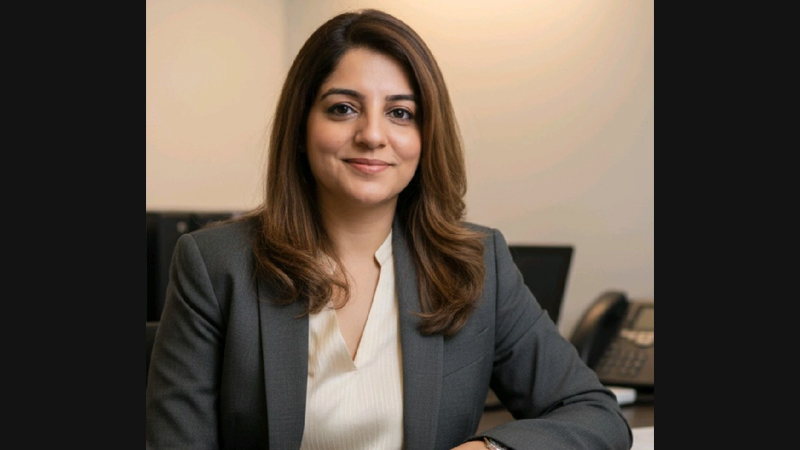
MUMBAI: Publicis Groupe India has appointed Sonal Verma as managing director of Arc Worldwide India, handing the reins of its experiential and shopper marketing business to a leader steeped in live brands and real world storytelling.
Arc Worldwide, the Groupe’s specialist arm focused on experiences that nudge consumers from curiosity to checkout, sits at the intersection of creativity, commerce and culture. Verma’s mandate is to sharpen that edge as brands grapple with shorter attention spans and more complicated buying journeys.
Verma joins from Cheil India, where she spent nearly five years building and leading the brand experience practice, most recently as senior vice president and head of brand experience. Her career reads like a tour of India’s experiential landscape, with leadership roles at Momentum Worldwide, Percept D Mark, Blockkbuster Events and Showtime Events.
She has also held senior activation roles at Radio City and The Times of India, giving her a rare mix of agency, media and on-ground execution experience. The common thread has been simple: turning big ideas into moments people remember and talk about.
At Arc Worldwide India, Verma will focus on expanding the agency’s experiential and shopper capabilities, strengthening client partnerships and keeping the work firmly rooted in consumer behaviour rather than buzzwords.
With Verma at the helm, Arc Worldwide is expected to double down on ideas that live beyond screens and closer to everyday life. For an industry obsessed with clicks and scrolls, this is a reminder that sometimes the strongest connections still happen face to face.
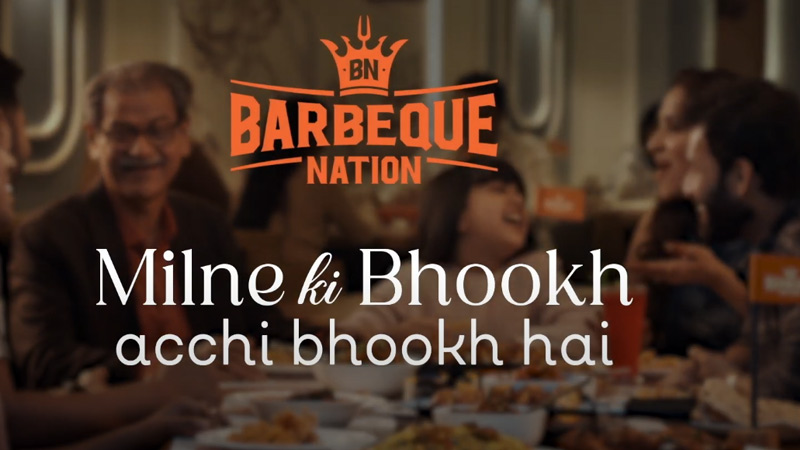
BENGALURU: Barbeque Nation is ringing in the new year with a reminder that some cravings cannot be ordered online. The casual dining chain has rolled out a new film campaign, milne ki bhookh, pitching its restaurants as places to meet, reconnect and linger over food.
Set against a world of constant messages and missed meet-ups, the campaign leans into a simple truth: dining out remains one of the few rituals that still brings people together. Barbeque Nation positions itself as the excuse and the setting for real conversations, shared plates and unhurried moments.
Nakul Gupta, cmo at Barbeque Nation, says the brand has long been about shared celebrations. As the year turns, milne ki bhookh captures what he calls a growing hunger to meet, connect and spend time together, with food at the centre of that experience.
Created by Makani Creatives, the campaign comprises three films built around Barbeque Nation’s signature grills and desserts. The storytelling is deliberately sensorial, designed to spark cravings while nudging diners to step out and meet in person.
Pavan Punjabi, chief integration officer at Makani Creatives, says the idea stems from a familiar contradiction. People are constantly connected, yet meetings with loved ones are endlessly postponed. Milne ki bhookh, he says, is a gentle push to make time for real-life catch-ups, using food as the reason to come together, share a meal and create memories.
The campaign breaks on December 25 with the grilled prawns film and will run for two months, amplified across digital platforms. As the new year begins, Barbeque Nation is betting that the strongest appetite of all is not for food alone, but for each other.


MIB sets OTT accessibility rules, mandates captions and audio description

Boney Kapoor acquires remake rights of Tamil political satire Thalaivar Thambi Thalaimaiyil

Netflix India names Rekha Rane director of films and series marketing

Zabeen signs off from TV9 after shaping the network’s public voice

Dhawan steps up to bat for Delhi’s grassroots sports push

Orient Beverages pops the fizz with steady Q3 gains and rising profits

Cheekatilo shines in the dark with record debut on Prime Video

These ’90s fashion trends are making a comeback in 2017
The final 6 ‘Game of Thrones’ episodes might feel like a full season
According to Dior Couture, this taboo fashion accessory is back
The old and New Edition cast comes together to perform
Phillies’ Aaron Altherr makes mind-boggling barehanded play
Uber and Lyft are finally available in all of New York State
Disney’s live-action Aladdin finally finds its stars
MIB sets OTT accessibility rules, mandates captions and audio description
Boney Kapoor acquires remake rights of Tamil political satire Thalaivar Thambi Thalaimaiyil
Netflix India names Rekha Rane director of films and series marketing
Zabeen signs off from TV9 after shaping the network’s public voice
Dhawan steps up to bat for Delhi’s grassroots sports push
Orient Beverages pops the fizz with steady Q3 gains and rising profits
Cheekatilo shines in the dark with record debut on Prime Video
-

 News Broadcasting1 week ago
Mukesh Ambani, Larry Fink come together for CNBC-TV18 exclusive
-

 News Headline1 month ago
From selfies to big bucks, India’s influencer economy explodes in 2025
-

 iWorld2 weeks ago
Netflix celebrates a decade in India with Shah Rukh Khan-narrated tribute film
-

 Hollywood5 days ago
The man who dubbed Harry Potter for the world is stunned by Mumbai traffic
-
 I&B Ministry3 months ago
India steps up fight against digital piracy
-
 MAM3 months ago
HoABL soars high with dazzling Nagpur sebut
-
 iWorld12 months ago
BSNL rings in a revival with Rs 4,969 crore revenue
-
 iWorld3 months ago
Tips Music turns up the heat with Tamil party anthem Mayangiren
