
Brands
Throwback Thursday: How Nirma became ‘Sab ki Pasand’

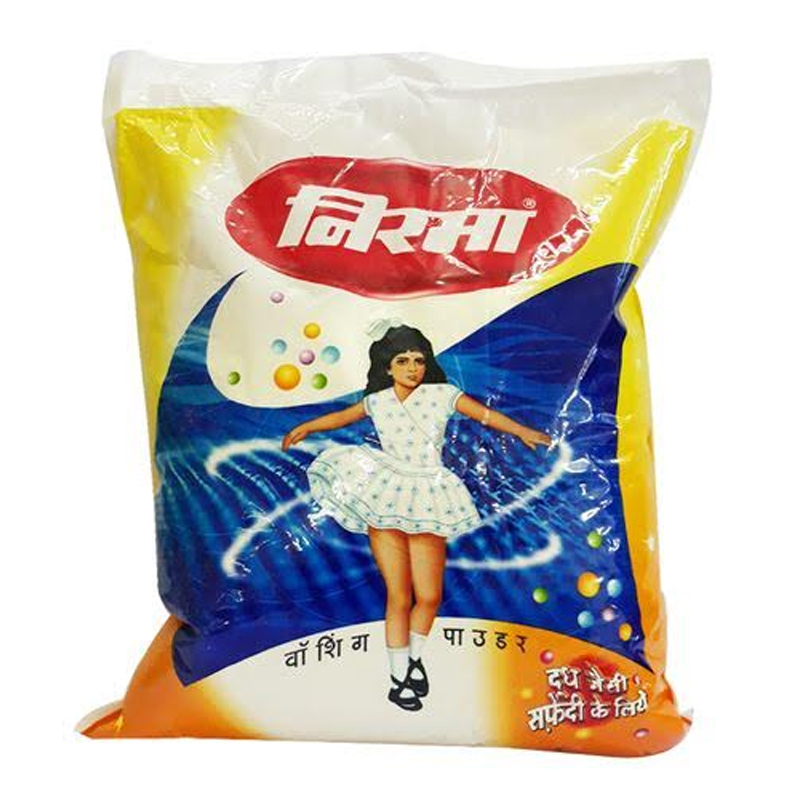
MUMBAI: It’s Thursday once again, and in continuation of our Throwback series featuring prolific marketing campaigns from the past, we rewind to an ad that is sure to invoke nostalgia in most of us.
Remember the visuals of a little girl in a frilly white frock twirling to the tune of a catchy jingle? It remains one of the most enduring images from television commercials of the ’80s. Yes, we are referring to the ‘Washing Powder Nirma’ advertisement, which played a key role in catapulting an underdog, regional, barely known brand into the national limelight and in scripting its marketing success. Admit it, the song “Doodh si safedi Nirma se aayi” is already playing in your head, right? So, let’s flashback to the time when this jingle played on every television set – be it black & white or colour. But for that, we need to start from the beginning.
The homegrown detergent brand, which went on to become a household name, had a unique journey that began in the backyard of its founder. The washing powder is the brainchild of Karsanbhai Patel, who worked as a lab technician at the time, at the department of mining and geology in Ahmedabad, Gujarat, after completing his BSc in Chemistry. The year was 1969 and he was all of 24, when he started experimenting with phosphate-free synthetic detergent powder. Eventually, he started manufacturing it in his house. Packaging the washing powder neatly in a transparent pouch, he started handing out packets to people on his way to work, even selling it door-to-door.
‘Detergents’ till then were a premium product, with most average-income households using laundry soap instead. But Patel knew his target consumers well. In order to reach the masses, the product was priced low and presented sans any fancy packaging, to appeal to the target group. The packaging just had the name ‘Nirma’ with a little girl’s mascot on it. Not many know that the brand derives its name from Patel’s own daughter, Nirupama, who tragically passed away young in an accident. The image of the girl on the detergent’s pack belongs to her, as well. This also explains why the image has remained a constant throughout, upto this day.
The detergent market in those days was dominated by Hindustan Lever Ltd’s (now Hindustan Unilever) Surf, which was priced at around Rs 13 per kg. Since the majority of the middle class couldn’t afford to buy detergents at that time, it hardly had any competition. It is this market that Patel tapped into. He priced his brand at Rs 3.50 per kg. This massive price difference led to consumers opting to buy Nirma, over other pricier alternatives. Subsequently, the product sales picked up and Patel started manufacturing Nirma on a large scale. The time was ripe for a low-cost, no-frills alternative to Surf.

In the 1970s, when Nirma entered the market, the biggest challenge it faced was to make its targeted audience aware of its existence. This was the time when the available means of advertising were primarily radio, newspaper, and magazines- and only a few hours of television. This is where Nirma’s advertising strategy caused an upheaval in the detergents market.
Karsanbhai Patel collaborated with Purnima Advertising Agency for a catchy ad that would promote the product, create brand awareness and of course, boost sales. And thus, the jingle was born — “washing powder Nirma, washing powder Nirma…“
It first hit radio airwaves in 1975 and was a hit. Patel then took a chance on TV advertising, upon seeing the increasing scope of television commercials. And the rest, as they say, is history.
The ad debuted on television in 1982 with actor-model Sangeeta Bijlani as the face for the television commercial. The catchy jingle of “Washing Powder Nirma…Sabki Pasand Nirma” captured the nation’s attention, embedding it in our psyches forever.
The jingle had a desi touch with regular Indian names such as Hema, Rekha, Jaya, and Sushma being thrown in, which struck a chord with the masses. The ad by itself was not path-breaking as such. Positioning itself as a brand for the masses, it followed a similar template for long, showing young people actively enjoying- singing, dancing – and of course, washing clothes using the Nirma powder. It portrayed the act of doing laundry as a fun activity, instead of a dreary task. Focusing on pan-India reach perhaps, the ad was shot at a variety of vantage locations across the length and breadth of the country. The ad begins and closes with the ‘Nirma girl’ – the brand’s mascot- twirling onto the detergent pack.
It is probably one of those rare ads where the jingle actually outshines the visuals that accompany it. The song effectively and simply drove the brand messaging with lyrics like “doodh si safedi, nirma se aayi, rangeen kapda bhi, khil khil jaayae” (It brings the whiteness of milk to white clothes and brightens coloured ones too) and, “kam keemat mein adhik safedi laya nirma” (superior whiteness at a low price), which stressed on the low-cost factor coupled with a quality wash that basically every housewife was looking for. The campaign succeeded in dethroning the detergent heavyweight, Surf and overtaking all other big names in the market with its brand positioning.
Little wonder then, that apart from minor tweaks, Nirma retained the jingle in its ad campaign for more than a dozen years- going on to become the longest-running ad jingle in Indian advertising. The brand responded to the evolving customer tastes and times by showcasing the four characters of Hema, Rekha, Jaya, and Sushma as evolving with time, depicting them as independent-minded women actively pursuing their interests and passion, in a slight upgrade from the original ad.
By 1985, Nirma had overtaken Surf to become the best-selling detergent brand in India. And three years later, what started as a door-to-door selling brand, had 60 per cent of the total detergent market share in the country, dethroning the heavyweight brand from the house of a multinational, which had created the market in India. Also forcing HLL marketing stalwarts to go into a huddle for “Operation STING” which stood for-believe it or not-Strategy To Inhibit Nirma’s Growth!
It was a classic David vs Goliath case- that’s worthy of becoming a management case study- where the advertisement helped script the perfect underdog win. The Nirma ad goes down the annals of Indian advertising for taking on the market leader of the time. And while at it, it did what a good ad is supposed to do – tell you about the product’s advantages and make you remember it. And if an ad doesn’t tick those two boxes, all the awards in the world cannot make it work.












Gurugram: Delhivery’s boardroom is being reset. Deepak Kapoor, chairman and independent director, has resigned with effect from April 1 as part of a planned board reconstitution, the logistics company said in an exchange filing. Saugata Gupta, managing director and chief executive of FMCG major Marico and an independent director on Delhivery’s board, has also stepped down.
Kapoor exits after an eight-year stint that included steering the company through its 2022 stock-market debut, a period that saw Delhivery transform from a venture-backed upstart into one of India’s most visible logistics platforms. Gupta, who joined the board in 2021, departs alongside him, marking a simultaneous clearing of two senior independent seats.
“Deepak and Saugata have been instrumental in our process of recognising the need for and enabling the reconstitution of the board of directors in line with our ambitious next phase of growth,” said Sahil Barua, managing director and chief executive, Delhivery. The statement frames the exits less as departures and more as deliberate succession, a boardroom shuffle timed to the company’s evolving scale and strategy.
The resignations arrive amid broader governance recalibration. In 2025, Delhivery appointed Emcure Pharmaceuticals whole-time director Namita Thapar, PB Fintech founder and chairman Yashish Dahiya, and IIM Bangalore faculty member Padmini Srinivasan as independent directors, signalling a tilt towards consumer, fintech and academic expertise at the board level.
Kapoor’s tenure spanned Delhivery’s most defining years, rapid network expansion, public listing and the push towards profitability in a bruising logistics market. Gupta’s presence brought FMCG and brand-scale perspective during a period when ecommerce volumes and last-mile delivery economics were being rewritten.
The twin exits, effective from the new financial year, underscore a familiar corporate rhythm: founders consolidate, veterans rotate out, and fresh voices are ushered in to script the next chapter. In India’s hyper-competitive logistics race, even the boardroom does not stand still.
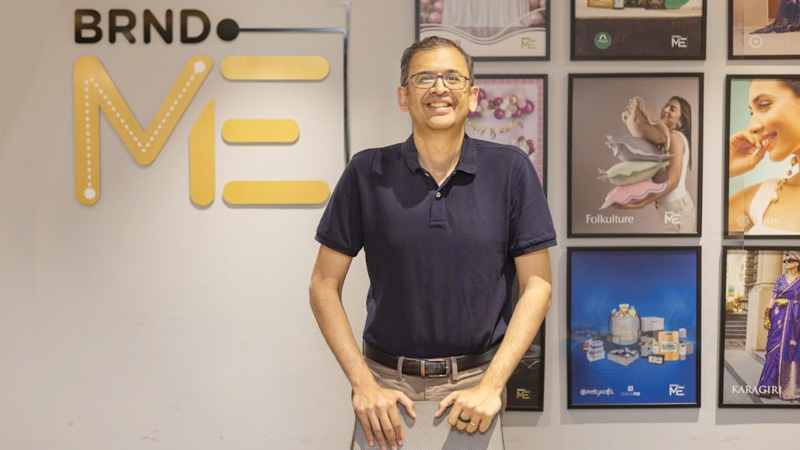
Bengaluru: Brnd.me, the global consumer brands company formerly known as Mensa Brands, has entered the European market following strong momentum across the Middle East, the United States and Canada.
The company has launched across the UK, Germany, France and Spain, with plans to expand into Italy, the Netherlands and Poland over the next year. The push is being led by its haircare and aromatherapy brands, Botanic Hearth and Majestic Pure, marking Brnd.me’s first structured expansion into Europe.
The European beauty market represents a total addressable opportunity of over $4 billion across haircare and aromatherapy, supported by high digital adoption and demand for accessible, performance-led products.
Brnd.me’s hair care and aromatherapy business currently operates at an annual run rate of around $6 million, with Botanic Hearth and Majestic Pure delivering roughly 10 per cent month-on-month growth, driven by expansion and rising repeat demand.
To support regional growth, the company has appointed a general manager based in Germany and is evaluating investments in warehousing and local team expansion.
Early traction has been strong. Within weeks of launch, Botanic Hearth’s rosemary hair oil ranked among the top five hair oils in Germany, signalling strong consumer pull in a competitive market.
Brnd.me founder and chief executive officer Ananth Narayanan, said Europe represents the next phase of the company’s international strategy. He added that the European business is expected to scale to a $10 million annual run rate by the end of 2026, with long-term ambitions to reach $60 million over the next six years.
The company’s Europe strategy centres on digital-first distribution, repeat demand and TikTok-led discovery, alongside direct-to-consumer expansion to strengthen brand equity and margins.
The move also aligns with growing EU–India trade engagement, supporting long-term sourcing and cross-border supply chains.

NATIONAL: TechnoSport has launched on Slikk, the ultra-fast fashion app offering 60-minute delivery, as the activewear brand accelerates its push into quick commerce to capture Gen Z and young millennial shoppers.
The debut brings more than 150 high-performance styles to Slikk’s platform, with an average selling price of Rs 450, expanding TechnoSport’s reach across over 80 pin codes.
The partnership follows strong momentum for TechnoSport across Q-commerce channels, where the brand has recorded around 60 per cent volume growth over the past six months. The company expects quick commerce to contribute nearly 20 per cent of its revenue in the coming years as hyperlocal delivery gains scale.
Slikk, which recently raised $3.2 million in seed funding led by Lightspeed, has rapidly gained popularity among youth consumers seeking speed, trend relevance and impulse-led shopping experiences.
Activewear remains one of Slikk’s fastest-growing categories, driven by shoppers increasingly treating fitness-led fashion as an everyday essential. The platform has reported a 30-fold year-on-year increase in items sold, reflecting rising demand for performance wear that blends comfort with style.
TechnoSport chief executive officer Puspen Maity, said the collaboration would help the brand engage more closely with young consumers whose fashion choices are shaped by instant needs and lifestyle aspirations. He added that rapid delivery bridges the gap between intent and purchase, allowing shoppers to access activewear exactly when they want it.


Mukesh Ambani, Larry Fink come together for CNBC-TV18 exclusive

Nielsen launches co-viewing pilot to sharpen TV measurement

Netflix celebrates a decade in India with Shah Rukh Khan-narrated tribute film

Delhivery chairman Deepak Kapoor, independent director Saugata Gupta quit board

Meta appoints Anuvrat Rao as APAC head of commerce partnerships

Brnd.me enters Europe as haircare brands power global expansion

TechnoSport taps quick commerce with launch on Slikk’s 60-minute platform

These ’90s fashion trends are making a comeback in 2017
The final 6 ‘Game of Thrones’ episodes might feel like a full season
According to Dior Couture, this taboo fashion accessory is back
The old and New Edition cast comes together to perform
Phillies’ Aaron Altherr makes mind-boggling barehanded play
Uber and Lyft are finally available in all of New York State
Disney’s live-action Aladdin finally finds its stars
Mukesh Ambani, Larry Fink come together for CNBC-TV18 exclusive
Nielsen launches co-viewing pilot to sharpen TV measurement
Netflix celebrates a decade in India with Shah Rukh Khan-narrated tribute film
Delhivery chairman Deepak Kapoor, independent director Saugata Gupta quit board
Meta appoints Anuvrat Rao as APAC head of commerce partnerships
Brnd.me enters Europe as haircare brands power global expansion
TechnoSport taps quick commerce with launch on Slikk’s 60-minute platform
-
 News Broadcasting4 days ago
Mukesh Ambani, Larry Fink come together for CNBC-TV18 exclusive
-
 iWorld1 week ago
Netflix celebrates a decade in India with Shah Rukh Khan-narrated tribute film
-
 MAM3 months ago
HoABL soars high with dazzling Nagpur sebut
-
 MAM4 days ago
Nielsen launches co-viewing pilot to sharpen TV measurement
-
 iWorld12 months ago
BSNL rings in a revival with Rs 4,969 crore revenue
-
 I&B Ministry3 months ago
India steps up fight against digital piracy
-
 iWorld3 months ago
Tips Music turns up the heat with Tamil party anthem Mayangiren
-

 Film Production1 week ago
UFO Moviez rides high on strong Q3 earnings
