

MAM
The SME Revolution starts in Dubai and GCC

The Western economies realised decades ago that small and medium enterprises are really the main drivers of the economy. While big businesses are necessary to preserve and maintain structure within the economy, surely they have considerable problems of their own. Mega corporations of the earlier era have increasingly lost their edge to smaller, nimbler organisations, which have spouted all over the Western landscape. The Middle East is now a new turning point for SME’s to begin a grassroots revolution.
Four Driving Forces –
The Critical Mass
Middle East and particularly the super-charged Gulf-Cooperative Council known as a GCC region, the current GCC members are Saudi Arabia, Bahrain, UAE, Qatar and Oman. This also ripples into bigger Middle East and Middle East and North Africa known as Mena regions.
GCC nations are in a major transition, something so dramatic and so powerful that when it comes to new business formation front then all this is pointing to a mass incubation of new enterprises all over this region. Dubai is now such a dynamic place and unmatched by any other region on this planet; the examples set by Dubai provides the fuel to this expansion, and brings a brand new high level of confidence.
The speed and operational level is dramatically high, and it may continuously re-charge in a way that was similar to the 1990 American e-commerce boom, which erupted in a chain reaction of one success leading into several others, simultaneously. Though, at times, we refer to this American boom period as ‘irrational exuberance’, but still the dotcom boom followed by a long bust was still only a small hiccup towards the long haul of the e-commerce revolution. There is a similar pattern emerging, this massive growth may get a bump here and there but it is gathering momentum and amassing its own critical mass with signs of longevity.
The Integration
The shades and colours of extreme diversity combined with variety of loose floating ideas can become an awesome force, sometimes only the crude differences and wild ideas germinate great original concepts. This region is like an extraordinary bazaar of strange concepts, traditions, styles, personalities, and nationalities, parked in various geographies. Isn’t the same reason why the open diversity of America in the later parts of the last century made it a hot spot for innovation and the introduction of hundreds of new concepts to the world? This is what is in the making. Here the diversification and cultural integration is becoming the nurturing ground and technology is offering the tools to produce such concepts in a world-class manner. The SME sectors all over the GCC countries are poised for big gains.
The Image and Branding
Today, and all throughout history, no matter what, everyone is being branded, either for their origins, ideologies, presentations and interactions, plus hundreds of many other reasons. Everyone is branded. From mega personalities to little individuals, from Governmental institutions and big organisations to small businesses, nothing is left untouched.
Though nothing wrong with this, but the most important part is to acquire tactical and highly-trained skills to develop a deeper understanding of this external branding force so as to combat all the undesired images with a professionally executed counter-action plan, aimed to continuously achieve a sharper and a desired image along the way. The smart ones know this very well and this smartness is now slowly creeping throughout the region rapidly. This image building is going to create some new standards to be adopted by the rest of the globe. The culture is becoming image-savvy along the way, just like the West was all along.
The Nationalization
The GCC countries are facing population and foreign workforce imbalances and therefore want to create and train their own nationals to be in the forefront of all sectors and also to become the driving force behind the business and corporate sectors in their own countries.
The issues of nationalisation are being discussed at all levels; this also is creating a positive interaction among nationals to take direct, active roles rather than passive ones. Nationalisation is fueling education and active engagement. This, when blended with a foreign workforce creates a new kind of energy of its own, and this energy is what the new business climate needs, a blend of integrated highly efficient working environments. Nationalisation is a very good thing, and sooner the localisation picks up steam it will be better for all sides.
Opportunities for the World
Today Dubai and GCC opens golden opportunities to the global business communities of the world. The business activities in the region are increasing at record pace by the day, Dubai now sets the standard, and every other city in the region wants to catch up fast. Right now, Dubai International Exhibition Centre, the largest centre in Middle East, has 365 days of bookings for major fairs, exhibitions and conferences, millions of people are coming in to interact, exchange ideas to form alliances and sellers form all over the globe in search of business from this super-rich region.
“We are the gateway to the world now, and we can show it in technicolour. Just come and see what we have done here in last 10 years,” says Sateesh Khanna, an Indian born expatriate in Dubai since last the last 30 years, and now General Manger at Al Fajer Information and Services, the largest exhibition company in the region and also the organizer of the SME Expo in Jan 2007, www.gogcc.com www.semeexpo.com. Sateesh further adds, “Easy access to ownership of your own business, property and no taxes have made this the top location now, and SME’s are coming in huge numbers.”
Some 15,000 members of the SME community will visit this SME Expo from this region and the world. There will be some 300 SME related businesses showcasing their strengths and innovative ideas. In the Golden Opportunity for SME in GCC Conference, there will some 1000 delegates who will hear the top 20 speakers in this field. The theme is to offer a platform to create new alliances and to team-up for greater exportable opportunities throughout the Middle East and Mena. “Finally, we are ready to tackle this new frontier and we invite businesses from all over the world to come and explore the golden opportunities this region has to offer to SME,” says SME Expo Event Manger Winnie Lugon.
The tourism and general traffic to Dubai is at a frantic pace, and people from all over the globe are exploring this to make a major branch operation or Asian head quarters, and this alone has brought a boom to the real-estate markets and foreign investments. There is a certainly a brand new SME business revolution starting in Dubai and spreading all over the GCC countries. Right now, everybody is talking about being Dubai-bound or going GCC. Al aboard.




MAM
Nielsen launches co-viewing pilot to sharpen TV measurement
Super Bowl pilot to refine how shared TV audiences are counted
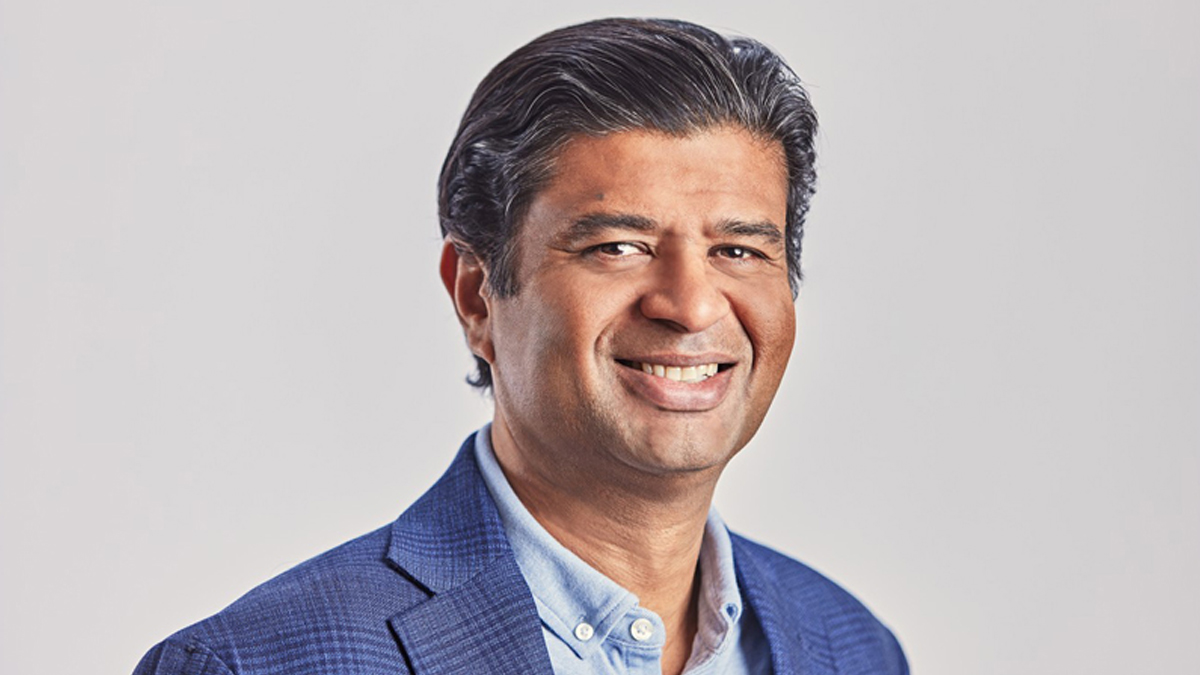
MUMBAI: Nielsen is taking a fresh stab at one of television’s oldest blind spots: how many people are actually watching the same screen. The audience-measurement giant on February 4 unveiled a co-viewing pilot that uses wearable devices to better capture shared viewing, starting with America’s biggest broadcast stage.
The trial begins with Super Bowl LX on NBC on February 8, 2026, before extending to other high-profile live sports and entertainment events in the first half of the year. The goal is simple but commercially potent: count viewers more accurately, especially during live spectacles that pull families and friends to one screen.
The new approach leans on Nielsen’s proprietary wearable meters, wrist-worn devices that resemble smartwatches. These passively capture audio signatures from TV content, logging exposure to shows, films and live events without requiring viewers to sign in or self-report. In theory, fewer clicks, fewer lapses, better data.
Karthik Rao, Nielsen’s ceo, cast the move as part of a broader measurement push. He said the company’s task is to keep pushing accuracy as clients invest heavily in live programming that draws mass audiences. The co-viewing pilot, he added, builds on upgrades such as Big Data + Panel measurement, out-of-home expansion, live-streaming metrics and wearable-based tracking.
Co-viewing is not new territory for Nielsen, which has long tried to estimate how many people sit before a single set. What is new is the heavier integration of wearables and passive detection to reduce reliance on active inputs from panel homes.
For now, the pilot comes with caveats. Co-viewing estimates from the trial will not be folded into Nielsen’s Big Data + Panel ratings, which remain the industry’s trading currency. Instead, pilot findings will be shared with clients a few weeks after final Big Data + Panel ratings are delivered. Clients may disclose those findings publicly.
More impact data will follow later this year. Full integration into Nielsen’s marketing-intelligence suite is slated as a longer-term play, with a target of bringing co-viewing into currency measurement for the 2026–2027 season. This is only phase one, with further co-viewing enhancements planned beyond 2026 and additional timelines to be announced.
The push fits a wider pattern. Nielsen has in recent years expanded big-data integration, adopted first-party data for live-streaming measurement and broadened out-of-home tracking. It also positions itself as the reference point for streaming metrics through products such as The Gauge and the Nielsen Streaming Top 10.
In a market where billions of ad dollars hinge on decimal points, counting who is in the room matters. If Nielsen can pin down shared viewing, the humble sofa could become prime measurement real estate. The race to count every eyeball just found a new wrist to watch.
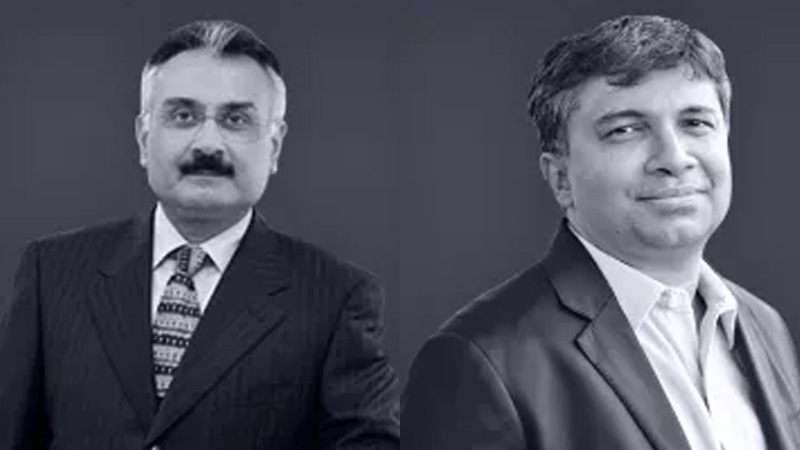
Gurugram: Delhivery’s boardroom is being reset. Deepak Kapoor, chairman and independent director, has resigned with effect from April 1 as part of a planned board reconstitution, the logistics company said in an exchange filing. Saugata Gupta, managing director and chief executive of FMCG major Marico and an independent director on Delhivery’s board, has also stepped down.
Kapoor exits after an eight-year stint that included steering the company through its 2022 stock-market debut, a period that saw Delhivery transform from a venture-backed upstart into one of India’s most visible logistics platforms. Gupta, who joined the board in 2021, departs alongside him, marking a simultaneous clearing of two senior independent seats.
“Deepak and Saugata have been instrumental in our process of recognising the need for and enabling the reconstitution of the board of directors in line with our ambitious next phase of growth,” said Sahil Barua, managing director and chief executive, Delhivery. The statement frames the exits less as departures and more as deliberate succession, a boardroom shuffle timed to the company’s evolving scale and strategy.
The resignations arrive amid broader governance recalibration. In 2025, Delhivery appointed Emcure Pharmaceuticals whole-time director Namita Thapar, PB Fintech founder and chairman Yashish Dahiya, and IIM Bangalore faculty member Padmini Srinivasan as independent directors, signalling a tilt towards consumer, fintech and academic expertise at the board level.
Kapoor’s tenure spanned Delhivery’s most defining years, rapid network expansion, public listing and the push towards profitability in a bruising logistics market. Gupta’s presence brought FMCG and brand-scale perspective during a period when ecommerce volumes and last-mile delivery economics were being rewritten.
The twin exits, effective from the new financial year, underscore a familiar corporate rhythm: founders consolidate, veterans rotate out, and fresh voices are ushered in to script the next chapter. In India’s hyper-competitive logistics race, even the boardroom does not stand still.
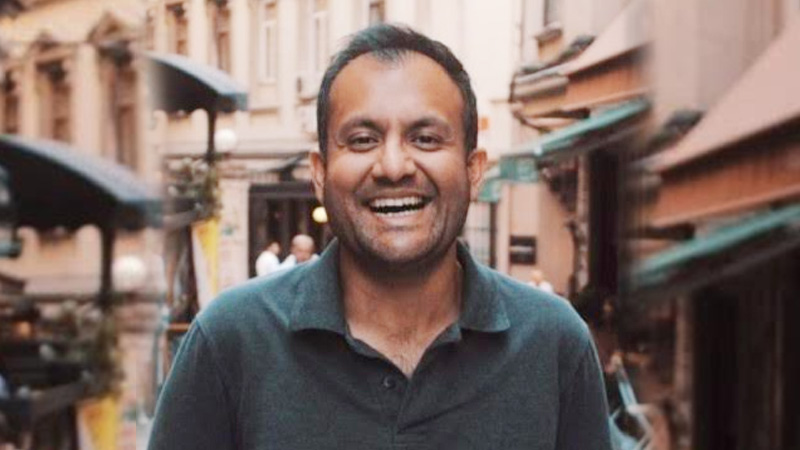
At Locofy.ai, Rao helped convert a three-year free beta into a paid engine, clocking 1,000 subscribers and 15 enterprise clients within ten days of launch in September 2024. The low-code startup, backed by Accel and top tech founders, is famed for turning designs into production-ready code using proprietary large design models.
Before that, Rao founded generative AI venture 1Bstories, which was acquired by creative AI platform Laetro in mid-2024, where he briefly served as managing director for APAC. Alongside operating roles, he has been an active investor and advisor since 2020, backing startups such as BotMD, Muxy, Creator plus, Intellect, Sealed and CricFlex through a creator-economy-led thesis.
Rao spent over eight years at Google, holding senior partnership roles across search, assistant, chrome, web and YouTube in APAC, and earlier cut his teeth in strategy consulting at OC&C in London and investment finance at W. P. Carey in Europe and the US.

Mukesh Ambani, Larry Fink come together for CNBC-TV18 exclusive

Nielsen launches co-viewing pilot to sharpen TV measurement

Netflix celebrates a decade in India with Shah Rukh Khan-narrated tribute film

Delhivery chairman Deepak Kapoor, independent director Saugata Gupta quit board

Meta appoints Anuvrat Rao as APAC head of commerce partnerships

Brnd.me enters Europe as haircare brands power global expansion

TechnoSport taps quick commerce with launch on Slikk’s 60-minute platform

These ’90s fashion trends are making a comeback in 2017
The final 6 ‘Game of Thrones’ episodes might feel like a full season
According to Dior Couture, this taboo fashion accessory is back
The old and New Edition cast comes together to perform
Phillies’ Aaron Altherr makes mind-boggling barehanded play
Uber and Lyft are finally available in all of New York State
Disney’s live-action Aladdin finally finds its stars
Mukesh Ambani, Larry Fink come together for CNBC-TV18 exclusive
Nielsen launches co-viewing pilot to sharpen TV measurement
Netflix celebrates a decade in India with Shah Rukh Khan-narrated tribute film
Delhivery chairman Deepak Kapoor, independent director Saugata Gupta quit board
Meta appoints Anuvrat Rao as APAC head of commerce partnerships
Brnd.me enters Europe as haircare brands power global expansion
TechnoSport taps quick commerce with launch on Slikk’s 60-minute platform
-
 News Broadcasting1 day ago
Mukesh Ambani, Larry Fink come together for CNBC-TV18 exclusive
-
 iWorld5 days ago
Netflix celebrates a decade in India with Shah Rukh Khan-narrated tribute film
-
 I&B Ministry3 months ago
India steps up fight against digital piracy
-
 iWorld3 months ago
Tips Music turns up the heat with Tamil party anthem Mayangiren
-
 MAM1 day ago
Nielsen launches co-viewing pilot to sharpen TV measurement
-
 iWorld12 months ago
BSNL rings in a revival with Rs 4,969 crore revenue
-
 MAM3 months ago
HoABL soars high with dazzling Nagpur sebut
-
 News Broadcasting2 months ago
CNN-News18 dominates Bihar election coverage with record viewership
