
Ad Campaigns
The not so fair face of advertising!


Channels and ad agencies feel the heat as NGOs and the government wake up to discriminatory fairness product ads
Fairness products may have just lost shade or two of that promised glow.
Star India claims that 10 days ago it pulled out the offensive HLL ad that had some leftist women’s organizations in the country seeing red, prompting the I&B ministry to issue a directive to channels to pull the blinds on the commercial.
Fulcrum head Vikram Sakhuja however, maintains the campaign had already run its course and was anyway not being shown on any channel by the time the I&B order came through. Sony ad sales Rohit Gupta however, says no fairness product ad has been pulled out from the Sony channels in the last few days. The network has replied to some directives received from the ministry, he says, but prefers not to comment on the issue as Sony has not received any directives on the issue and ‘there are many issues involved.’
Star, which has a sizeable chunk of HLL product inventory, is now reviewing the issue to check whether Lever plans to replace the offending ad with any other. Sakhuja, who says the particular campaign was a success as it struck a chord with viewers, adds that while the I&B order thought the ad derided women, it is still a matter of interpretation. While the Advertising Standards Council of India’s (ASCI) regulations are quite clear, says Sakhuja, “the jury is still out on this one,” he believes.

All’s fair in ads and war!
The product that has raised the hackles of a section of the population
Sakhuja for one believes the ad, created by Lowe Lintas, sent out a positive message in that it advocates that the girl is induced to get out of the confines of her life and build her own identity, helped along by a fairness product.
Advertising Agencies’ Association of India president Sam Balsara opines that while the AAAI has not taken a stance on this issue, the ads merely reflect current societal mores. “While I am not going into the specific emotional route taken, fairness creams as a product are an important category which meet the genuine requirements of young people,” he says. It would not be correct to say that marketers exploit all opportunities available to them, says Balsara, as every product has a physical and an emotional attribute that will be highlighted.
The ASCI on the other hand says it has never upheld any complaint received by it against fairness creams on the basis of social discrimination. ASCI secretariat officials spoken to by indiantelevision.com admitted that though the council has received several complaints about such products till date, most were concerned about the claims made by the products. None of the complaints thus far have been upheld as the manufacturers and advertisers were able to prove that the products pass the technical tests. The level of fairness achievable by the use of these products however becomes a matter of personal judgment and since there is no way of measuring it, none of the complaints have been able to nail either the advertiser or the manufacturer of these products.
ASCI officials however, say that by adding a storyline and putting a roundabout form of presentation, some of the ads have availed of the ‘license’ that can be exploited by the advertising fraternity.”Although it can be disagreeable, if it is a convincing story, we don’t come into the picture,” the ASCI says.
The issue of `objectionable’ ads on the telly has however once again pitchforked into the limelight the need to have a separate body to monitor content on television channels on the lines of the content bureau as envisaged in the still-pending Communication Convergence Bill.
“We cannot always get involved in such things and the need for an outside body monitoring content has again been made,” a senior official of India’s information and broadcasting ministry told indiantelevision.com earlier today, emphasising that the notice from the ministry to TV channels and also the Indian Broadcasting Foundation (IBF) on ads of fairness cream and soaps is a stop-gap measure.
Not quite fair, says government
According to the government official, the need for a monitoring body is amplified from the fact that the government has received several complaints regarding programmes and advertisements on television channels and the government cannot always be active in the activity of policing.
“The relevant files (on bringing in a legislative act to form a monitoring body) have been put up before the minister and it is for him to take a studied decision,” the official said.
Fair Weather Friends
Three prominent companies – HLL, Emami and Cavin Kare are currently aggressively pushing their fairness creams on television, even as Godrej markets its fairness soap with equal gusto. The All-India Democratic Women’s Association (AIDWA) was the one which woke up the sleeping critics with its protest to the government that the ad be pulled off air.
However, I&B minister Ravi Shankar Prasad, during his recent interactions with journalists, has not been too bullish on having a monitoring body on the lines of the content bureau, something that was dear to his predecessor’s heart. Sushma Swaraj had said it was to be part of her agenda for the first quarter of 2003 to have the broadcasting council legislation okayed by Parliament.
Three days ago, several TV channels got notices from the I&B ministry to take off the air ads relating to products which claimed to lighten the colour of the skin after usage. The move came after the All India Democratic Women’s Association had petitioned the government, a Left party dominated organisation, that such ads were biased against the dark-skinned girl child.
Is this fair?
One such `objectionable’ ad features two girl friends bantering amongst themselves how the usage of two bars of soap of a particular brand for a period of eight weeks would make one of them (dark skinned compared to her friend who is very fair) fair and lovely. The dark-skinned girl takes up the offer, turns into a fair-skinned Cinderella and loses the bet of Rs 20 (cost of soaps). The friend now, of course, does not want her boyfriend to see her `lovely’ friend closely.
There’s more. In another ad, a girl is unable to land a handsome groom due to her dark complexion, but her use of a fairness cream helps her hook a good looking guy. Another has a girl who lands a job as an airhostess after using a fairness product and is able to make up for her father’s regret of not having a son to look after him
Fair enough?
“It is ads like these which can upset anybody. Are the companies trying to say that it is a sin to be dark-skinned in a country like India (where a majority of the population are various shades of brown)? Especially when even educated people pray for fair daughters and daughters-in-law,” the government official said, pointing out that in recent times cases of girl infanticide too has increased alarmingly.
The government official also said that the TV channels have been given 14 days time to take the necessary steps on the notice, including petitioning the government on it too. “We understand that channels have business policies and taking off the air ads cannot be done overnight. The IBF too has been asked to look into the matter and take steps to expedite the matter,” the official added.
Fair enough?









NATIONAL: Amazon Ads has laid out a sharply tech-led vision for the advertising industry in 2026, arguing that artificial intelligence, streaming TV and creator partnerships will combine to turn brand building into a more precise, performance-driven business.
At the heart of the shift, the company says, is the fusion of AI with Amazon’s vast trove of shopping, browsing and streaming signals, allowing advertisers to move beyond blunt reach metrics to campaigns designed around real customer behaviour.
“The future of advertising is not about reaching more people, but the right people with messages that resonate,” said Amazon Ads India head and vice president Girish Prabhu. “By combining AI with deep customer insights, we help brands move from broadcasting campaigns to having meaningful conversations wherever audiences spend their time.”
One of the biggest changes, according to Amazon Ads, will be the collapse of the wall between media planning and creative development. Retail media, powered by first-party data, is increasingly shaping everything from brand discovery to final purchase, pushing marketers to design campaigns around audience insight rather than internal instinct.
AI is also moving from a support tool to a creative engine. Agentic AI, which automates and accelerates production, is expected to make high-quality creative accessible even to small businesses, compressing weeks of work into hours and giving challengers the ability to compete with larger brands on speed and scale.
Behind the scenes, AI-driven analytics will take on a bigger role in campaign optimisation, identifying patterns, spotting opportunities and recommending actions that would previously have required teams of analysts.
Streaming TV is another big battleground. With India’s video streaming audience now above 600 million and connected TV users at 129.2 million in 2025, advertisers are set to treat streaming not just as a branding channel but as a performance engine, measured increasingly by sales, sign-ups and bookings rather than just reach.
Finally, Amazon Ads sees creators and contextual advertising reshaping how brands tell stories. Creators will act less like influencers and more like long-term partners, while scene-aware ads on streaming platforms will allow brands to insert hyper-relevant offers into the flow of what viewers are watching.
Taken together, Amazon Ads argues, these shifts mark a move towards advertising that is both more human and more measurable, where AI handles the complexity, and creativity does the persuading.
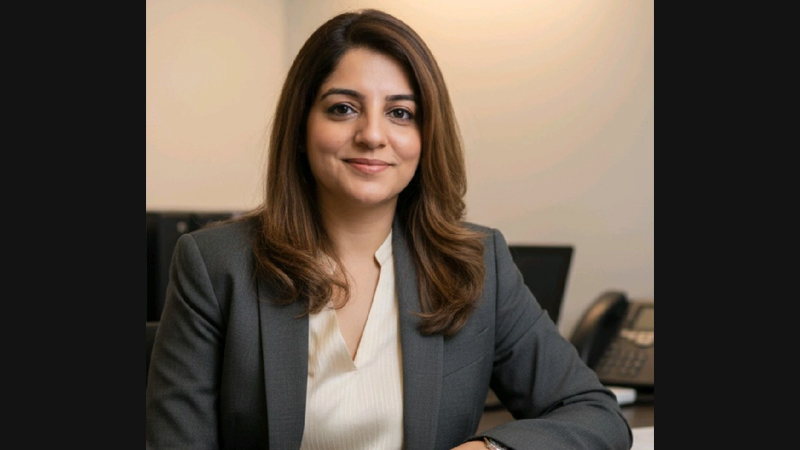
MUMBAI: Publicis Groupe India has appointed Sonal Verma as managing director of Arc Worldwide India, handing the reins of its experiential and shopper marketing business to a leader steeped in live brands and real world storytelling.
Arc Worldwide, the Groupe’s specialist arm focused on experiences that nudge consumers from curiosity to checkout, sits at the intersection of creativity, commerce and culture. Verma’s mandate is to sharpen that edge as brands grapple with shorter attention spans and more complicated buying journeys.
Verma joins from Cheil India, where she spent nearly five years building and leading the brand experience practice, most recently as senior vice president and head of brand experience. Her career reads like a tour of India’s experiential landscape, with leadership roles at Momentum Worldwide, Percept D Mark, Blockkbuster Events and Showtime Events.
She has also held senior activation roles at Radio City and The Times of India, giving her a rare mix of agency, media and on-ground execution experience. The common thread has been simple: turning big ideas into moments people remember and talk about.
At Arc Worldwide India, Verma will focus on expanding the agency’s experiential and shopper capabilities, strengthening client partnerships and keeping the work firmly rooted in consumer behaviour rather than buzzwords.
With Verma at the helm, Arc Worldwide is expected to double down on ideas that live beyond screens and closer to everyday life. For an industry obsessed with clicks and scrolls, this is a reminder that sometimes the strongest connections still happen face to face.
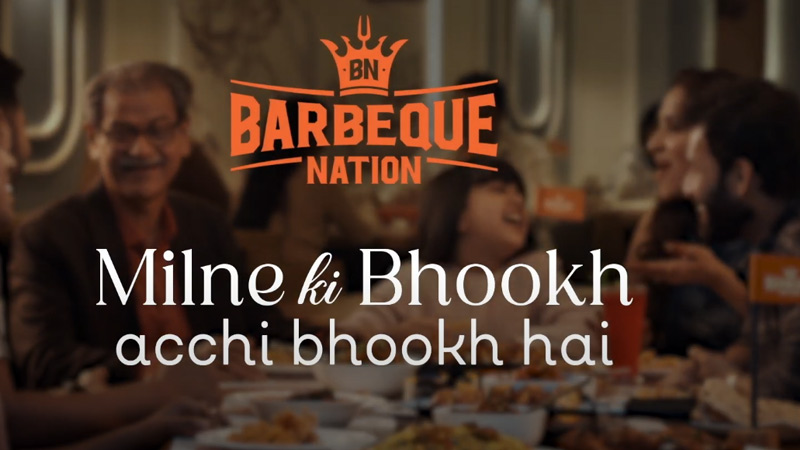
BENGALURU: Barbeque Nation is ringing in the new year with a reminder that some cravings cannot be ordered online. The casual dining chain has rolled out a new film campaign, milne ki bhookh, pitching its restaurants as places to meet, reconnect and linger over food.
Set against a world of constant messages and missed meet-ups, the campaign leans into a simple truth: dining out remains one of the few rituals that still brings people together. Barbeque Nation positions itself as the excuse and the setting for real conversations, shared plates and unhurried moments.
Nakul Gupta, cmo at Barbeque Nation, says the brand has long been about shared celebrations. As the year turns, milne ki bhookh captures what he calls a growing hunger to meet, connect and spend time together, with food at the centre of that experience.
Created by Makani Creatives, the campaign comprises three films built around Barbeque Nation’s signature grills and desserts. The storytelling is deliberately sensorial, designed to spark cravings while nudging diners to step out and meet in person.
Pavan Punjabi, chief integration officer at Makani Creatives, says the idea stems from a familiar contradiction. People are constantly connected, yet meetings with loved ones are endlessly postponed. Milne ki bhookh, he says, is a gentle push to make time for real-life catch-ups, using food as the reason to come together, share a meal and create memories.
The campaign breaks on December 25 with the grilled prawns film and will run for two months, amplified across digital platforms. As the new year begins, Barbeque Nation is betting that the strongest appetite of all is not for food alone, but for each other.



MIB sets OTT accessibility rules, mandates captions and audio description

Boney Kapoor acquires remake rights of Tamil political satire Thalaivar Thambi Thalaimaiyil

Netflix India names Rekha Rane director of films and series marketing

Zabeen signs off from TV9 after shaping the network’s public voice

Dhawan steps up to bat for Delhi’s grassroots sports push

Orient Beverages pops the fizz with steady Q3 gains and rising profits

Cheekatilo shines in the dark with record debut on Prime Video

Swiggy Instamart’s GOV surges 103 per cent year on year to Rs 7,938 crore

These ’90s fashion trends are making a comeback in 2017
The final 6 ‘Game of Thrones’ episodes might feel like a full season
According to Dior Couture, this taboo fashion accessory is back
The old and New Edition cast comes together to perform
Phillies’ Aaron Altherr makes mind-boggling barehanded play
ATN International brings ATN Bangla to Canada
MIB sets OTT accessibility rules, mandates captions and audio description
Boney Kapoor acquires remake rights of Tamil political satire Thalaivar Thambi Thalaimaiyil
Netflix India names Rekha Rane director of films and series marketing
Zabeen signs off from TV9 after shaping the network’s public voice
Dhawan steps up to bat for Delhi’s grassroots sports push
Orient Beverages pops the fizz with steady Q3 gains and rising profits
Cheekatilo shines in the dark with record debut on Prime Video
-
 e-commerce1 month ago
Swiggy Instamart’s GOV surges 103 per cent year on year to Rs 7,938 crore
-
 iWorld1 year ago
Kuku TV transforms India’s OTT space with vertical microdrama boom
-
 News Headline1 year ago
TRAI puts a ‘stop’ to unsolicited calls and messages
-
 News Headline2 months ago
From selfies to big bucks, India’s influencer economy explodes in 2025
-
 Comedy2 years ago
Taarak Mehta Ka Ooltah Chashmah celebrates 4,000 episodes
-
 MAM2 years ago
OpenAI joins C2PA steering committee
-
 News Headline1 year ago
Abhishek Bachchan joins as co-owner of European T20 Premier League
-
 News Headline2 years ago
Odisha to host Ultimate Kho Kho Season 2 from December 24


