
MAM
The Big Shift: Where is digital taking the M&E industry?

NEW DELHI/MUMBAI: It’s a rainy afternoon in Delhi and 48-year-old homemaker Sunita is looking for recipes for fritters on YouTube on a smartphone she was recently gifted by her husband. She has made fritters a thousand times in her life and she knows the recipe to it by heart, but she likes to watch chefs online to “learn new tricks” for perfecting her already excellent culinary skills. Sometimes, she plugs in the firestick on her smart TV and scrolls through Amazon Prime and Netflix for old movies. Even her evening TV watching has shifted to apps like Hotstar and Voot, which she is still learning to use properly but nevertheless enjoys the ad-free entertainment on demand.
This is not just the story of Sunita, but a whole lot of other people from all age groups and interests. Her husband prefers watching news online rather than switching on the TV channels as it is more comfortable to watch it on his phone, though without earplugs. Their three-year-old grandson is learning his ABCs on yet another mobile app and doesn’t miss his Peppa Pig sessions every evening. And as the never-ending lockdown imposes its dark shadow on his probability to attend physical classes like his parents or grandparents, there are investments being made into paid subscriptions of many educational apps and sites, along with other digital tools.
Digital, as we know, is dominating all aspects of our lives. From grocery shopping to learning, to working out, to dating; everything has found a digital counterpart and in many cases a competition.
The media and entertainment industry is also not untouched from this trend. As per PwC Global Entertainment and Media Outlook 2019-2023, digital revenues are accounting for a larger share of the industry’s total revenue, year-on-year, starting at 40.7 per cent in 2014 and reaching 55.4 per cent in 2019. It is expected to reach 61.6 per cent in 2023.

India is not far behind from the global trends. In fact, it is one of the top markets to embrace this digital boom. As per EY-FICCI report 2020, digital media overtook filmed entertainment in 2019 to become the third-largest segment of the M&E sector. Digital media grew 31 per cent to reach Rs 221 billion and is expected to grow at 23 per cent CAGR to reach Rs 414 billion by 2022.
“Digital subscription revenues more than doubled from 2018 levels and digital advertising revenues grew to command 24 per cent of total advertising spend. The sector continues to grow at a rate faster than the GDP, driven primarily by growth in subscription-based business models and India’s attractiveness as a content production and post-production destination,” read the report.
The same report suggests that OTT subscription market will approximate 10 per cent of the total TV subscription market by 2020 and there will be over 40 million connected TVs by 2025. And while there is no concrete comparative data to see the growth of digital in comparison to traditional forms of media, there have been many agencies and people claiming that Covid2019 has only accelerated this process. Several reports by bodies like BARC, Nielsen and Kantar have hinted at the increased time spent on digital platforms during the lockdown.
So, is this big shift to digital indicating a slow demise of traditional media?
Swastik Productions MD Rahul Kumar Tewary notes that while digital media has gained traction during the past few months, there is not going to be a takeover of the market space that television enjoys by it. Both the mediums may overlap to a certain extent, but in the end, these are two different market segments.
“I believe digital is growing but TV will remain the same. I don’t think there will be too much of an impact on TV programming. There is a certain age group of consumers for the digital content; there is a trend that the youth of India is moving towards the digital side,” he shares.
Locomotive Global co-founder Sunder Aaron adds, “We will come out of this pandemic at some time and the domination of pay television and the advertisement on pay TV will continue. But it will have a new balance with digital media and digital delivery of content. We still are a country where there is low penetration for digital consumption. Mobile consumption is actually high but if you look at wirelines into households, it’s still very low as compared to the rest of the world. Hopefully, we will see an increase in the wireline broadband penetration over several years and that will be a big game-changer for digital delivery and digital content consumption.”
But are there enough rigid lines between TV and digital anymore? Once, during an interview, someone had asked to define television and the gentleman then went on to elaborate that television is more than the idiot box we knew a few years back. It has camouflaged in a ‘smart box’ now, which also hosts traditional entertainment as well as the modern digital options. It also enables personal chatting and social media apps on the big screen and has a far bigger role to play as a shared screen as well.
And definitely, no one can deny the part of digital technologies in keeping this traditional form of entertainment up. In the past few years, almost all the big GECs and news channels have launched their own apps to keep pace with the digital age. Be it Hotstar, Sony Liv, Voot, or Zee5, all these applications first started as an inventory of television shows and then went on to host original content as well.
All the major telecom players are a part of the revolution as they were in the DTH era. With Airtel launching its own entertainment app and partnering with other OTTs to offer its consumers exclusive access to content, Idea offering live channels on its movies and TV apps and the very popular and Jio announcement Jio TV+ aggregating TV as well as OTT content, digital dominance seems to stay here. Even on the regulators’ side, TRAI recently launched a channel selection app to facilitate easy subscription modifications for users.
Digital technology is now everywhere and that’s what made it possible for the world to continue running even during the strictest of lockdowns for the past few months.
One of the biggest industries to benefit from it has been the online news industry. In an earlier story , Indiantelevision.com wrote on the movement of mainstream journalists like Vikram Chandra and Faye D’Souza to digital content curation. It showed how the democratic environment that digital offers as a medium allows journalists to be more true and free to express themselves. The added technological features and better reach are cherries on the top.
While Chandra admitted of being heavily reliant on AI-based execution of his editorial functions and being in advanced-level talks with some of the OTT players to push his content, Pankaj Pachauri said, “GoNews has been successfully able to converge satellite TV technology with digital technology as our product can be uplinked on any satellite channel digitally for broadcast. We have tried and tested this technology during the last general elections with APN news for its prime time broadcast,” highlighting the vast roles digital technologies are playing there.
All this, undoubtedly, has opened up the gates to great opportunities for digital marketers. Most of the functions of an agency have turned data-driven and are claiming to provide a never-attained-before hyper-targeted reach to advertisers.
Digitalkites sr. VP Amit Lall, a few weeks back, discussed s the ability of marketers to follow a consumer’s journey not just across platforms but also devices to provide them with a seamless experience and help advertisers understand user behaviour better.
Madison Media & OOH group CEO told Indiantelevision.com on Media Minds 2 that the entire digital renaissance has been a big part of his successful five-year-long journey at the agency, thus far. He shared that the share of digital in agency billings has increased from two to three per cent to 20-22 per cent in this time.
And this digital intervention is not only helping the programmatic, SEO, search, social and other digital aspects of marketing but also helping traditional options to be more targeted and improved. The whole lot of data collection that is done via digital media is used to chart out trajectories for mainline campaigns.
Additionally, the oldest mainline medium of traditional advertising, out-of-home (OOH), has begun its digital journey, again pushed by the Covid2019 lockdown.
Eyetalk Media Ventures MD Gautam Bhirani says, “Fuelled by technological advancements as more devices connect with the power of internet-of-things, location-based mobile data can bridge the gap between digital-physical worlds and converging them can give us holistic consumer insights. As we adapt to the pandemic induced lifestyle changes often termed as ‘The New Normal’, it is constantly impacting consumer behaviour, sentiment and journey which makes it imperative for us to learn and integrate these learnings in OOH planning. Detailed analysis of mobile data that determine brand affinity, interests, preferences, income size, gender, commute patterns, dwell time in the online and offline world can help identify locations for OOH placement and mobile device IDs can be used to retarget the consumer.”
Laqshya Media Group CEO Atul Shrivastava adds his own experience, “Our transformation from an OOH to a multi-media conglomerate has followed a carefully coordinated strategy of delivering the most optimised consumer-contact solution to our clients by combining digital, OOH and experiential. In order to make our OOH and experiential offerings more interactive, we added a digital marketing company to our network, which gives us the bandwidth to offer our clients an unbeatable offline-online combination.”
Digital dominance is clearly shaping up a distinct world, dominating the media and entertainment industry. While there are high chances that traditional platforms will survive this big shift, one can look forward to redefined versions of televisions and newspapers.
(With inputs from Anjali Thakur and Shikha Singh)






MAM
Nielsen launches co-viewing pilot to sharpen TV measurement
Super Bowl pilot to refine how shared TV audiences are counted
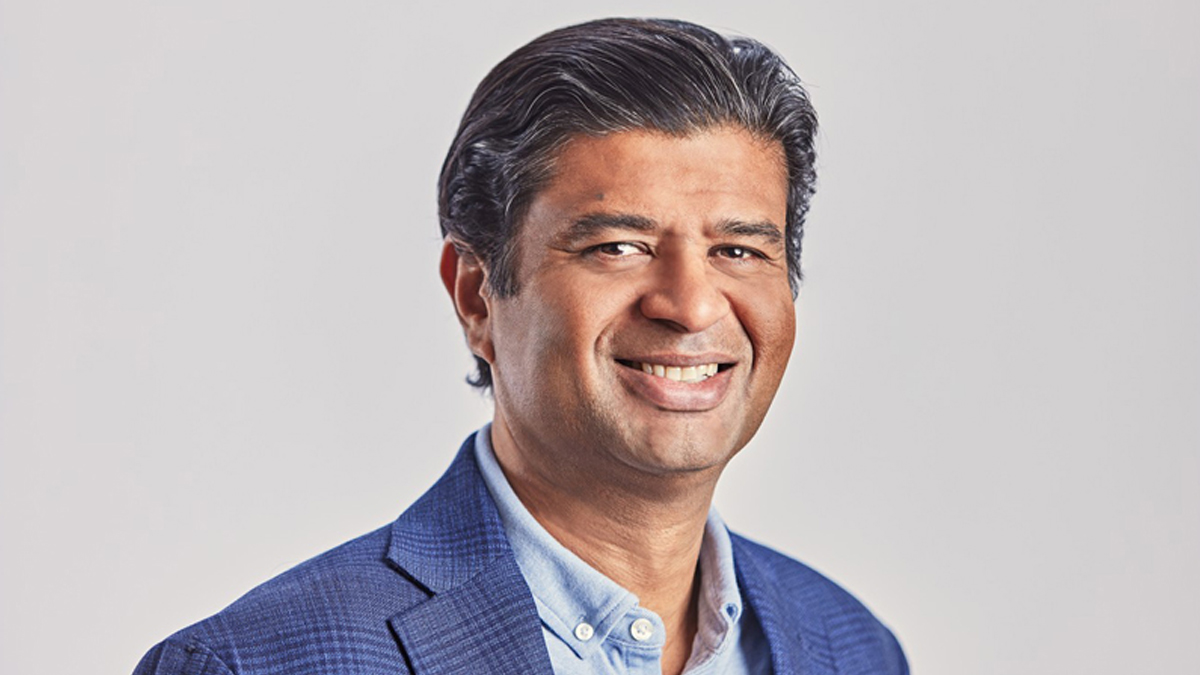
MUMBAI: Nielsen is taking a fresh stab at one of television’s oldest blind spots: how many people are actually watching the same screen. The audience-measurement giant on February 4 unveiled a co-viewing pilot that uses wearable devices to better capture shared viewing, starting with America’s biggest broadcast stage.
The trial begins with Super Bowl LX on NBC on February 8, 2026, before extending to other high-profile live sports and entertainment events in the first half of the year. The goal is simple but commercially potent: count viewers more accurately, especially during live spectacles that pull families and friends to one screen.
The new approach leans on Nielsen’s proprietary wearable meters, wrist-worn devices that resemble smartwatches. These passively capture audio signatures from TV content, logging exposure to shows, films and live events without requiring viewers to sign in or self-report. In theory, fewer clicks, fewer lapses, better data.
Karthik Rao, Nielsen’s ceo, cast the move as part of a broader measurement push. He said the company’s task is to keep pushing accuracy as clients invest heavily in live programming that draws mass audiences. The co-viewing pilot, he added, builds on upgrades such as Big Data + Panel measurement, out-of-home expansion, live-streaming metrics and wearable-based tracking.
Co-viewing is not new territory for Nielsen, which has long tried to estimate how many people sit before a single set. What is new is the heavier integration of wearables and passive detection to reduce reliance on active inputs from panel homes.
For now, the pilot comes with caveats. Co-viewing estimates from the trial will not be folded into Nielsen’s Big Data + Panel ratings, which remain the industry’s trading currency. Instead, pilot findings will be shared with clients a few weeks after final Big Data + Panel ratings are delivered. Clients may disclose those findings publicly.
More impact data will follow later this year. Full integration into Nielsen’s marketing-intelligence suite is slated as a longer-term play, with a target of bringing co-viewing into currency measurement for the 2026–2027 season. This is only phase one, with further co-viewing enhancements planned beyond 2026 and additional timelines to be announced.
The push fits a wider pattern. Nielsen has in recent years expanded big-data integration, adopted first-party data for live-streaming measurement and broadened out-of-home tracking. It also positions itself as the reference point for streaming metrics through products such as The Gauge and the Nielsen Streaming Top 10.
In a market where billions of ad dollars hinge on decimal points, counting who is in the room matters. If Nielsen can pin down shared viewing, the humble sofa could become prime measurement real estate. The race to count every eyeball just found a new wrist to watch.
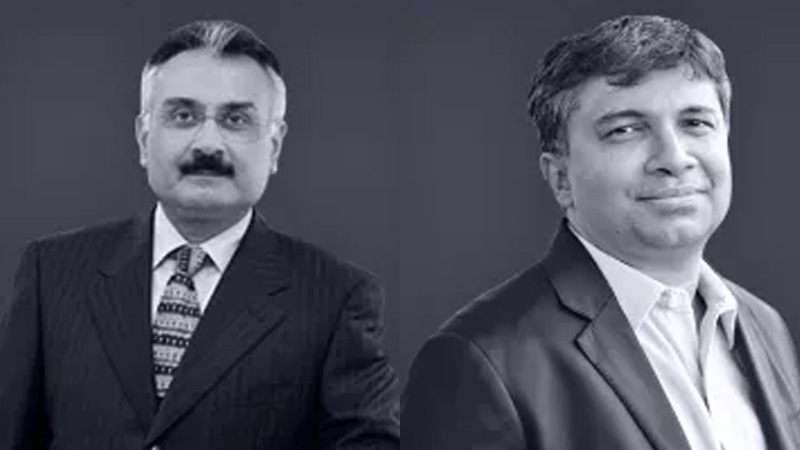
Gurugram: Delhivery’s boardroom is being reset. Deepak Kapoor, chairman and independent director, has resigned with effect from April 1 as part of a planned board reconstitution, the logistics company said in an exchange filing. Saugata Gupta, managing director and chief executive of FMCG major Marico and an independent director on Delhivery’s board, has also stepped down.
Kapoor exits after an eight-year stint that included steering the company through its 2022 stock-market debut, a period that saw Delhivery transform from a venture-backed upstart into one of India’s most visible logistics platforms. Gupta, who joined the board in 2021, departs alongside him, marking a simultaneous clearing of two senior independent seats.
“Deepak and Saugata have been instrumental in our process of recognising the need for and enabling the reconstitution of the board of directors in line with our ambitious next phase of growth,” said Sahil Barua, managing director and chief executive, Delhivery. The statement frames the exits less as departures and more as deliberate succession, a boardroom shuffle timed to the company’s evolving scale and strategy.
The resignations arrive amid broader governance recalibration. In 2025, Delhivery appointed Emcure Pharmaceuticals whole-time director Namita Thapar, PB Fintech founder and chairman Yashish Dahiya, and IIM Bangalore faculty member Padmini Srinivasan as independent directors, signalling a tilt towards consumer, fintech and academic expertise at the board level.
Kapoor’s tenure spanned Delhivery’s most defining years, rapid network expansion, public listing and the push towards profitability in a bruising logistics market. Gupta’s presence brought FMCG and brand-scale perspective during a period when ecommerce volumes and last-mile delivery economics were being rewritten.
The twin exits, effective from the new financial year, underscore a familiar corporate rhythm: founders consolidate, veterans rotate out, and fresh voices are ushered in to script the next chapter. In India’s hyper-competitive logistics race, even the boardroom does not stand still.
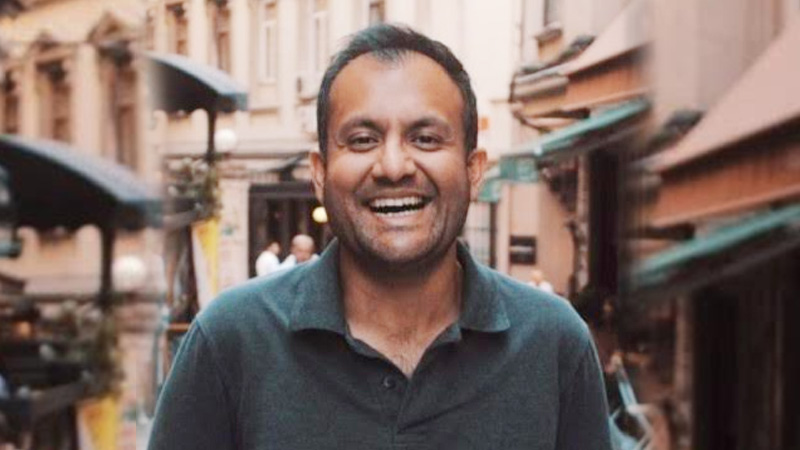
At Locofy.ai, Rao helped convert a three-year free beta into a paid engine, clocking 1,000 subscribers and 15 enterprise clients within ten days of launch in September 2024. The low-code startup, backed by Accel and top tech founders, is famed for turning designs into production-ready code using proprietary large design models.
Before that, Rao founded generative AI venture 1Bstories, which was acquired by creative AI platform Laetro in mid-2024, where he briefly served as managing director for APAC. Alongside operating roles, he has been an active investor and advisor since 2020, backing startups such as BotMD, Muxy, Creator plus, Intellect, Sealed and CricFlex through a creator-economy-led thesis.
Rao spent over eight years at Google, holding senior partnership roles across search, assistant, chrome, web and YouTube in APAC, and earlier cut his teeth in strategy consulting at OC&C in London and investment finance at W. P. Carey in Europe and the US.

Mukesh Ambani, Larry Fink come together for CNBC-TV18 exclusive

Nielsen launches co-viewing pilot to sharpen TV measurement

Netflix celebrates a decade in India with Shah Rukh Khan-narrated tribute film

Delhivery chairman Deepak Kapoor, independent director Saugata Gupta quit board

Meta appoints Anuvrat Rao as APAC head of commerce partnerships

Brnd.me enters Europe as haircare brands power global expansion

TechnoSport taps quick commerce with launch on Slikk’s 60-minute platform

These ’90s fashion trends are making a comeback in 2017
The final 6 ‘Game of Thrones’ episodes might feel like a full season
According to Dior Couture, this taboo fashion accessory is back
The old and New Edition cast comes together to perform
Phillies’ Aaron Altherr makes mind-boggling barehanded play
Uber and Lyft are finally available in all of New York State
Disney’s live-action Aladdin finally finds its stars
Mukesh Ambani, Larry Fink come together for CNBC-TV18 exclusive
Nielsen launches co-viewing pilot to sharpen TV measurement
Netflix celebrates a decade in India with Shah Rukh Khan-narrated tribute film
Delhivery chairman Deepak Kapoor, independent director Saugata Gupta quit board
Meta appoints Anuvrat Rao as APAC head of commerce partnerships
Brnd.me enters Europe as haircare brands power global expansion
TechnoSport taps quick commerce with launch on Slikk’s 60-minute platform
-
 News Broadcasting2 days ago
Mukesh Ambani, Larry Fink come together for CNBC-TV18 exclusive
-
 iWorld6 days ago
Netflix celebrates a decade in India with Shah Rukh Khan-narrated tribute film
-
 I&B Ministry3 months ago
India steps up fight against digital piracy
-
 iWorld3 months ago
Tips Music turns up the heat with Tamil party anthem Mayangiren
-
 MAM2 days ago
Nielsen launches co-viewing pilot to sharpen TV measurement
-
 iWorld12 months ago
BSNL rings in a revival with Rs 4,969 crore revenue
-
 MAM3 months ago
HoABL soars high with dazzling Nagpur sebut
-
 News Broadcasting2 months ago
CNN-News18 dominates Bihar election coverage with record viewership

