
AD Agencies
Sunil Lulla will bring in a new dimension in our offering to clients: Nirvik Singh

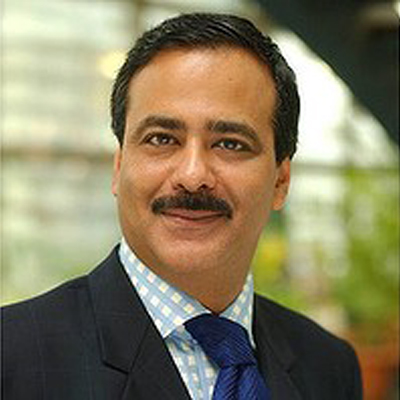
When indiantelevision.com wrote about Sunil Lulla taking up a leadership position in Grey India, it did surprise many in the industry. Very few knew or recollected that Lulla’s roots have been in advertising: he was an account director at HTA (now JWT India) and had also taken the role of regional client servicing director on the Colgate Palmolive business with Y&R New York.
The announcement of his joining saw the departure of president & CEO Jishnu Sen. Lulla is taking over at Grey India at a time when it is in the midst of a grow-grow phase. On the global front, Grey was ranked as the agency of the year by adage.com for its revenue growth, client retention and the fact that it won almost all of the client pitches it made in 2013.
In India, Grey, the advertising network of the Grey Group, acquired a majority stake in rural and marketing communications services provider RC&M just as the year was drawing to a close.

It has done well on the awards front too, both in traditional and digital advertising. It can be noted that Grey India picked up a Gold Lion at the Cannes this year in the Press category for the work done for P&G’s Duracell Batteries.
Indiantelevision.com’s Priyanka Nair got in touch with Grey Group Asia Pacific CEO Nirvik Singh to chat with him about the leadership change in India, and what he expects going forward.
Excerpts:
With Sunil Lulla coming on board, what are the areas in which Grey India is looking at expanding?
We have been investing in India continually and with RC&M coming under our fold, I believe we have the right expertise and capabilities currently across the full marketing spectrum. Sunil Lulla would play a critical role in integrating and strengthening our offering.
In the 30 years of experience that Sunil Lulla has, he has been associated with the broadcast side of the business most. How do you think his expertise will help in the growth of Grey India?
With his 30 years of working experience, Sunil brings with him a wealth of knowledge from the media side of the business, not just broadcast. From our conversations, he has shown that he knows the heavily fragmented media landscape in South Asia in depth. By having him leading our operations in India, he is able to add a new dimension in our offering to our clients.
How has the year 2014 been so far for Grey India?
2014 has been really good for Grey Group, not just in India but across Asia Pacific as well. We are seeing clients in the market increasing their marketing spend with us, both regional and local clients. All in all, I expect India to be a really strong performer at year end. Malvika Mehra (National Creative Director) and team have been performing consistently as well – they have brought home yet another Gold Lion from the Cannes Lions International Festival of Creativity. This is their second year in a row they are doing so.
What are the plans lined up for the digital side of your business?
Sudhir Nair (Senior Vice President, Head of Grey Digital India) will be working closely with Sunil on this, but I must say our digital team has been stellar in their creative solutions and output (using Twitter to launch a car and YouTube for a test drive). Digital is definitely a big part of the picture and the continued investment in talent and capabilities is top of our priorities.
What is at top of your wish list for Grey India?
Win more Cannes Lions next year!
Till when will Jishnu Sen be with Grey India? Could you elaborate on the experience of working with him?
It has been a truly great journey – I have seen him grow into the CEO’s role and he is a great chap to work with.









MUMBAI: Innocean has renewed its global media partnership with Havas Media Network following an internal review across Hyundai Motor Group brands.
The renewed mandate spans Hyundai, Kia and Genesis across Europe, the Middle East, Asia Pacific and Latin America. The work will be coordinated with Innocean’s international teams in Seoul, Frankfurt, Dubai, New Delhi and Jakarta.
The refreshed alliance is designed with a sharper focus on data and technology, aiming to connect the dots across customer acquisition, conversion and retention as the Group’s global audience continues to diversify.
Innocean head of global business Steve Jun, said the extension reflects a shared push for stronger, data-led media performance across key markets. He added that the partnership would focus on creating more connected and effective customer experiences for Hyundai Motor Group brands.
Havas Media Network global CEO Peter Mears, described the relationship as one built on innovation and global scale. He said the next phase would lean on the network’s Converged.AI platform to deliver seamless, data-driven media experiences and drive business outcomes for the automotive brands.
The renewed partnership officially commenced in January 2026.
INDIA: India’s advertising industry is entering a new phase of structural transformation, with digital media now the central growth engine, according to the Dentsu digital advertising report 2026.
Total advertising spends closed 2025 at Rs 1.21 lakh crore, up 8.3 per cent year on year, and are projected to reach Rs 1.40 lakh crore by 2027, implying a compound annual growth rate of over 7 per cent.
Digital advertising accounted for Rs 71,621 crore in 2025, representing 59 per cent of total spends. By 2027, digital’s share is expected to rise to around 70 per cent, with spends nearing Rs 98,034 crore.
The report stresses that this is no longer a temporary shift but a permanent rebalancing of advertising priorities, driven by mobile-first consumption, short-form video, creator ecosystems, embedded commerce and AI-led optimisation.
Retail media has emerged as the fastest-growing segment, with ad spends on e-retail platforms reaching Rs 17,601 crore in 2025: a surge of nearly 56 per cent year on year. Retail platforms are evolving into full-funnel media ecosystems, linking storytelling directly with purchase outcomes through first-party data.
Within digital formats, social media leads with a 29 per cent share, closely followed by online video at 28 per cent, while paid search contributes 23 per cent. Online video is expected to overtake social as the largest digital format over the next two years.
Programmatic buying now accounts for 42 per cent of digital spends, exceeding Rs 30,000 crore, and is increasingly becoming the default media operating layer across video, connected TV and retail platforms.
FMCG remains the largest advertising category at 30 per cent of total spends, followed by e-commerce at 18 per cent, which also recorded the fastest growth.
Dentsu South Asia chief executive Harsha Razdan said the most meaningful industry shift has been in how consumers consciously allocate attention.
Dentsu South Asia president and chief strategy officer Narayan Devanathan, added that the next growth phase will belong to organisations that successfully integrate creativity, data, media and technology.
PARIS: Publicis Groupe is laughing all the way to the bank whilst its rivals scramble to catch up. The French advertising colossus reported full-year 2025 net revenue of €14.5bn, marking its sixth consecutive year of outperforming the industry. Organic growth hit 5.6 per cent, accelerating past its five-year compound annual growth rate of 5.0 per cent.
The secret sauce? Artificial intelligence-powered products and services, which contributed roughly 300 basis points to growth. Arthur Sadoun, chairman and chief executive, has staked Publicis’s future on becoming clients’ “most valuable partner” for what the firm calls “agentic business transformation”—essentially helping companies build enterprise-grade AI solutions that actually make money.
The fourth quarter proved particularly robust, with organic growth of 5.9 per cent despite tougher comparisons. Connected media, which accounts for 60 per cent of the business, surged with high-single-digit growth. Creative and production services delivered mid-single-digit expansion. Only the technology consulting arm stumbled, finishing nearly flat for the year as clients adopted a “wait-and-see” attitude—a malaise afflicting all IT consulting firms.
Geography tells a tale of American dominance. The United States, representing 57 per cent of group revenue, grew 5.2 per cent organically for the year, cementing Publicis’s position as the market leader. Europe managed 4.2 per cent growth, whilst Asia-Pacific posted 5.8 per cent, with China impressing at 6.0 per cent. The most dramatic expansions came from emerging markets: Latin America roared ahead at 18.7 per cent, whilst Middle East and Africa surged 10.8 per cent.
Operating margin improved to 18.2 per cent from 18.0 per cent, delivering 50 basis points of operating leverage. Crucially, Publicis reinvested 30 basis points—totalling 230 basis points overall—into AI capabilities, talent upgrades and new business development. The remaining 20 basis points flowed straight to the bottom line. Michel-Alain Proch, chief financial officer, called it “the highest operating margin in the industry”.
Free cash flow before working capital changes reached €2.03bn, up 10.6 per cent from an already-record 2024. The firm deployed roughly €1bn on bolt-on acquisitions targeting identity resolution, pharmaceuticals, influencer marketing and sports marketing. Client retention remained stellar at 98 per cent for top-100 clients, whilst new business wins exceeded $8bn.
Headline earnings per share climbed 6.6 per cent at constant currency to €7.48. In dollar terms—increasingly relevant given Publicis’s American dominance—EPS rose 7.0 per cent to $8.45. The board proposed a dividend of €3.75 per share, up 4.2 per cent, representing a payout ratio of 50.1 per cent, which Publicis claims is the highest in the industry.
The financial fortress looks impregnable. Net debt turned into net cash of €548m by year-end, down from net cash of €775m the previous year after funding acquisitions. The firm maintains €2bn in undrawn committed credit facilities and €4bn in cash and marketable securities. Average net debt to EBITDA stood at a negligible 1.0 times.
Industry sectors showed divergent fortunes. Consumer goods clients increased spending by 20 per cent, whilst automotive rose 14 per cent and financial services climbed 11 per cent. Technology clients, however, cut budgets by 7 per cent, and telecommunications spending dropped 2 per cent.
Publicis’s AI strategy extends beyond client services to internal transformation. The firm is “agentifying” processes using AI agents, equipping all 100,000-plus employees with AI tools through its Marcel learning platform. The goal: make everyone “AI-fluent” whilst boosting productivity and results. The company reckons AI-powered capabilities grew 20 per cent organically in 2025.
Looking ahead, Publicis guided for 2026 organic growth of 4.0 to 5.0 per cent—marking a potential seventh consecutive year of industry outperformance. Operating margin should tick “slightly” higher from the already-elevated 18.2 per cent whilst maintaining “high levels” of investment. Free cash flow is targeted at roughly €2.1bn, based on an exchange rate assumption of €1.20 to the dollar, earmarked for dividends, maintaining a stable share count and more bolt-on acquisitions.
The firm’s longer-term ambitions border on audaciousness. Management projects annual net revenue growth of 6.0 to 7.0 per cent and earnings-per-share expansion of 7.0 to 9.0 per cent, both at constant currency. The logic: AI is fragmenting the marketing landscape, with no top client spending more than 4.0 per cent of budget on any single platform. Publicis reckons its “unique connective tissue” positions it perfectly to orchestrate this complexity.
The advertising world has witnessed a decade-long reshaping. Since 2017, when Publicis began its data and technology pivot, the firm has invested €14bn integrating capabilities whilst rivals dithered. That first-mover advantage in AI has compounded. Publicis now claims the number-one position in global media billings, including in the crucial American and Chinese markets. Its market capitalisation exceeds the combined value of its next two competitors.
Yet competition is heating up as everyone piles into AI. Omnicom’s proposed merger with IPG would create a formidable rival. Technology giants are muscling into advertising with their own AI platforms. And clients are becoming more sophisticated, building in-house capabilities and squeezing agency margins.
Publicis is betting the farm that complexity favours the orchestrator. As marketing technology proliferates and AI agents multiply, companies will need partners who can connect the dots. Whether that vision proves prescient or hubris will determine if Sadoun’s transformation becomes a case study in strategic brilliance or just another expensive pivot that failed to justify its price tag. For now, though, the numbers suggest Publicis is winning the AI arms race in adland—and widening the gap with every quarter.



MIB sets OTT accessibility rules, mandates captions and audio description

Boney Kapoor acquires remake rights of Tamil political satire Thalaivar Thambi Thalaimaiyil

Netflix India names Rekha Rane director of films and series marketing

Zabeen signs off from TV9 after shaping the network’s public voice

Dhawan steps up to bat for Delhi’s grassroots sports push

Orient Beverages pops the fizz with steady Q3 gains and rising profits

Cheekatilo shines in the dark with record debut on Prime Video

These ’90s fashion trends are making a comeback in 2017

Swiggy Instamart’s GOV surges 103 per cent year on year to Rs 7,938 crore
The final 6 ‘Game of Thrones’ episodes might feel like a full season
According to Dior Couture, this taboo fashion accessory is back
The old and New Edition cast comes together to perform
Phillies’ Aaron Altherr makes mind-boggling barehanded play
Uber and Lyft are finally available in all of New York State
MIB sets OTT accessibility rules, mandates captions and audio description
Boney Kapoor acquires remake rights of Tamil political satire Thalaivar Thambi Thalaimaiyil
Netflix India names Rekha Rane director of films and series marketing
Zabeen signs off from TV9 after shaping the network’s public voice
Dhawan steps up to bat for Delhi’s grassroots sports push
Orient Beverages pops the fizz with steady Q3 gains and rising profits
Cheekatilo shines in the dark with record debut on Prime Video
-
 e-commerce4 weeks ago
Swiggy Instamart’s GOV surges 103 per cent year on year to Rs 7,938 crore
-
 iWorld1 year ago
Kuku TV transforms India’s OTT space with vertical microdrama boom
-

 News Headline2 months ago
From selfies to big bucks, India’s influencer economy explodes in 2025
-
 News Headline2 years ago
Odisha to host Ultimate Kho Kho Season 2 from December 24
-
 News Headline2 months ago
Game on again as 2025 powers up a record year and sets the stage for 2030
-

 News Headline2 months ago
2025: The year Indian sports saw chaos, comebacks, and breakthroughs
-
 News Headline1 year ago
Abhishek Bachchan joins as co-owner of European T20 Premier League
-
 MAM2 years ago
OpenAI joins C2PA steering committee


