
MAM
Sir Mark Tully (1935–2026): The voice that told India’s story to the world falls silent

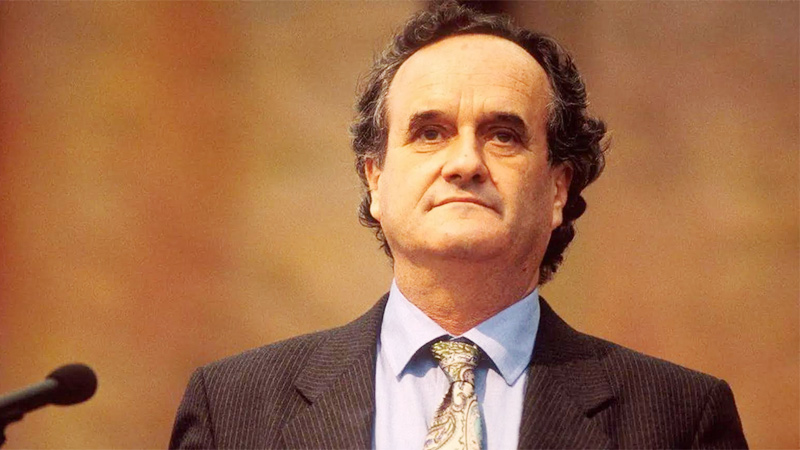
New Delhi: For over half a century, to hear the calm and measured cadence of Sir Mark Tully was to hear the heartbeat of India. Today, that voice, once the most trusted source of news for millions across the subcontinent, has fallen silent. Sir Mark Tully, the legendary BBC Bureau Chief and peerless chronicler of South Asia, passed away at a hospital in New Delhi at the age of 90.
His death marks the end of an era in international journalism. He leaves behind a legacy that bridged the gap between the British Raj into which he was born and the modern, vibrant India he chose as his home.
A witness to the making of a nation
Born in Tollygunge, Calcutta, in 1935, Tully was a child of the Raj who evolved into one of its most insightful critics and most devoted admirers. His father was a prominent British businessman, and his mother was born in Bengal with roots stretching back generations.
Immediately after World War Two, at the age of nine, Tully was sent to Britain for his education. He studied history and theology at Cambridge and then headed to theological college with the aim of being ordained as a clergyman. However, both he and the church eventually had second thoughts. He was brought up with an English nanny who once chided him for learning to count by copying the family driver, telling him it was the “servants’ language.” Ironically, he eventually became fluent in Hindi, a rare achievement in Delhi’s foreign press corps that endeared him to many as “Tully sahib.”
Returning to India with the BBC in 1965, initially as an administrative assistant, Tully did not just report on the country; he lived it. Over three decades, he became the primary witness to the region’s most turbulent and defining moments. During the 1971 Bangladesh Liberation War, his reporting was so vital that he became a household name in Dhaka. He covered war, famine, riots, and the execution of Zulfikar Ali Bhutto, bringing the vibrancy and diversity of the country to audiences in the UK and around the world.

When Indira Gandhi declared the Emergency in 1975, Tully was expelled from India at 24 hours’ notice. Yet, he returned 18 months later with a deeper resolve and remained based in Delhi for the rest of his life. In 1984, during Operation Blue Star and the subsequent assassination of Indira Gandhi, his voice on the shortwave radio was the only steady source of information for a nation in trauma. It was the BBC that scooped the news of the assassination hours before official government sources.
Peril in Ayodhya and the fight for secularism
In 1992, in the small north Indian city of Ayodhya, Tully faced a moment of real peril. He witnessed a massive crowd of Hindu hardliners tear down the ancient Babri Masjid mosque. Some of the mob, suspicious of the BBC, threatened him and chanted “Death to Mark Tully.” He was locked in a room for several hours before a local official and a Hindu priest came to his aid.
The demolition provoked the worst religious violence in India for decades. Years later, Tully described it as the gravest setback to secularism since India’s independence in 1947. He remained a staunch advocate for the secular culture of India, stating in 2016 that it was really important to treasure the secular culture of the country and that we must not endanger this by insisting on Hindu majoritarianism.
The philosophy of “No Full Stops”
Tully’s journalism was defined by a rejection of the Western lens. He famously resigned from the BBC in 1994 after a much publicized speech accusing the then director general, John Birt, of running the corporation by “fear.” He felt the organization was shifting toward corporate priorities that stifled the soul of reporting.
As an author, his books became essential reading. In “No Full Stops in India” and “India in Slow Motion,” he argued against the imposition of Western standards on a culture that moved to its own ancient rhythms. He was never an armchair correspondent; he travelled relentlessly across India and neighboring countries, by train when he could, and was as comfortable wearing an Indian kurta as in a shirt and tie.
Extraordinary contributions and recognition
His life was a rare example of a person being honored by both the land of his birth and the land of his heritage.
Knighthood (KBE) in 2002: Awarded for his services to broadcasting and journalism. He described the award as “an honour to India.”
Padma Shri (1992) and Padma Bhushan (2005): India’s high civilian honors, reflecting the deep respect he commanded across the political spectrum.
Overseas citizen of India: Late in life, he became an OCI, proudly stating he was a citizen of the two countries he felt he belonged to, India and Britain.
Cultural bridge: He hosted the BBC Radio 4 program “Something Understood” for years, exploring spiritual and ethical themes that had engaged him since his student days.
Literary impact: Books like “Amritsar: Mrs. Gandhi’s Last Battle” and “Upcountry Tales” reflected his deep engagement with rural north India and the moral complexities of the country.
Tributes and the final departure
Following the news of his passing, Prime Minister Narendra Modi expressed deep grief on social media, highlighting the journalist’s profound connection to the nation:
Saddened by the passing of Sir Mark Tully, a towering voice of journalism. His connection with India and the people of our nation was reflected in his works. His reporting and insights have left an enduring mark on public discourse. Condolences to his family, friends and many admirers.”
Saddened by the passing of Sir Mark Tully, a towering voice of journalism. His connect with India and the people of our nation was reflected in his works. His reporting and insights have left an enduring mark on public discourse. Condolences to his family, friends and many…
— Narendra Modi (@narendramodi) January 25, 2026
Jonathan Munro, Interim CEO of BBC News, noted that as a pioneer of foreign correspondents, Sir Mark opened India to the world. In his final years, Tully lived unostentatiously in Nizamuddin, South Delhi, with his partner and collaborator, Gillian Wright. He remained a familiar figure at the India International Centre, forever a student of the land he had spent three quarters of his life documenting.
A legacy beyond the airwaves
The true measure of Sir Mark Tully was not found in the awards he received or the world leaders he interviewed, but in the trust he earned from the ordinary Indian citizen. To millions who huddled around shortwave radios in remote villages, Tully Sahib was more than a journalist; he was a window to the truth when the curtains were drawn shut.

He understood that India is not a problem to be solved, but a mystery to be lived. He leaves us with the reminder that there are indeed no full stops in India, only the continuous, sprawling story of a people he loved with all his heart. As the sun sets over the monuments of Delhi tonight, the silence left behind by his departure is heavy, but the echoes of his integrity, his warmth, and his unwavering pursuit of the truth will resonate for generations to come. India has lost a son, and the world has lost its most eloquent bridge.










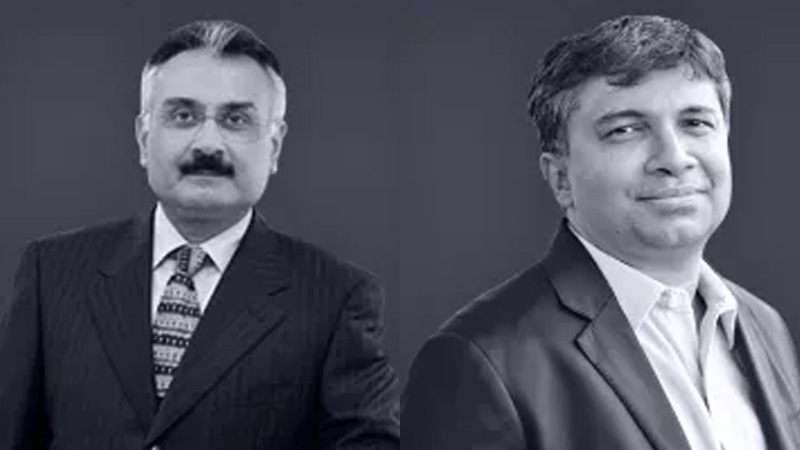
Gurugram: Delhivery’s boardroom is being reset. Deepak Kapoor, chairman and independent director, has resigned with effect from April 1 as part of a planned board reconstitution, the logistics company said in an exchange filing. Saugata Gupta, managing director and chief executive of FMCG major Marico and an independent director on Delhivery’s board, has also stepped down.
Kapoor exits after an eight-year stint that included steering the company through its 2022 stock-market debut, a period that saw Delhivery transform from a venture-backed upstart into one of India’s most visible logistics platforms. Gupta, who joined the board in 2021, departs alongside him, marking a simultaneous clearing of two senior independent seats.
“Deepak and Saugata have been instrumental in our process of recognising the need for and enabling the reconstitution of the board of directors in line with our ambitious next phase of growth,” said Sahil Barua, managing director and chief executive, Delhivery. The statement frames the exits less as departures and more as deliberate succession, a boardroom shuffle timed to the company’s evolving scale and strategy.
The resignations arrive amid broader governance recalibration. In 2025, Delhivery appointed Emcure Pharmaceuticals whole-time director Namita Thapar, PB Fintech founder and chairman Yashish Dahiya, and IIM Bangalore faculty member Padmini Srinivasan as independent directors, signalling a tilt towards consumer, fintech and academic expertise at the board level.
Kapoor’s tenure spanned Delhivery’s most defining years, rapid network expansion, public listing and the push towards profitability in a bruising logistics market. Gupta’s presence brought FMCG and brand-scale perspective during a period when ecommerce volumes and last-mile delivery economics were being rewritten.
The twin exits, effective from the new financial year, underscore a familiar corporate rhythm: founders consolidate, veterans rotate out, and fresh voices are ushered in to script the next chapter. In India’s hyper-competitive logistics race, even the boardroom does not stand still.
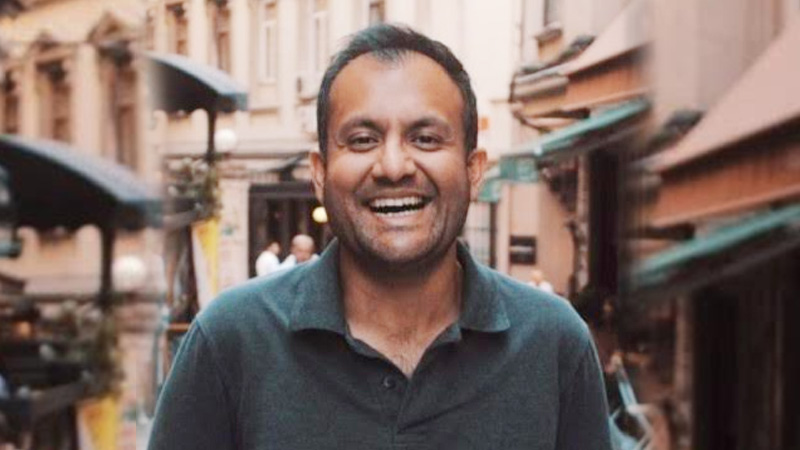
At Locofy.ai, Rao helped convert a three-year free beta into a paid engine, clocking 1,000 subscribers and 15 enterprise clients within ten days of launch in September 2024. The low-code startup, backed by Accel and top tech founders, is famed for turning designs into production-ready code using proprietary large design models.
Before that, Rao founded generative AI venture 1Bstories, which was acquired by creative AI platform Laetro in mid-2024, where he briefly served as managing director for APAC. Alongside operating roles, he has been an active investor and advisor since 2020, backing startups such as BotMD, Muxy, Creator plus, Intellect, Sealed and CricFlex through a creator-economy-led thesis.
Rao spent over eight years at Google, holding senior partnership roles across search, assistant, chrome, web and YouTube in APAC, and earlier cut his teeth in strategy consulting at OC&C in London and investment finance at W. P. Carey in Europe and the US.
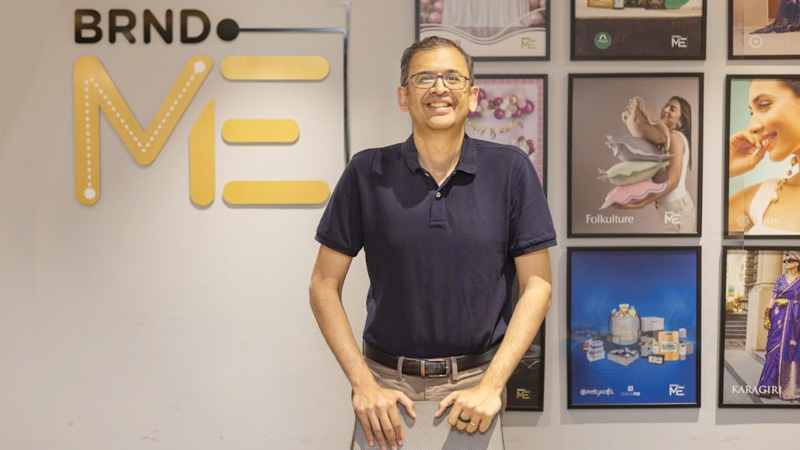
Bengaluru: Brnd.me, the global consumer brands company formerly known as Mensa Brands, has entered the European market following strong momentum across the Middle East, the United States and Canada.
The company has launched across the UK, Germany, France and Spain, with plans to expand into Italy, the Netherlands and Poland over the next year. The push is being led by its haircare and aromatherapy brands, Botanic Hearth and Majestic Pure, marking Brnd.me’s first structured expansion into Europe.
The European beauty market represents a total addressable opportunity of over $4 billion across haircare and aromatherapy, supported by high digital adoption and demand for accessible, performance-led products.
Brnd.me’s hair care and aromatherapy business currently operates at an annual run rate of around $6 million, with Botanic Hearth and Majestic Pure delivering roughly 10 per cent month-on-month growth, driven by expansion and rising repeat demand.
To support regional growth, the company has appointed a general manager based in Germany and is evaluating investments in warehousing and local team expansion.
Early traction has been strong. Within weeks of launch, Botanic Hearth’s rosemary hair oil ranked among the top five hair oils in Germany, signalling strong consumer pull in a competitive market.
Brnd.me founder and chief executive officer Ananth Narayanan, said Europe represents the next phase of the company’s international strategy. He added that the European business is expected to scale to a $10 million annual run rate by the end of 2026, with long-term ambitions to reach $60 million over the next six years.
The company’s Europe strategy centres on digital-first distribution, repeat demand and TikTok-led discovery, alongside direct-to-consumer expansion to strengthen brand equity and margins.
The move also aligns with growing EU–India trade engagement, supporting long-term sourcing and cross-border supply chains.

Netflix celebrates a decade in India with Shah Rukh Khan-narrated tribute film

Delhivery chairman Deepak Kapoor, independent director Saugata Gupta quit board

Meta appoints Anuvrat Rao as APAC head of commerce partnerships

Brnd.me enters Europe as haircare brands power global expansion

TechnoSport taps quick commerce with launch on Slikk’s 60-minute platform

Jitendra Singh joins Reliance Industries as senior vice president, special projects

Tinder brings real-world dating experiences to North East India

These ’90s fashion trends are making a comeback in 2017
The final 6 ‘Game of Thrones’ episodes might feel like a full season
According to Dior Couture, this taboo fashion accessory is back
The old and New Edition cast comes together to perform
Phillies’ Aaron Altherr makes mind-boggling barehanded play
Uber and Lyft are finally available in all of New York State
Disney’s live-action Aladdin finally finds its stars
Netflix celebrates a decade in India with Shah Rukh Khan-narrated tribute film
Delhivery chairman Deepak Kapoor, independent director Saugata Gupta quit board
Meta appoints Anuvrat Rao as APAC head of commerce partnerships
Brnd.me enters Europe as haircare brands power global expansion
TechnoSport taps quick commerce with launch on Slikk’s 60-minute platform
Jitendra Singh joins Reliance Industries as senior vice president, special projects
Tinder brings real-world dating experiences to North East India
-
 iWorld3 months ago
Tips Music turns up the heat with Tamil party anthem Mayangiren
-
 iWorld12 months ago
BSNL rings in a revival with Rs 4,969 crore revenue
-
 I&B Ministry3 months ago
India steps up fight against digital piracy
-
 MAM3 months ago
HoABL soars high with dazzling Nagpur sebut
-
 News Broadcasting6 months ago
Wion marks Independence Day with global showcase of India’s spirit
-
 iWorld3 months ago
The Night Manager returns with new secrets, new spies and old scars
-
 iWorld2 days ago
Netflix celebrates a decade in India with Shah Rukh Khan-narrated tribute film
-

 iWorld2 weeks ago
Pocket FM brings Marvel heroes to Hindi audio series