
Brands
Reliance Industries reports lower net profit; flat revenues in Q2 FY 2025

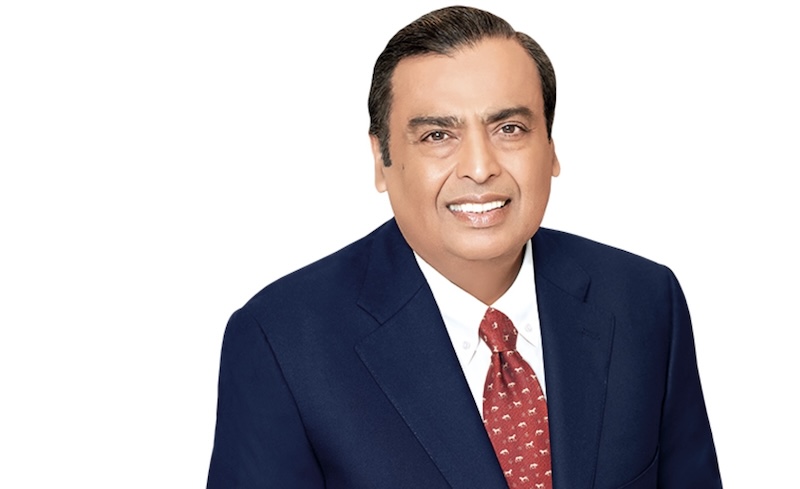
MUMBAI: Billionaire Mukesh Ambani’s Reliance Industries Ltd reported nearly flat revenues and lower profits for Q2 of FY 2025 ended 30 September 2024 as compared to Q2 of FY 2024 ended 30 September 2023.
Revenue from operations at the oil to telecom conglomerate was at Rs 235,481 crore (Rs 234,956 crore); other income (Rs 4,876 crore vs Rs 3,841 crore) took up total income to Rs 240,357 crore (Rs 238,797 crore). Higher expenses of Rs 215,320 crore (Rs 212,304 crore) took a toll on the bottom line with PBT falling to Rs 25,037 crore (Rs 26,493 crore). Lower taxes (both direct and differed) of Rs 5,396 crore (Rs 6,673 crore) helped rescue the fall in PAT marginally which dropped to Rs 19,101 crore (Rs 19,820 crore). Net profit attributable to the owners of the company fell 4.88 per cent to Rs 16,563 crore (Rs 17,394 crore).
The oil to chemicals business reported higher revenues of Rs 155,580 crore (Rs 147,988 crore) with EBITDA dipping to Rs 12,143 crore (Rs 16,277 crore). A press release stated that the oil to chemicals revenue improved with higher volumes and increased domestic placement of products. EBITDA was lower by 23.7 per cent on account of sharp decline in product margins. Fuel cracks declined by nearly 50 per cent Y-o-Y. Downstream chemical also declined with muted global demand. In a well-supplied market, RIL benefited due to superior ethane cracking economics driven by sharp fall in ethane prices.
The oil and gas business had a lower top line with revenues at Rs 6,222 crore (Rs 6,6620 crore). EBITDA for this segment however showed buoyancy rising to Rs 5,290 crore (Rs 4,766 crore). The press release stated that lower gas price realizations led to six per cent lower revenue in the oil and gas segment. Oil and gas segment EBITDA increased by 11.0 per cent on account of sustained volume growth and one time provisioning towards decommissioning cost for Tapti field in Q2 FY 24.
Reliance’s retail business received a slight knock with revenues dropping to Rs 76,325 crore (Rs 77,163 crore). The press release said EBITDA for this segment improved fractionally to Rs 5,861 crore (Rs 5,841 crore) with a continued focus on streamlining of operations and calibrated approach in B2B.
Digital services which includes its Jio Platforms business was the shining star with revenues climbing to Rs 38,055 crore (Rs 32,657 crore) and EBITDA at Rs 16,139 crore (Rs 14,055 crore). The 17.8 per cent Y-o-Y EBITDA increase was due to better subscriber mix, digital services scale-up and revision in telecom tariffs, stated the RIL press release.
“I am happy to note that during this quarter Reliance once again demonstrated the resilience of its diversified business portfolio. Our performance reflects robust growth in digital services and upstream business,” said RIL chairman & managing director Mukesh Ambani. ”This helped partially offset weak contribution from O2C business which was impacted by unfavorable global demand-supply dynamics.
“Growth in digital services was led by increased ARPU and improving customer engagement metrics reflecting the strong value proposition of our services. The home broadband segment is witnessing accelerated momentum on the back of our unique industry-leading JioAirFiber offering. Jio’s broad spectrum of offerings enables it to digitally empower every village, town and city in India as well as the country’s small and medium scale enterprises. The digital services business continues to focus on innovative deep-tech solutions on a national scale and is on track to deliver the path-breaking benefits of Artificial Intelligence to all Indians.
“The retail segment continues to increase its consumer touchpoints and product offerings across physical and digital channels. The unique omni-channel retail model enables the business to service a wide range of requirements of a vast, heterogenous customer base. The retail business continues to partner with renowned domestic as well as global players, expanding its basket of quality product offerings. The focus on strengthening our retail operations will help us rapidly scale-up this business in the coming quarters and years and sustain our industry-leading growth momentum.
“The first of our new energy giga-factories is on-track to commence production of solar PV modules by the end of this year. With a comprehensive range of renewable solutions including solar, energy storage systems, green hydrogen, bio-energy and wind, the new energy business is poised to become a significant contributor to global clean energy transition.”










Gurugram: Delhivery’s boardroom is being reset. Deepak Kapoor, chairman and independent director, has resigned with effect from April 1 as part of a planned board reconstitution, the logistics company said in an exchange filing. Saugata Gupta, managing director and chief executive of FMCG major Marico and an independent director on Delhivery’s board, has also stepped down.
Kapoor exits after an eight-year stint that included steering the company through its 2022 stock-market debut, a period that saw Delhivery transform from a venture-backed upstart into one of India’s most visible logistics platforms. Gupta, who joined the board in 2021, departs alongside him, marking a simultaneous clearing of two senior independent seats.
“Deepak and Saugata have been instrumental in our process of recognising the need for and enabling the reconstitution of the board of directors in line with our ambitious next phase of growth,” said Sahil Barua, managing director and chief executive, Delhivery. The statement frames the exits less as departures and more as deliberate succession, a boardroom shuffle timed to the company’s evolving scale and strategy.
The resignations arrive amid broader governance recalibration. In 2025, Delhivery appointed Emcure Pharmaceuticals whole-time director Namita Thapar, PB Fintech founder and chairman Yashish Dahiya, and IIM Bangalore faculty member Padmini Srinivasan as independent directors, signalling a tilt towards consumer, fintech and academic expertise at the board level.
Kapoor’s tenure spanned Delhivery’s most defining years, rapid network expansion, public listing and the push towards profitability in a bruising logistics market. Gupta’s presence brought FMCG and brand-scale perspective during a period when ecommerce volumes and last-mile delivery economics were being rewritten.
The twin exits, effective from the new financial year, underscore a familiar corporate rhythm: founders consolidate, veterans rotate out, and fresh voices are ushered in to script the next chapter. In India’s hyper-competitive logistics race, even the boardroom does not stand still.
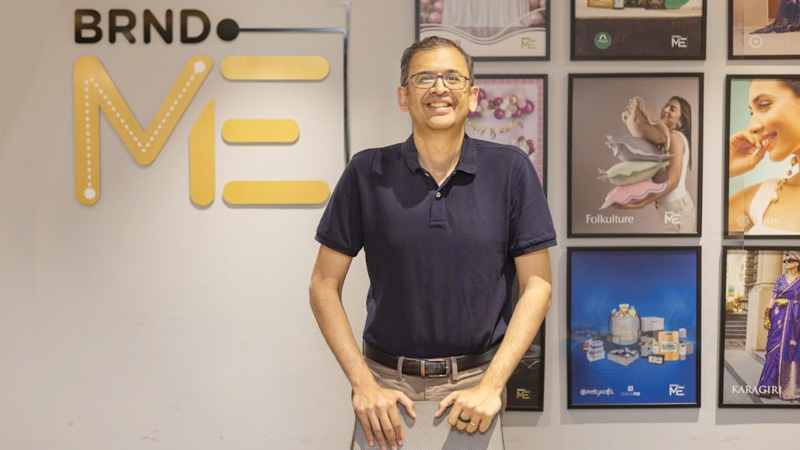
Bengaluru: Brnd.me, the global consumer brands company formerly known as Mensa Brands, has entered the European market following strong momentum across the Middle East, the United States and Canada.
The company has launched across the UK, Germany, France and Spain, with plans to expand into Italy, the Netherlands and Poland over the next year. The push is being led by its haircare and aromatherapy brands, Botanic Hearth and Majestic Pure, marking Brnd.me’s first structured expansion into Europe.
The European beauty market represents a total addressable opportunity of over $4 billion across haircare and aromatherapy, supported by high digital adoption and demand for accessible, performance-led products.
Brnd.me’s hair care and aromatherapy business currently operates at an annual run rate of around $6 million, with Botanic Hearth and Majestic Pure delivering roughly 10 per cent month-on-month growth, driven by expansion and rising repeat demand.
To support regional growth, the company has appointed a general manager based in Germany and is evaluating investments in warehousing and local team expansion.
Early traction has been strong. Within weeks of launch, Botanic Hearth’s rosemary hair oil ranked among the top five hair oils in Germany, signalling strong consumer pull in a competitive market.
Brnd.me founder and chief executive officer Ananth Narayanan, said Europe represents the next phase of the company’s international strategy. He added that the European business is expected to scale to a $10 million annual run rate by the end of 2026, with long-term ambitions to reach $60 million over the next six years.
The company’s Europe strategy centres on digital-first distribution, repeat demand and TikTok-led discovery, alongside direct-to-consumer expansion to strengthen brand equity and margins.
The move also aligns with growing EU–India trade engagement, supporting long-term sourcing and cross-border supply chains.

NATIONAL: TechnoSport has launched on Slikk, the ultra-fast fashion app offering 60-minute delivery, as the activewear brand accelerates its push into quick commerce to capture Gen Z and young millennial shoppers.
The debut brings more than 150 high-performance styles to Slikk’s platform, with an average selling price of Rs 450, expanding TechnoSport’s reach across over 80 pin codes.
The partnership follows strong momentum for TechnoSport across Q-commerce channels, where the brand has recorded around 60 per cent volume growth over the past six months. The company expects quick commerce to contribute nearly 20 per cent of its revenue in the coming years as hyperlocal delivery gains scale.
Slikk, which recently raised $3.2 million in seed funding led by Lightspeed, has rapidly gained popularity among youth consumers seeking speed, trend relevance and impulse-led shopping experiences.
Activewear remains one of Slikk’s fastest-growing categories, driven by shoppers increasingly treating fitness-led fashion as an everyday essential. The platform has reported a 30-fold year-on-year increase in items sold, reflecting rising demand for performance wear that blends comfort with style.
TechnoSport chief executive officer Puspen Maity, said the collaboration would help the brand engage more closely with young consumers whose fashion choices are shaped by instant needs and lifestyle aspirations. He added that rapid delivery bridges the gap between intent and purchase, allowing shoppers to access activewear exactly when they want it.

Mukesh Ambani, Larry Fink come together for CNBC-TV18 exclusive

Nielsen launches co-viewing pilot to sharpen TV measurement

Netflix celebrates a decade in India with Shah Rukh Khan-narrated tribute film

Delhivery chairman Deepak Kapoor, independent director Saugata Gupta quit board

Meta appoints Anuvrat Rao as APAC head of commerce partnerships

Brnd.me enters Europe as haircare brands power global expansion

TechnoSport taps quick commerce with launch on Slikk’s 60-minute platform

These ’90s fashion trends are making a comeback in 2017
The final 6 ‘Game of Thrones’ episodes might feel like a full season
According to Dior Couture, this taboo fashion accessory is back
The old and New Edition cast comes together to perform
Phillies’ Aaron Altherr makes mind-boggling barehanded play
Uber and Lyft are finally available in all of New York State
Disney’s live-action Aladdin finally finds its stars
Mukesh Ambani, Larry Fink come together for CNBC-TV18 exclusive
Nielsen launches co-viewing pilot to sharpen TV measurement
Netflix celebrates a decade in India with Shah Rukh Khan-narrated tribute film
Delhivery chairman Deepak Kapoor, independent director Saugata Gupta quit board
Meta appoints Anuvrat Rao as APAC head of commerce partnerships
Brnd.me enters Europe as haircare brands power global expansion
TechnoSport taps quick commerce with launch on Slikk’s 60-minute platform
-
 News Broadcasting1 day ago
Mukesh Ambani, Larry Fink come together for CNBC-TV18 exclusive
-
 iWorld5 days ago
Netflix celebrates a decade in India with Shah Rukh Khan-narrated tribute film
-
 I&B Ministry3 months ago
India steps up fight against digital piracy
-
 iWorld3 months ago
Tips Music turns up the heat with Tamil party anthem Mayangiren
-
 MAM1 day ago
Nielsen launches co-viewing pilot to sharpen TV measurement
-
 iWorld12 months ago
BSNL rings in a revival with Rs 4,969 crore revenue
-
 MAM3 months ago
HoABL soars high with dazzling Nagpur sebut
-

 News Broadcasting2 months ago
CNN-News18 dominates Bihar election coverage with record viewership