Ad Campaigns
Regional representation in creative teams can help reduce blind spots: Karthik Srinivasan

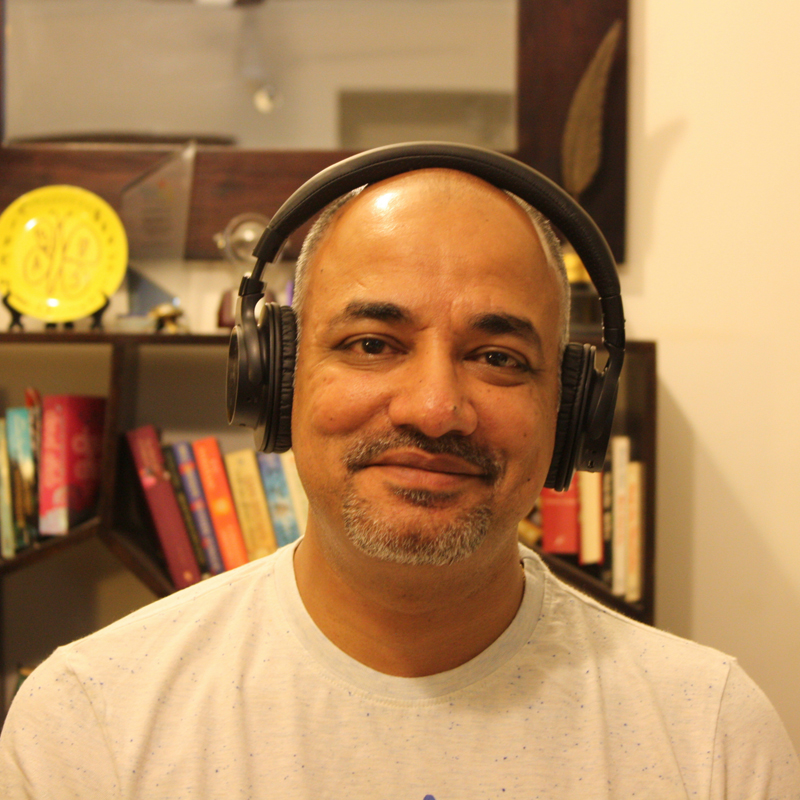
MUMBAI: If you’re not in tune with the intricacies of a different language, you’re going to land yourself in a soup. Just like Google’s voice assistant Alexa a few months ago when it had censored the word “chhod” (meaning ‘leave’ in English) from a number of popular Hindi songs, as it confused it with an expletive that is spelt the same way when written in English.
While the world is currently moving in an inner spiral with people and cultures merging, the vernacular is extending outwards. And in an assorted country like India, this trend only deepens. As lucrative as it sounds, advertisers are still struggling to extract the most from this.
Case in point is the latest ‘Tinda Moments’ campaign by Uber Eats, as highlighted by communications consultant on digital/social media marketing and PR Karthik Srinivasan in a LinkedIn post. Srinivasan, who has earlier worked with companies like Ogilvy, Flipkart, and Edelman, noted that a Tamilian or Malayali might not be able to get the reference of Hindi word ‘Tinda’. He asked an important question, “Is it too much to expect the brand to customise/localise the ad for the regions it is advertising in? Or is it ok in these multi-lingual metro-centric days where having your ad understood by those who can (and if it is assumed to be a sizeable number) is good enough?”
Indiantelevision.com got in touch with Srinivasan to discuss more on the subject of the need of regional content in the advertising sphere and he shared some interesting insights with us. Edited excerpts follow:
The need for vernacular content in advertising is rising steadily, especially after the boom of digital media. Most of the marketers are talking about it. But do you think the brands understand this requirement?

First of all, I would like to note that the term vernacular might not be the best one to describe regional languages. The origin of the word goes back to the varna system in India – it is literally 'language spoken by different coloured people' according to the British. I believe that ‘regional language’ should be used in fact.
On your question, I'd say that the local brands understand this better than the national brands. Those brands that have a strong regional-decision making team for marketing get this really well. If the decisions are made for all of India, in say a Mumbai or a Delhi, unless the teams have adequate representation from the regions or good, sensible counsel from the agencies, they could miss this aspect. It's hardly ever intentional but more of a blind spot.
Isn’t it going to cost the brands more if they create the same ad in various languages? How can this progression towards personalised content be made more cost-effective?
Brands (at least the ones that are national) already do this. Even regional brands, when they go national, do this quite effectively. For example, Manappuram had 8 versions and 8 brand ambassadors, one for each region (Mohanlal, Vikram, Venkatesh, Puneet Rajkumar, Utham Mohanty, Mithun Chakraborty and Sachin Khadekar). I'd not see it as a cost imperative. This is more targetting and effectiveness imperative. Having a nationally known brand ambassador is easy – there are enough Hindi film stars or sports stars, who can be recognised across the country. Having them talk in various regional languages is also a good deal and already happens. But, if you want to reach the heart of a region and not just its eyes, you need to contextualise its communication to appeal to its specific sensibilities. That's not just locally known brand ambassadors, but also locally nuanced content.
How are programmatic advertising and artificial intelligence contributing to the growth of regional content in advertising space?
To the best of my knowledge, AI hasn't really caught up with the nuances of Indian regional languages. There are broad efforts to get the basics right, like Google Maps translating names of areas in all Indian languages. But understanding and translating with context to local nuances is quite some time away. Programmatic does help in micro-targeting. There is better awareness in building a pool of localised content and let the right one be used for the right region. But even here, it is the intent that is the starting point. The marketing team should realise the need for localisation first.
Can you think of any brand that is using regional content to its benefit smartly?
For instance, take Muthoot's campaign featuring Vidya Balan. The choice of Vidya Balan as a brand ambassador is a good move, given her almost pan-Indian appeal and familiarity. But beyond that, it is very interesting that they use 'Blue' (an English word) as connecting glue for the campaign tagline. 'Blue' is the term for smart entrepreneurs (who get some help from Muthoot Finance, of course). The end tagline, 'Blue hai आत्मविश्वास' (Atmavishwas, meaning confidence) translates to 'நம்பிக்கையின் (Nambikkayin meaning confidence in Tamil) niram blue', for instance. The word blue is not translated and is retained as a common factor to connect across multiple regional languages. If blue was translated too, then the statement may seem different in each language. You can argue that 'neel' in Hindi or 'neelam' in Tamil or similar variants is the most common translation for blue in many Indian languages, but that may not be uniform in all languages. The effort in understanding local nuances and working accordingly shows. Another was an effort by ET Money last year in its “Upar Ki Kamayi” campaign, which was printed in seven different languages for different areas on the same day.
What can be the key strategies of a brand to design and implement the right form of multi-linguistic content?
The first, and most basic, is the intent. It is simply recognising the need that regional language content if you have a substantial target audience in that region, will simply work far better in reaching them. It is the humility in accepting that I don't know everything and I can do better by asking around and learning other kinds of effective communication.
Then you have the strategies and processes. Ad agencies and brands simply need to look for inspiration from the dubbing and subtitling industries in India. If you switch on cable TV and look at any Hindi movie channel during non-peak hours (sometimes even during peak hours), they only play Hindi-dubbed South Indian movies. And that dubbing is done brilliantly, placing the location to Northern regions and even using local Northern dialects and nuances.
The subtitling industry is also doing some stellar work since that's a basic requirement for films to be shown in OTT platforms. So, much of the subtitles are done professionally, understanding the context within films and not just transliterated. If the film industry can pull it off, there's no reason a far more professional and educated bunch of people in marketing and advertising cannot. It all boils down to the intent and getting the right people.
How do you see the growth of regional content industry in general?
I'd say it is the next big frontier. Most large brands like Google, Facebook and Twitter are trying to crack that in order to reach Indians better with better context. Even in the OTT space, there's a profusion of regional language content. From a user interface/user experience perspective too, most of the mobile wallets that are from startups have a multi-lingual interface, while those from larger, legacy banks still lack this feature and use English as default.
To a large extent, the bigger technology brands are leapfrogging the complexities of written regional language by taking the voice input route. Google and Amazon's smart speakers already recognise and respond to a few Indian regional languages well and are improving.
Any special pointers you want to share with the brands and marketers regarding the topic?
The most important one is again on intent. We Indians seldom venture beyond our comfort zone when it comes to languages. For instance, our choice of music or movies is usually in English + our mother tongue. It is only now that subtitles have opened up the audience for all kinds of languages but they remain small. With music, is a classic case – if I ask a Hindi speaking person for his/her favourite Tamil or Telugu songs, the standard reaction would be to name a song from Baahubali (pan-India) and say they don't understand the language so they don't listen. But remember, music was supposed to be universal, and we gladly listen to Latin and Spanish hits from the US, like Despacito! The point is, if your target audience is in Karnataka, get to know the local nuances first and not assume that mere Hindi and English would do. They would, no doubt because most people have been conditioned to learn English and perhaps know functional Hindi too for day-to-day survival in cities, but when they see or hear something in their mother-tongue, the appeal goes straight to the heart. It’s much like you being in another part of India and seeing a car with a number plate from your state!








NATIONAL: Amazon Ads has laid out a sharply tech-led vision for the advertising industry in 2026, arguing that artificial intelligence, streaming TV and creator partnerships will combine to turn brand building into a more precise, performance-driven business.
At the heart of the shift, the company says, is the fusion of AI with Amazon’s vast trove of shopping, browsing and streaming signals, allowing advertisers to move beyond blunt reach metrics to campaigns designed around real customer behaviour.
“The future of advertising is not about reaching more people, but the right people with messages that resonate,” said Amazon Ads India head and vice president Girish Prabhu. “By combining AI with deep customer insights, we help brands move from broadcasting campaigns to having meaningful conversations wherever audiences spend their time.”
One of the biggest changes, according to Amazon Ads, will be the collapse of the wall between media planning and creative development. Retail media, powered by first-party data, is increasingly shaping everything from brand discovery to final purchase, pushing marketers to design campaigns around audience insight rather than internal instinct.
AI is also moving from a support tool to a creative engine. Agentic AI, which automates and accelerates production, is expected to make high-quality creative accessible even to small businesses, compressing weeks of work into hours and giving challengers the ability to compete with larger brands on speed and scale.
Behind the scenes, AI-driven analytics will take on a bigger role in campaign optimisation, identifying patterns, spotting opportunities and recommending actions that would previously have required teams of analysts.
Streaming TV is another big battleground. With India’s video streaming audience now above 600 million and connected TV users at 129.2 million in 2025, advertisers are set to treat streaming not just as a branding channel but as a performance engine, measured increasingly by sales, sign-ups and bookings rather than just reach.
Finally, Amazon Ads sees creators and contextual advertising reshaping how brands tell stories. Creators will act less like influencers and more like long-term partners, while scene-aware ads on streaming platforms will allow brands to insert hyper-relevant offers into the flow of what viewers are watching.
Taken together, Amazon Ads argues, these shifts mark a move towards advertising that is both more human and more measurable, where AI handles the complexity, and creativity does the persuading.
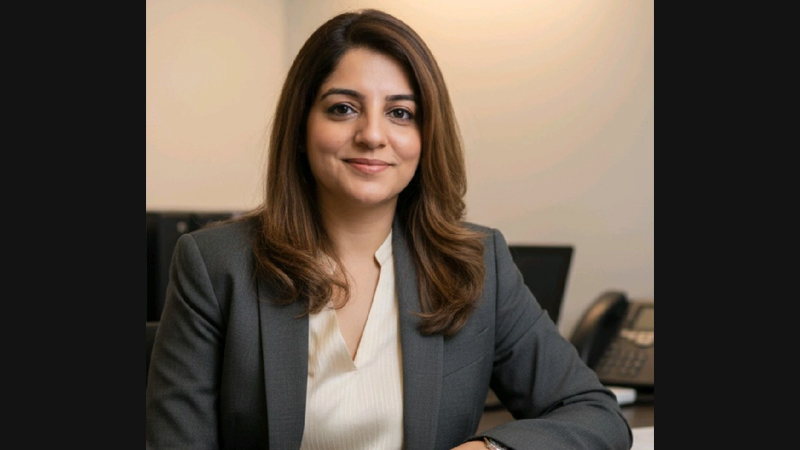
MUMBAI: Publicis Groupe India has appointed Sonal Verma as managing director of Arc Worldwide India, handing the reins of its experiential and shopper marketing business to a leader steeped in live brands and real world storytelling.
Arc Worldwide, the Groupe’s specialist arm focused on experiences that nudge consumers from curiosity to checkout, sits at the intersection of creativity, commerce and culture. Verma’s mandate is to sharpen that edge as brands grapple with shorter attention spans and more complicated buying journeys.
Verma joins from Cheil India, where she spent nearly five years building and leading the brand experience practice, most recently as senior vice president and head of brand experience. Her career reads like a tour of India’s experiential landscape, with leadership roles at Momentum Worldwide, Percept D Mark, Blockkbuster Events and Showtime Events.
She has also held senior activation roles at Radio City and The Times of India, giving her a rare mix of agency, media and on-ground execution experience. The common thread has been simple: turning big ideas into moments people remember and talk about.
At Arc Worldwide India, Verma will focus on expanding the agency’s experiential and shopper capabilities, strengthening client partnerships and keeping the work firmly rooted in consumer behaviour rather than buzzwords.
With Verma at the helm, Arc Worldwide is expected to double down on ideas that live beyond screens and closer to everyday life. For an industry obsessed with clicks and scrolls, this is a reminder that sometimes the strongest connections still happen face to face.
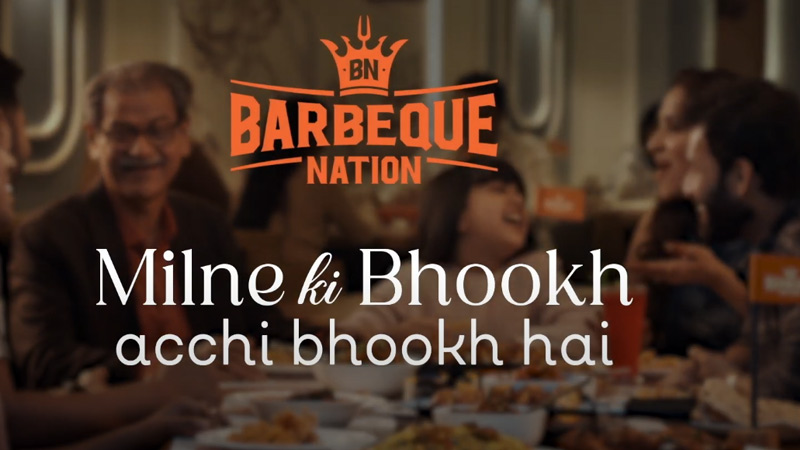
BENGALURU: Barbeque Nation is ringing in the new year with a reminder that some cravings cannot be ordered online. The casual dining chain has rolled out a new film campaign, milne ki bhookh, pitching its restaurants as places to meet, reconnect and linger over food.
Set against a world of constant messages and missed meet-ups, the campaign leans into a simple truth: dining out remains one of the few rituals that still brings people together. Barbeque Nation positions itself as the excuse and the setting for real conversations, shared plates and unhurried moments.
Nakul Gupta, cmo at Barbeque Nation, says the brand has long been about shared celebrations. As the year turns, milne ki bhookh captures what he calls a growing hunger to meet, connect and spend time together, with food at the centre of that experience.
Created by Makani Creatives, the campaign comprises three films built around Barbeque Nation’s signature grills and desserts. The storytelling is deliberately sensorial, designed to spark cravings while nudging diners to step out and meet in person.
Pavan Punjabi, chief integration officer at Makani Creatives, says the idea stems from a familiar contradiction. People are constantly connected, yet meetings with loved ones are endlessly postponed. Milne ki bhookh, he says, is a gentle push to make time for real-life catch-ups, using food as the reason to come together, share a meal and create memories.
The campaign breaks on December 25 with the grilled prawns film and will run for two months, amplified across digital platforms. As the new year begins, Barbeque Nation is betting that the strongest appetite of all is not for food alone, but for each other.


MIB sets OTT accessibility rules, mandates captions and audio description

Boney Kapoor acquires remake rights of Tamil political satire Thalaivar Thambi Thalaimaiyil

Netflix India names Rekha Rane director of films and series marketing

Zabeen signs off from TV9 after shaping the network’s public voice

Dhawan steps up to bat for Delhi’s grassroots sports push

Orient Beverages pops the fizz with steady Q3 gains and rising profits

Cheekatilo shines in the dark with record debut on Prime Video

These ’90s fashion trends are making a comeback in 2017
The final 6 ‘Game of Thrones’ episodes might feel like a full season
According to Dior Couture, this taboo fashion accessory is back

Swiggy Instamart’s GOV surges 103 per cent year on year to Rs 7,938 crore
The old and New Edition cast comes together to perform
Phillies’ Aaron Altherr makes mind-boggling barehanded play
Uber and Lyft are finally available in all of New York State
MIB sets OTT accessibility rules, mandates captions and audio description
Boney Kapoor acquires remake rights of Tamil political satire Thalaivar Thambi Thalaimaiyil
Netflix India names Rekha Rane director of films and series marketing
Zabeen signs off from TV9 after shaping the network’s public voice
Dhawan steps up to bat for Delhi’s grassroots sports push
Orient Beverages pops the fizz with steady Q3 gains and rising profits
Cheekatilo shines in the dark with record debut on Prime Video
-
 e-commerce3 weeks ago
Swiggy Instamart’s GOV surges 103 per cent year on year to Rs 7,938 crore
-

 News Headline2 months ago
From selfies to big bucks, India’s influencer economy explodes in 2025
-

 News Broadcasting2 weeks ago
Mukesh Ambani, Larry Fink come together for CNBC-TV18 exclusive
-
 iWorld5 months ago
Billions still offline despite mobile internet surge: GSMA
-

 News Headline2 months ago
2025: The year Indian sports saw chaos, comebacks, and breakthroughs
-
 MAM2 years ago
Costa Coffee becomes official coffee partner of Olympic Games Paris 2024
-
 News Headline2 months ago
Game on again as 2025 powers up a record year and sets the stage for 2030
-

 Applications2 months ago
28 per cent of divorced daters in India are open to remarriage: Rebounce