
Brands
Pokemon Go craze: A brand insight

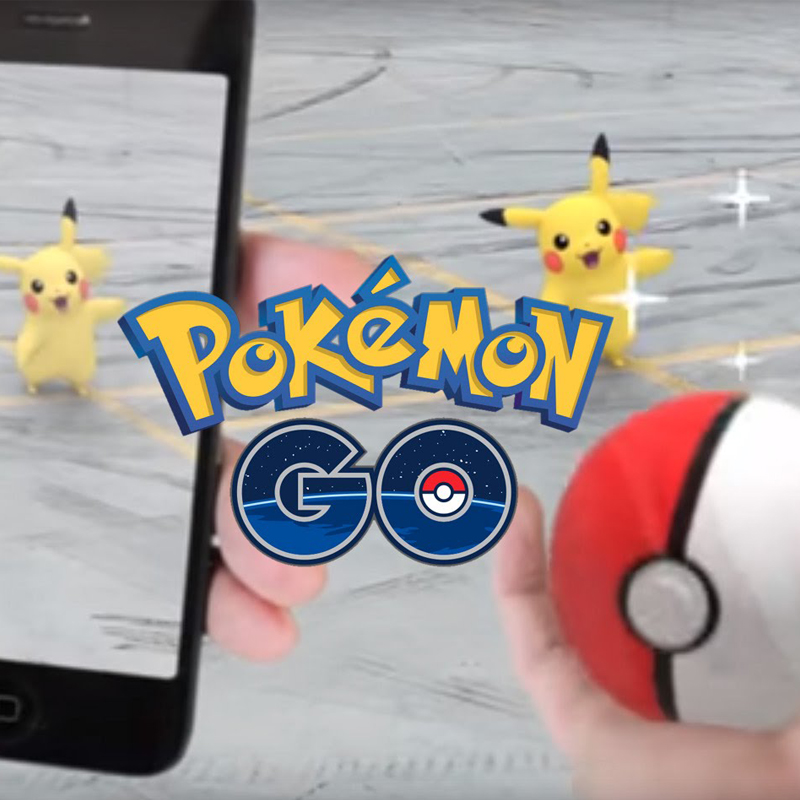
MUMBAI: They are on the streets, right outside posh coffee shops, in temples and churches, in your offices, on your desk and are even invading your bedrooms, seducing you to catch ‘em all. And if you still don’t know about this illusive ‘them’, you are missing out on one of the biggest ‘game’ changers of this decade : this phenomenon called Pokemon Go.
Quite like Schrodinger’s paradox, Pokemons are everywhere and nowhere at the same time — thanks to the ingenious fusion of Augmented Reality and Google Maps with gamification devised by California based former Google startup Niantic.
Folks at Niantic remastered their existing idea of a mobile game based on augmented reality (Ingress) and launched it on the back of the twenty year of Pokemon franchise that Nintendo co-owns. Nintendo, together with its affiliate Pokemon Co. and Google, last year had invested in Niantic. The game is both an opportunity as well as a leap of faith for Nintendo in the mobile game market given its initial reluctance to move away from console driven games.
Eat, Catch, Play, Repeat:
For the gaming and mobile marketing fraternity and brands at large it is a success story worth taking notes of. Since the game launched in select countries on 6 July, it has reportedly rivaled social media giant Twitter in daily use as per SimilarWeb, and jumped to become the most downloaded app on Google Play in the US.

Nintendo basked in this sudden craze for the game and saw its stock pricing skyrocketing and gaining 86 percent since its US launch earlier this month, adding $39 billion to its market value as of Tuesday’s stock market close as reported by Reuters. And that is after the prices showed cooling down after the initial doubling of the share rates. Nonetheless, Nintendo has surpassed long time rival and technology ace Sony.
All this, and the app hasn’t even been officially launched across the world and is currently officially limited to only 26 countries.
But that hasn’t stopped Pokemon lovers and Nintendo loyalists from downloading the app outside Google Play and iTunes. India too has joined the bandwagon.
Suddenly teenagers and young adults are walking away from stores with discounted limited edition items in a mall and flocking to a mirage-like ‘Pokestop’ that is only virtually visible to them through their smartphones. People are taking breaks during lunch hours to hunt for Pokemons around their workplace.
In fact, the game’s popularity has also earned it a viral ‘Pokemons Of New York’ page on the social media, quite in tandem with the famous ‘Humans Of New York.’ Creators of the page — Abhishek Singh Kadian, Avish Revis, Abhi Nash, and Aakash Shah hailing from different parts of the country — share that their largest traction come from India.
“Given the initial response brands are on my mind, but we need to feel that we have earned them (followers) enough. Therefore, first we want some good content out there,” shared Kadian.
If all these facts and figures don’t impress you, wait till you hear of the number of marketing possibilities the game has for your brand.
A dream IP for marketers:
According to MindShift Interactive creative lead Randal Gomes, the game may have made records on online usage, it’s the retail store owners and brands with an offline touch base with consumers that will reap the most benefits.
“From a brand perspective, there is an advantage to those who have an offline store. Because there is this thing called Pokestops in the game that attracts gamers to it. These are real world locations and could be anything from coffee shops to malls. In other words, stores or shops who don’t have a Pokestop have a disadvantage. Several shops in the US are doing some innovative ongoing marketing campaigns based on this. They are inviting people to come play Pokemon at the shops while they try out the products, and are even giving discounts and other gratifications to those who catch them. It is a wonderful way to engage consumers.”
Another fine example how brands are leveraging the Pokemon fandom to gain traction for themselves is GOQii. The California based fitness band manufacturer founded by former Indiagames head honcho Vishal Gondal has used the game’s requirement for people to walk and hunt and given it a fitness twist. “We are organising Pokemon related events throughout the city where people are expected to turn up with the game installed and walk around to catch Pokemon Go. Along with that we have ‘Poke Trainers’ who will make you exercise and get healthy. Since GOQii is all about being fit and healthy, we are encouraging people to play the game to start walking,” shared Gondal.
Nintendo is aware of the game’s implications for the advertising world and is quickly acting on it to monetise it in every possible way. Niantic CEO John Hanke has asserted that Niantic would augment the already significant revenue that the game is making from in-app purchases by allowing selective partners to become “sponsored locations” in the game. A sponsor can create “gyms” — where Pokémon can be battled or trained by gamers — at their retail store or locations, a move that could drive real-world traffic and potential sales to their business.
Nintendo is in fact launching the app in Japan with its first sponsored location. McDonald’s will be the first launch partner in a tie-in that will see its 3,000 plus fast food restaurants across Japan become gyms for would-be Pokémon collectors. Given the talks of brand integration between the fast food giant and Pokemon Go and it’s Pokemon-branded Happy Meal sales, McDonald’s share prices in Japan have already seen positive growth. It is a take away for all the brands, especially those that target kids, to jump on the gravy train to sign merchandising deals with Pokemon Go.
In India, the merchandising and licensing agency owned and operated by Jiggy George has already prepared a road map for licensing different product categories once Pokemon launches. The agency is the answer to brands’ Pokemon Go related merchandising requirements, as it is representing the franchise in India and South Asia. Recently, George, through an informal post on social media, has called in brands to add ‘Pokemon Power’ to their portfolio.
Meanwhile, there are also some marketers who prefer to wait out this initial craze to find real value to invest time, money and creative energy on the property.
“Pokemon Go per se may or may not become a fad. More likely the former. So it is not about what would now brands do with this new shiny thing. What Pokemon Go has done is to bring AR back into the mainstream conversations. Developers and marketers will now explore possibilities of AR in creating consumer engagement programs. In the short term, as the fever of Pokemon Go peaks, brands might use tactical methods to drive footfalls to designated areas or leverage some possibilities with virtual currencies,” said Maxus South Asia chief digital officer Unny Radhakrishnan.
Pokemon trainers in the industry:
As the old marketing gurus used to say, best marketing practices comes from real life experienced. Therefore, many within the industry are trying the game first hand.
“We had some business visitors yesterday who said on their way to us somewhere around UB city etc, they also caught a few Pokemons. My nieces are going crazy over it as well. When Pokemon first happened to India in the 90s, I was a twenty something boy. It is interesting that the makers have revived what was an old video game on the back of smartphones and made it app based and therefore more relevant for today’s generation. Would Kingfisher do any integration with the franchise or do anything Pokemon related? Too early to say. Honestly the game became popular overnight so we haven’t really sat around to discuss it in detail… so for now, we can’t tell,” United Beverages marketing SVP Samar Singh Sheikhawat shared.
Folks at different agencies too are trying their hands at the game. Rediffusion Y & R India president Dhunji S Wadia, informed that several at his agency have been enjoying the game. “Although I haven’t gotten into it very seriously, I have been fooling around the game with all the online content,” Wadia said. “It is definitely a rage. It is spreading like a wildfire in the States, and soon catching up in India. From what I have observed, two kinds of people are trying it out: the loyal teens and twenty somethings who are seriously getting into it and the adults and others who are emulating the former because it is cool to be associated with the game.”
Leo Burnett India CCO Raj Deepak Das blamed his laziness for not being able to download the app. “Have been travelling a lot lately therefore haven’t really got around to download it.” But Das is on top of the game on anything Pokemon Go related. “I am constantly following the development on Twitter and Facebook. I am reading many interesting stories related to this and it is all very exciting,” Das revealed.
While Das needs a spark of self motivation to join the hunt for Pokemons, the industry continues to keep its eyes trained on where Pokemon Go is headed. Some are already projecting its fate in India post the promised launched in September 2016, and are ‘hatching’ strategies to make the most of it.










Brands
Netflix India names Rekha Rane director of films and series marketing
Streaming giant bets on a seasoned marketer who helped build Amazon and Netflix into household names

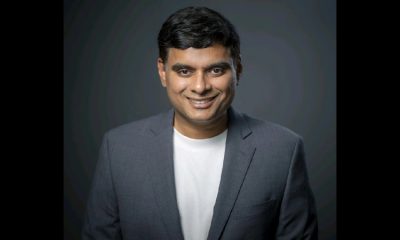
MUMBAI: Netflix has put a proven brand builder at the helm of its films and series marketing in India, naming Rekha Rane as director in a move that signals sharper focus on audience growth and cultural cut-through in one of its most hotly contested markets.
Rane steps into the role after seven years at Netflix, where she has quietly shaped how the platform sells stories to India. Her latest promotion, effective February 2026, crowns a run that spans brand, slate and product marketing across originals, licensed content and new verticals such as games.
A strategic marketing and communications professional with roughly 15 years’ experience, Rane has spent much of her career building technology-led consumer businesses and new categories, notably e-commerce and subscription video on demand. She was part of the early push that introduced Amazon.in, Prime Video and Netflix to Indian homes, then helped turn them into everyday brands.
At Netflix, she most recently served as head of brand and slate marketing for India from March 2024 to February 2026, leading teams across media and marketing for global and local content portfolios. Before that, as manager for original films and series marketing, she led IP creation and go-to-market strategy for titles including Guns and Gulaabs, Kaala Paani, The Railway Men* and The Great Indian Kapil Show, spanning both binge and weekly-release formats.
Her earlier Netflix roles covered product discovery and promotion in India and integrated campaign strategy to drive conversations around the content slate, product awareness and brand-equity metrics.
Before Netflix, Rane logged more than three years at Amazon in brand marketing roles in Bengaluru. There she handled national and regional campaigns for Amazon.in, worked on customer assistance programmes in growth geographies and contributed to the go-to-market strategy for the launch of Prime Video India.
Her career began well away from streaming. At Reliance Brands in Mumbai, she worked on retail marketing for Diesel and Superdry. A stint at Leo Burnett saw her work on primary research for P&G Tide, mapping Indian shoppers’ paths to purchase. Earlier still, at Orange in the United Kingdom, she rose from sales assistant to store manager, running a team and owning monthly P&L for a retail outlet.
The arc is telling. As global streamers fight for attention in a crowded Indian market, executives who understand both mass retail behaviour and digital habit-building are prized. Rane’s career sits at that intersection.
For Netflix, the bet is simple: in a market spoilt for choice, sharp marketing can still tilt the screen. And with Rane now leading the charge, the streamer is signalling it wants not just viewers, but fandom.
Brands
Orient Beverages pops the fizz with steady Q3 gains and rising profits
Kolkata-based beverage maker reports stronger revenues and profits for December quarter.
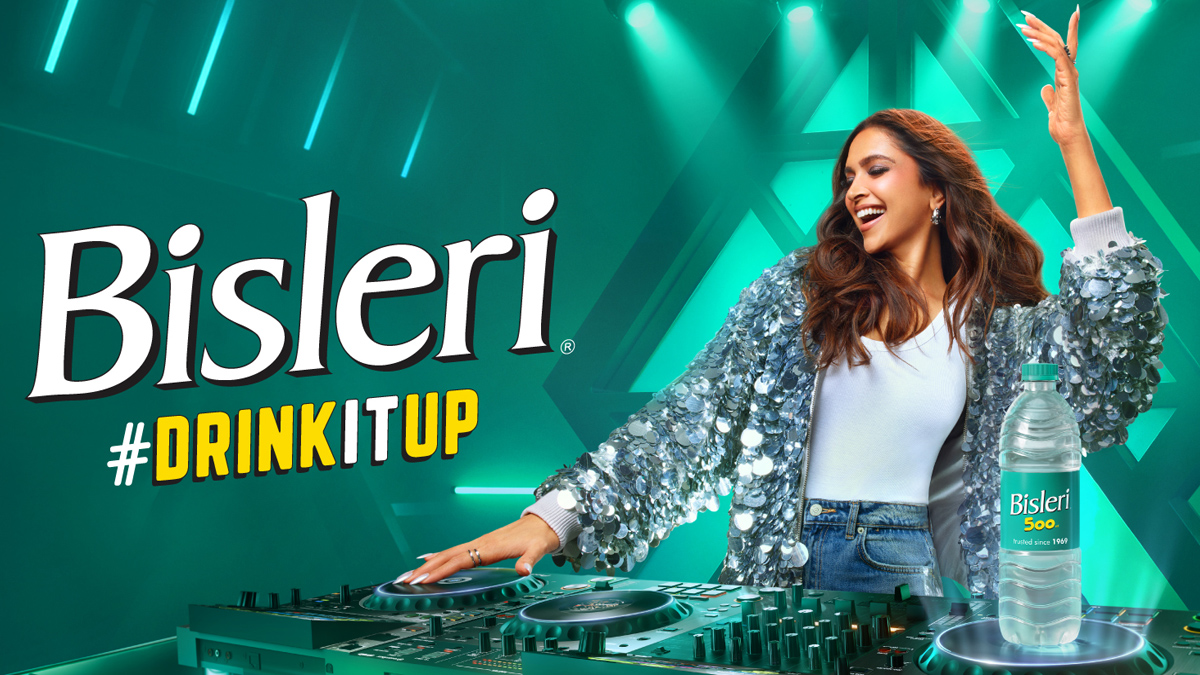
MUMBAI: A fizzy quarter with a steady aftertaste that’s how Orient Beverages Limited, the company that manufactures and distributes packaged drinking water under the brand name Bisleri closed the December 2025 period, as the Kolkata-based drinks maker reported improved revenues and a healthy rise in profits, signalling operational stability in a competitive beverage market.
For the quarter ended December 31, 2025, Orient Beverages posted standalone revenue from operations of Rs 39.98 crore, up from Rs 36.42 crore in the previous quarter and Rs 33.53 crore in the same quarter last year. Total income for the quarter stood at Rs 42.24 crore, reflecting consistent demand and stable pricing across its beverage portfolio.
Profit before tax for the quarter came in at Rs 3.47 crore, a sharp improvement from Rs 1.31 crore in the September quarter and Rs 0.39 crore a year ago. After accounting for tax expenses of Rs 0.79 crore, the company reported a net profit of Rs 2.68 crore, nearly three times the Rs 0.99 crore recorded in the preceding quarter.
On a nine-month basis, the momentum remained intact. Revenue from operations for the period ended December 31, 2025 rose to Rs 117.66 crore, compared with Rs 106.95 crore in the corresponding period last year. Net profit for the nine months climbed to Rs 5.51 crore, more than double the Rs 2.18 crore reported in the same period of the previous financial year.
The consolidated numbers told a similar story. For the December quarter, consolidated revenue from operations stood at Rs 45.06 crore, while profit after tax came in at Rs 2.06 crore. For the nine-month period, consolidated revenue touched Rs 133.57 crore, with net profit of Rs 4.49 crore, underscoring the group’s improving profitability trajectory.
Operating expenses remained largely controlled, with cost of materials, employee benefits and other expenses broadly aligned with revenue growth. The company continued to operate within a single reportable segment beverages simplifying its cost structure and reporting framework.
The unaudited financial results were reviewed by the Audit Committee and approved by the Board of Directors at its meeting held on 7 February 2026. Statutory auditors carried out a limited review and reported no material misstatements in the results.
In a market where margins are often squeezed by input costs and competition, Orient Beverages’ latest numbers suggest the company has found a reliable rhythm not explosive, but steady enough to keep the fizz alive.
Brands
BCCL profit jumps 53 per cent in FY25 as tax bill shrinks
Revenue rises 4.3 per cent to Rs 10,209.33 crore while deferred tax gain lifts bottom line sharply
NEW DELHI: Bennett, Coleman and Company (BCCL) has posted a sparkling set of financial results for the year ended 31 March 2025, proving that there is still plenty of ink and gold left in the ledger.
Revenue from operations climbed a steady 4.3 per cent, reaching Rs 10,209.33 crore compared to Rs 9,786.44 crore the previous year. When you sprinkle in other income, which rose 8.9 per cent to Rs 949.36 crore, the total income for the media behemoth hit a healthy Rs 11,158.69 crore.
While the income grew at a modest pace, the bottom line tells a far more dramatic story. The real headline is the 53 per cent surge in annual profit. How did they pull off such a feat? While Profit Before Tax (PBT) saw a gentle nudge upward of 2.7 per cent to Rs 1,610.00 crore, it was a vanishing act by the taxman that really did the trick.
Total tax expenses plummeted by 32.4 per cent, dropping from Rs 468.76 crore down to Rs 316.97 crore. This was largely thanks to a swing in deferred tax, moving from an expense of Rs 156.02 crore in FY24 to a benefit of Rs 39.44 crore this year.
Total income rose from Rs 10,658.55 crore in FY24 to Rs 11,158.69 crore in FY25, marking a 4.7 per cent increase. Total expenses grew at a slower pace, up 3.0 per cent from Rs 9,306.06 crore to Rs 9,581.45 crore. Profit before tax inched up 2.7 per cent, moving from Rs 1,567.02 crore to Rs 1,610.00 crore. However, the standout figure was net profit, which jumped sharply by 53.0 per cent, climbing from Rs 1,042.03 crore in FY24 to Rs 1,594.73 crore in FY25.
Despite the rising costs of doing business across the globe, BCCL kept a tight grip on the purse strings. Total expenses rose by just 3.0 per cent to Rs 9,581.45 crore. By keeping costs lower than the rate of income growth, the company ensured that the final figure, a net profit of Rs 1,594.73 crore, was nothing short of a front-page sensation.
In a world of shifting digital tides, it seems the BCCL ship is not just steady, but sailing into significantly wealthier waters.


MIB sets OTT accessibility rules, mandates captions and audio description

Boney Kapoor acquires remake rights of Tamil political satire Thalaivar Thambi Thalaimaiyil

Netflix India names Rekha Rane director of films and series marketing

Zabeen signs off from TV9 after shaping the network’s public voice

Dhawan steps up to bat for Delhi’s grassroots sports push

Orient Beverages pops the fizz with steady Q3 gains and rising profits

Cheekatilo shines in the dark with record debut on Prime Video

These ’90s fashion trends are making a comeback in 2017
The final 6 ‘Game of Thrones’ episodes might feel like a full season
According to Dior Couture, this taboo fashion accessory is back
The old and New Edition cast comes together to perform
Phillies’ Aaron Altherr makes mind-boggling barehanded play
Uber and Lyft are finally available in all of New York State
Disney’s live-action Aladdin finally finds its stars
MIB sets OTT accessibility rules, mandates captions and audio description
Boney Kapoor acquires remake rights of Tamil political satire Thalaivar Thambi Thalaimaiyil
Netflix India names Rekha Rane director of films and series marketing
Zabeen signs off from TV9 after shaping the network’s public voice
Dhawan steps up to bat for Delhi’s grassroots sports push
Orient Beverages pops the fizz with steady Q3 gains and rising profits
Cheekatilo shines in the dark with record debut on Prime Video
-

 News Broadcasting1 week ago
Mukesh Ambani, Larry Fink come together for CNBC-TV18 exclusive
-

 News Headline1 month ago
From selfies to big bucks, India’s influencer economy explodes in 2025
-
 iWorld5 months ago
Billions still offline despite mobile internet surge: GSMA
-

 Applications2 months ago
28 per cent of divorced daters in India are open to remarriage: Rebounce
-

 iWorld2 weeks ago
Netflix celebrates a decade in India with Shah Rukh Khan-narrated tribute film
-

 Hollywood6 days ago
The man who dubbed Harry Potter for the world is stunned by Mumbai traffic
-
 I&B Ministry3 months ago
India steps up fight against digital piracy
-
 MAM3 months ago
HoABL soars high with dazzling Nagpur sebut
