
AD Agencies
“Our focus will be on digital, mobile & activation”: Dhunji Wadia

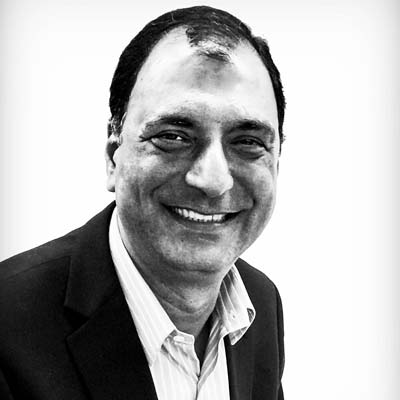
Regarded as someone with strong business acumen, great entrepreneurial instincts and affinity towards clients’ businesses, Dhunji Wadia was anointed as Rediffusion-Y&R president in December last year.
With the Rediffusion-Y&R Group since 2010, Wadia had moved from JWT after spending 18 years there. Helming Everest Brand Solutions, he will now have greater responsibilities on his shoulders as he steps into the shoes of predecessors like Mahesh Chauhan, D Rajappa and Sam Ahmed.
The 40-year-old company surfaced from choppy waters by reinventing itself. The years 2014 saw the agency bag a number of new accounts, including Videocon, Virgin Atlantic and Biba Fashions in Delhi; PC Chandra Jewellers and Cordlife in Kolkata; and Revtron in Mumbai.

Indiantelevision.com’s Meghna Sharma spoke to the man, who has over 25 years of industry experience and has worked closely on brands like Parle, Tata, Unilever and Nike amongst others, to know his plans for the agency.
Excerpts…
A new year, a new beginning. What will be on your agenda for 2015 for Rediffusion Y&R and Everest Brand Solutions?
2015 will be the year of focus. The number one priority is to focus on the creative work. Creative work is the whole agency. Of course, creative and strategic thinking are interlinked. But it’s the final output that moves the consumer. Once the creative work is in place, all good things will start to happen. It will positively impact the health of our brands, the agency’s fortunes, new business acquisitions and taking better care of our people.
Having understood the destination, we are working on the strategy to get there. In the process, people who are excited about the opportunities will make it big rather than people who are happy to sit back and wait for things to happen. The results will speak for themselves.
The year 2014 saw Rediffusion Y&R bagging new accounts like Videocon, Virgin Atlantic and Biba amongst others. The agency also regained its spot amongst the 10 advertising agencies in the country. What does this mean for the agency and how will this impact the future?
Winning new business is always great. It gives us a chance to showcase new work. Regaining our spot in the top 10 was a great moral booster. It fills us with the confidence and enthusiasm to go further.
What were the key lessons learnt from 2014 for you and the agency? And how will you implement those learnings in 2015?
Today, the size of the agency makes no difference at all. Neither does the scope or the geographic reach of the agency. The difference for any client is really in the people. Do they bring the experience, knowledge and insight to a client that will make a big impact in that organisation’s results and bottom line?
People are going to be the key going forward. We have a promising lot with immense potential and unleashing this potential will be a priority in 2015.
What are the key areas that the agency has been working on?
We have been focusing on our existing clients. Last year, more than half of our new business came from existing clients. It feels terrific when your existing clients trust you with their critical new brand launches. It’s a responsibility we cherish and specialise in.
We are living in a ‘Breaking News’ world where what’s trending today is forgotten tomorrow, so we need to be in the news for the right reasons. We not only need to do the work but we also will have to come out and tell the world ‘Hey look, here’s what we’ve been doing.’
According to you, what will be the highlights for the coming years?
We hope to make our work the single biggest highlight of 2015 and beyond.
What is your take on digital video format becoming a go to formula for advertising? Why are brands as well as advertising agencies opting for it?
This is going to become a key differentiator in content marketing – one will be able to cut through online clutter to attract customers, increase engagement and guide customers throughout their buying journey. This would be possible on any screen, anytime, anywhere.
Since brands are banking on creating films for digital platforms what do you enjoy the 30-second clip for TV or the long ones for digital?
As opposed to bombarding the viewer with repeat telecasts of TV commercials, this is an option where you create a long duration commercial and hope the viewer likes, comments and shares the video.
Going forward, clients won’t care about web hits because majority of the hits are now just bots. The main parameter for them will be sales. That’s what it was supposed to be in the first case.
What are the plans lined up for the digital side of your business?
We have done quite a few award-winning digital initiatives for our clients – SAB TV, Ranbaxy Volini and TATA Housing to name a few. Going forward there will be additional drive and focus on digital, mobile marketing and activation.
How has storytelling evolved over the years?
Thanks to the advancement in technology, storytelling is becoming increasingly compelling over the years. The recent Honda Type R commercial is a good example.
One mandate which you are really proud of and why?
Every mandate comes with its own unique challenges. And our credo is – To Resist The Usual. It would be impossible to isolate any one instance.
Everest has won the Brand Revitalisation Award for Brand Everest, at the ‘Global Excellence Awards’ by World Brand Congress and also adjudged the ‘Happiest Agency in India’. What initiatives do you take to make sure employees are happy? And how productive are happy people?
Happy people make a happy agency and in turn happy clients. It’s a happy circle. Most people join advertising in order to follow their passion. Majority of the work related grievances turn out to be minor issues when there is a common consensus. You need to have your heart in the right place.

MUMBAI: Innocean has renewed its global media partnership with Havas Media Network following an internal review across Hyundai Motor Group brands.
The renewed mandate spans Hyundai, Kia and Genesis across Europe, the Middle East, Asia Pacific and Latin America. The work will be coordinated with Innocean’s international teams in Seoul, Frankfurt, Dubai, New Delhi and Jakarta.
The refreshed alliance is designed with a sharper focus on data and technology, aiming to connect the dots across customer acquisition, conversion and retention as the Group’s global audience continues to diversify.
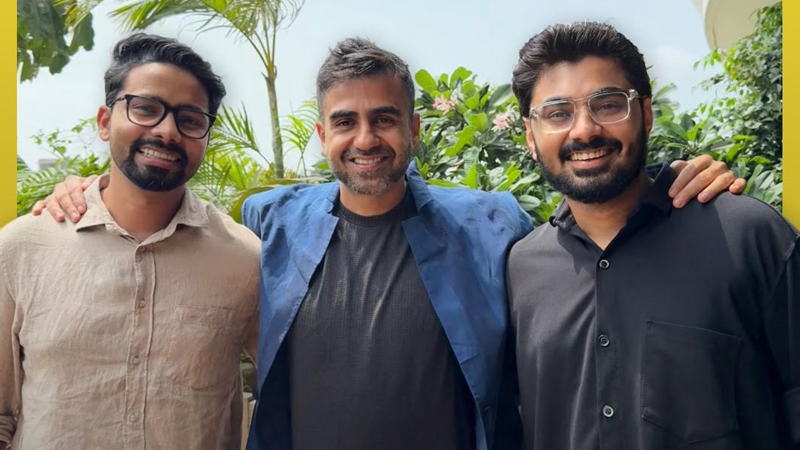
Innocean head of global business Steve Jun, said the extension reflects a shared push for stronger, data-led media performance across key markets. He added that the partnership would focus on creating more connected and effective customer experiences for Hyundai Motor Group brands.
Havas Media Network global CEO Peter Mears, described the relationship as one built on innovation and global scale. He said the next phase would lean on the network’s Converged.AI platform to deliver seamless, data-driven media experiences and drive business outcomes for the automotive brands.
The renewed partnership officially commenced in January 2026.
INDIA: India’s advertising industry is entering a new phase of structural transformation, with digital media now the central growth engine, according to the Dentsu digital advertising report 2026.
Total advertising spends closed 2025 at Rs 1.21 lakh crore, up 8.3 per cent year on year, and are projected to reach Rs 1.40 lakh crore by 2027, implying a compound annual growth rate of over 7 per cent.
Digital advertising accounted for Rs 71,621 crore in 2025, representing 59 per cent of total spends. By 2027, digital’s share is expected to rise to around 70 per cent, with spends nearing Rs 98,034 crore.
The report stresses that this is no longer a temporary shift but a permanent rebalancing of advertising priorities, driven by mobile-first consumption, short-form video, creator ecosystems, embedded commerce and AI-led optimisation.
Retail media has emerged as the fastest-growing segment, with ad spends on e-retail platforms reaching Rs 17,601 crore in 2025: a surge of nearly 56 per cent year on year. Retail platforms are evolving into full-funnel media ecosystems, linking storytelling directly with purchase outcomes through first-party data.
Within digital formats, social media leads with a 29 per cent share, closely followed by online video at 28 per cent, while paid search contributes 23 per cent. Online video is expected to overtake social as the largest digital format over the next two years.
Programmatic buying now accounts for 42 per cent of digital spends, exceeding Rs 30,000 crore, and is increasingly becoming the default media operating layer across video, connected TV and retail platforms.
FMCG remains the largest advertising category at 30 per cent of total spends, followed by e-commerce at 18 per cent, which also recorded the fastest growth.
Dentsu South Asia chief executive Harsha Razdan said the most meaningful industry shift has been in how consumers consciously allocate attention.
Dentsu South Asia president and chief strategy officer Narayan Devanathan, added that the next growth phase will belong to organisations that successfully integrate creativity, data, media and technology.
PARIS: Publicis Groupe is laughing all the way to the bank whilst its rivals scramble to catch up. The French advertising colossus reported full-year 2025 net revenue of €14.5bn, marking its sixth consecutive year of outperforming the industry. Organic growth hit 5.6 per cent, accelerating past its five-year compound annual growth rate of 5.0 per cent.
The secret sauce? Artificial intelligence-powered products and services, which contributed roughly 300 basis points to growth. Arthur Sadoun, chairman and chief executive, has staked Publicis’s future on becoming clients’ “most valuable partner” for what the firm calls “agentic business transformation”—essentially helping companies build enterprise-grade AI solutions that actually make money.
The fourth quarter proved particularly robust, with organic growth of 5.9 per cent despite tougher comparisons. Connected media, which accounts for 60 per cent of the business, surged with high-single-digit growth. Creative and production services delivered mid-single-digit expansion. Only the technology consulting arm stumbled, finishing nearly flat for the year as clients adopted a “wait-and-see” attitude—a malaise afflicting all IT consulting firms.
Geography tells a tale of American dominance. The United States, representing 57 per cent of group revenue, grew 5.2 per cent organically for the year, cementing Publicis’s position as the market leader. Europe managed 4.2 per cent growth, whilst Asia-Pacific posted 5.8 per cent, with China impressing at 6.0 per cent. The most dramatic expansions came from emerging markets: Latin America roared ahead at 18.7 per cent, whilst Middle East and Africa surged 10.8 per cent.
Operating margin improved to 18.2 per cent from 18.0 per cent, delivering 50 basis points of operating leverage. Crucially, Publicis reinvested 30 basis points—totalling 230 basis points overall—into AI capabilities, talent upgrades and new business development. The remaining 20 basis points flowed straight to the bottom line. Michel-Alain Proch, chief financial officer, called it “the highest operating margin in the industry”.
Free cash flow before working capital changes reached €2.03bn, up 10.6 per cent from an already-record 2024. The firm deployed roughly €1bn on bolt-on acquisitions targeting identity resolution, pharmaceuticals, influencer marketing and sports marketing. Client retention remained stellar at 98 per cent for top-100 clients, whilst new business wins exceeded $8bn.
Headline earnings per share climbed 6.6 per cent at constant currency to €7.48. In dollar terms—increasingly relevant given Publicis’s American dominance—EPS rose 7.0 per cent to $8.45. The board proposed a dividend of €3.75 per share, up 4.2 per cent, representing a payout ratio of 50.1 per cent, which Publicis claims is the highest in the industry.
The financial fortress looks impregnable. Net debt turned into net cash of €548m by year-end, down from net cash of €775m the previous year after funding acquisitions. The firm maintains €2bn in undrawn committed credit facilities and €4bn in cash and marketable securities. Average net debt to EBITDA stood at a negligible 1.0 times.
Industry sectors showed divergent fortunes. Consumer goods clients increased spending by 20 per cent, whilst automotive rose 14 per cent and financial services climbed 11 per cent. Technology clients, however, cut budgets by 7 per cent, and telecommunications spending dropped 2 per cent.
Publicis’s AI strategy extends beyond client services to internal transformation. The firm is “agentifying” processes using AI agents, equipping all 100,000-plus employees with AI tools through its Marcel learning platform. The goal: make everyone “AI-fluent” whilst boosting productivity and results. The company reckons AI-powered capabilities grew 20 per cent organically in 2025.
Looking ahead, Publicis guided for 2026 organic growth of 4.0 to 5.0 per cent—marking a potential seventh consecutive year of industry outperformance. Operating margin should tick “slightly” higher from the already-elevated 18.2 per cent whilst maintaining “high levels” of investment. Free cash flow is targeted at roughly €2.1bn, based on an exchange rate assumption of €1.20 to the dollar, earmarked for dividends, maintaining a stable share count and more bolt-on acquisitions.
The firm’s longer-term ambitions border on audaciousness. Management projects annual net revenue growth of 6.0 to 7.0 per cent and earnings-per-share expansion of 7.0 to 9.0 per cent, both at constant currency. The logic: AI is fragmenting the marketing landscape, with no top client spending more than 4.0 per cent of budget on any single platform. Publicis reckons its “unique connective tissue” positions it perfectly to orchestrate this complexity.
The advertising world has witnessed a decade-long reshaping. Since 2017, when Publicis began its data and technology pivot, the firm has invested €14bn integrating capabilities whilst rivals dithered. That first-mover advantage in AI has compounded. Publicis now claims the number-one position in global media billings, including in the crucial American and Chinese markets. Its market capitalisation exceeds the combined value of its next two competitors.
Yet competition is heating up as everyone piles into AI. Omnicom’s proposed merger with IPG would create a formidable rival. Technology giants are muscling into advertising with their own AI platforms. And clients are becoming more sophisticated, building in-house capabilities and squeezing agency margins.
Publicis is betting the farm that complexity favours the orchestrator. As marketing technology proliferates and AI agents multiply, companies will need partners who can connect the dots. Whether that vision proves prescient or hubris will determine if Sadoun’s transformation becomes a case study in strategic brilliance or just another expensive pivot that failed to justify its price tag. For now, though, the numbers suggest Publicis is winning the AI arms race in adland—and widening the gap with every quarter.


MIB sets OTT accessibility rules, mandates captions and audio description

Boney Kapoor acquires remake rights of Tamil political satire Thalaivar Thambi Thalaimaiyil

Netflix India names Rekha Rane director of films and series marketing

Zabeen signs off from TV9 after shaping the network’s public voice

Dhawan steps up to bat for Delhi’s grassroots sports push

Orient Beverages pops the fizz with steady Q3 gains and rising profits

Cheekatilo shines in the dark with record debut on Prime Video

These ’90s fashion trends are making a comeback in 2017
The final 6 ‘Game of Thrones’ episodes might feel like a full season
According to Dior Couture, this taboo fashion accessory is back
The old and New Edition cast comes together to perform
Phillies’ Aaron Altherr makes mind-boggling barehanded play
Uber and Lyft are finally available in all of New York State
Disney’s live-action Aladdin finally finds its stars
MIB sets OTT accessibility rules, mandates captions and audio description
Boney Kapoor acquires remake rights of Tamil political satire Thalaivar Thambi Thalaimaiyil
Netflix India names Rekha Rane director of films and series marketing
Zabeen signs off from TV9 after shaping the network’s public voice
Dhawan steps up to bat for Delhi’s grassroots sports push
Orient Beverages pops the fizz with steady Q3 gains and rising profits
Cheekatilo shines in the dark with record debut on Prime Video
-

 News Broadcasting1 week ago
Mukesh Ambani, Larry Fink come together for CNBC-TV18 exclusive
-

 News Headline1 month ago
From selfies to big bucks, India’s influencer economy explodes in 2025
-
 iWorld5 months ago
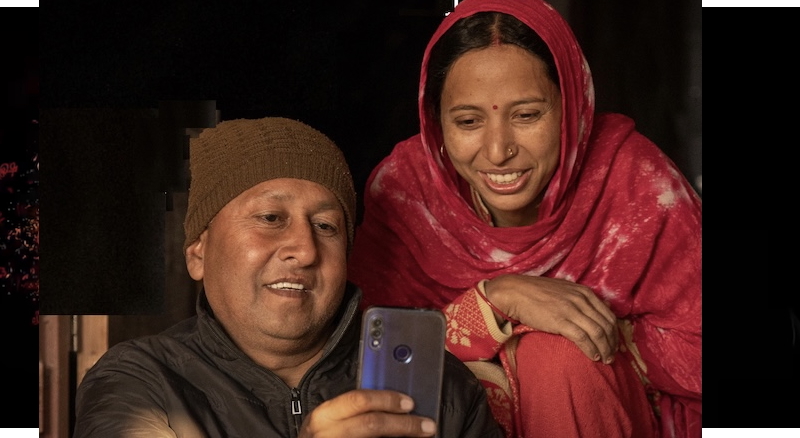
Billions still offline despite mobile internet surge: GSMA
-

 Applications2 months ago
28 per cent of divorced daters in India are open to remarriage: Rebounce
-

 iWorld2 weeks ago
Netflix celebrates a decade in India with Shah Rukh Khan-narrated tribute film
-

 Hollywood6 days ago
The man who dubbed Harry Potter for the world is stunned by Mumbai traffic
-
 I&B Ministry3 months ago
India steps up fight against digital piracy
-
 MAM3 months ago
HoABL soars high with dazzling Nagpur sebut
