
MAM
Marketers play catch-up as AI runs ahead of confidence curve


MUMBAI: Artificial intelligence may be the new creative director in advertising but not everyone’s sure how to take its orders. A new global study by programmatic media partner MiQ reveals a curious paradox: 72 per cent of marketers plan to ramp up their use of AI in the next 12 months, yet only 45 per cent feel confident doing so.
In India, the enthusiasm is even louder than the confidence. Nearly 79 per cent of Indian marketers intend to use AI more across their roles in the coming year, and 72 per cent already employ AI tools in some or all of their projects. But just 46 per cent feel fully confident that their teams can use AI to meet campaign KPIs, a gap that sums up what MiQ dubs the “AI Confidence Curve”.
The study, based on insights from 3,169 marketers across 16 countries (including 200 from India), paints a picture of an industry at the crossroads of ambition and anxiety. “Most marketers are bunched together at the early stages of the confidence curve,” said MiQ chief marketing officer Jordan Bitterman. “Usage currently outpaces readiness by 27 percentage points but that’s pure opportunity.”
MiQ India chief commercial officer Varun Mohan added that Indian marketers are “actively adopting AI across functions from creative strategy to campaign optimisation”. He noted that those who prioritise early adoption and upskilling will gain “a competitive edge that will define the next phase of data-led marketing transformation in India.”
The report shows that globally, marketers are most comfortable using AI for content creation (40 per cent), marketing optimisation (38 per cent), and social media management (38% per cent, all areas where generative AI tools like ChatGPT thrive. In India, the trend is even stronger: marketers are leaning heavily on AI for social media management, visual design, and content creation. Google’s Performance Max (69 per cent) and Canva (66 per cent) emerged as the top AI tools among Indian professionals.
Yet, confidence hasn’t quite caught up. Forty percent of marketers admitted their organisations don’t understand AI or large language models well enough, while 38 per cent blamed a lack of training. Another 44 per cent said they struggle to track AI-driven results against business goals.
India’s figures echo this unease: 69 per cent of marketers cited limited expertise and training as the top barrier to AI adoption, and 54 per cent said AI’s role in marketing remains poorly understood. Despite the buzz, many are still measuring success through old-school metrics like click-through rates (62 per cent) and website visits (57 per cent), missing AI’s wider business impact.
Still, optimism remains the dominant flavour. Indian marketers are global frontrunners in behaviour-based targeting, with 45 per cent building campaigns around browsing and shopping activity more than any other country. Youtube (80 per cent), social media (61 per cent), and digital video (58 per cent) are their preferred platforms, showing how multi-channel digital strategy has become second nature.
To bridge the confidence gap, MiQ recommends a mix of smarter tools and sharper minds:
● Break data silos: Use partner-agnostic AI systems that draw from multiple platforms.
● Tie AI to outcomes: Let algorithms optimise for real KPIs, not vanity metrics.
● Invest in AI literacy: With 44 per cent citing knowledge gaps, training is the new media spend.
● Keep humans in the loop: AI can automate, but human judgement keeps it accountable.
As Bitterman puts it, “Every marketer is trying to find the balance between learning and leading with AI. The ones who advance fastest will treat confidence as a capability built every day through connection, curiosity, and collaboration.”
For now, the ad world seems united in one truth: AI may have the answers, but marketers are still figuring out the right questions to ask.









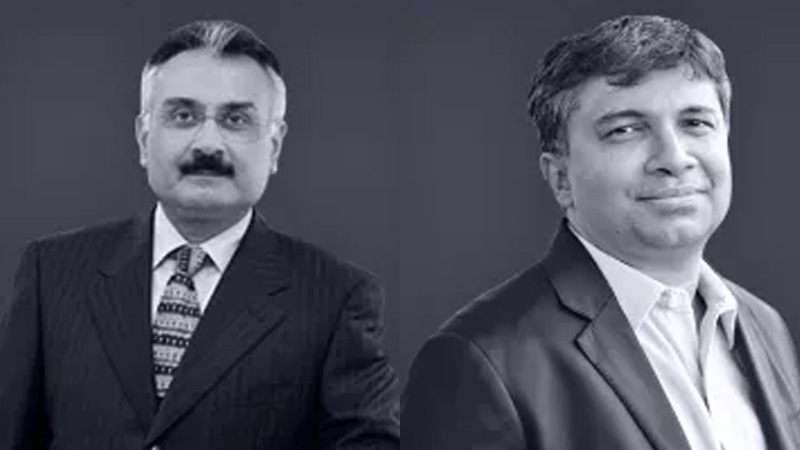
Gurugram: Delhivery’s boardroom is being reset. Deepak Kapoor, chairman and independent director, has resigned with effect from April 1 as part of a planned board reconstitution, the logistics company said in an exchange filing. Saugata Gupta, managing director and chief executive of FMCG major Marico and an independent director on Delhivery’s board, has also stepped down.
Kapoor exits after an eight-year stint that included steering the company through its 2022 stock-market debut, a period that saw Delhivery transform from a venture-backed upstart into one of India’s most visible logistics platforms. Gupta, who joined the board in 2021, departs alongside him, marking a simultaneous clearing of two senior independent seats.
“Deepak and Saugata have been instrumental in our process of recognising the need for and enabling the reconstitution of the board of directors in line with our ambitious next phase of growth,” said Sahil Barua, managing director and chief executive, Delhivery. The statement frames the exits less as departures and more as deliberate succession, a boardroom shuffle timed to the company’s evolving scale and strategy.
The resignations arrive amid broader governance recalibration. In 2025, Delhivery appointed Emcure Pharmaceuticals whole-time director Namita Thapar, PB Fintech founder and chairman Yashish Dahiya, and IIM Bangalore faculty member Padmini Srinivasan as independent directors, signalling a tilt towards consumer, fintech and academic expertise at the board level.
Kapoor’s tenure spanned Delhivery’s most defining years, rapid network expansion, public listing and the push towards profitability in a bruising logistics market. Gupta’s presence brought FMCG and brand-scale perspective during a period when ecommerce volumes and last-mile delivery economics were being rewritten.
The twin exits, effective from the new financial year, underscore a familiar corporate rhythm: founders consolidate, veterans rotate out, and fresh voices are ushered in to script the next chapter. In India’s hyper-competitive logistics race, even the boardroom does not stand still.
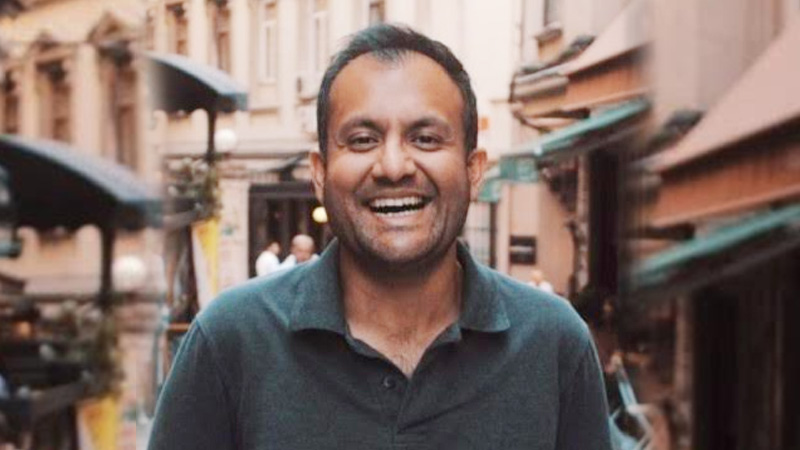
At Locofy.ai, Rao helped convert a three-year free beta into a paid engine, clocking 1,000 subscribers and 15 enterprise clients within ten days of launch in September 2024. The low-code startup, backed by Accel and top tech founders, is famed for turning designs into production-ready code using proprietary large design models.
Before that, Rao founded generative AI venture 1Bstories, which was acquired by creative AI platform Laetro in mid-2024, where he briefly served as managing director for APAC. Alongside operating roles, he has been an active investor and advisor since 2020, backing startups such as BotMD, Muxy, Creator plus, Intellect, Sealed and CricFlex through a creator-economy-led thesis.
Rao spent over eight years at Google, holding senior partnership roles across search, assistant, chrome, web and YouTube in APAC, and earlier cut his teeth in strategy consulting at OC&C in London and investment finance at W. P. Carey in Europe and the US.
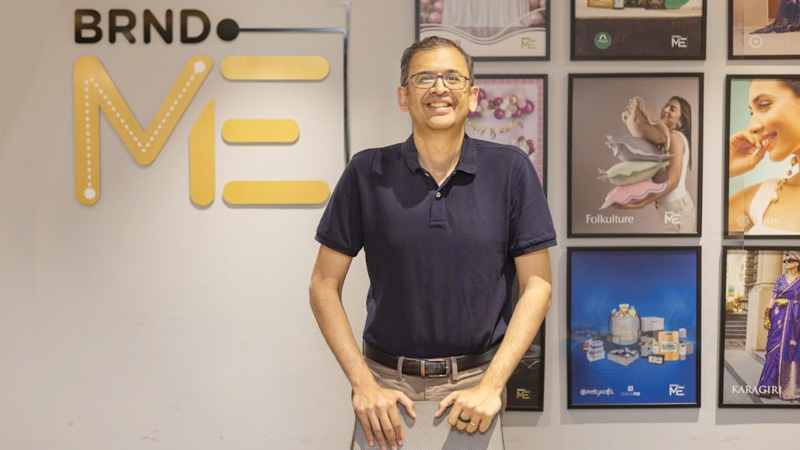
Bengaluru: Brnd.me, the global consumer brands company formerly known as Mensa Brands, has entered the European market following strong momentum across the Middle East, the United States and Canada.
The company has launched across the UK, Germany, France and Spain, with plans to expand into Italy, the Netherlands and Poland over the next year. The push is being led by its haircare and aromatherapy brands, Botanic Hearth and Majestic Pure, marking Brnd.me’s first structured expansion into Europe.
The European beauty market represents a total addressable opportunity of over $4 billion across haircare and aromatherapy, supported by high digital adoption and demand for accessible, performance-led products.
Brnd.me’s hair care and aromatherapy business currently operates at an annual run rate of around $6 million, with Botanic Hearth and Majestic Pure delivering roughly 10 per cent month-on-month growth, driven by expansion and rising repeat demand.
To support regional growth, the company has appointed a general manager based in Germany and is evaluating investments in warehousing and local team expansion.
Early traction has been strong. Within weeks of launch, Botanic Hearth’s rosemary hair oil ranked among the top five hair oils in Germany, signalling strong consumer pull in a competitive market.
Brnd.me founder and chief executive officer Ananth Narayanan, said Europe represents the next phase of the company’s international strategy. He added that the European business is expected to scale to a $10 million annual run rate by the end of 2026, with long-term ambitions to reach $60 million over the next six years.
The company’s Europe strategy centres on digital-first distribution, repeat demand and TikTok-led discovery, alongside direct-to-consumer expansion to strengthen brand equity and margins.
The move also aligns with growing EU–India trade engagement, supporting long-term sourcing and cross-border supply chains.

Netflix celebrates a decade in India with Shah Rukh Khan-narrated tribute film

Delhivery chairman Deepak Kapoor, independent director Saugata Gupta quit board

Meta appoints Anuvrat Rao as APAC head of commerce partnerships

Brnd.me enters Europe as haircare brands power global expansion

TechnoSport taps quick commerce with launch on Slikk’s 60-minute platform

Jitendra Singh joins Reliance Industries as senior vice president, special projects

Tinder brings real-world dating experiences to North East India

These ’90s fashion trends are making a comeback in 2017
The final 6 ‘Game of Thrones’ episodes might feel like a full season
According to Dior Couture, this taboo fashion accessory is back
The old and New Edition cast comes together to perform
Phillies’ Aaron Altherr makes mind-boggling barehanded play
Uber and Lyft are finally available in all of New York State
Disney’s live-action Aladdin finally finds its stars
Netflix celebrates a decade in India with Shah Rukh Khan-narrated tribute film
Delhivery chairman Deepak Kapoor, independent director Saugata Gupta quit board
Meta appoints Anuvrat Rao as APAC head of commerce partnerships
Brnd.me enters Europe as haircare brands power global expansion
TechnoSport taps quick commerce with launch on Slikk’s 60-minute platform
Jitendra Singh joins Reliance Industries as senior vice president, special projects
Tinder brings real-world dating experiences to North East India
-
 iWorld3 months ago
Tips Music turns up the heat with Tamil party anthem Mayangiren
-
 iWorld12 months ago
BSNL rings in a revival with Rs 4,969 crore revenue
-
 I&B Ministry3 months ago
India steps up fight against digital piracy
-
 MAM3 months ago
HoABL soars high with dazzling Nagpur sebut
-
 News Headline4 weeks ago
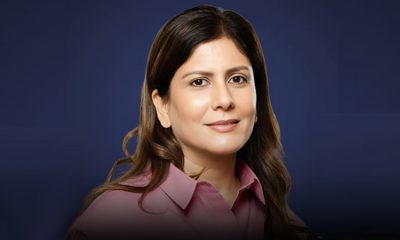
Preeti Sahni set to join TV9 Network in senior leadership role
-

 News Broadcasting5 days ago
Palki Sharma leaves Firstpost: Reports
-
 iWorld3 days ago
Netflix celebrates a decade in India with Shah Rukh Khan-narrated tribute film
-
 News Broadcasting6 months ago
Wion marks Independence Day with global showcase of India’s spirit