
Brands
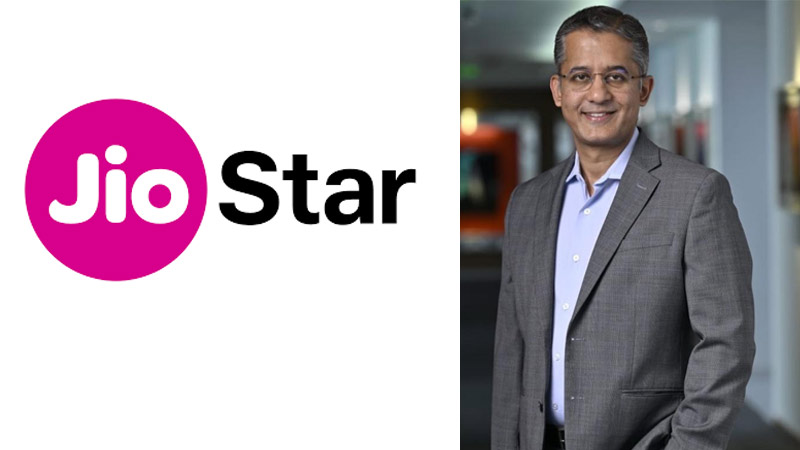
Kevin Vaz reacts to JioStar’s quarterly results

MUMBAI: Mumbai-based Reliance Industries delivered a robust performance in the quarter ended December 31st 2025, with consolidated revenues climbing 10 per cent year-on-year and EBITDA rising 6 per cent. The numbers underscore the strength of its diversified portfolio even as global uncertainties rattle markets.
V Srikanth, the company’s chief financial officer, told analysts on January 16th that profit after tax came in at Rs 22,290 crore, up 1.6 per cent. For the nine months through December, revenues grew 9 per cent whilst EBITDA surged 18 per cent and PAT jumped 28 per cent. “Businesses continue to deliver cash,” he said, noting that the conglomerate’s net debt position remained steady.
The performance was underpinned by stellar growth in digital services, where Reliance Jio added 8.9 million subscribers to reach 515 million customers. Average revenue per user ticked up organically to Rs 213.7, a 5.5 per cent annual increase, with no tariff hikes baked in. The telecom unit posted EBITDA of Rs 18,408 crore, a 16.5 per cent year-on-year jump, whilst operating revenues rose nearly 12 per cent.
Anshuman Thakur, head of strategy at Jio, highlighted the company’s technology edge. “Our whole core of 4G and 5G runs on our own stack, developed in-house,” he said. The 5G user base has swelled to 253 million, capturing 65 per cent of India’s 5G subscribers. Fixed broadband connections crossed 25 million, with 70 per cent of new additions coming via fixed wireless technology. “We are the world’s largest fixed wireless operator already,” Thakur noted.
On the retail front, revenues hit a record Rs 97,600 crore despite headwinds from GST rate rationalisation and a split festive season. Dinesh Taluja, chief financial officer of Reliance Retail, said the demerger of Reliance Consumer Products (RCPL) on December 1st also affected comparisons. The retailer’s quick commerce business is scaling rapidly, reaching a run rate of 1.6 million daily orders, a 53 per cent quarter-on-quarter surge. “We are on track to be the second largest QC player,” Taluja said.
RCPL, now a direct RIL subsidiary, clocked revenues of Rs 5,000 crore in the quarter, up 60 per cent year-on-year. Ketan Mody, executive director, said the unit completed acquisitions of global brands including Brylcreem and Toni & Guy whilst expanding beverage capacity across 12 states.
The oil-to-chemicals (O2C) business remained a cash cow, with EBITDA climbing 15 per cent to Rs 16,507 crore. Transportation fuel cracks surged 60-100 per cent, whilst Jio-bp retail volumes grew 24 per cent. Srinivas Tuttagunta, chief operating officer for refining and marketing, said diesel and gasoline sales through Jio-bp jumped 25 per cent and 21 per cent respectively. “We focused on the domestic market,” he said.
Petrochemicals faced margin pressure as global operating rates sagged to 80 per cent, but Amit Chaturvedi, president of the division, pointed to Reliance’s edge. “Three-fourths of our portfolio is gas-based,” he said, referring to cheaper ethane and refinery off-gas feeds versus costlier naphtha. “That has fully paid off.”
The exploration and production business saw EBITDA dip to Rs 4,850 crore on lower volumes and softer gas prices. Sanjay Barman Roy, president of E&P, said KG-D6 and CBM fields produced 26.5 million standard cubic metres daily, still a substantial slice of India’s 90-95 mmscmd output.
Entertainment unit JioStar posted operating revenues of Rs 6,896 crore with EBITDA of Rs 1,303 crore. Kevin Vaz, chief executive of JioStar Entertainment, delivered a standout revelation: monthly active users hit 450 million, up 13 per cent, whilst the Women’s Cricket World Cup shattered records with live watch time surging tenfold over the previous tournament. “The final match viewership was as good as any IPL match,” Vaz declared, noting that the event drew four times more viewers with peak concurrency hitting 21 million. The platform’s growth story is equally striking—Vaz said JioStar managed to convert cricket fans to entertainment consumers, keeping them sticky quarter-on-quarter even without major sporting events. Digital entertainment revenue hit record highs driven by connected TV and broader client engagement. Entertainment watch time climbed 15 per cent, powered by Bigg Boss franchises across multiple markets and top-rated originals.
The new energy push is gathering steam. Karan Suri, senior vice president, said the company is on track to commission its first fully integrated 10-gigawatt solar manufacturing facility this year, with plans to scale to 20 gigawatts. “We have reached a very high yield of 94-95 per cent” in module production, he said. Solar cell manufacturing using heterojunction technology is ramping up, whilst pilot facilities for ingot and wafer production are expanding to gigascale. Polysilicon and glass plants—both rare outside China—are nearing completion.
Battery manufacturing for 40-gigawatt-hour capacity is also advancing, with equipment already on site. Suri said the group’s 550,000-acre Kutch site will eventually generate 300 billion units of round-the-clock green power annually. “At an annual installation of 20 gigawatts peak, we will be delivering as much capacity as more than three out of four countries in the world,” he said.
S&P upgraded Reliance’s credit rating from BBB+ to A-, making it the first Indian manufacturer with an international A-minus rating. Srikanth said the upgrade reflects earnings shifting to less cyclical consumer businesses and strong free cash flow generation.
The conglomerate spent Rs 34,000 crore on capital expenditure in the nine months, split across O2C expansion (Rs 9,000 crore), new energy (Rs 8,000 crore), Jio (Rs 7,500 crore) and retail (Rs 4,000 crore). Srikanth emphasised the balance sheet remains robust with no change in net debt or leverage.
Asked about retail’s single-digit revenue growth, Srikanth was blunt. “These are extremely short-term volatility. The opportunity is so large.” He urged investors to look past quarterly fluctuations caused by the festive calendar shift, GST changes and the RCPL demerger. “We are very constructive about growth rates.”
The numbers suggest he has reason to be. With 515 million mobile subscribers, 25 million home broadband connections, 20,000 retail stores and gigawatt-scale solar factories taking shape, Reliance’s bets are paying off. The conglomerate is no longer just an oil refiner, it is India’s most diversified industrial powerhouse, and it is firing on all cylinders.













Gurugram: Delhivery’s boardroom is being reset. Deepak Kapoor, chairman and independent director, has resigned with effect from April 1 as part of a planned board reconstitution, the logistics company said in an exchange filing. Saugata Gupta, managing director and chief executive of FMCG major Marico and an independent director on Delhivery’s board, has also stepped down.
Kapoor exits after an eight-year stint that included steering the company through its 2022 stock-market debut, a period that saw Delhivery transform from a venture-backed upstart into one of India’s most visible logistics platforms. Gupta, who joined the board in 2021, departs alongside him, marking a simultaneous clearing of two senior independent seats.
“Deepak and Saugata have been instrumental in our process of recognising the need for and enabling the reconstitution of the board of directors in line with our ambitious next phase of growth,” said Sahil Barua, managing director and chief executive, Delhivery. The statement frames the exits less as departures and more as deliberate succession, a boardroom shuffle timed to the company’s evolving scale and strategy.
The resignations arrive amid broader governance recalibration. In 2025, Delhivery appointed Emcure Pharmaceuticals whole-time director Namita Thapar, PB Fintech founder and chairman Yashish Dahiya, and IIM Bangalore faculty member Padmini Srinivasan as independent directors, signalling a tilt towards consumer, fintech and academic expertise at the board level.
Kapoor’s tenure spanned Delhivery’s most defining years, rapid network expansion, public listing and the push towards profitability in a bruising logistics market. Gupta’s presence brought FMCG and brand-scale perspective during a period when ecommerce volumes and last-mile delivery economics were being rewritten.
The twin exits, effective from the new financial year, underscore a familiar corporate rhythm: founders consolidate, veterans rotate out, and fresh voices are ushered in to script the next chapter. In India’s hyper-competitive logistics race, even the boardroom does not stand still.
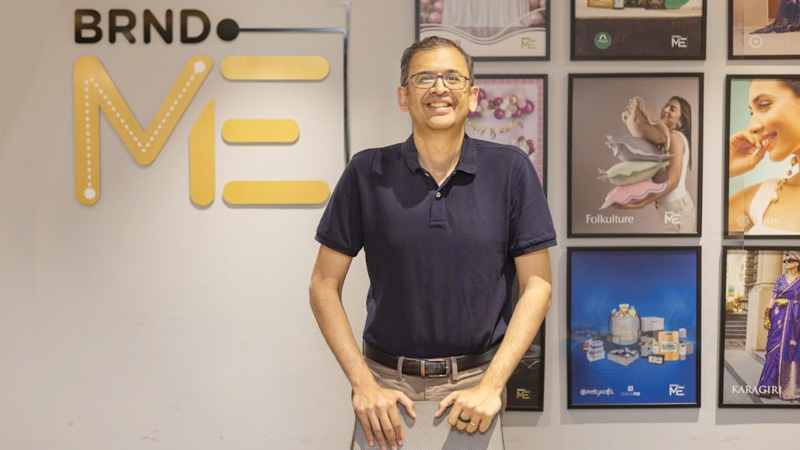
Bengaluru: Brnd.me, the global consumer brands company formerly known as Mensa Brands, has entered the European market following strong momentum across the Middle East, the United States and Canada.
The company has launched across the UK, Germany, France and Spain, with plans to expand into Italy, the Netherlands and Poland over the next year. The push is being led by its haircare and aromatherapy brands, Botanic Hearth and Majestic Pure, marking Brnd.me’s first structured expansion into Europe.
The European beauty market represents a total addressable opportunity of over $4 billion across haircare and aromatherapy, supported by high digital adoption and demand for accessible, performance-led products.
Brnd.me’s hair care and aromatherapy business currently operates at an annual run rate of around $6 million, with Botanic Hearth and Majestic Pure delivering roughly 10 per cent month-on-month growth, driven by expansion and rising repeat demand.
To support regional growth, the company has appointed a general manager based in Germany and is evaluating investments in warehousing and local team expansion.
Early traction has been strong. Within weeks of launch, Botanic Hearth’s rosemary hair oil ranked among the top five hair oils in Germany, signalling strong consumer pull in a competitive market.
Brnd.me founder and chief executive officer Ananth Narayanan, said Europe represents the next phase of the company’s international strategy. He added that the European business is expected to scale to a $10 million annual run rate by the end of 2026, with long-term ambitions to reach $60 million over the next six years.
The company’s Europe strategy centres on digital-first distribution, repeat demand and TikTok-led discovery, alongside direct-to-consumer expansion to strengthen brand equity and margins.
The move also aligns with growing EU–India trade engagement, supporting long-term sourcing and cross-border supply chains.

NATIONAL: TechnoSport has launched on Slikk, the ultra-fast fashion app offering 60-minute delivery, as the activewear brand accelerates its push into quick commerce to capture Gen Z and young millennial shoppers.
The debut brings more than 150 high-performance styles to Slikk’s platform, with an average selling price of Rs 450, expanding TechnoSport’s reach across over 80 pin codes.
The partnership follows strong momentum for TechnoSport across Q-commerce channels, where the brand has recorded around 60 per cent volume growth over the past six months. The company expects quick commerce to contribute nearly 20 per cent of its revenue in the coming years as hyperlocal delivery gains scale.
Slikk, which recently raised $3.2 million in seed funding led by Lightspeed, has rapidly gained popularity among youth consumers seeking speed, trend relevance and impulse-led shopping experiences.
Activewear remains one of Slikk’s fastest-growing categories, driven by shoppers increasingly treating fitness-led fashion as an everyday essential. The platform has reported a 30-fold year-on-year increase in items sold, reflecting rising demand for performance wear that blends comfort with style.
TechnoSport chief executive officer Puspen Maity, said the collaboration would help the brand engage more closely with young consumers whose fashion choices are shaped by instant needs and lifestyle aspirations. He added that rapid delivery bridges the gap between intent and purchase, allowing shoppers to access activewear exactly when they want it.

Netflix celebrates a decade in India with Shah Rukh Khan-narrated tribute film

Delhivery chairman Deepak Kapoor, independent director Saugata Gupta quit board

Meta appoints Anuvrat Rao as APAC head of commerce partnerships

Brnd.me enters Europe as haircare brands power global expansion

TechnoSport taps quick commerce with launch on Slikk’s 60-minute platform

Jitendra Singh joins Reliance Industries as senior vice president, special projects

Tinder brings real-world dating experiences to North East India

These ’90s fashion trends are making a comeback in 2017
The final 6 ‘Game of Thrones’ episodes might feel like a full season
According to Dior Couture, this taboo fashion accessory is back
The old and New Edition cast comes together to perform
Phillies’ Aaron Altherr makes mind-boggling barehanded play
Uber and Lyft are finally available in all of New York State
Disney’s live-action Aladdin finally finds its stars
Netflix celebrates a decade in India with Shah Rukh Khan-narrated tribute film
Delhivery chairman Deepak Kapoor, independent director Saugata Gupta quit board
Meta appoints Anuvrat Rao as APAC head of commerce partnerships
Brnd.me enters Europe as haircare brands power global expansion
TechnoSport taps quick commerce with launch on Slikk’s 60-minute platform
Jitendra Singh joins Reliance Industries as senior vice president, special projects
Tinder brings real-world dating experiences to North East India
-
 iWorld3 months ago
Tips Music turns up the heat with Tamil party anthem Mayangiren
-
 iWorld12 months ago
BSNL rings in a revival with Rs 4,969 crore revenue
-
 I&B Ministry3 months ago
India steps up fight against digital piracy
-
 MAM3 months ago
HoABL soars high with dazzling Nagpur sebut
-

 MAM2 months ago
Best Lightweight Sunscreens for Daily Use in India
-

 MAM3 months ago
Kapil Sethi joins Network18 as head of technology
-

 MAM2 months ago
Radio one’s renaissance man gets bigger brief
-

 News Broadcasting2 months ago
Twenty years and counting, CNN News18 still makes sense