
MAM
“I’ve always found it fascinating to consider a creative that is based on consumer insight”: Rishi Sharma

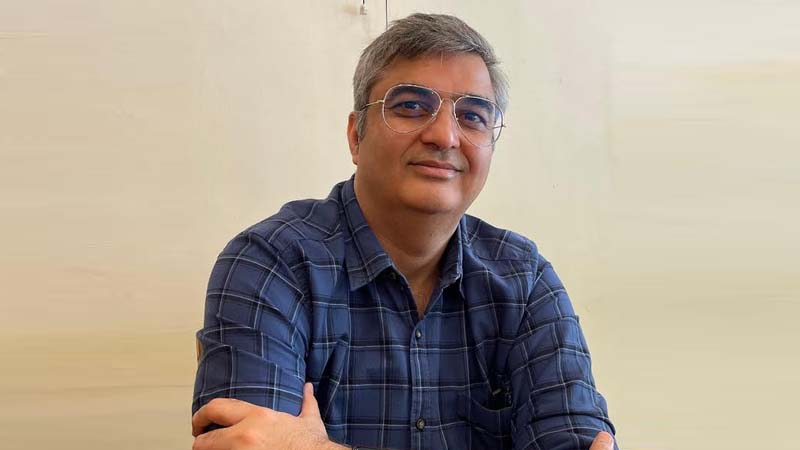
Mumbai: In today’s ever-evolving marketing landscape, Rishi Sharma stands as a seasoned chief marketing officer with a diverse background in managing brands across various sectors and business trajectories. His expertise lies in navigating the rapidly evolving digital landscape, emphasizing the importance of adaptability, technology integration, and speed to market.
Rishi’s career journey began with a fascination for branding, leading him through advertising, corporate marketing at Samsung India, and diverse roles at Aditya Birla Group. His experience spans both established corporates and nimble startups, allowing him to appreciate the nuances of innovation and adaptability required in different organizational sizes.
He shared a successful instance where tailoring marketing tactics, particularly focusing on content creation and digital channels, led to a significant increase in leads, conversions, and brand visibility.
Indiantelevision caught up with chief marketing officer Rishi Sharma,
Edited excerpts
On initially sparked your interest in marketing, and on your transition into your role as a chief marketing officer
My fascination with branding began at a young age; I’ve always found it fascinating to consider a creative that is based on consumer insight. I will never forget advertisements such as Hamara Bajaj and Kuch Khaas Hai. In addition, I began reading the A&M magazine that our neighbour was reading back then, and that’s when I made the decision to pursue a career in marketing. Fortunately, we were also given the opportunity to select a major after graduation, and I went with advertising and public relations.
My experience working closely with product and brand managers for ten years in advertising has led me to believe that marketing is much more than just communication; many other factors contribute to a campaign’s outcome.
To better understand the process of getting a product to market, I started spending more time with the sales and marketing teams. Eventually, in 2009, I was given the opportunity to work in the corporate marketing department at Samsung India. and it marked the beginning of my marketing career.
I worked in three separate B2C, B2B, and B2B2C businesses at Aditya Birla Group after leaving Samsung after three years. While these were still in the marketing and communication domain, I began to appreciate and admire the advancements occurring in the tech/digital arena. I also launched digital marketing, worldwide outreach utilising digital, and numerous other activities. After working for Aditya Birla Group for nine years, I felt that I could accomplish more.
So, I decided to start over and joined Zolo as a CMO, where I oversaw marketing, customer experience, communication, product, lead generation, and brand. A role that was more complex and substantial.
At Bonito as a CMO, I’m in charge of the entire client journey and funnel, even with the capital-intensive category challenges, as a member of the core team, I help find strategies and solutions that aids in the business growth. Our distinctive offering of celebrity-designed houses including Gauri Khan and Manish Malhotra has helped the brand reach number three in a very short span. Our most recent “World Design” campaign was well received by the well-travelled Indian customer who responded to the campaign warmly. Additionally, I have built a team that is business focused and have implemented a full-stack Mar-Tech infrastructure, which has started delivering lead flow, improved conversion rates, and lowered CAC.
On your balance your experiences working with both established corporations and nimble startups in your current role
That’s a really intriguing question. It is comparable to drawing a comparison between a boat and a ship in the ocean. In a boat, the captain interacts directly with the companions, however in a ship, there is a hierarchy and the captain rarely meets the crew.
Both are travelling in the same manner. The distinction lies in their ability to innovate quickly, even if both share the same goal. A ship will creep, but a boat will appear swift and quick. In a similar vein, a ship is responsible for hundreds of passages on board, whilst a boat can accommodate a handful. Last but not least, while a ship can withstand severe seas, a boat finds it challenging.
However, they both have a captain with the same goal of staying afloat. Both need to get to the destination safely. As with any organisation, large or little, it is crucial to be committed, detail-oriented, and aware of the current circumstances as well as to make plans for unanticipated events. Cannot afford to lose focus on the objective when in the lead role.
On staying informed about emerging platforms and changes in audience preferences to adapt your marketing strategies accordingly
I have subscribed myself to various publications and forums. It gives me a regular dosage of the latest in tech and digital. I used to read books but lately, follow podcasts that talk about Martech and topics around it. There are various sites, and even Meta and Google create reports on the latest consumption trends.
Can you share a particularly successful instance where tailoring marketing tactics led to significant results
The ultimate measure of our campaign’s success was leads and shop visits with a CAC that was well within bounds; for this reason, I cut back on our print and outdoor spending. I also cut back on spending on lead-only performance initiatives that offered no guarantee of quality.
As a result, my attention was drawn to content creation, increasing website traffic, dialogue, and display. I used programmatic, YouTube, Social Media, Display, and FM as part of my media mix approach. When combined with performance, this gave the brand a 360-degree appeal that was always in demand. It wasn’t just economical, but it also elevated Bonito to the status of one of the most well-known brands. We got, A noteworthy 100 per cent increase in leads and a 25 per cent improvement in conversion from shop visits are the outcomes of these measures. Sales increased dramatically as a result of the ripple effect, exceeding our highest revenue goals and making the brand positive in December.
In what ways do you ensure that your marketing strategies remain agile and adaptable in response to technological advancements and shifting consumer behaviours?
Continuous experimentations and pilots, in the digital age there’s no sure shot way without experiments and pilots. Like we learnt that young Indians don’t like calls and they are more comfortable with the text, we created a WhatsApp-based conversation module, and it is now contributing to almost 25 per cent of lead flow. With over 35 per cent qualification.
On the key elements that you consider when designing marketing campaigns to engage customers across different industries
Consumer Insights, the latest trends and shifting busying patterns across categories are good enough to get cues. Like EV sales reflect upon the need for sustainable options. Increasing travel will make the customer more demanding. More socialising at home would mean needing space optimisation solutions. These cues when embedded in a piece of communication subtly, it help connect with the larger audience base and help open the funnel.
On ensuring consistency and coherence across various marketing channels within a single campaign
Create a framework and see that everyone who is working in marketing sees and approves the campaigns through that framework.
On some common pitfalls or mistakes to avoid in marketing campaigns, based on your experience
Thinking of a solution before comprehending the problem, if there’s no sale the solution in not an “offer/promotion” but to understand what is behavioural shift
On measuring the success and impact of a brand campaign beyond traditional metrics like ROI
It is simple, in today’s age it is about Traction, Traffic on the website and what percentage of these customers visit your website and transact.
On ensuring alignment between your marketing strategies and the broader growth plans and objectives of the organisation as a CMO
CMO is equally responsible for business growth, the role is no longer only focusing on branding and awareness but on budget, awareness, lead generation, retention, conversion and CAC, each of the above is linked to the other and hence CMO needs to follow this through on a daily basis.
Nowadays there is a trend where even campaigns are releasing trailers, your outlook on it
This is a very super bowl approach, it used to be common in mega launches, like automobiles, movies etc. Even in the olden days when a celebrity was getting introduced… I think it is not going to last long… unless it is a content-driven campaign. Businesses are very conscious about CAC and long-tail campaigns cost a lot. In my view, it works where the campaign is content/story lead and has a direct impact on purchase behaviour.
On the trailer for this campaign or ad film engaging with its target audience
It only builds curiosity, but as I said, it largely depends on the category.







MAM
Nielsen launches co-viewing pilot to sharpen TV measurement
Super Bowl pilot to refine how shared TV audiences are counted
MUMBAI: Nielsen is taking a fresh stab at one of television’s oldest blind spots: how many people are actually watching the same screen. The audience-measurement giant on February 4 unveiled a co-viewing pilot that uses wearable devices to better capture shared viewing, starting with America’s biggest broadcast stage.
The trial begins with Super Bowl LX on NBC on February 8, 2026, before extending to other high-profile live sports and entertainment events in the first half of the year. The goal is simple but commercially potent: count viewers more accurately, especially during live spectacles that pull families and friends to one screen.
The new approach leans on Nielsen’s proprietary wearable meters, wrist-worn devices that resemble smartwatches. These passively capture audio signatures from TV content, logging exposure to shows, films and live events without requiring viewers to sign in or self-report. In theory, fewer clicks, fewer lapses, better data.
Karthik Rao, Nielsen’s ceo, cast the move as part of a broader measurement push. He said the company’s task is to keep pushing accuracy as clients invest heavily in live programming that draws mass audiences. The co-viewing pilot, he added, builds on upgrades such as Big Data + Panel measurement, out-of-home expansion, live-streaming metrics and wearable-based tracking.
Co-viewing is not new territory for Nielsen, which has long tried to estimate how many people sit before a single set. What is new is the heavier integration of wearables and passive detection to reduce reliance on active inputs from panel homes.
For now, the pilot comes with caveats. Co-viewing estimates from the trial will not be folded into Nielsen’s Big Data + Panel ratings, which remain the industry’s trading currency. Instead, pilot findings will be shared with clients a few weeks after final Big Data + Panel ratings are delivered. Clients may disclose those findings publicly.
More impact data will follow later this year. Full integration into Nielsen’s marketing-intelligence suite is slated as a longer-term play, with a target of bringing co-viewing into currency measurement for the 2026–2027 season. This is only phase one, with further co-viewing enhancements planned beyond 2026 and additional timelines to be announced.
The push fits a wider pattern. Nielsen has in recent years expanded big-data integration, adopted first-party data for live-streaming measurement and broadened out-of-home tracking. It also positions itself as the reference point for streaming metrics through products such as The Gauge and the Nielsen Streaming Top 10.
In a market where billions of ad dollars hinge on decimal points, counting who is in the room matters. If Nielsen can pin down shared viewing, the humble sofa could become prime measurement real estate. The race to count every eyeball just found a new wrist to watch.
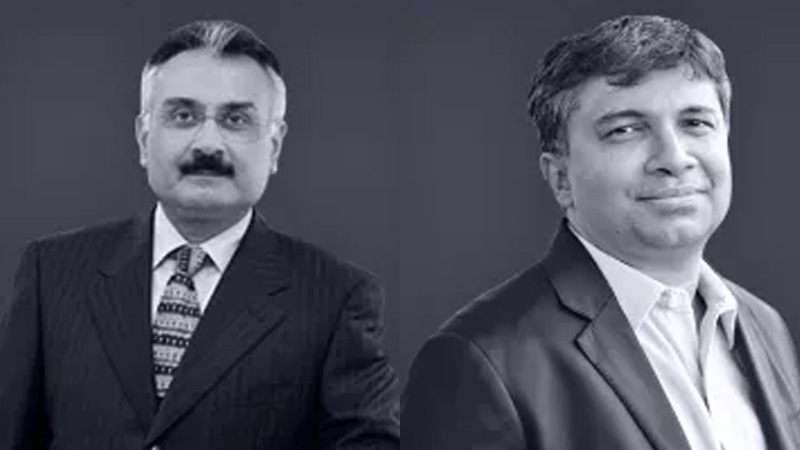
Gurugram: Delhivery’s boardroom is being reset. Deepak Kapoor, chairman and independent director, has resigned with effect from April 1 as part of a planned board reconstitution, the logistics company said in an exchange filing. Saugata Gupta, managing director and chief executive of FMCG major Marico and an independent director on Delhivery’s board, has also stepped down.
Kapoor exits after an eight-year stint that included steering the company through its 2022 stock-market debut, a period that saw Delhivery transform from a venture-backed upstart into one of India’s most visible logistics platforms. Gupta, who joined the board in 2021, departs alongside him, marking a simultaneous clearing of two senior independent seats.
“Deepak and Saugata have been instrumental in our process of recognising the need for and enabling the reconstitution of the board of directors in line with our ambitious next phase of growth,” said Sahil Barua, managing director and chief executive, Delhivery. The statement frames the exits less as departures and more as deliberate succession, a boardroom shuffle timed to the company’s evolving scale and strategy.
The resignations arrive amid broader governance recalibration. In 2025, Delhivery appointed Emcure Pharmaceuticals whole-time director Namita Thapar, PB Fintech founder and chairman Yashish Dahiya, and IIM Bangalore faculty member Padmini Srinivasan as independent directors, signalling a tilt towards consumer, fintech and academic expertise at the board level.
Kapoor’s tenure spanned Delhivery’s most defining years, rapid network expansion, public listing and the push towards profitability in a bruising logistics market. Gupta’s presence brought FMCG and brand-scale perspective during a period when ecommerce volumes and last-mile delivery economics were being rewritten.
The twin exits, effective from the new financial year, underscore a familiar corporate rhythm: founders consolidate, veterans rotate out, and fresh voices are ushered in to script the next chapter. In India’s hyper-competitive logistics race, even the boardroom does not stand still.
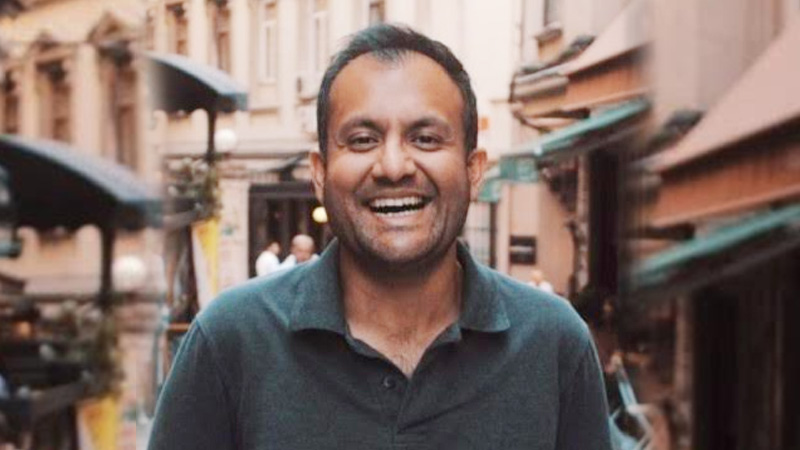
At Locofy.ai, Rao helped convert a three-year free beta into a paid engine, clocking 1,000 subscribers and 15 enterprise clients within ten days of launch in September 2024. The low-code startup, backed by Accel and top tech founders, is famed for turning designs into production-ready code using proprietary large design models.
Before that, Rao founded generative AI venture 1Bstories, which was acquired by creative AI platform Laetro in mid-2024, where he briefly served as managing director for APAC. Alongside operating roles, he has been an active investor and advisor since 2020, backing startups such as BotMD, Muxy, Creator plus, Intellect, Sealed and CricFlex through a creator-economy-led thesis.
Rao spent over eight years at Google, holding senior partnership roles across search, assistant, chrome, web and YouTube in APAC, and earlier cut his teeth in strategy consulting at OC&C in London and investment finance at W. P. Carey in Europe and the US.

Mukesh Ambani, Larry Fink come together for CNBC-TV18 exclusive

Nielsen launches co-viewing pilot to sharpen TV measurement

Netflix celebrates a decade in India with Shah Rukh Khan-narrated tribute film

Delhivery chairman Deepak Kapoor, independent director Saugata Gupta quit board

Meta appoints Anuvrat Rao as APAC head of commerce partnerships

Brnd.me enters Europe as haircare brands power global expansion

TechnoSport taps quick commerce with launch on Slikk’s 60-minute platform

These ’90s fashion trends are making a comeback in 2017
The final 6 ‘Game of Thrones’ episodes might feel like a full season
According to Dior Couture, this taboo fashion accessory is back
The old and New Edition cast comes together to perform
Phillies’ Aaron Altherr makes mind-boggling barehanded play
Uber and Lyft are finally available in all of New York State
Disney’s live-action Aladdin finally finds its stars
Mukesh Ambani, Larry Fink come together for CNBC-TV18 exclusive
Nielsen launches co-viewing pilot to sharpen TV measurement
Netflix celebrates a decade in India with Shah Rukh Khan-narrated tribute film
Delhivery chairman Deepak Kapoor, independent director Saugata Gupta quit board
Meta appoints Anuvrat Rao as APAC head of commerce partnerships
Brnd.me enters Europe as haircare brands power global expansion
TechnoSport taps quick commerce with launch on Slikk’s 60-minute platform
-
 iWorld5 days ago
Netflix celebrates a decade in India with Shah Rukh Khan-narrated tribute film
-
 News Broadcasting1 day ago
Mukesh Ambani, Larry Fink come together for CNBC-TV18 exclusive
-
 I&B Ministry3 months ago
India steps up fight against digital piracy
-
 iWorld3 months ago
Tips Music turns up the heat with Tamil party anthem Mayangiren
-
 MAM1 day ago
Nielsen launches co-viewing pilot to sharpen TV measurement
-
 iWorld12 months ago
BSNL rings in a revival with Rs 4,969 crore revenue
-
 MAM3 months ago
HoABL soars high with dazzling Nagpur sebut
-
 News Broadcasting2 months ago
CNN-News18 dominates Bihar election coverage with record viewership