
Brands
IBS: Tapping into the D2C Opportunity

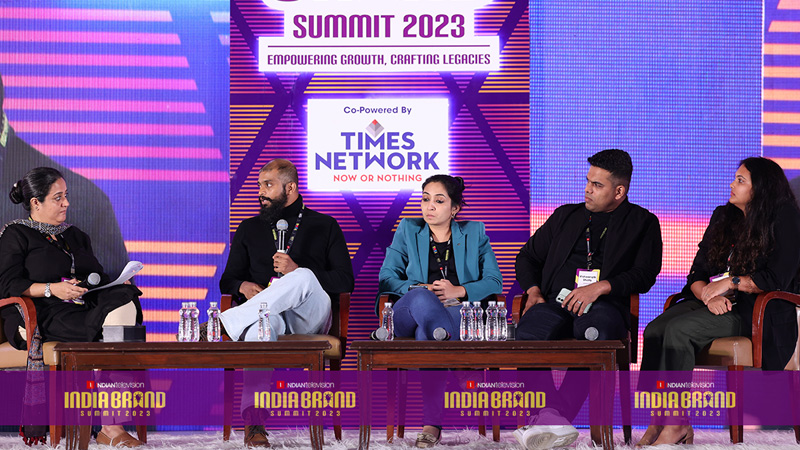
Mumbai: The India Brand Summit held on 28 November 2023 at The Lalit Mumbai, convened leaders, marketers, entrepreneurs, and experts to explore current trends, challenges, and opportunities in the dynamic brands and marketing arena.
The session delved into: Is D2C the correct way for businesses? How bright is the future? The session offers an in-depth exploration of the brands choosing the way of D2C and how that decision has impacted the success journey and contributed to their successful brand building.
The key highlights of this session were: Brands are turning to D2C for rapid revenue growth and enhanced customer loyalty. This shift, crucial in price-sensitive markets like India, overcomes distribution challenges. D2C not only bridges gaps but also utilizes data for personalized user journeys, ensuring quicker and more efficient consumer connections.
The panel was moderated by Boston Consulting Group partner and associate director Jyoti Narula Ranjan and had panelists including
Candere By Kalyan Jewellers head of marketing, brand experience & data Akshay Matkar, NIVEA India digital precision marketing manager Tanvi Amladi, Pocket Aces business head Vishwanath Shetty, Kaya VP & head of marketing Samyukta Ganesh Iyer.

The session began with Ranjan asking, “How do you as a brand, map the consumer journeys in this omni-channel D2C world? There is an aspect of marketing to these users in this digital world and there is a method of mapping the consumer journeys.”
Amladi answered, “ I think one for us was to really acknowledge that today consumer journeys are not linear. So we know consumers are exposed to so many different touchpoints, especially in a category like skincare. I think the first step for us when we talked about customer journey was to really acknowledge that fact and say then therefore What are these different ways in which I can reach my consumer? The second thing was actually understanding the consumer and therefore just making sense of who she is because we knew weren’t talking to someone who is just 18 to 22. That is someone who is just displaying a certain specific life she would within that she’s doing so many different things. She comes in with different, she’s at different stages in her skincare journey. So speaking, again specifically to the category that we play in, it was very important for us to even understand what is her category entry point. When she gets into skin care. Someone’s getting into it, at the age of 18, by the time she’s 22, she’s already super evolved in her journey. Someone is getting introduced to it only at the age of 25, maybe when she’s a little bit into her career. So, for us just understanding all these little nuances around how the consumer comes into the category and how kind of she plays around with it, in different in different ways. That was the starting point and that’s always been kind of the anchor around which we build a lot of what we do at NIVEA.
Commenting on the same, Ranjan said, “I think one thing which is probably coming out stronger is how over the long term period there were a lot of micro-moments that you’re probably capturing in how these consumers are entering the purchase journey or just the brand interaction journey.”
She then asked Matkar, “It would be very interesting to see how really as a brand to thrive in an environment where consumers are doing this omni channel touch point. How do the marketing teams really thrive using agile methodologies, both on preparing the back end, and getting the right touchpoints in place? How do you make that happen at the backend because one is knowing the consumer, but then how do you capture that touchpoint in a digital-first world?”
Matker replied, “I’ll break it into two parts. Part A is, how you look at the consumer area. So in our case, since we have an online store and also offline store. We look at it in four parts. Part A is, that the user has discovered the product online and purchased it offline. Part B is, consumers have discovered the product online and purchase is also happening online. Third and fourth is user has discovered the product offline and purchased it offline and the user has discovered the product offline and made the purchase online. So these are the four different types of consumer journeys that we look at. Hence our entire marketing spends, the teams, the way we operate, it shifted. We started our offline reading journey in 2022. Prior to that, it was completely online. What we do is, we have something created called our entire data warehouse, and we have something called a CDP like many brands do. The main problem in the digital space is that it’s not about collecting the data, it’s about how accurately your data you’re collecting and what are the data losses that are happening. So because we have multiple systems, we have CRM, we have a communication platform, we have personalisation tools, we have recommendation tool and then so many data points that we need to collect, we need to process and then we need to look at different data and based on that how do we actually split the entire marketing spends. So looking this journey into four halfs has helped us to make informed decision on which channel we need to invest more. Though, I think we can see that, our data pointers like 70 per cent of the consumers are discovering the product online. So though our CPA on the retail side would be lower, but our investments should be on the higher side on the digital space.”
Thereafter bringing Iyer into the conversation next, Ranjan asked, “How did you help these (Baskin Robbins & Kaya) brands find out the value proposition to the right consumer set mapping? And how did you really use digital media to drive this omnichannel existence for the brand?”
Iyer said, “One big thing I think we were discussing just before the panel right now in terms of saying that, today every brand, small, big otherwise needs to have a very strong presence both online and offline. So it’s no longer about whether I’m a D2C brand, or whether I have an offline brand. Everyone’s omnichannel today. Brands that were born on D2C have now started opening up stores offline in order to give consumers the experience that they’ve been craving because they don’t get that online. And vice versa, the convenience, the comfort of calling for things online is why even the large brands who registered for the longest time today are all there. A great case study would be what happened with CPR in, when we actually did one of the first collabs, that we drove with Swiggy where we actually did a 50/50 partnership in terms of making the ads, making all of the media buys including Hotstar Integration. For the very first time, two brands, one aggregator brand and one brand actually came together and it hit the nail on many boxes because one, a brand like Baskin-Robbins, which had been there in the Indian market for 26 years at that point in time, globally for 75 years, suddenly became relevant to millennials who had kind of played back to us saying ‘it’s my childhood friend, it’s a brand that I grew up having as a kid with my parents. After dinner, we would go for a walk, go to the nearest Baskin-Robbins parlor, and pick from their 31 flavours. But today it was not the brand of choice for millennials so there was a definite issue there. For Swiggy, they wanted a premium ice cream brand on their platform. So it kind of hit the nail on many, many boxes there. Second, it had also become irrelevant to the male audiences, perhaps because of the color pink it had become little alienating to the audience, that ice cream as a category is fairly gender agnostic otherwise. Third, there was also a problem of the brand not being easily available because ice cream, as a category, was not something that people were calling for online. So going live on IPL being there from, the first match to the last match, we did this fantastic innovation with Hotstar as well where you could just call for the ice cream while the gamification was happening. It has changed the landscape because suddenly the brand became relevant. The brand had fresh fruit ice cream flavors like Naturals and Ibaco and it also helped everybody. As I was saying it was a much larger connect because suddenly during the lockdown the brand was available and that would have never happened. I mean we could have never forced on. So I think why D2C matters, it kind of answers the question of the topic today, the brand is then available. Any brand of your choice is then available at your fingertips.”
Thereafter Ranjan asked Shetty, “What is the mantra for getting content right on social marketing and how do you advise brands to leverage content social media influencer marketing for building brands having that direct connect?”
Shetty replied, ”I feel knowing your customer is very important. Where is the customer? Are they on Instagram or are they on Facebook or on LinkedIn, That’s also really, really important. So content is a huge bucket where you can bifurcate its basis where your audience is. Interestingly, when the influencer wave started post-COVID. I think there was good traction initially. I remember basically when we started Skinsi which was direct competition to Kaya then and we largely were D2C, so we provided clinical services at home. So for us, I still remember we did drop challenge which was one of the first campaigns that I did for Skinsi back then and this was I think Woman’s Day. So there was a clear trend that we saw, globally whatever works on TikTok on Insta, in a week’s time it is to travel to India. So you always want to make your UGC content a success and everyone starts digging into what should we do. While it was very simple for what we saw, we executed in 10 days and we spent barely around 10-12 lacs. Interestingly, we didn’t get a lot of leads in such, but the consideration and the conversion doubled our business. So, I think influencer marketing is not just a big mark in a box, but you need to be very, very sure what will work for your brand and how your audience will take it and if you make it a very inclusive community campaign, budget doesn’t matter. It will work for your brand. So that’s influencer marketing and working and you don’t have to spend crores, but you can still leverage it using international trends or global trends. Indianise it, take one or two good influencer and make a UGC content, do a tactical campaign, and kick-off. So that’s how influencer marketing has really helped especially for a skincare category. So I think that’s a great example. But now what has happened is a lot of these influencers also don’t want to be called influencers, they want to be called creators. So if you go back to the influencers, tell them, ‘You know what here is a reel, a post, do one story, one reel’, they’ll charge you a bomb but instead if an Instagram influencer wants to do a podcast series on Spotify and as a brand you help him to do that, he will come at 1/3 the cost and he will do value ads like no one’s business. So when you start connecting with the creator, help him in his journey, is when the brand grows and then the creator will be happy to push extra stuff from his side.”









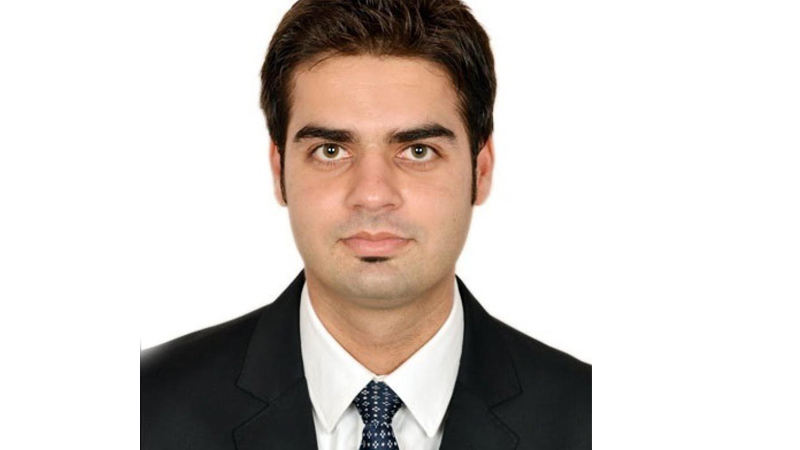
MUMBAI: Zepto has elevated Ahmad Muneeb to vice president – HR centre of excellence, placing him at the helm of the company’s total rewards, executive compensation and organisational effectiveness as the quick-commerce firm powers through a high-growth phase.
The move follows his stint as senior director of the HR COE, where he played a central role in preparing the company for IPO readiness while scaling its people analytics capabilities. During this period, Muneeb helped align complex performance management structures with more streamlined and scalable employee experience frameworks.
In his new role, he will steer the design of total rewards strategies, executive compensation planning and organisational design, while also overseeing performance management, employee experience initiatives and people analytics programmes.
Before joining Zepto, Muneeb spent nearly three years at Meesho, where he held multiple rewards and HR business partner roles. Earlier in his career, he worked as a senior rewards consultant at Mercer, advising high-tech clients on compensation benchmarking, pay structures and talent-focused reward frameworks.
He began his hr journey at Cognizant, where he supported compensation programmes for nearly two lakh employees across India and worked on m&a compensation alignment and skill-based pay initiatives. Prior to moving into HR, Muneeb started his career as a software engineer at Netcracker, bringing a technical grounding to his people strategy work.
With a mix of consulting rigour, start-up agility and enterprise-scale experience, Muneeb’s elevation signals Zepto’s continued focus on building robust people systems as it races towards its next phase of growth.
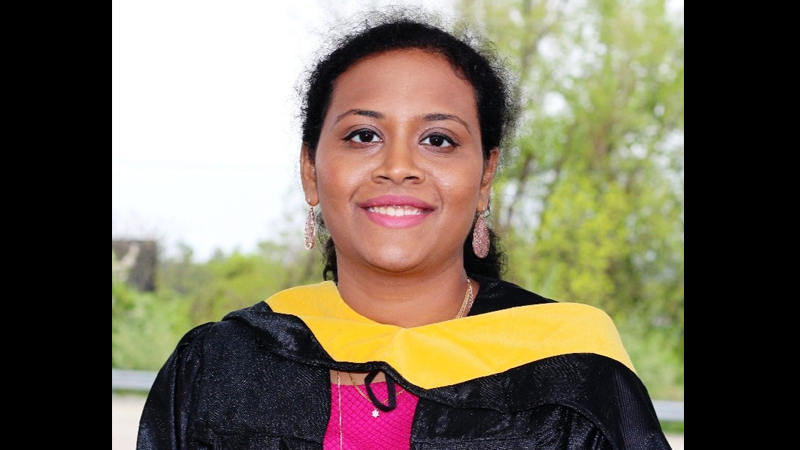
INDIA: Dell Technologies is doubling down on artificial intelligence in marketing. The company has elevated Aishwarya Sudhakar to director of marketing measures and intelligence engineering, tasking her with building an enterprise-wide framework for AI-led measurement and customer intelligence.
In the role, Sudhakar will oversee unified data strategy, advanced modelling and context engineering: areas increasingly central to how large technology firms link marketing performance to business outcomes. Her remit includes shaping scalable systems that support Dell’s next phase of AI deployment across marketing functions.
Sudhakar steps into the position after holding a series of senior roles at Dell, including AI lead for marketing orchestration, senior manager, and senior data scientist in customer insights. Across these roles, she led global teams working on large-scale machine learning models, data pipelines and customer analytics.
Before joining Dell, she began her career at Tata Consultancy Services as a systems engineer and later founded Oclor, a shopping discovery start-up, where she built end-to-end technology platforms. The combination of enterprise-scale data work and entrepreneurial experience has shaped her focus on product-led, engineering-first innovation.
As technology companies seek sharper attribution and intelligence in an AI-saturated market, Dell’s move underscores the growing importance of marketing measurement as an engineering discipline rather than a reporting function.
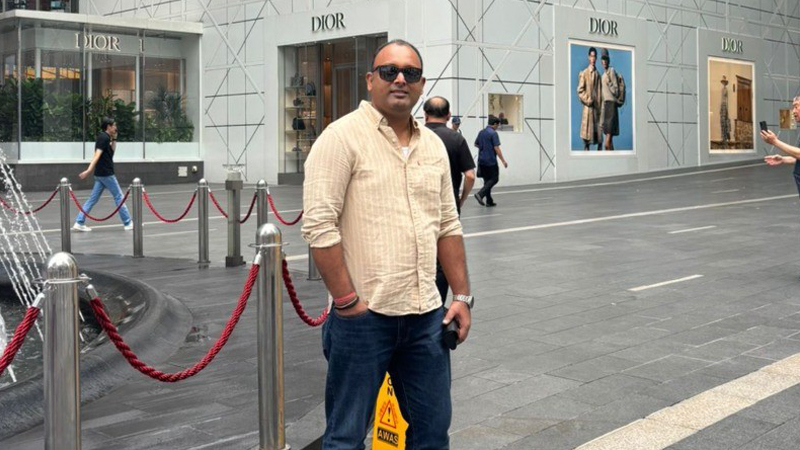
GURUGRAM: Adidas has appointed Gaurav Pathak as director of key and field accounts, bringing back an executive who began his leadership career at the company.
In the role, Pathak will be responsible for deepening strategic partnerships and expanding key, field and export accounts, with a mandate to accelerate growth across the Indian market. The appointment marks a return to Adidas after nearly a decade across premium retail and footwear brands.
Pathak most recently served as head of retail and business development at Ecco, where he focused on partner-led growth, market risk mitigation and operational scale. Before that, he spent eight years at House of Anita Dongre Limited, rising to general manager and leading regional operations across western and southern India.
His earlier career includes a stint as regional sales manager for Karnataka at United Colors of Benetton India and a six-year run at Adidas, where he held sales leadership roles.
With competition intensifying in India’s lifestyle and footwear market, Pathak’s brief will centre on strengthening field execution while aligning large accounts with Adidas’s broader commercial priorities.


Hamdard honours changemakers at Abdul Hameed awards

Why the Best Campaigns Today Start With Insights, Not Ideas

Ahmad Muneeb elevated to VP – HR centre of excellence at Zepto

Fans Take Centre Stage as Zee Cine Awards Turns the Spotlight Around

GUEST COLUMN: How content leaders decide what gets greenlit

The man who dubbed Lord of the Rings in 50 languages is stunned by Mumbai traffic

Dell names Aishwarya Sudhakar director of marketing intelligence

These ’90s fashion trends are making a comeback in 2017
The final 6 ‘Game of Thrones’ episodes might feel like a full season
According to Dior Couture, this taboo fashion accessory is back
The old and New Edition cast comes together to perform
Phillies’ Aaron Altherr makes mind-boggling barehanded play
Uber and Lyft are finally available in all of New York State
Disney’s live-action Aladdin finally finds its stars
Hamdard honours changemakers at Abdul Hameed awards
Why the Best Campaigns Today Start With Insights, Not Ideas
Ahmad Muneeb elevated to VP – HR centre of excellence at Zepto
Fans Take Centre Stage as Zee Cine Awards Turns the Spotlight Around
GUEST COLUMN: How content leaders decide what gets greenlit
The man who dubbed Lord of the Rings in 50 languages is stunned by Mumbai traffic
Dell names Aishwarya Sudhakar director of marketing intelligence
-

 News Broadcasting4 days ago
Mukesh Ambani, Larry Fink come together for CNBC-TV18 exclusive
-

 iWorld1 week ago
Netflix celebrates a decade in India with Shah Rukh Khan-narrated tribute film
-
 MAM3 months ago
HoABL soars high with dazzling Nagpur sebut
-
 MAM4 days ago
Nielsen launches co-viewing pilot to sharpen TV measurement
-
 iWorld12 months ago
BSNL rings in a revival with Rs 4,969 crore revenue
-
 I&B Ministry3 months ago
India steps up fight against digital piracy
-
 iWorld3 months ago
Tips Music turns up the heat with Tamil party anthem Mayangiren
-

 Film Production1 week ago
UFO Moviez rides high on strong Q3 earnings
