
Brands
IBS: Marketing in a VUCA world

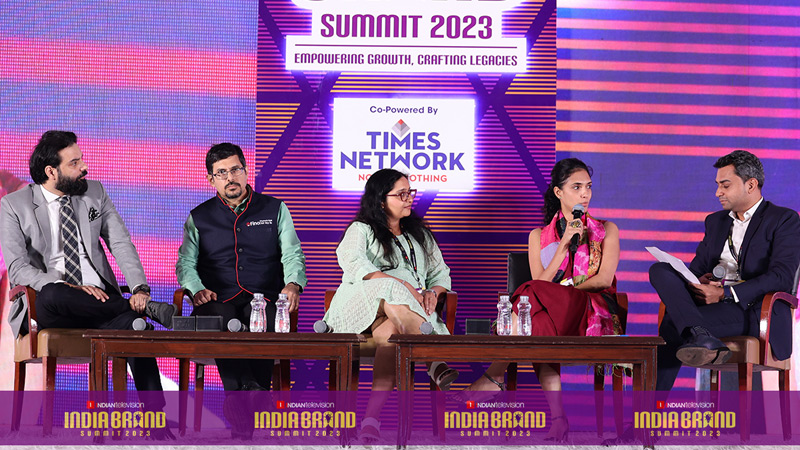
Mumbai: The India Brand Summit held on 28 November 2023 at The Lalit Mumbai, convenes leaders, marketers, entrepreneurs, and experts to explore current trends, challenges, and opportunities in the dynamic brands and marketing arena.
The session offered an in-depth exploration of the strategies and insights required to effectively navigate the challenges posed by a VUCA environment. VUCA stands for Volatility, Uncertainty, Complexity, and Ambiguity – characteristics that define the modern business landscape’s fast-paced & unpredictable nature.
The panel was moderated by Ernst & Young LLP partner & head marketing advisor Amiya Swarup. Panellists for this session were Aditya Birla Fashion and Retail Ltd head- corporate marketing & strategy Apeksha Gupta, Bisleri International Pvt. Ltd. marketing head Tushar Malhotra, Fino Payments Bank CMO Anand Bhatia, Shemaroo Entertainment Ltd. CMO Anuja Trivedi.
Key highlights of this session was to understand the VUCA dynamics & how it impacts marketing strategies and to learn about the tactics to respond to sudden market shifts, emerging trends, and unforeseen disruptions. Along with this, they will also speak on what role does data & decision making play in such dynamic structure, the role of digital platforms and technology in VUCA marketing and much more..
The panel was started by Swarup asking Gupta on how marketing has evolved over the years, as it is at the forefront of generating data and the role it plays in the dynamic structure to which Gupta answered, “VUCA has always been around, because it’s always been an unstructured, volatile environment, because that’s the nature of how things move. It’s just that the pace has increased right now and it’s multi fold in terms of what’s happening in the unpredictability of it. So I broadly kind of focus on three broad mantras to deal with this kind of uncertainty. My first one is, it’s perfectly okay to not know, I think we kind of get caught up in saying, okay, I’m supposed to be so and so. And I have to know all the answers, and I’m supposed to connect the dots. Actually, it’s perfectly okay to not know because that’s really where the starting point is. If you don’t know, you will work really hard to figure it out. So I’m always very open to saying, look, I don’t know how Gen Z is working, I don’t know how data works, I don’t know how digital is working. It’s a great starting point. The second for me really is earlier, we were always told, go targeted, go really sharp, I think maybe that’s changing a little bit. Now, to the extent that anything that we do, actually try and figure out the larger implication or the ripple effect of it, because the ripple effect will actually help you be agile. Because when you shoot that stone, you can choose to jump off one ribbon to the other if you’re keeping your eye around that and not that Bullseye essentially. And of course, third, again, very spoken off in the past, but a lot more implication now is to celebrate failures. If we don’t have that cultural DNA to sort of help us celebrate our failures to take that much risk to constantly keep coming up with new and the new itself is so difficult because it’s like changing so rapidly. But those would be my three ways of dealing with uncertainty in terms of mindset and approach to how I deal with challenges.”

Swarup was delighted by the answer as he shifted towards the content side by asking Trivedi on the evolution and strategies of marketing over the years to which she replied, “Marketing for the longest time been about, you know, you bring out the brand film and then you wait for the next brand track to know where things are going. Today with the data and you know the access we have, marketing has never been as close to business as it is today, like you said connecting the dots. So what I put out in 24 to 48 hours, I know whether it’s working or whether it’s not working, it allows me the agility to change those things. It allows me to, I mean, with digital, it allows us to experiment as AV testing, you can get those results. Marketing is a lot more two way process today. So you’re also listening to what your consumer is saying, and making those changes. So to my mind, actually, you know, we are as close to business today as we could be.”
Marketing plays a fundamental role in terms of driving ROI, business goals etc. Bhatia shared his views by saying, “India is an incredibly homogeneous country. We are a country of ABCD. A as “Adda” when people get together to talk, you know, whether it’s politics or you know, whatever it is, B is “Bollywood”, hence any kind of old, you know Tolly calls you whatever comes with it, C “Cricket”, right? Everywhere. D is “Devotion” or only depends on which side of the spectrum you want. Marketing has just got very simplified over time. And I guess, the best thing that a CMO can do today is really bring it down to a few controllable variables. Good part is that technology today allows you that, right, so fundamentals don’t change. Technology just allows you to bring everything down to a few variables, few moving parts, and you can really leverage that in a big way and deliver ROI.
At the end of the day, the name of the game is ROI. If the CMO is not getting in business, you really won’t be in business anymore, right? In fact, I think marketers need to start looking at the function as, as a profit center marketing is a profit center, it has always been a profit center, they, you know, they’ll always be disagreements on the way certain measurements happen, we counters will have the views, marketer will have his views, or her views, you know, that life goes on. But I think that fundamental shift is critical.”
Swarup then asked Malhotra on the role of marketing and especially gave a lot of insights on the mindset of today’s Gen Z people. He said, “This is an everyday morning board conversation, right? The role of marketing. I would say four things stand out today, more than anything else. One is that marketing is a strategic and tactical function at the same time. Strategic from a perspective of brand building and tactical from sales delivery. So both go hand in hand together and the focus of marketing is on both parts, right. The second part is of course, the evolution of the consumer landscape today.
Gen Z’s today are a very woke audience and conversations happen in a matter of minutes. So understanding Gen Z, understanding your product and understanding the relevance because truth be told, India is a very young country today. Its demographic dividend that we spoke about conditions are favourable. There are a lot of tailwinds towards business and how do businesses harness consumer trends? How do businesses prepare themselves when Gen Z’s really take over? Because this is an audience with a very different mindset. Very woke, looking for a brand for purpose? But also looking at getting away from a lot of stressors in life, right?
The third bit I will speak about is that today, a marketer needs to be an integrated marketing specialist, there are so many channels, right? Traditional channels still exist as a mass brand, if you reach out for awareness, it has to be TV. So how do you make your campaigns tick across all channels, and get a proper ROI rather than just focus on one channel. And the last point is that whatever we speak about there is no one detail. You have to wait in different mini India’s with your messaging with your communication, because India is also filled with a lot of different cultural landmarks. If you go to South India, it behaves slightly differently from West or North India, and you have to appeal to those audiences to see what works for them as well.”
The session concluded with many panellists agreeing on one thing that today Gen Z is where the conversations are happening and will also be the key to unlocking and staying relevant in the next 10 years as they are different drivers who talk about sustainability, brands with purpose, imagery, stresses, and by addressing all these things, their being ready for future of the consumers.








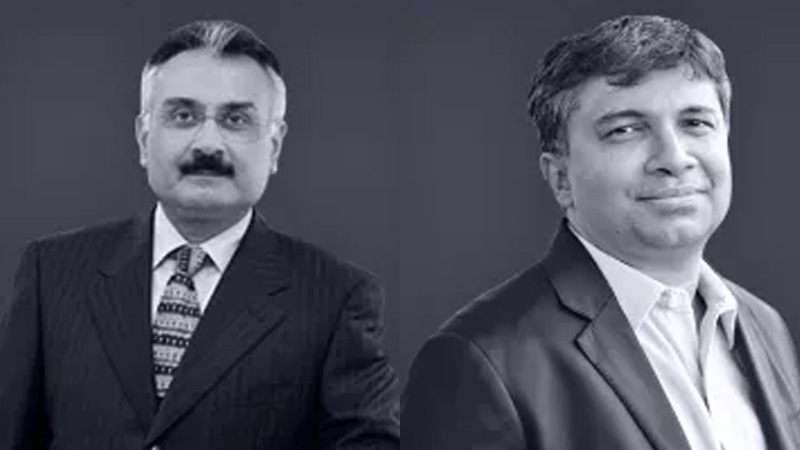
Gurugram: Delhivery’s boardroom is being reset. Deepak Kapoor, chairman and independent director, has resigned with effect from April 1 as part of a planned board reconstitution, the logistics company said in an exchange filing. Saugata Gupta, managing director and chief executive of FMCG major Marico and an independent director on Delhivery’s board, has also stepped down.
Kapoor exits after an eight-year stint that included steering the company through its 2022 stock-market debut, a period that saw Delhivery transform from a venture-backed upstart into one of India’s most visible logistics platforms. Gupta, who joined the board in 2021, departs alongside him, marking a simultaneous clearing of two senior independent seats.
“Deepak and Saugata have been instrumental in our process of recognising the need for and enabling the reconstitution of the board of directors in line with our ambitious next phase of growth,” said Sahil Barua, managing director and chief executive, Delhivery. The statement frames the exits less as departures and more as deliberate succession, a boardroom shuffle timed to the company’s evolving scale and strategy.
The resignations arrive amid broader governance recalibration. In 2025, Delhivery appointed Emcure Pharmaceuticals whole-time director Namita Thapar, PB Fintech founder and chairman Yashish Dahiya, and IIM Bangalore faculty member Padmini Srinivasan as independent directors, signalling a tilt towards consumer, fintech and academic expertise at the board level.
Kapoor’s tenure spanned Delhivery’s most defining years, rapid network expansion, public listing and the push towards profitability in a bruising logistics market. Gupta’s presence brought FMCG and brand-scale perspective during a period when ecommerce volumes and last-mile delivery economics were being rewritten.
The twin exits, effective from the new financial year, underscore a familiar corporate rhythm: founders consolidate, veterans rotate out, and fresh voices are ushered in to script the next chapter. In India’s hyper-competitive logistics race, even the boardroom does not stand still.
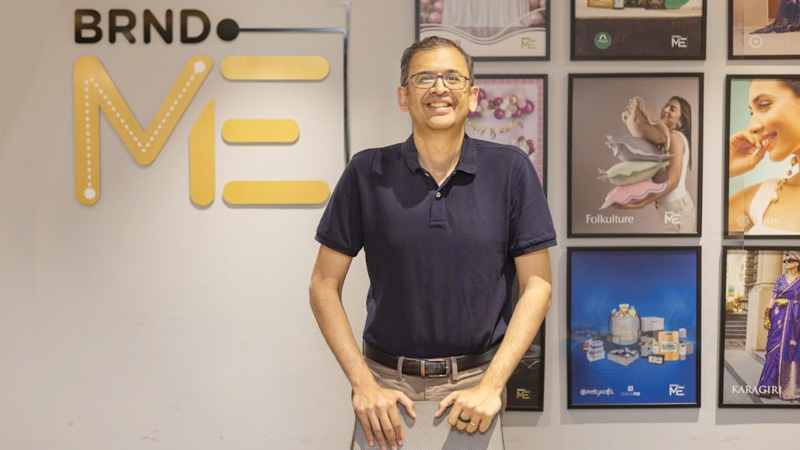
Bengaluru: Brnd.me, the global consumer brands company formerly known as Mensa Brands, has entered the European market following strong momentum across the Middle East, the United States and Canada.
The company has launched across the UK, Germany, France and Spain, with plans to expand into Italy, the Netherlands and Poland over the next year. The push is being led by its haircare and aromatherapy brands, Botanic Hearth and Majestic Pure, marking Brnd.me’s first structured expansion into Europe.
The European beauty market represents a total addressable opportunity of over $4 billion across haircare and aromatherapy, supported by high digital adoption and demand for accessible, performance-led products.
Brnd.me’s hair care and aromatherapy business currently operates at an annual run rate of around $6 million, with Botanic Hearth and Majestic Pure delivering roughly 10 per cent month-on-month growth, driven by expansion and rising repeat demand.
To support regional growth, the company has appointed a general manager based in Germany and is evaluating investments in warehousing and local team expansion.
Early traction has been strong. Within weeks of launch, Botanic Hearth’s rosemary hair oil ranked among the top five hair oils in Germany, signalling strong consumer pull in a competitive market.
Brnd.me founder and chief executive officer Ananth Narayanan, said Europe represents the next phase of the company’s international strategy. He added that the European business is expected to scale to a $10 million annual run rate by the end of 2026, with long-term ambitions to reach $60 million over the next six years.
The company’s Europe strategy centres on digital-first distribution, repeat demand and TikTok-led discovery, alongside direct-to-consumer expansion to strengthen brand equity and margins.
The move also aligns with growing EU–India trade engagement, supporting long-term sourcing and cross-border supply chains.

NATIONAL: TechnoSport has launched on Slikk, the ultra-fast fashion app offering 60-minute delivery, as the activewear brand accelerates its push into quick commerce to capture Gen Z and young millennial shoppers.
The debut brings more than 150 high-performance styles to Slikk’s platform, with an average selling price of Rs 450, expanding TechnoSport’s reach across over 80 pin codes.
The partnership follows strong momentum for TechnoSport across Q-commerce channels, where the brand has recorded around 60 per cent volume growth over the past six months. The company expects quick commerce to contribute nearly 20 per cent of its revenue in the coming years as hyperlocal delivery gains scale.
Slikk, which recently raised $3.2 million in seed funding led by Lightspeed, has rapidly gained popularity among youth consumers seeking speed, trend relevance and impulse-led shopping experiences.
Activewear remains one of Slikk’s fastest-growing categories, driven by shoppers increasingly treating fitness-led fashion as an everyday essential. The platform has reported a 30-fold year-on-year increase in items sold, reflecting rising demand for performance wear that blends comfort with style.
TechnoSport chief executive officer Puspen Maity, said the collaboration would help the brand engage more closely with young consumers whose fashion choices are shaped by instant needs and lifestyle aspirations. He added that rapid delivery bridges the gap between intent and purchase, allowing shoppers to access activewear exactly when they want it.


Mukesh Ambani, Larry Fink come together for CNBC-TV18 exclusive

Nielsen launches co-viewing pilot to sharpen TV measurement

Netflix celebrates a decade in India with Shah Rukh Khan-narrated tribute film

Delhivery chairman Deepak Kapoor, independent director Saugata Gupta quit board

Meta appoints Anuvrat Rao as APAC head of commerce partnerships

Brnd.me enters Europe as haircare brands power global expansion

TechnoSport taps quick commerce with launch on Slikk’s 60-minute platform

These ’90s fashion trends are making a comeback in 2017
The final 6 ‘Game of Thrones’ episodes might feel like a full season
According to Dior Couture, this taboo fashion accessory is back
The old and New Edition cast comes together to perform
Phillies’ Aaron Altherr makes mind-boggling barehanded play
Uber and Lyft are finally available in all of New York State
Disney’s live-action Aladdin finally finds its stars
Mukesh Ambani, Larry Fink come together for CNBC-TV18 exclusive
Nielsen launches co-viewing pilot to sharpen TV measurement
Netflix celebrates a decade in India with Shah Rukh Khan-narrated tribute film
Delhivery chairman Deepak Kapoor, independent director Saugata Gupta quit board
Meta appoints Anuvrat Rao as APAC head of commerce partnerships
Brnd.me enters Europe as haircare brands power global expansion
TechnoSport taps quick commerce with launch on Slikk’s 60-minute platform
-
 News Broadcasting3 days ago
Mukesh Ambani, Larry Fink come together for CNBC-TV18 exclusive
-
 iWorld7 days ago
Netflix celebrates a decade in India with Shah Rukh Khan-narrated tribute film
-
 MAM3 months ago
HoABL soars high with dazzling Nagpur sebut
-
 MAM3 days ago
Nielsen launches co-viewing pilot to sharpen TV measurement
-
 iWorld12 months ago
BSNL rings in a revival with Rs 4,969 crore revenue
-
 I&B Ministry3 months ago
India steps up fight against digital piracy
-
 iWorld3 months ago
Tips Music turns up the heat with Tamil party anthem Mayangiren
-

 Film Production1 week ago
UFO Moviez rides high on strong Q3 earnings
