
Brands
IBS: Building the MarTech stack for digital India

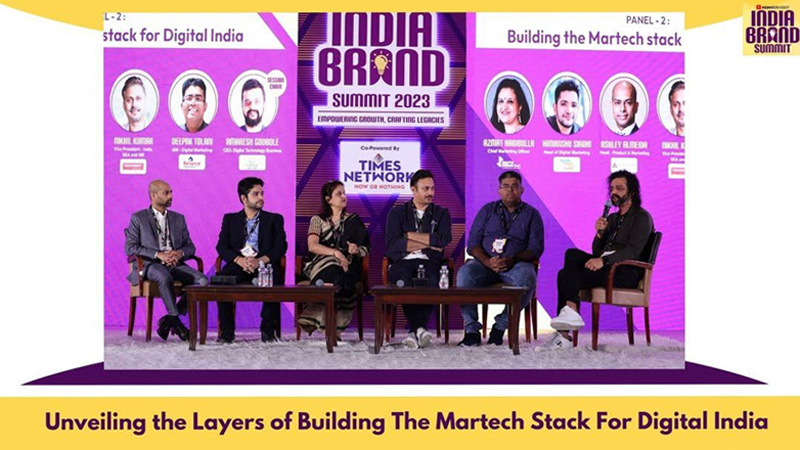
Mumbai: The India Brand Summit held on 28 November 2023 at The Lalit Mumbai, convenes leaders, marketers, entrepreneurs, and experts to explore current trends, challenges, and opportunities in the dynamic brands and marketing arena.
The session focuses on the implementation of marketing technology (MarTech) to drive digital transformation in India. The session delves into how organisations are leveraging Martech tools and strategies to navigate the digital landscape and connect with consumers in a rapidly evolving technological environment.
The key highlights of this session are: To explore Martech stack components, reaching India’s diverse population, personalised experiences, challenges, competing with larger players, and aiding digital transformation in businesses.
The panel moderated by Publicis Groupe India CEO, digital technology business Amaresh Godbole had panelists including South Indian Bank CMO Azmat Habibulla, Apollo 24|7 head of digital marketing Himanshu Sirohi, Axis Securities head – product & marketing Ashley Almeida, mediasmart VP – India, SEA and ME Nikhil Kumar and Reliance Retail GM digital marketing Deepak Tolani.
The session began by Godbole asking a question to all the panellists, “Given the evolution that we’ve seen with the MarTech world over the last decade, how have you seen the investment drive? how has it changed your life? What is the single biggest benefit that you’ve seen from you MarTech stats? How has it changed you as a marketeror the program that you take and what are the challenges there is?”
Tolani said, “The concept of MarTech itself is so new. A lot of people are actually not familiar within the system of what MarTech is. So I think, we need to have more of making this a non-jargonish kind of a thing and let the entire organisation know. Because when you are actually talking about MarTech and its implementation while you can get the best of the best tools onboarded. The most critical part is how it is getting used and how the data is actually getting collected. Then if the data is getting collected cleanly in a manner in which will help you. That’s when the MarTech could actually be utilised. So I think as marketers our role has become to be more of people who are actually spokesperson for how you go and adopt technology and make it easy for adoption within the organisation. Whether it is a supply chain who has their own systems, or it is the operations at the stores, or it is whether it is your end delivery logistics partner who is actually handling over the product to the customers. I think for us, the role as marketers has become how do you ensure that people are not afraid who this entire MarTech. It’s something that will help business become more efficient, help better conversation and also ensure that it will give insights which may not be available five or ten years back. So I think it’s very important for us to educate the entire environment inside our organisations.”
Thereafter Kumar said, ”Marketing and technology coming together in a short form word which is cool and we’re having a panel today celery talks how we’ve evolved. I think technology is going to play a role not just today but in the future and how its evolving is where we need to put our focus on. I represent an organisation which started as an SMS organisation. Today we’re one of the world’s leading global Ad-tech companies.”
He then went on to talk about the evolution from single screen, SMS once being the best way to reach consumers to smart screens and all these giving birth to technologies. He then added saying, “As a marketer myself, I think every marketing insight comes from a consumer or from a need generated by the consumer or just the need of the current hour. I think that’s where MarTech is heading.”
Slightly changing the question for Azmat Habibulla, Godbole asked, “How is MarTech playing a role in marketing for banks?”
To which Habibulla replied, “In the earlier days there was no concept of MarTech and now nothing can be done without technology. We’re all living in a technology advanced world. What MarTech does for all brand in generali: you get all your customer data in one place which becomes a central data repository. It was never the case earlier. We had lot of data silos and every channel was a separate channel, not even talking to each other. This is the biggest advantage that I feel of MarTech today is. The level of personalisation and sub segmentation that you can do. You can talk to very specific cohorts and personas and do highly personalised communication. All this is only because of the MarTech technology that exists today. Banking is a very very regulated industry. Fortunately there is lots of security and processes around data which helps BFSI. Being regulated really helps us and the way we collect data from customers as in consent driven, be transparent, what will be the use of the data, etc, all of these goes into building trust. When it comes to the trust that a customer has with a brand: it’s attached to personalisation; it’s attached to data security. Thanks to MarTech.”
Thereafter, Sirohi said, “Now if you breakdown MarTech into 3 core elements, one of the biggest element would be a customer 360° view. You have data coming into all kinds of engines. It can be a back-end engine which is upper order, which is created 10 years back. It could be a new engine like an app supplier or Adobe Analytics or a Google Analytics where you’re tracking data and it’s a very new age engine. How do you get data across all of these traditional landing sources and create that customer 360° view? That is one very, very important part of MarTech, which again to a lot of degree has been solved by a lot of new age market getting stacks. The second aspect what I would call is hyper-personalisation. So personalisation 10 years back used to be many to one. I would have a customer cohort of maybe thousands of users and I would probably send an e-mail, SMS or a push to that entire cohort. Now that is big-time award. Now it’s very one-to-one. You can have all those variables coming out of that customer’s 360° view and you can personalize everything the way you want to.
The third aspect is real-time campaign orchestration, real time campaign orchestration across channels. Now you have the customer 360° view. You know what to probably send to the customer. How do you personalize it. Now the third aspect is how do you kind of send it to the user across multiple channels in a profitable manner so that there is no fatigue via your communication and you orchestrate your campaigns in real time. Now 10 years back, I will tell you a use case, there was no way for doing that that now and at Apollo we do that use case almost day in and day out. We run one of the biggest key pharmacies in the country. Now imagine someone ordering in Delhi in winter and my customer 360° view telling me, ‘OK, this person ordered something is based out of Delhi. Should I send him/her an informative mailer or an offer around sub-interventions? Now imagine this person now moving to Bangalore and that e-mail, if this person opens in out of Bangalore, this e-mail is absolutely not relevant while all the data points suggested that this was the right e-mail to be sent to. Via our marketing stack, what we can do is when this individual opens their e-mail boxes, we capture the IP location. We send it back to our dynamic creative optimizer. Understand, OK which location is it coming from changing the creative on the go. So someone sitting out of maybe Delhi in winters would be seeing a different creative to someone sitting out of Bombay or Bangalore or Hyderabad. So these sort of interesting use cases kind of very, very interesting to us. Imagine sending someone an offer, a Diwali offer code and this individual opening that e-mail five days after Diwali. That offer and that e-mail is kind of waste to this individual now. But what you can do via these marketing stacks these days is, you can change the offer on the go. So if there is a date counter, you check it out and then you send a revised offer as per the latest trends or whatever is happening. So that I believe is a big, big play wherein one you can have all of the data in your system, you can create personalised offers or emails or products for this individual and on real time orchestrate, basis the location, time, segment. So that I think is very interesting for us in terms of marketing stacks.”
After which, Almeida went on to say, ”Three years back we realised that AI is going to be such a huge part in what we do. Therefore I upskilled myself and spent two years in learning AI, etc. The reason is, the name itself MarTech – marketing in tech. I think the tools are all there but I think the most important thing as marketers is how do I make it useful to the company and also useful to the consumer in the end. So this personalisation etcetera, but personalization also can mean, you know, personalisation at different levels for the industry that I’m in stockbroking, I’ve spent most of my time in stockbroking and I think the most important thing that people are looking for is getting something that is really relevant to them. In the stock market, it’s almost to the degree of one. We need to speak to each person individually because each need is so different. So how can you understand that user using his behavior and then give him something that he can use to make, you know, wise investment decisions? That’s where we really want to take MarTech to.”









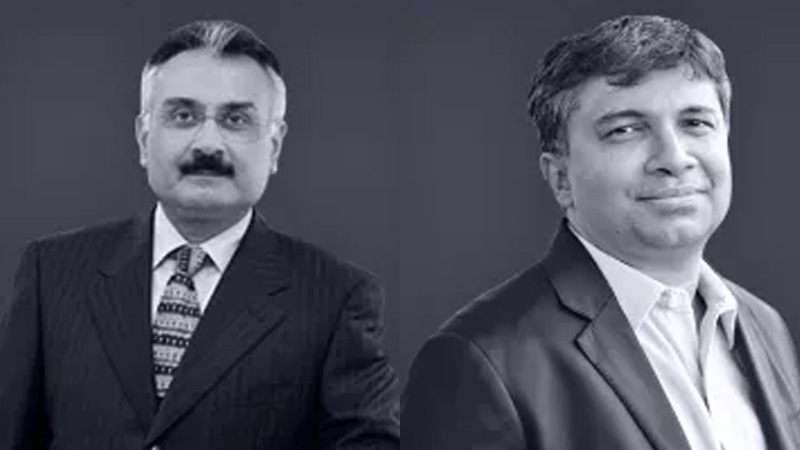
Gurugram: Delhivery’s boardroom is being reset. Deepak Kapoor, chairman and independent director, has resigned with effect from April 1 as part of a planned board reconstitution, the logistics company said in an exchange filing. Saugata Gupta, managing director and chief executive of FMCG major Marico and an independent director on Delhivery’s board, has also stepped down.
Kapoor exits after an eight-year stint that included steering the company through its 2022 stock-market debut, a period that saw Delhivery transform from a venture-backed upstart into one of India’s most visible logistics platforms. Gupta, who joined the board in 2021, departs alongside him, marking a simultaneous clearing of two senior independent seats.
“Deepak and Saugata have been instrumental in our process of recognising the need for and enabling the reconstitution of the board of directors in line with our ambitious next phase of growth,” said Sahil Barua, managing director and chief executive, Delhivery. The statement frames the exits less as departures and more as deliberate succession, a boardroom shuffle timed to the company’s evolving scale and strategy.
The resignations arrive amid broader governance recalibration. In 2025, Delhivery appointed Emcure Pharmaceuticals whole-time director Namita Thapar, PB Fintech founder and chairman Yashish Dahiya, and IIM Bangalore faculty member Padmini Srinivasan as independent directors, signalling a tilt towards consumer, fintech and academic expertise at the board level.
Kapoor’s tenure spanned Delhivery’s most defining years, rapid network expansion, public listing and the push towards profitability in a bruising logistics market. Gupta’s presence brought FMCG and brand-scale perspective during a period when ecommerce volumes and last-mile delivery economics were being rewritten.
The twin exits, effective from the new financial year, underscore a familiar corporate rhythm: founders consolidate, veterans rotate out, and fresh voices are ushered in to script the next chapter. In India’s hyper-competitive logistics race, even the boardroom does not stand still.
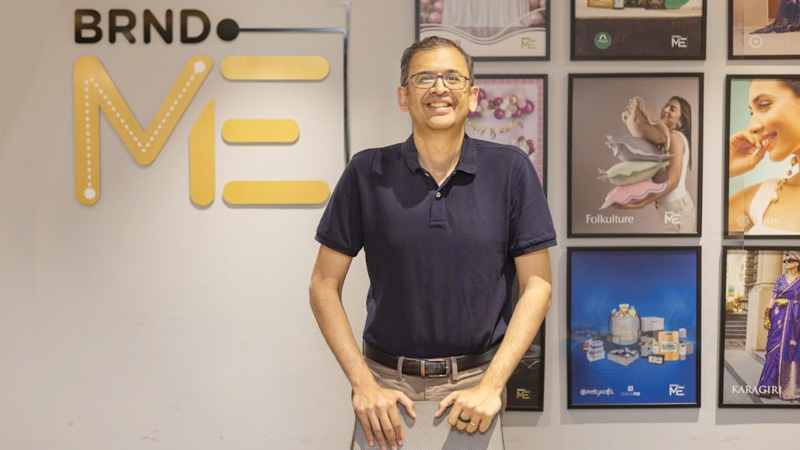
Bengaluru: Brnd.me, the global consumer brands company formerly known as Mensa Brands, has entered the European market following strong momentum across the Middle East, the United States and Canada.
The company has launched across the UK, Germany, France and Spain, with plans to expand into Italy, the Netherlands and Poland over the next year. The push is being led by its haircare and aromatherapy brands, Botanic Hearth and Majestic Pure, marking Brnd.me’s first structured expansion into Europe.
The European beauty market represents a total addressable opportunity of over $4 billion across haircare and aromatherapy, supported by high digital adoption and demand for accessible, performance-led products.
Brnd.me’s hair care and aromatherapy business currently operates at an annual run rate of around $6 million, with Botanic Hearth and Majestic Pure delivering roughly 10 per cent month-on-month growth, driven by expansion and rising repeat demand.
To support regional growth, the company has appointed a general manager based in Germany and is evaluating investments in warehousing and local team expansion.
Early traction has been strong. Within weeks of launch, Botanic Hearth’s rosemary hair oil ranked among the top five hair oils in Germany, signalling strong consumer pull in a competitive market.
Brnd.me founder and chief executive officer Ananth Narayanan, said Europe represents the next phase of the company’s international strategy. He added that the European business is expected to scale to a $10 million annual run rate by the end of 2026, with long-term ambitions to reach $60 million over the next six years.
The company’s Europe strategy centres on digital-first distribution, repeat demand and TikTok-led discovery, alongside direct-to-consumer expansion to strengthen brand equity and margins.
The move also aligns with growing EU–India trade engagement, supporting long-term sourcing and cross-border supply chains.

NATIONAL: TechnoSport has launched on Slikk, the ultra-fast fashion app offering 60-minute delivery, as the activewear brand accelerates its push into quick commerce to capture Gen Z and young millennial shoppers.
The debut brings more than 150 high-performance styles to Slikk’s platform, with an average selling price of Rs 450, expanding TechnoSport’s reach across over 80 pin codes.
The partnership follows strong momentum for TechnoSport across Q-commerce channels, where the brand has recorded around 60 per cent volume growth over the past six months. The company expects quick commerce to contribute nearly 20 per cent of its revenue in the coming years as hyperlocal delivery gains scale.
Slikk, which recently raised $3.2 million in seed funding led by Lightspeed, has rapidly gained popularity among youth consumers seeking speed, trend relevance and impulse-led shopping experiences.
Activewear remains one of Slikk’s fastest-growing categories, driven by shoppers increasingly treating fitness-led fashion as an everyday essential. The platform has reported a 30-fold year-on-year increase in items sold, reflecting rising demand for performance wear that blends comfort with style.
TechnoSport chief executive officer Puspen Maity, said the collaboration would help the brand engage more closely with young consumers whose fashion choices are shaped by instant needs and lifestyle aspirations. He added that rapid delivery bridges the gap between intent and purchase, allowing shoppers to access activewear exactly when they want it.

Mukesh Ambani, Larry Fink come together for CNBC-TV18 exclusive

Nielsen launches co-viewing pilot to sharpen TV measurement

Netflix celebrates a decade in India with Shah Rukh Khan-narrated tribute film

Delhivery chairman Deepak Kapoor, independent director Saugata Gupta quit board

Meta appoints Anuvrat Rao as APAC head of commerce partnerships

Brnd.me enters Europe as haircare brands power global expansion

TechnoSport taps quick commerce with launch on Slikk’s 60-minute platform

These ’90s fashion trends are making a comeback in 2017
The final 6 ‘Game of Thrones’ episodes might feel like a full season
According to Dior Couture, this taboo fashion accessory is back
The old and New Edition cast comes together to perform
Phillies’ Aaron Altherr makes mind-boggling barehanded play
Uber and Lyft are finally available in all of New York State
Disney’s live-action Aladdin finally finds its stars
Mukesh Ambani, Larry Fink come together for CNBC-TV18 exclusive
Nielsen launches co-viewing pilot to sharpen TV measurement
Netflix celebrates a decade in India with Shah Rukh Khan-narrated tribute film
Delhivery chairman Deepak Kapoor, independent director Saugata Gupta quit board
Meta appoints Anuvrat Rao as APAC head of commerce partnerships
Brnd.me enters Europe as haircare brands power global expansion
TechnoSport taps quick commerce with launch on Slikk’s 60-minute platform
-
 News Broadcasting2 days ago
Mukesh Ambani, Larry Fink come together for CNBC-TV18 exclusive
-
 iWorld6 days ago
Netflix celebrates a decade in India with Shah Rukh Khan-narrated tribute film
-
 I&B Ministry3 months ago
India steps up fight against digital piracy
-
 iWorld3 months ago
Tips Music turns up the heat with Tamil party anthem Mayangiren
-
 MAM2 days ago
Nielsen launches co-viewing pilot to sharpen TV measurement
-
 iWorld12 months ago
BSNL rings in a revival with Rs 4,969 crore revenue
-
 MAM3 months ago
HoABL soars high with dazzling Nagpur sebut
-
 News Broadcasting2 months ago
CNN-News18 dominates Bihar election coverage with record viewership