
MAM
GUEST COLUMN: When marketing stopped shouting and started working

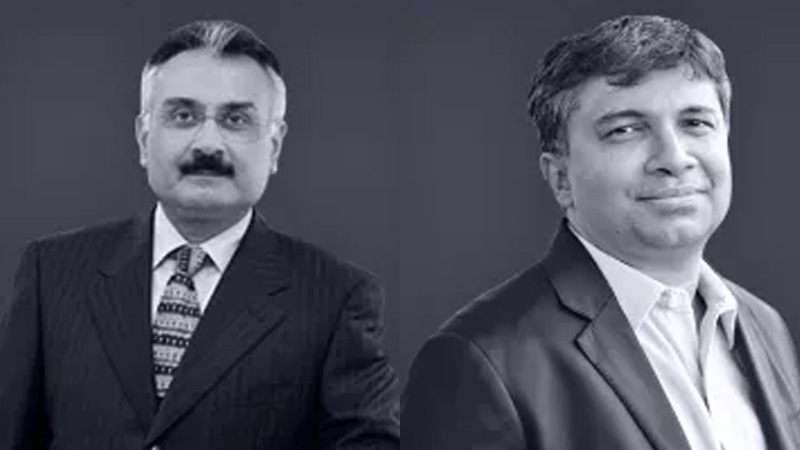
MUMBAI: In this guest column, Sameer Joshi and Anindya Ghosh, founders of brand marketing firm Sam & Andy, bring together their combined experience of over 45+ years to reflect on how 2025 reset the rules of marketing and branding. Drawing from careers that span leading global agencies and corporate roles, the duo examine the industry’s shift away from chasing extremes towards balance, focus and fundamentals. They discuss the rise of micro-influencers and micro-dramas, the reversal of content thinking where short formats lead to big ideas, and why the long-standing divide between brand and performance has finally collapsed. The column also explores marketing’s closer alignment with business outcomes, the emergence of quick commerce as a high-intent media platform, the growing relevance of B2B storytelling, and omnichannel becoming hygiene rather than hype. Anchored in an India-first perspective, Joshi and Ghosh argue that growth today is built through system-led thinking, credibility and clarity, making the case that 2025 was not about louder brands, but about clearer ones.
If 2025 taught the marketing and branding industry anything, it was this: growth no longer comes from chasing extremes. It comes from balance, focus and a return to fundamentals.
This was the year marketers stopped looking for silver bullets and started building systems that actually work.
One of the clearest shifts was the rise of micro-influencers and micro-dramas. Influence is no longer defined by scale alone. Brands increasingly leaned on smaller, credible voices that speak to specific communities with authenticity. Alongside this came micro-dramas. Short, episodic content formats designed for attention-fragmented audiences. These weren’t cut-down versions of larger ideas; they were the idea itself.
This marked a reversal in content thinking. Earlier, brands made long films and edited them into shorter formats. In 2025, the thinking flipped. The six-second or ten-second film became the starting point. If the idea worked, it earned the right to scale up. Even film promotions followed this model. Movies were marketed through hundreds of short reels that gradually pulled audiences into theatres. Everything small now leads to something bigger.
Another long-standing debate finally lost relevance: brand versus performance. The industry realised that these are not opposing forces. Performance without brand hits a ceiling. Brand without performance lacks accountability. The most effective marketers treated them as one system, not two separate mandates. Legacy brands demonstrated this balance well, proving that sustained growth requires both short-term efficiency and long-term meaning.
This shift also moved marketing closer to the business core. Marketing conversations increasingly happened in revenue rooms, not just creative reviews. Banks, startups and large enterprises began expecting solutions, not just campaigns. Marketing was no longer measured by what it said, but by what it delivered.
A major structural shift came from the rise of quick commerce as a media platform. Media budgets didn’t vanish; they migrated. High-intent environments where discovery and transaction coexist became far more valuable than passive reach. Quick commerce platforms evolved from distribution channels into powerful influence points, reshaping how brands think about visibility and timing. B2B marketing also came into its own. It moved beyond relationship-led selling and embraced visibility, storytelling and relevance. Decision-makers are people first, not designations. B2B brands began competing for attention, not just access, recognising that mental availability shortens sales cycles.
On the distribution front, omnichannel stopped being a buzzword and became hygiene. Digital-native brands acknowledged the power of physical presence, while traditional brands strengthened on digital platforms, sometimes offering products unavailable anywhere else. Growth now sits at the intersection of offline trust and online convenience.
At a broader level, India itself underwent a branding shift. The country is no longer content being just a manufacturer or exporter. There is a growing understanding that markets are created through narratives, not just capacity. Indian businesses, from commodities to consumer brands, recognised the need to build brands with global relevance. The industry also witnessed consolidation and fragmentation at the same time. Large agency networks merged and streamlined, while independent agencies thrived by being agile and fearless.
Scale and specialisation now coexist.
Trust became non-negotiable. Brand crises this year showed that audiences expect honesty, speed and accountability. Saying sorry early proved more powerful than explaining later. Authenticity stopped being a value statement and became a survival skill.
Looking ahead, several signals are clear. Media platforms will be judged harder on real business impact. AI-led discovery will reshape search and commerce. Categories like jewellery will see clearer articulation of purpose; natural diamonds, lab-grown diamonds and gold will coexist, each with its own reason to exist rather than competing for the same space.
Politically and economically, change is inevitable. But fundamentals remain unchanged. Brands that win will be those that focus on clarity, consistency and credibility.
One myth, however, needs retiring: the disappearance of the Indian middle class. It hasn’t vanished; it has evolved. The middle class is no longer a single income band, it is a mindset. Writing it off is not insight; it is misreading India.
2025 wasn’t about louder brands. It was about clearer ones.
Note: The views expressed in this article are solely the author’s and do not necessarily reflect our own.





Gurugram: Delhivery’s boardroom is being reset. Deepak Kapoor, chairman and independent director, has resigned with effect from April 1 as part of a planned board reconstitution, the logistics company said in an exchange filing. Saugata Gupta, managing director and chief executive of FMCG major Marico and an independent director on Delhivery’s board, has also stepped down.
Kapoor exits after an eight-year stint that included steering the company through its 2022 stock-market debut, a period that saw Delhivery transform from a venture-backed upstart into one of India’s most visible logistics platforms. Gupta, who joined the board in 2021, departs alongside him, marking a simultaneous clearing of two senior independent seats.
“Deepak and Saugata have been instrumental in our process of recognising the need for and enabling the reconstitution of the board of directors in line with our ambitious next phase of growth,” said Sahil Barua, managing director and chief executive, Delhivery. The statement frames the exits less as departures and more as deliberate succession, a boardroom shuffle timed to the company’s evolving scale and strategy.
The resignations arrive amid broader governance recalibration. In 2025, Delhivery appointed Emcure Pharmaceuticals whole-time director Namita Thapar, PB Fintech founder and chairman Yashish Dahiya, and IIM Bangalore faculty member Padmini Srinivasan as independent directors, signalling a tilt towards consumer, fintech and academic expertise at the board level.
Kapoor’s tenure spanned Delhivery’s most defining years, rapid network expansion, public listing and the push towards profitability in a bruising logistics market. Gupta’s presence brought FMCG and brand-scale perspective during a period when ecommerce volumes and last-mile delivery economics were being rewritten.
The twin exits, effective from the new financial year, underscore a familiar corporate rhythm: founders consolidate, veterans rotate out, and fresh voices are ushered in to script the next chapter. In India’s hyper-competitive logistics race, even the boardroom does not stand still.
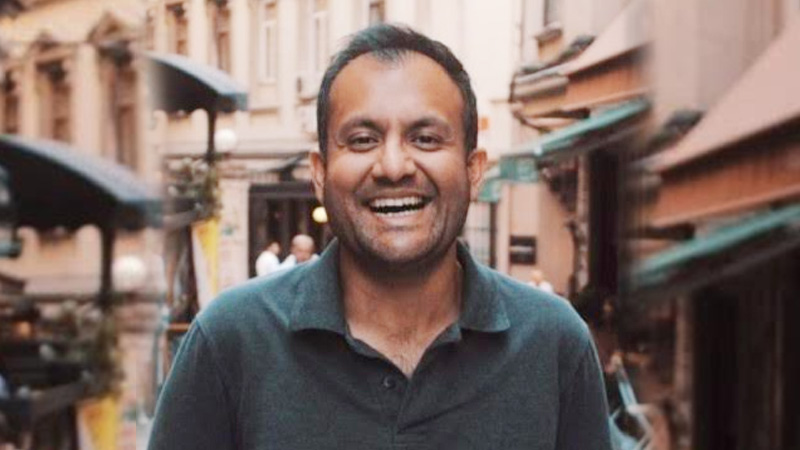
At Locofy.ai, Rao helped convert a three-year free beta into a paid engine, clocking 1,000 subscribers and 15 enterprise clients within ten days of launch in September 2024. The low-code startup, backed by Accel and top tech founders, is famed for turning designs into production-ready code using proprietary large design models.
Before that, Rao founded generative AI venture 1Bstories, which was acquired by creative AI platform Laetro in mid-2024, where he briefly served as managing director for APAC. Alongside operating roles, he has been an active investor and advisor since 2020, backing startups such as BotMD, Muxy, Creator plus, Intellect, Sealed and CricFlex through a creator-economy-led thesis.
Rao spent over eight years at Google, holding senior partnership roles across search, assistant, chrome, web and YouTube in APAC, and earlier cut his teeth in strategy consulting at OC&C in London and investment finance at W. P. Carey in Europe and the US.
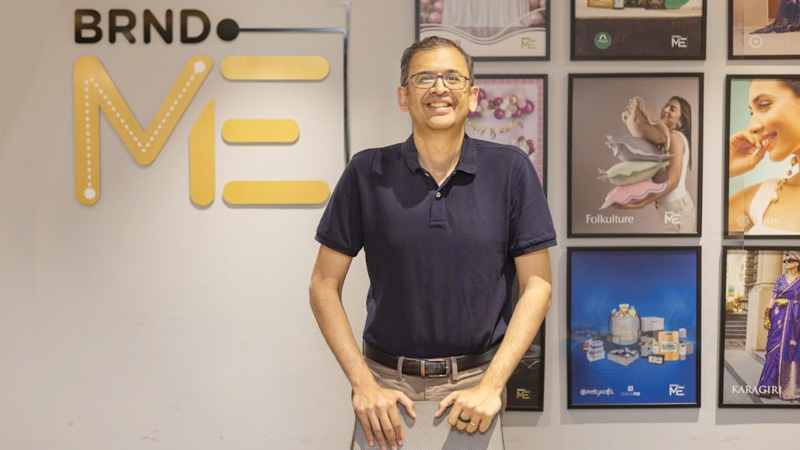
Bengaluru: Brnd.me, the global consumer brands company formerly known as Mensa Brands, has entered the European market following strong momentum across the Middle East, the United States and Canada.
The company has launched across the UK, Germany, France and Spain, with plans to expand into Italy, the Netherlands and Poland over the next year. The push is being led by its haircare and aromatherapy brands, Botanic Hearth and Majestic Pure, marking Brnd.me’s first structured expansion into Europe.
The European beauty market represents a total addressable opportunity of over $4 billion across haircare and aromatherapy, supported by high digital adoption and demand for accessible, performance-led products.
Brnd.me’s hair care and aromatherapy business currently operates at an annual run rate of around $6 million, with Botanic Hearth and Majestic Pure delivering roughly 10 per cent month-on-month growth, driven by expansion and rising repeat demand.
To support regional growth, the company has appointed a general manager based in Germany and is evaluating investments in warehousing and local team expansion.
Early traction has been strong. Within weeks of launch, Botanic Hearth’s rosemary hair oil ranked among the top five hair oils in Germany, signalling strong consumer pull in a competitive market.
Brnd.me founder and chief executive officer Ananth Narayanan, said Europe represents the next phase of the company’s international strategy. He added that the European business is expected to scale to a $10 million annual run rate by the end of 2026, with long-term ambitions to reach $60 million over the next six years.
The company’s Europe strategy centres on digital-first distribution, repeat demand and TikTok-led discovery, alongside direct-to-consumer expansion to strengthen brand equity and margins.
The move also aligns with growing EU–India trade engagement, supporting long-term sourcing and cross-border supply chains.

Netflix celebrates a decade in India with Shah Rukh Khan-narrated tribute film

Delhivery chairman Deepak Kapoor, independent director Saugata Gupta quit board

Meta appoints Anuvrat Rao as APAC head of commerce partnerships

Brnd.me enters Europe as haircare brands power global expansion

TechnoSport taps quick commerce with launch on Slikk’s 60-minute platform

Jitendra Singh joins Reliance Industries as senior vice president, special projects

Tinder brings real-world dating experiences to North East India

These ’90s fashion trends are making a comeback in 2017
The final 6 ‘Game of Thrones’ episodes might feel like a full season
According to Dior Couture, this taboo fashion accessory is back
The old and New Edition cast comes together to perform
Phillies’ Aaron Altherr makes mind-boggling barehanded play
Uber and Lyft are finally available in all of New York State
Disney’s live-action Aladdin finally finds its stars
Netflix celebrates a decade in India with Shah Rukh Khan-narrated tribute film
Delhivery chairman Deepak Kapoor, independent director Saugata Gupta quit board
Meta appoints Anuvrat Rao as APAC head of commerce partnerships
Brnd.me enters Europe as haircare brands power global expansion
TechnoSport taps quick commerce with launch on Slikk’s 60-minute platform
Jitendra Singh joins Reliance Industries as senior vice president, special projects
Tinder brings real-world dating experiences to North East India
-
 iWorld3 months ago
Tips Music turns up the heat with Tamil party anthem Mayangiren
-
 iWorld12 months ago
BSNL rings in a revival with Rs 4,969 crore revenue
-
 I&B Ministry3 months ago
India steps up fight against digital piracy
-
 MAM3 months ago
HoABL soars high with dazzling Nagpur sebut
-

 MAM2 months ago
Best Lightweight Sunscreens for Daily Use in India
-

 News Headline4 weeks ago
Preeti Sahni set to join TV9 Network in senior leadership role
-

 GECs4 weeks ago
Brick by Brick Zee TV Builds a Family Saga With Lakshmi Niwas
-

 iWorld2 weeks ago
Jio shifts gears as 5G, homes and AI deals drive quarter momentum