
Ad Campaigns
Guest article: Measuring advertising ROI for festivals metrics and analytics

Mumbai: India eagerly welcomes festivals with open arms, celebrating the joy and unity they bring. People from diverse backgrounds come together to partake in these festivities, creating a perfect platform for brands to connect with their target
audience, establish a compelling brand image, and achieve financial success.
Measuring advertising return on investment (ROI) can be challenging, especially
during festivals when there is an influx of data. However, this data can be valuable
in making informed decisions, optimising marketing campaigns, allocating

resources, and ultimately increasing profitability. To achieve these goals, brands
must utilise comprehensive metrics and analytics.
1. LTV/CAC Ratio
Checking the Customer Lifetime Value (LTV) versus Customer Acquisition Cost (CAC) is essential for measuring advertising ROI. The LTV/CAC ratio is a key metric to evaluate the effectiveness of advertising during festivals. A ratio greater than 1 suggests that the festival marketing efforts are generating more long-term revenue than the cost of acquiring customers, indicating a positive ROI. A higher ratio indicates a more profitable advertising campaign, while a lower ratio may suggest the need for optimization. One can also determine which marketing channels and campaigns are working best and allocate resources and fine-tune strategies accordingly.
2. New VS Repeat Customers’ Behaviour
Leveraging the festive period for new customer acquisition can be highly effective, as festivals are a time of heightened consumer activity. By starting and planning campaigns well ahead with compelling content and engaging creatives is a good strategy. Indian festivals often have specific audiences, and tailoring campaigns to these segments can yield better results. Publishing festival-themed blog posts, articles, and videos that provide value to your target audience, for eg., festival guides, DIY ideas, and cultural insights can be fruitful to acquire new customers and also engage existing consumers.
Analysing New vs Return purchase trends is also extremely crucial as it helps to make informed decisions regarding customer acquisition, retention, and advertising strategies. It ensures that advertising ROI measurement takes into account the diverse behaviours and preferences of these two customer segments, ultimately contributing to better ROI.
3. Gross RoAS VS Net RoAS
Gross RoAS is the total revenue generated from advertising campaigns whereas Net RoAS takes into account deductions and expenses like returns, cancellations, etc., associated with the campaigns. Gross RoAS helps assess the immediate impact during festivals but Net RoAS provides a more accurate picture of the true profitability of the festive campaigns. While festivals can drive increased sales and revenue, they can also be associated with higher rates of cancellations and returns. Tracking this helps identify patterns and trends. One can determine if certain product categories, promotions, or marketing channels are more prone to cancellations or returns. It also provides insights into customer satisfaction, product performance, and the effectiveness of advertising campaigns.
4. Attribution modeling
Attribution modelling plays a crucial role in measuring advertising ROI as it helps advertisers understand how different touchpoints and marketing channels contribute to conversions and revenue. In the context of festivals in India, where diverse marketing strategies and regional nuances are at play, attribution modelling becomes especially valuable. It helps you track the customer journey across various touchpoints, such as social media, email marketing, search ads, and offline promotions. This understanding is essential for optimizing your marketing mix. By this data, you can segment your audience based on their behaviour and preferences. This segmentation can inform personalized marketing strategies for different customer groups. Attribution modelling can also reveal seasonal trends in customer behaviour and help you plan marketing campaigns accordingly. For example, it can show if early promotional campaigns or last-minute offers are more effective.
5. Conversion rate analysis
During the festive season, consumer spending reaches its peak, causing intense
competition among brands. To ensure maximum return on investment (ROI), it
becomes crucial to assess how effectively advertising campaigns convert interested
prospects into paying customers. In this regard, analyzing conversion rates involves
tracking individuals who engage with festival-related advertisements before
embarking on their buyer’s journey. This analysis provides a comprehensive
evaluation of an advertising campaign’s efficiency and effectiveness.
All things considered
In India, festivals are not just events but also cultural milestones that brands can
embrace to connect with their customers. In these vibrant times, it has become a
crucial endeavour for them to measure ROI on their advertising campaigns. To do this effectively, brands can leverage data-driven metrics and analytics strategies for valuable insights into consumer behaviour, campaign performance, and ROI. This information also allows brands to optimize their marketing strategies, efficiently allocate resources, and take advantage of increased consumer engagement and spending that typically occur during festive periods. Ultimately, by utilizing the power of metrics and analytics, brands can drive themselves towards success and profitability.
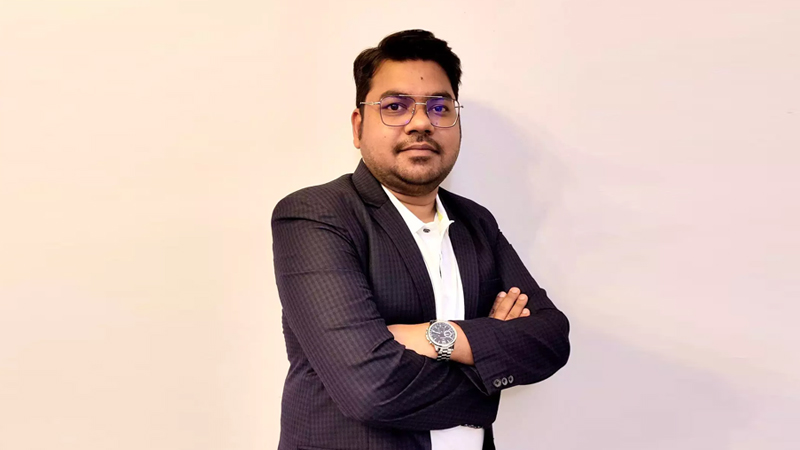
This article is authored by ETML co-founder and COO Amitek Sinha, a leading growth advertising & analytics company.


NATIONAL: Amazon Ads has laid out a sharply tech-led vision for the advertising industry in 2026, arguing that artificial intelligence, streaming TV and creator partnerships will combine to turn brand building into a more precise, performance-driven business.
At the heart of the shift, the company says, is the fusion of AI with Amazon’s vast trove of shopping, browsing and streaming signals, allowing advertisers to move beyond blunt reach metrics to campaigns designed around real customer behaviour.
“The future of advertising is not about reaching more people, but the right people with messages that resonate,” said Amazon Ads India head and vice president Girish Prabhu. “By combining AI with deep customer insights, we help brands move from broadcasting campaigns to having meaningful conversations wherever audiences spend their time.”
One of the biggest changes, according to Amazon Ads, will be the collapse of the wall between media planning and creative development. Retail media, powered by first-party data, is increasingly shaping everything from brand discovery to final purchase, pushing marketers to design campaigns around audience insight rather than internal instinct.
AI is also moving from a support tool to a creative engine. Agentic AI, which automates and accelerates production, is expected to make high-quality creative accessible even to small businesses, compressing weeks of work into hours and giving challengers the ability to compete with larger brands on speed and scale.
Behind the scenes, AI-driven analytics will take on a bigger role in campaign optimisation, identifying patterns, spotting opportunities and recommending actions that would previously have required teams of analysts.
Streaming TV is another big battleground. With India’s video streaming audience now above 600 million and connected TV users at 129.2 million in 2025, advertisers are set to treat streaming not just as a branding channel but as a performance engine, measured increasingly by sales, sign-ups and bookings rather than just reach.
Finally, Amazon Ads sees creators and contextual advertising reshaping how brands tell stories. Creators will act less like influencers and more like long-term partners, while scene-aware ads on streaming platforms will allow brands to insert hyper-relevant offers into the flow of what viewers are watching.
Taken together, Amazon Ads argues, these shifts mark a move towards advertising that is both more human and more measurable, where AI handles the complexity, and creativity does the persuading.
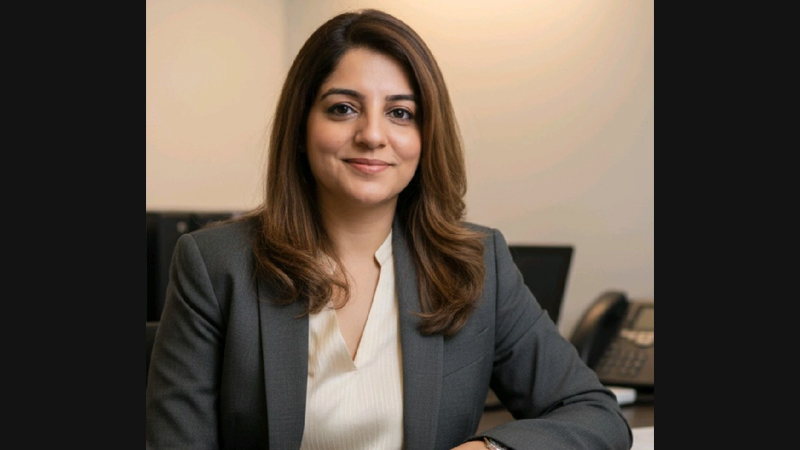
MUMBAI: Publicis Groupe India has appointed Sonal Verma as managing director of Arc Worldwide India, handing the reins of its experiential and shopper marketing business to a leader steeped in live brands and real world storytelling.
Arc Worldwide, the Groupe’s specialist arm focused on experiences that nudge consumers from curiosity to checkout, sits at the intersection of creativity, commerce and culture. Verma’s mandate is to sharpen that edge as brands grapple with shorter attention spans and more complicated buying journeys.
Verma joins from Cheil India, where she spent nearly five years building and leading the brand experience practice, most recently as senior vice president and head of brand experience. Her career reads like a tour of India’s experiential landscape, with leadership roles at Momentum Worldwide, Percept D Mark, Blockkbuster Events and Showtime Events.
She has also held senior activation roles at Radio City and The Times of India, giving her a rare mix of agency, media and on-ground execution experience. The common thread has been simple: turning big ideas into moments people remember and talk about.
At Arc Worldwide India, Verma will focus on expanding the agency’s experiential and shopper capabilities, strengthening client partnerships and keeping the work firmly rooted in consumer behaviour rather than buzzwords.
With Verma at the helm, Arc Worldwide is expected to double down on ideas that live beyond screens and closer to everyday life. For an industry obsessed with clicks and scrolls, this is a reminder that sometimes the strongest connections still happen face to face.
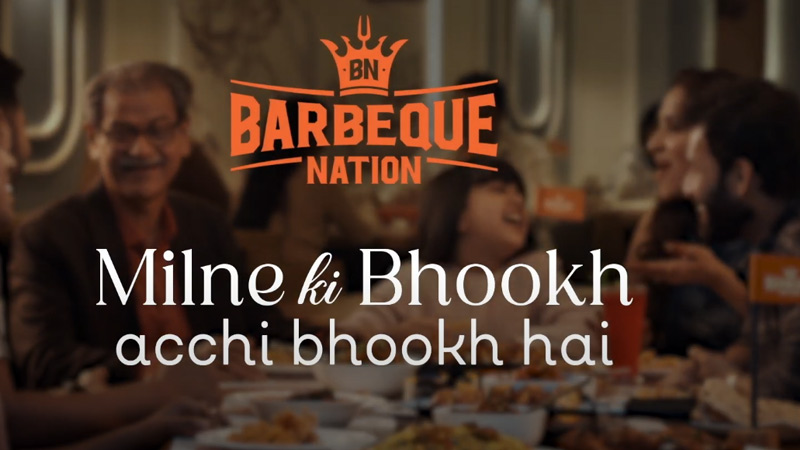
BENGALURU: Barbeque Nation is ringing in the new year with a reminder that some cravings cannot be ordered online. The casual dining chain has rolled out a new film campaign, milne ki bhookh, pitching its restaurants as places to meet, reconnect and linger over food.
Set against a world of constant messages and missed meet-ups, the campaign leans into a simple truth: dining out remains one of the few rituals that still brings people together. Barbeque Nation positions itself as the excuse and the setting for real conversations, shared plates and unhurried moments.
Nakul Gupta, cmo at Barbeque Nation, says the brand has long been about shared celebrations. As the year turns, milne ki bhookh captures what he calls a growing hunger to meet, connect and spend time together, with food at the centre of that experience.
Created by Makani Creatives, the campaign comprises three films built around Barbeque Nation’s signature grills and desserts. The storytelling is deliberately sensorial, designed to spark cravings while nudging diners to step out and meet in person.
Pavan Punjabi, chief integration officer at Makani Creatives, says the idea stems from a familiar contradiction. People are constantly connected, yet meetings with loved ones are endlessly postponed. Milne ki bhookh, he says, is a gentle push to make time for real-life catch-ups, using food as the reason to come together, share a meal and create memories.
The campaign breaks on December 25 with the grilled prawns film and will run for two months, amplified across digital platforms. As the new year begins, Barbeque Nation is betting that the strongest appetite of all is not for food alone, but for each other.


MIB sets OTT accessibility rules, mandates captions and audio description

Boney Kapoor acquires remake rights of Tamil political satire Thalaivar Thambi Thalaimaiyil

Netflix India names Rekha Rane director of films and series marketing

Zabeen signs off from TV9 after shaping the network’s public voice

Dhawan steps up to bat for Delhi’s grassroots sports push

Orient Beverages pops the fizz with steady Q3 gains and rising profits

Cheekatilo shines in the dark with record debut on Prime Video

These ’90s fashion trends are making a comeback in 2017
The final 6 ‘Game of Thrones’ episodes might feel like a full season
According to Dior Couture, this taboo fashion accessory is back
The old and New Edition cast comes together to perform
Phillies’ Aaron Altherr makes mind-boggling barehanded play
Uber and Lyft are finally available in all of New York State
Disney’s live-action Aladdin finally finds its stars
MIB sets OTT accessibility rules, mandates captions and audio description
Boney Kapoor acquires remake rights of Tamil political satire Thalaivar Thambi Thalaimaiyil
Netflix India names Rekha Rane director of films and series marketing
Zabeen signs off from TV9 after shaping the network’s public voice
Dhawan steps up to bat for Delhi’s grassroots sports push
Orient Beverages pops the fizz with steady Q3 gains and rising profits
Cheekatilo shines in the dark with record debut on Prime Video
-
 e-commerce3 weeks ago
Swiggy Instamart’s GOV surges 103 per cent year on year to Rs 7,938 crore
-
 News Headline1 month ago
From selfies to big bucks, India’s influencer economy explodes in 2025
-

 News Broadcasting2 weeks ago
Mukesh Ambani, Larry Fink come together for CNBC-TV18 exclusive
-
 iWorld5 months ago
Billions still offline despite mobile internet surge: GSMA
-

 News Headline2 months ago
2025: The year Indian sports saw chaos, comebacks, and breakthroughs
-

 Applications2 months ago
28 per cent of divorced daters in India are open to remarriage: Rebounce
-
 News Headline2 months ago
Game on again as 2025 powers up a record year and sets the stage for 2030
-
 MAM2 years ago
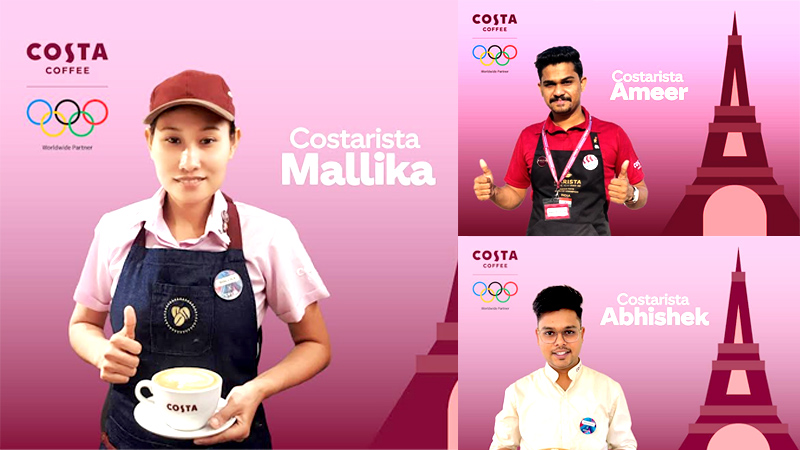
Costa Coffee becomes official coffee partner of Olympic Games Paris 2024
