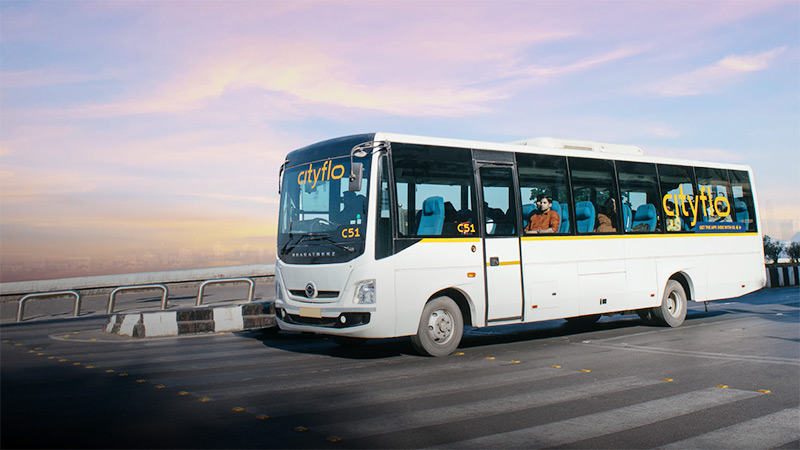
MUMBAI: India’s creaky public bus system is getting a long-overdue upgrade—and this time, it’s private players taking the wheel. Cityflo’s parent company, Komorebi Tech Solutions, has launched a joint venture with Globus Trans Solutions LLP to operate electric buses under the state-run transit system. The JV, Urban Glide, hit the road on 12 May 2025, promising to shake up the Rs 1,00,000 crore public mobility opportunity.
Urban Glide plans to deploy 500 electric buses in its first year. The project brings together former Best honcho Victor Nagaonkar and public transport veteran Sunil Solanki—names long associated with operational scale and on-ground execution across India’s biggest transit networks.
India’s urban transit network is undergoing a seismic shift under the Gross Cost Contract (GCC) model, which allows private operators to run state-owned electric buses while states control routes and fares. It’s a playbook borrowed from global models in Singapore and the UK, where companies like Comfortdelgro and Stagecoach run high-frequency, reliable services within public-private partnerships.
“We believe this will be one of urban India’s most consequential infrastructure transitions. The opportunity is not just operational but generational”, said Cityflo CEO Jerin Venad. “India is going to move over 200 million people a day on zero-emission, clean, well-run buses. Urban Glide is our commitment to building at the scale and standard that this moment demands.”
The new model solves several pain points—funding gaps, outdated fleets, inconsistent commuter experience—by opening the doors to private innovation and investment. And with over 200,000 electric buses being inducted across India under the GCC framework, players like Urban Glide are positioning themselves for scale.
Urban Glide will kickstart operations with 150 buses across Mumbai Metropolitan Region (MMR), with national expansion on the cards as more GCC contracts roll out. Its approach focuses on asset lifecycle control, professionalised driver operations, data-driven route optimisation, and embedded safety systems.
“We have seen this move in other sectors: regulation opens, capital flows in, and the incumbents are those who can build at scale. Public transport is now getting its Jio moment”, added Venad.
The ecosystem is further bolstered by long-term contracts, fare collection handled by the state, operating subsidies on EVs, and a Payment Security Mechanism already in motion—mitigating risk for serious operators.
Still, Venad acknowledges that the sector demands players with muscle—those ready to manage fleets of over 1,000 buses and commit to long-term, safety-first operations. With deep operational roots and capital alignment, Urban Glide appears ready to lead from the front.
Leave a Reply