
Brands
Celebrities & brands in 2015: The changing dynamics

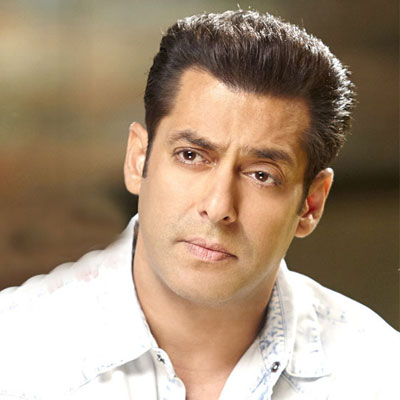
MUMBAI: Celebrities and brands go hand in hand and so do celebrities and controversies! No sooner has a celeb publicly said something even remotely scandalous, blasphemous, startling or offensive knowingly or unknowingly than a controversy has erupted… one which doesn’t take too much time to snowball into a “grave national issue” to be discussed on prime time across news channels!
And 2015 was one such year that saw many a celebs facing the wrath of the common man for putting their foot in their mouth on more occasions than one. Be it Shah Rukh Khan, Aamir Khan, Salman Khan or Aishwarya Rai Bachchan, they’ve all had their moment in the spotlight and for all the wrong reasons. When a controversy breaks, after the celebrity, the next thing that gets affected is either their unreleased movie or the brands that they endorse.
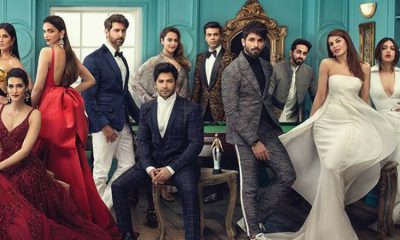
Last year was a significant year when it comes to celebrity endorsements. While there weren’t any path breaking innovations, a few memorable campaigns like Tanishq Divyam’s Diwali campaign featuring Deepika Padukone and her family, Shah Rukh Khan’s Yepme campaign and Ranbir Kapoor in Saavn’s TVC commercial kept up the excitement quotient. There’s no denying the fact that an ad’s reach becomes tenfold when a celebrity gets onboard. From automobiles, life insurances to washing powders and vests — there’s not a single category left that hasn’t yielded to star power. But it was not all merry in endorsement land as several cases of endorsements gone wrong popped up in 2015.

Brand endorsements that went wrong:
Interestingly, while it is hard to name any celebrity brand campaign that stood out in 2015, one can easily name the ones that made it to the headlines for all the wrong reasons. We saw Aishwarya Rai Bachchan being hurdled with racial discrimination allegations for her Kalyan Jewellers ad.
That aside, one of the biggest example would be Nestle’s Maggi, which came under the radar over permissible amount of lead in it. Several celebrities who had promoted the brand in the past, especially Madhuri Dixit and Amitabh Bachchan had to face the wrath of netizens for endorsing a brand that may have been harmful.
So what do we take home from these instances of endorsements gone wrong (if they are)?
“Not to ride on media wave and add to mass hysteria,” says KWAN Entertainment and Marketing Solutions CEO and MD Anirban Das Blah. “A lot of all the so called controversial brand endorsements we saw in 2015 were more of a media cook up than a real issue. Moreover, almost all of them had nothing to do with the celebrities, who endorsed the product.”
Acknowledging the moral responsibility of a celebrity in carefully choosing the brands they endorse, Blah simply asks, “If a certain product is considered harmful for consumption, aren’t the dealers and shopkeepers who sold it for so many years equally or more responsible?”
According to Blah’s observation, celebrities do their research with whatever information is available to the public. Unless one is expecting them to conduct their own lab test, one can’t really point a finger at them for supporting a brand they know to be true. “I also feel that the media needs to be more responsible in how it reports these issues instead of riding on the power of social media trends and ignoring the facts,” he adds.
However, it is not always the celebrities who are at the far end of the stick. We saw the flip side of the relationship when, spurned by Aamir Khan’s public statement, several netizens took to social media to boycott his biggest endorsed brand of 2015 – Snapdeal. The Rs 30 crore deal, which took Aamir Khan to the fifth spot in the Forbes list of celebrities as per brand value, came under trial when several threatened to boycott the online shopping portal if the brand didn’t ‘snap’ its relationship with the star.
Madison Mates CEO Darshana Bhalla, who handled the deal between Snapdeal and Khan, shares her take away from the entire incident. “In a situation like that of Snapdeal and Aamir Khan, the brand has got to hand hold. If they are distinctly sure of the communication, which came with having Aamir Khan on board, then even if there are ups and downs either from the brand’s side or the celebrity’s side, they have got to stay on. Because it is after a lot of analysis that the two parties have embarked on their journey together.”
While Snapdeal issued an official statement saying that it was neither connected nor played a role in comments made by Aamir Khan in his personal capacity, at the end of the day, their association survived the storm.
Changing ball game:
What’s changing the game is undoubtedly the emergence of digital as an advertisement platform. A clear shift from the traditional to the digital medium has been seen and more so in 2015. More and more brands are moving from plastering vanilla deals through electronic and print media to YouTube and social networking sites like Facebook, Twitter, and Instagram for their trend value.
What does that imply for celebrity endorsements? Multi-platform entertainment management company, Exceed CEO Uday Singh says that it offers a sea change in the way endorsements are looked at.
“Earlier we used see celebrities at several on-ground activation events. Getting a big star onboard generally would guarantee several hundred footfall for the events. But times have changed now. Now instead of on-ground activation, online activations are being preferred. If a brand can get an Amitabh Bachchan onboard, who has one of the highest number of followers on social media, a single message from him can reach millions of people. The beauty further lies in the fact that the result is instantaneous and measurable,” Singh explains, adding that he finds the current changes in the advertisement sphere quite exciting.
When asked if the standard for hiring a star to communicate a message for a brand would eventually depend on their social media traction, Singh says, “The parameters aren’t that singular. There are more than one or two factors, which marketers and brand managers consider when signing a deal with a celebrity. The person has to stand for something and has to be relatable to the brand’s target group.”
Seconding Singh, Bhalla adds, “Between 2014 and 2015, the industry saw a slight paradigm shift in how advertising is treated. We noticed a unique focus on multiple platforms viz-a-viz electronic and print ads that we were so used to. Digital and mobile phones have made advertising more personal and targeted. The rapid growth of e-commerce has also led to an increased traction on digital platforms. Stress is given on content and brands are opting for a more narrative approach to their brand communication that emotionally connects consumers with the products. This opens a huge opportunity for celebrity endorsements. Celebrities have an advantage when it comes to forming those bonds and connecting with consumers emotionally,” she says.
Celebrity or not, the 30 second TVC formula is a dying breed, says Blah. The advertising world is fast moving to digital and soon mobile will outdo television in terms of reach. Bhalla says, “The growing need to have a personal connect with consumers will lead brands to take the celebrity approach as well.”
Noticing the shift in the way a brand endorsement is approached, Blah adds, “Gone are the days when actors were required to fit into a type cast to be able to join the brand wagon. Where action heroes would address certain brands, while actresses would represent glamorous products. Today, endorsements are not strategic calls but a tactical necessity on the part of the marketers to retain their USP, and celebrities are nothing more than the models who act in the TVCs, albeit with a larger reach that the marketer needs.”
The number game:
What exactly is a successful celebrity campaign? Is it by its content, how many calls the brand’s sales teams get after the campaign, or by how long people retain an ad in their memory.
“While talking about a good campaign done with a celebrity, we are often caught analysing the creative input and the content, which is a subjective matter, if you ask me. Creatively appealing or not, ultimately what matters is how much a particular campaign and a star’s presence has helped the brand achieve its communication target. In short, how many sales call they receive,” Bhalla puts across straightforwardly.
With relevance as the key, the profit and loss effect of an ambassador over a brand is the ultimate judge of that celebrity’s brand value. Going by that formula, Bhalla acknowledges that Snapdeal has worked really well for Aamir Khan, not to mention it was one of the highest grossing endorsement deals of the year worth approximately Rs 30 crore.
Perhaps it has to do with the actor preferring to sign at least a year or two long contracts, instead of per day deals like most celebrities. “Ranbir Kapoor and Aamir Khan are two celebrities, who prefer to sign long term campaigns and only come onboard with a brand with brand communication in mind. This also puts them on the top of the list of highest paid celebrities for endorsements,” Bhalla says.
An executive from a celebrity brand management company shares on condition of anonymity that if one were to break up these two actors’ endorsement fees on a per day basis, Aamir Khan can charge up to Rs 3 – 4 crore per day for an endorsement, while Ranbir Kapoor can ask for Rs 2.5 – 3 crore.
“The high rates don’t necessarily effect a celebrity’s net earnings from endorsements. While Aamir and Ranbir charge a ton for a single endorsement, they are not onboard with too many brands,” says Blah.
On the other hand, actors like Shah Rukh Khan, who recently reclaimed his top rank in the Forbes list of Indian celebrities in terms brand value in 2015, may be working with over 25 brands at a time. Sources share that SRK commands anything between Rs 2 – 3 crore as his per day endorsement fee.
While Blah asserts that SRK seldom strikes a long term deal with a brand, Singh begs to differ. “There is a certain charm about Shah Rukh Khan for which brands can’t leave him. His long term association with Videocon shows that the actor must be doing something right for them to be carrying on with him. Even brands like Tag Heuer, which have recently signed Ranbir Kapoor for one of their promotions, are still continuing with their contract with Shah Rukh Khan. He is undoubtedly the king in the endorsement world in India,” stresses Singh.
Going by the figures shared by a source, who works closely with the stars, SRK, Aamir and Ranbir are closely followed by Salman Khan with a per day endorsement fee of Rs 2 – 2.5 crore. On the other hand, cricketers Virat Kohli and MS Dhoni, actors Deepika Padukone and Akshay Kumar all charge in the range of Rs 1.2 crore approximately, followed by Katrina Kaif and Kareena Kapoor at Rs 1 crore. Endorsement fees of actors like Shahid Kapoor, Farhan Akhtar and Priyanka Chopra fall in the Rs 75 lakhs per day range.
While the Khans continue to lead the number game, even though the year wasn’t the best for the Dabangg hit-maker, industry experts unanimously agree that Akhtar emerged as the new face of endorsement for several brands in 2015.
“He has carved a niche market for himself as an urban man in a scenario where every other actor is either too young or has too much mass appeal. Brands looking for a man of credibility to communicate for their premium products, have only so many options to choose from. This was a market initially led by Saif Ali Khan, and now Farhan Akhtar is doing amazing well for similar products like Asian Paints and Chivas,” says Blah.
Another new kid on the block to watch out for, says Singh, is Varun Dhawan. “The boy has chosen his films very carefully. While he has done roles that strike a chord with a masses, he has also appealed to the niche market. Starting with 2015, one can look forward to seeing him in several brand campaigns in the upcoming year as well.”
When it comes to newcomers and new faces, 2015 has been a busy year for the likes of Alia Bhatt, Kriti Sanon, Shraddha Kapoor and Jacqueline Fernandes says Blah, adding that these ladies will continue to command television screen time, visibility through OOH campaigns as well as digital footprints in 2016 as well.
Over all, experts foresee an exciting year ahead for celebrity endorsements albeit with their share of controversies.
As long as India remains a country that is driven by visual communication for quick and effective reach, celebrity endorsements will continue to dominate the advertising space, be it electronic, print or digital.






Brands
Netflix India names Rekha Rane director of films and series marketing
Streaming giant bets on a seasoned marketer who helped build Amazon and Netflix into household names
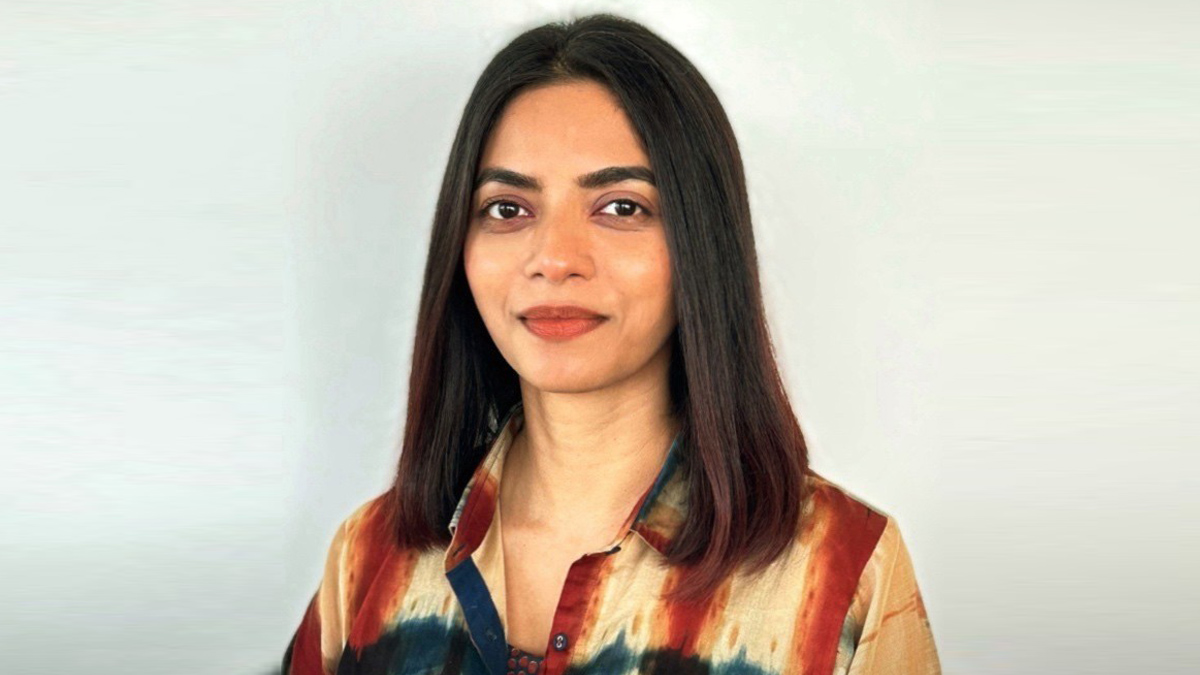
MUMBAI: Netflix has put a proven brand builder at the helm of its films and series marketing in India, naming Rekha Rane as director in a move that signals sharper focus on audience growth and cultural cut-through in one of its most hotly contested markets.
Rane steps into the role after seven years at Netflix, where she has quietly shaped how the platform sells stories to India. Her latest promotion, effective February 2026, crowns a run that spans brand, slate and product marketing across originals, licensed content and new verticals such as games.
A strategic marketing and communications professional with roughly 15 years’ experience, Rane has spent much of her career building technology-led consumer businesses and new categories, notably e-commerce and subscription video on demand. She was part of the early push that introduced Amazon.in, Prime Video and Netflix to Indian homes, then helped turn them into everyday brands.
At Netflix, she most recently served as head of brand and slate marketing for India from March 2024 to February 2026, leading teams across media and marketing for global and local content portfolios. Before that, as manager for original films and series marketing, she led IP creation and go-to-market strategy for titles including Guns and Gulaabs, Kaala Paani, The Railway Men* and The Great Indian Kapil Show, spanning both binge and weekly-release formats.
Her earlier Netflix roles covered product discovery and promotion in India and integrated campaign strategy to drive conversations around the content slate, product awareness and brand-equity metrics.
Before Netflix, Rane logged more than three years at Amazon in brand marketing roles in Bengaluru. There she handled national and regional campaigns for Amazon.in, worked on customer assistance programmes in growth geographies and contributed to the go-to-market strategy for the launch of Prime Video India.
Her career began well away from streaming. At Reliance Brands in Mumbai, she worked on retail marketing for Diesel and Superdry. A stint at Leo Burnett saw her work on primary research for P&G Tide, mapping Indian shoppers’ paths to purchase. Earlier still, at Orange in the United Kingdom, she rose from sales assistant to store manager, running a team and owning monthly P&L for a retail outlet.
The arc is telling. As global streamers fight for attention in a crowded Indian market, executives who understand both mass retail behaviour and digital habit-building are prized. Rane’s career sits at that intersection.
For Netflix, the bet is simple: in a market spoilt for choice, sharp marketing can still tilt the screen. And with Rane now leading the charge, the streamer is signalling it wants not just viewers, but fandom.
Brands
Orient Beverages pops the fizz with steady Q3 gains and rising profits
Kolkata-based beverage maker reports stronger revenues and profits for December quarter.
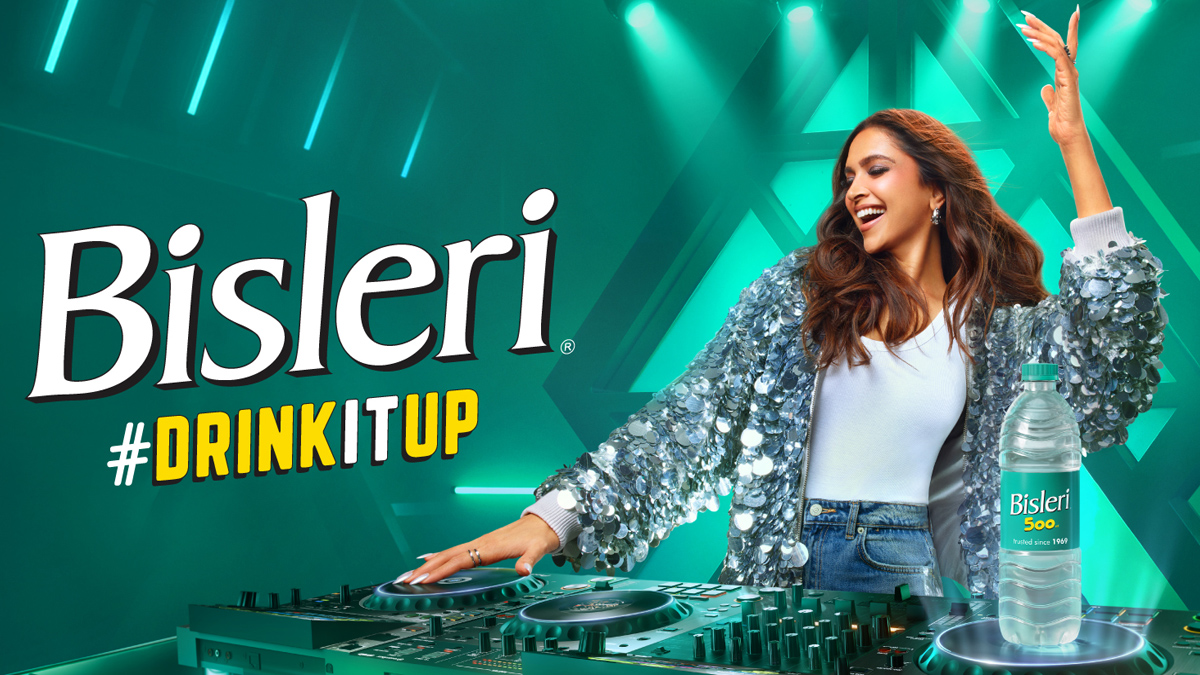
MUMBAI: A fizzy quarter with a steady aftertaste that’s how Orient Beverages Limited, the company that manufactures and distributes packaged drinking water under the brand name Bisleri closed the December 2025 period, as the Kolkata-based drinks maker reported improved revenues and a healthy rise in profits, signalling operational stability in a competitive beverage market.
For the quarter ended December 31, 2025, Orient Beverages posted standalone revenue from operations of Rs 39.98 crore, up from Rs 36.42 crore in the previous quarter and Rs 33.53 crore in the same quarter last year. Total income for the quarter stood at Rs 42.24 crore, reflecting consistent demand and stable pricing across its beverage portfolio.
Profit before tax for the quarter came in at Rs 3.47 crore, a sharp improvement from Rs 1.31 crore in the September quarter and Rs 0.39 crore a year ago. After accounting for tax expenses of Rs 0.79 crore, the company reported a net profit of Rs 2.68 crore, nearly three times the Rs 0.99 crore recorded in the preceding quarter.
On a nine-month basis, the momentum remained intact. Revenue from operations for the period ended December 31, 2025 rose to Rs 117.66 crore, compared with Rs 106.95 crore in the corresponding period last year. Net profit for the nine months climbed to Rs 5.51 crore, more than double the Rs 2.18 crore reported in the same period of the previous financial year.
The consolidated numbers told a similar story. For the December quarter, consolidated revenue from operations stood at Rs 45.06 crore, while profit after tax came in at Rs 2.06 crore. For the nine-month period, consolidated revenue touched Rs 133.57 crore, with net profit of Rs 4.49 crore, underscoring the group’s improving profitability trajectory.
Operating expenses remained largely controlled, with cost of materials, employee benefits and other expenses broadly aligned with revenue growth. The company continued to operate within a single reportable segment beverages simplifying its cost structure and reporting framework.
The unaudited financial results were reviewed by the Audit Committee and approved by the Board of Directors at its meeting held on 7 February 2026. Statutory auditors carried out a limited review and reported no material misstatements in the results.
In a market where margins are often squeezed by input costs and competition, Orient Beverages’ latest numbers suggest the company has found a reliable rhythm not explosive, but steady enough to keep the fizz alive.
Brands
BCCL profit jumps 53 per cent in FY25 as tax bill shrinks
Revenue rises 4.3 per cent to Rs 10,209.33 crore while deferred tax gain lifts bottom line sharply
NEW DELHI: Bennett, Coleman and Company (BCCL) has posted a sparkling set of financial results for the year ended 31 March 2025, proving that there is still plenty of ink and gold left in the ledger.
Revenue from operations climbed a steady 4.3 per cent, reaching Rs 10,209.33 crore compared to Rs 9,786.44 crore the previous year. When you sprinkle in other income, which rose 8.9 per cent to Rs 949.36 crore, the total income for the media behemoth hit a healthy Rs 11,158.69 crore.
While the income grew at a modest pace, the bottom line tells a far more dramatic story. The real headline is the 53 per cent surge in annual profit. How did they pull off such a feat? While Profit Before Tax (PBT) saw a gentle nudge upward of 2.7 per cent to Rs 1,610.00 crore, it was a vanishing act by the taxman that really did the trick.
Total tax expenses plummeted by 32.4 per cent, dropping from Rs 468.76 crore down to Rs 316.97 crore. This was largely thanks to a swing in deferred tax, moving from an expense of Rs 156.02 crore in FY24 to a benefit of Rs 39.44 crore this year.
Total income rose from Rs 10,658.55 crore in FY24 to Rs 11,158.69 crore in FY25, marking a 4.7 per cent increase. Total expenses grew at a slower pace, up 3.0 per cent from Rs 9,306.06 crore to Rs 9,581.45 crore. Profit before tax inched up 2.7 per cent, moving from Rs 1,567.02 crore to Rs 1,610.00 crore. However, the standout figure was net profit, which jumped sharply by 53.0 per cent, climbing from Rs 1,042.03 crore in FY24 to Rs 1,594.73 crore in FY25.
Despite the rising costs of doing business across the globe, BCCL kept a tight grip on the purse strings. Total expenses rose by just 3.0 per cent to Rs 9,581.45 crore. By keeping costs lower than the rate of income growth, the company ensured that the final figure, a net profit of Rs 1,594.73 crore, was nothing short of a front-page sensation.
In a world of shifting digital tides, it seems the BCCL ship is not just steady, but sailing into significantly wealthier waters.


MIB sets OTT accessibility rules, mandates captions and audio description

Boney Kapoor acquires remake rights of Tamil political satire Thalaivar Thambi Thalaimaiyil

Netflix India names Rekha Rane director of films and series marketing

Zabeen signs off from TV9 after shaping the network’s public voice

Dhawan steps up to bat for Delhi’s grassroots sports push

Orient Beverages pops the fizz with steady Q3 gains and rising profits

Cheekatilo shines in the dark with record debut on Prime Video

These ’90s fashion trends are making a comeback in 2017
The final 6 ‘Game of Thrones’ episodes might feel like a full season
According to Dior Couture, this taboo fashion accessory is back
The old and New Edition cast comes together to perform
Phillies’ Aaron Altherr makes mind-boggling barehanded play
Uber and Lyft are finally available in all of New York State
Disney’s live-action Aladdin finally finds its stars
MIB sets OTT accessibility rules, mandates captions and audio description
Boney Kapoor acquires remake rights of Tamil political satire Thalaivar Thambi Thalaimaiyil
Netflix India names Rekha Rane director of films and series marketing
Zabeen signs off from TV9 after shaping the network’s public voice
Dhawan steps up to bat for Delhi’s grassroots sports push
Orient Beverages pops the fizz with steady Q3 gains and rising profits
Cheekatilo shines in the dark with record debut on Prime Video
-

 News Broadcasting1 week ago
Mukesh Ambani, Larry Fink come together for CNBC-TV18 exclusive
-
 News Headline1 month ago
From selfies to big bucks, India’s influencer economy explodes in 2025
-

 iWorld2 weeks ago
Netflix celebrates a decade in India with Shah Rukh Khan-narrated tribute film
-
 Hollywood5 days ago
The man who dubbed Harry Potter for the world is stunned by Mumbai traffic
-
 I&B Ministry3 months ago
India steps up fight against digital piracy
-
 MAM3 months ago
HoABL soars high with dazzling Nagpur sebut
-
 iWorld12 months ago
BSNL rings in a revival with Rs 4,969 crore revenue
-
 iWorld3 months ago
Tips Music turns up the heat with Tamil party anthem Mayangiren
