
Digital Agencies
Budget 2024: Leaders envision a tech-driven budget revolution

Mumbai: India’s anticipation for Budget 2024 is palpable, resonating across diverse industries. From digital pioneers envisioning a tech renaissance to entrepreneurs seeking support for AI advancements, the expectations weave a narrative of innovation, growth, and strategic budgeting.
As the nation braces for economic direction, stakeholders in media, advertising, marketing, technology and martech share their hopes, emphasising the pivotal role of the budget in shaping the trajectory of their respective landscapes.
Following are the quotes from various business chiefs:
Pulp Strategy founder and MD Ambika Sharma
I have my sights set on a digital renaissance, not just a fiscal one. We at Pulp Strategy envision a landscape fortified by robust cybersecurity infrastructure, safeguarding the data that fuels our industry. Alongside this, a renewed focus on local media and advertising unlocks a tapestry of diverse voices, enriching audience engagement. The infusion of AI and automation promises to streamline operations, paving the way for more sophisticated storytelling. Adding to this I hope there would be potential for tax breaks and incentives – a catalyst for innovation and entrepreneurial spirit. This budget should be about empowering the creative minds who will sculpt the future of India’s digital narrative.

Media Care Brand Solutions director Yasin Hamidani
Anticipating steady growth, the advertising and marketing sector, fueled by a digital and eco-centric focus from last year’s budget, is set to expand. The momentum in digitisation and sustainable practices indicates a dynamic shift. As technology advances, the marketing & advertising landscape is poised to venture into burgeoning mediums like AR, VR, AI & CGI. Regardless of specific industry impacts, the surge in digital economy emphasis forecasts a rise in marketing and advertising.
Serial entrepreneur, Assiduus Global Inc founder and CEO, LP angel investor, Govt of India advisor Dr Somdutta Singh
Here’s one that’s clear: digital advertisers are poised to leverage AI and new metrics in the digital landscape that’s evolving everyday. Their goal will be to optimize budgets, especially considering there will be a surge in prices during the upcoming busy political campaigning season. Ultimately, the focus will be on ensuring meaningful connections with customers within the digital space.
Marketers, publishers, and adtech partners will be on the lookout for more profound indicators of engagement. This includes attention metrics, which provide a nuanced understanding of how users interact with content. This shift is being driven by a desire among marketers to adopt more impactful and effective advertising strategies. Moreover, there is an urgent need to strengthen the budget allocated for enhancing India’s digital infrastructure.
Tagglabs founder Hariom Seth
1. Improved HPC access: AI startups face challenges with computer access. The budget could establish affordable public cloud HPC infrastructures.
2. Local datasets creation: AI requires ample data, and the budget could support building relevant datasets for India. Global data may not grasp our issues or adhere to our rules.
– Ensure strict rules for data handling.
– Local data enhances AI tailored for India and ensures ethical usage.
3. Skill development support: India lacks AI knowledge. The budget could allocate funds for training, scholarships, and partnerships, even in remote areas.
4. AI application in key sectors: Allocate funds for AI research in vital sectors like farming, banking, and healthcare.
5. Promoting AI adoption: Provide incentives like tax breaks and public-private partnerships to encourage AI use across sectors.
6. Ethical AI practices: Support ethical AI development through training and awareness campaigns.
Additional points:
– Increased startup funding: Allocate more funds, especially for early stages.
– Conversational AI focus: Emphasise conversational AI, such as Siri.
– Encourage collaboration: Promote partnerships among companies and assist startups with significant costs.
NеtSеtGo co-foundеr Sundееp Rana
A well-structured budget can play a pivotal role in streamlining IPO processes and fostering investor confidence in startup exits. Allocating resources judiciously ensures regulatory compliance, transparency, and legal adherence during the IPO journey. Moreover, budget provisions for effective investor communication, marketing, and technology infrastructure signal professionalism and commitment, enhancing investor trust. Talent acquisition and retention, backed by budgetary allocations, contribute to a capable team ready to navigate the complexities of an IPO. In essence, a carefully planned budget not only facilitates a smoother startup exit but also instills confidence in investors, showcasing the company’s dedication to governance and operational excellence.
Social Pill co-founder & head of digital media Neelesh Pednekar
In anticipation of the Union Budget 2024-2025, the advertising, marketing, and experiential marketing industries in India are focusing on industry-specific expectations, particularly in the context of the digital economy’s Compound Annual Growth Rate (CAGR). Stakeholders are hopeful for supportive measures within the budget that will foster growth, innovation, and competitiveness. A significant point of discussion revolves around the potential introduction of the digital services tax (DST), a long-debated issue that could impact multinational tech giants operating within the country. With the explosive growth of e-commerce and online payments, there is a pressing need to reevaluate taxation related to online transactions, possibly leading to amendments in the goods and services tax (GST) to accommodate and bolster e-commerce in India. Additionally, stakeholders are speculating on the possibility of tax concessions in advertising and marketing, potentially prompting brands to increase their budgets in these domains. Furthermore, the budget might introduce taxation on influencer marketing, aiming to bring this emerging field under the formal economic umbrella.
Sirona Hygiene CEO & co-founder Deep Bajaj
At Sirona, we acknowledge the pivotal role that effective budgeting plays in shaping our strategic approach and ensuring the realisation of our business objectives. In navigating the dynamic landscape of marketing, advertising, and technology.
The marketing strategy is intricately woven into the understanding of market trends, consumer behavior, and the evolving needs of the target audience. Through meticulous budget planning, the objective is to allocate resources efficiently, leveraging both traditional and digital channels. This approach enhances brand visibility, engages our audience, and propels sustainable growth.
In the realm of advertising, Sirona places great importance on the creation of compelling campaigns that resonate deeply with our audience. A well-structured budget empowers us to invest in creative content, strategic media placements, and targeted advertising. By remaining adaptable and data-driven.
Embracing technological advancements is integral to the business model, and the budgeting approach reflects this commitment. Resources are allocated for the adoption of innovative technologies that enhance operational efficiency, elevate customer experience, and fortify data security. To remain steadfast in the dedication to staying at the forefront of technological trends to maintain a competitive edge in the industry.
The budgeting process is designed to be transparent and adaptable, allowing everyone to respond promptly to market dynamics, emerging trends, and unforeseen challenges. Regular assessments and performance evaluations enable one to make informed decisions, refining our strategies for continued success.
Almonds Ai CEO and co-founder Abhinav Jain
In Budget 2024, we hope for policies that nurture India’s tech innovation ecosystem. We need increased investments in R&D initiatives, particularly in areas like AI, robotics, and advanced materials. Additionally, incentives for attracting and retaining skilled tech talent through tax breaks for skill development programs and simplified visa processes would be greatly appreciated. The budget should act as a catalyst for India’s burgeoning startup ecosystem. We urge the government to consider easing regulations for startups, simplifying the funding process, and creating avenues for easier access to angel investors and venture capital.




BENGALURU: For years, creative teams have learned to live with ambiguity. Vague comments, last-minute changes, feedback that arrives without context, clarity, or conviction. It became part of the job – something teams worked around rather than getting it solved.
But as we head into 2026, that tolerance is wearing thin.
Creative work today moves faster, scales wider, and involves more stakeholders than before. Teams are producing more content across more formats, often with distributed collaborators and tighter timelines. In this environment, guesswork is no longer a harmless inconvenience. It’s a cost – to time, to budgets, and to creative mindspace.
The real problem isn’t feedback, it’s how it’s given
Most creative professionals you see today will tell you they’re not against feedback. In fact, they rely on it. Good feedback sharpens ideas, strengthens execution, and pushes work forward. The problem is ‘unclear’ feedback. When someone says “this doesn’t feel right” without context, they aren’t just revising – they’re basically decoding. They’re guessing what the problem might be, trying different directions, and burning time in the process. Multiply that by a few stakeholders and a few rounds, and suddenly days disappear.
In 2026, when teams are expected to deliver faster without compromising quality, interpretation is a luxury most can’t afford.
Scale has changed rverything
Creative projects used to be smaller and simpler. A designer, a manager, maybe one client contact. Feedback loops were short, even if they weren’t perfect.
Today, the same project might involve internal marketing teams, agencies, freelancers, brand reviewers, and regional teams. Everyone has a say. Everyone leaves comments. And often, those comments don’t agree. More people reviewing work means alignment matters more than ever. Clear feedback isn’t just about being nice to creative teams, it’s about keeping projects moving when complexity increases.
Guesswork quietly wears teams down
One of the less talked-about impacts of unclear feedback is what it does to people.
When feedback is vague or contradictory, creatives second-guess their decisions. They hesitate. They overwork. They keep extra time buffers “just in case.” Over time, confidence drops. Ownership fades. Work becomes safer, not stronger. Creative energy gets spent on managing uncertainty instead of pushing ideas forward. And in an industry already grappling with burnout, unclear feedback adds unnecessary mental load.
Actionable feedback is a shared skill
Clear feedback doesn’t mean controlling creative decisions or dictating every detail. It means being specific enough that someone knows what to do next.
Actionable feedback answers three basic questions:
What exactly needs attention?
Why does it matter?
What outcome are we aiming for?
This applies whether you’re reviewing a video frame, a design layout, or a copy draft. The clearer the feedback, the fewer follow-ups it creates. In 2026, teams that treat feedback as a skill and not an afterthought, will move faster with less friction.
Tools shape behaviour (whether we admit it or not)
The way feedback is delivered is often dictated by the tools teams use. Comments buried in long email threads, messages split across chat apps, or notes detached from the actual work all contribute to confusion.
When feedback lives outside the work, context often gets lost. When it’s disconnected from versions and timelines, decisions get questioned. When it’s scattered, accountability disappears. More teams are starting to realise that feedback problems aren’t just communication issues, they’re workflow issues. How work moves between people matters just as much as the work itself.
From Opinions To Alignment
One of the biggest shifts happening in creative teams is a move away from purely opinion-driven feedback. Instead of “I like this” or “I don’t,” teams are asking better questions:
● Does this meet the brief?
● Does this solve the problem?
● Does this align with the goal?
This change reduces unnecessary back-and-forth and helps feedback feel less personal and more productive. It also makes decisions easier to explain and defend. As creative work becomes more strategic, feedback has to support that shift.
2026 Is About Fewer Loops, Not Faster Loops
There’s a misconception that speed means moving through feedback cycles faster. In reality, the most creative teams aren’t just accelerating loops, they’re reducing them. Clear, actionable feedback upfront leads to fewer revisions later. Clear approval stages prevent last-minute surprises. Clear decisions stop work from circling endlessly.
In 2026, efficiency won’t come from working harder or longer. It will come from designing workflows that respect creative time and attention.
Ending guesswork is a mindset change
Ultimately, ending creative guesswork isn’t just about better tools or processes. It’s about mindset. It’s about recognising that clarity is an act of respect – for the work, for the people doing it, for the time invested and for the mindspace used. It’s about moving from “figure it out” to “here’s what we’re aiming for.”
Creative teams that embrace this shift will find themselves not only delivering faster, but also enjoying the process more. And in an industry built on imagination, that might be the most valuable outcome of all.
Digital Agencies
Kunal Wanvari steps up as senior brand and digital marketing manager at Franklin Templeton India

MUMBAI: Franklin Templeton India has elevated Kunal Wanvari to senior brand and digital marketing manager, signalling a continued push towards data-driven brand building and digital-first engagement in a crowded asset management market.
Wanvari has spent nearly eight years with Franklin Templeton India, steadily rising through the marketing ranks. Prior to this role, he served as marketing manager and assistant marketing manager, working across brand strategy, content, digital media and campaign execution from the firm’s Mumbai office.
Before joining Franklin Templeton, Wanvari built his digital credentials at WATConsult, where he handled brand strategy and account leadership roles, and earlier at Kush Infosystems, focusing on SEO and performance marketing. His career began in sales and marketing roles, giving him a ground-up understanding of commercial storytelling.
A computer engineer by training with deep digital marketing expertise, Wanvari’s elevation reflects Franklin Templeton’s bet on hybrid marketers—equal parts brand, data and digital—as competition for investor attention intensifies.
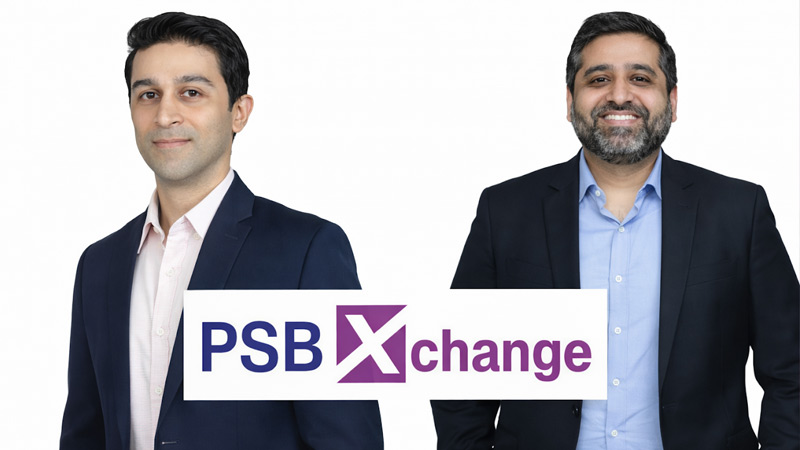
MUMBAI: PSB Xchange, India’s digital marketplace for financial solutions and a flagship platform of Veefin Solutions Limited, has reinforced its leadership team with two senior appointments as it prepares for its next phase of growth.
Ankush Aggarwal has been named chief experience officer, bringing with him more than 20 years of experience across corporate banking and the SME ecosystem. In his new role, he will focus on shaping simple, seamless and results-oriented experiences for banks, corporates and ecosystem partners. Aggarwal has previously held leadership roles at Kotak Mahindra Bank, IndusInd Bank and SG Finserve, where he led initiatives across customer onboarding, credit processes, servicing operations and digital transformation.
Widely recognised for connecting technology, operations and business strategy, Aggarwal has consistently built scalable and compliant experience models. At PSB Xchange, his focus will be on strengthening platform thinking, governance and continuous improvement to enhance efficiency and customer outcomes.
Alongside him, Sahil Sikka joins PSB Xchange as chief business officer and chief financial officer. With over 15 years of experience in banking and financial services, Sikka has played a key role in building and scaling businesses. He was part of the founding leadership team at SG Finserve, where he helped create a listed NBFC, overseeing business strategy, capital planning, product development and governance. His work earned him the best CFO financial services award at the India CFO Awards 2024.
Earlier in his career, Sikka worked with HDFC Bank, Aditya Birla Finance and Kotak Mahindra Bank, driving growth across corporate banking and structured finance. In his dual role at PSB Xchange, he will focus on strengthening growth strategy, scaling operations sustainably and delivering long-term value through strong governance and collaboration.
Commenting on the appointments, PSB Xchange and Veefin Solutions Limited CEO Sorabh Dhawan, said the additions reflect the platform’s ambitions as it expands its engagement with banks and financial institutions. He added that Aggarwal’s experience-led approach and Sikka’s strategic and financial expertise will be central to driving sustainable growth and value creation in the years ahead.


MIB sets OTT accessibility rules, mandates captions and audio description

Boney Kapoor acquires remake rights of Tamil political satire Thalaivar Thambi Thalaimaiyil

Netflix India names Rekha Rane director of films and series marketing

Zabeen signs off from TV9 after shaping the network’s public voice

Dhawan steps up to bat for Delhi’s grassroots sports push

Orient Beverages pops the fizz with steady Q3 gains and rising profits

Cheekatilo shines in the dark with record debut on Prime Video

These ’90s fashion trends are making a comeback in 2017
The final 6 ‘Game of Thrones’ episodes might feel like a full season
According to Dior Couture, this taboo fashion accessory is back
The old and New Edition cast comes together to perform
Phillies’ Aaron Altherr makes mind-boggling barehanded play
Uber and Lyft are finally available in all of New York State
Disney’s live-action Aladdin finally finds its stars
MIB sets OTT accessibility rules, mandates captions and audio description
Boney Kapoor acquires remake rights of Tamil political satire Thalaivar Thambi Thalaimaiyil
Netflix India names Rekha Rane director of films and series marketing
Zabeen signs off from TV9 after shaping the network’s public voice
Dhawan steps up to bat for Delhi’s grassroots sports push
Orient Beverages pops the fizz with steady Q3 gains and rising profits
Cheekatilo shines in the dark with record debut on Prime Video
-

 News Broadcasting6 days ago
Mukesh Ambani, Larry Fink come together for CNBC-TV18 exclusive
-
 I&B Ministry3 months ago
India steps up fight against digital piracy
-

 iWorld1 week ago
Netflix celebrates a decade in India with Shah Rukh Khan-narrated tribute film
-
 iWorld3 months ago
Tips Music turns up the heat with Tamil party anthem Mayangiren
-
 MAM3 months ago
HoABL soars high with dazzling Nagpur sebut
-
 iWorld12 months ago
BSNL rings in a revival with Rs 4,969 crore revenue
-

 MAM6 days ago
Nielsen launches co-viewing pilot to sharpen TV measurement
-

 Film Production2 weeks ago
UFO Moviez rides high on strong Q3 earnings
