
Executive Dossier
Branded Content isn’t all about visibility: Maxus ESP’s Pooja Verma

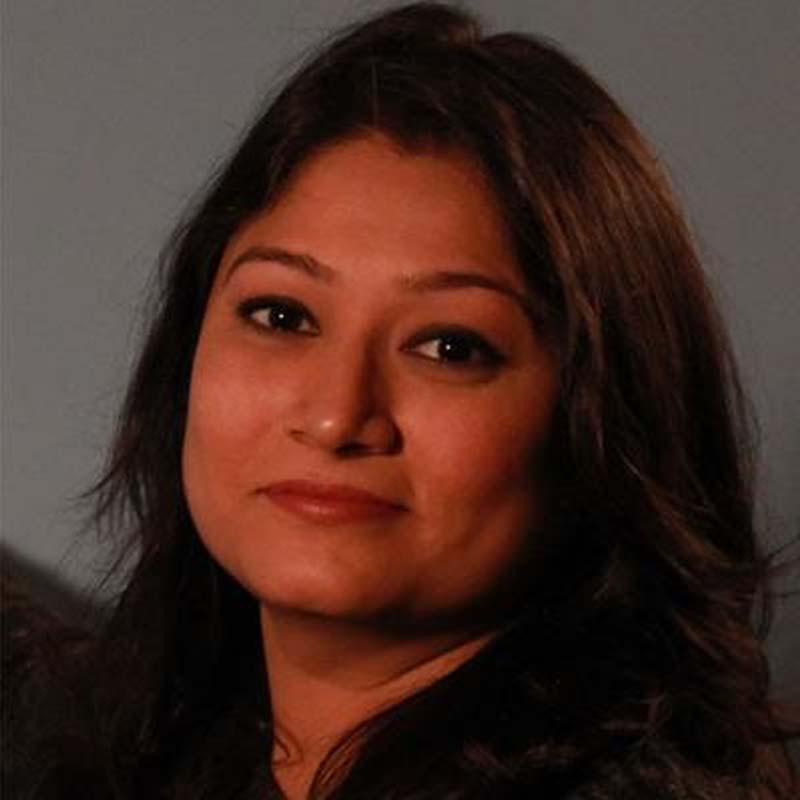
MUMBAI: Gone are the days when brands would like a piece of popular content and sponsor it, or spend some marketing budget over product placements. It starts with finding out the brand objectives first and matching it with the relevance of the content. It is not limited to a movie association or being a title sponsor of a prime time show; a plethora of content is available for brands to smartly associate with. Moving on from simple sponsorship deals, brands are donning the role of content creators themselves, both, short and long form, on television and the digital media. Content or, more precisely, branded content, is the new buzz word in the industry, as digital is becoming the norm. Naturally, traditional brands look at it as a risk, the same way digital was spoken of 10 years ago.
While there are several brands jumping the content bandwagon following a few success stories, it is important to understand what content will work for them, and when. That is when specialists such as Pooja Verma come in. Verma took on the role of head of content, Entertainment and Sports Partnerships (ESP) at Maxus a little over a year ago and life has been very busy since, she happily shares.
Maxus ESP, the content solutions arm of Maxus stepped up the branded content ante by facilitating some very innovative brand and content associations — Vodafone’s ‘Be Super’ that went live on Independence Day to promote its 4G connections, Maybellene and Manmarziyan, Tata Tiago’s association with TVF’s Tripling, and recently Vodafone’s association for Rock On 2 are some of the golden examples.
In a candid chat with indiantelevision’s Papri Das, Verma looks back on the year, and opens up on the current trends in branded content, Indian cinema’s prospects of building franchises, and what brands look for in a piece of content.
Excerpts:
What is the truth behind the current buzz for branded content?
Media agencies understand that it is not about the 30-seconder anymore, ever since social media became the norm. Thus they are investing significantly in technology, data and content of-course. Storytelling is a big part of how brands want to bring its message alive.
While digital as a medium has gone from a risk to the norm, content or storytelling for brands has taken up that space. Words like ‘native advertising’, ‘content marketing’ are being thrown up, because today’s consumers aren’t interested in being talked down to. They want to participate and engage, and then make a conscious decision to whether associate with a particular content, brand or product.
Therefore, good storytelling that is organic and intuitive and captures the essence of a brand is playing a much bigger role.
Are brands really finding it appealing and willing to spend on it?
Marketers, brands and advertisers are increasingly looking at content from a partnership perspective. The old concept of buying an IP or putting some money on show is being redefined. Content sponsorships have taken a much larger and smarter role.
For example, a brand spending Rs 10 in sponsoring a TV show now thinks how that money can work for the brand as if it were Rs 20. Which is where innovative partnerships come in. Yes, the run-of-the-mill sponsorship is the route taken but the difference is in how those sponsorships bring the brand alive. Moving forward that is the route we see becoming a norm for brands. Making the investment make harder for you and more memorable as well.
2016 has seen some interesting brands-movie associations. Yet Bollywood has a long way to catch up to international cinema when it comes to being brand-friendly. What do you think is holding Bollywood back?
I would give the industry credit for sitting up and taking notice. Firstly, stories are becoming central to the craft. The craft of storytelling and how it has changed is more than visible today. The thing with franchises is that it’s the next level. I can tell you very safely that the franchise culture will soon hit Bollywood as well. ‘Dhoom’ has three editions already. The way characters are being created shows that content makers, storytellers are thinking long term when making it. Characters around which you can spin another tale. That is great news for brands.
Look at all the bond movies, Aston Martin for car, and the Omega watch is a given. I can’t say how soon India will adopt the franchise culture, but it will be sooner than you are expecting. Hollywood saw the franchise boom because the studios took notice of the opportunity in allied businesses. The good thing is brands have started budgeting annually for movie partnerships.
At which point does a brand start its association with a piece of content?
It is around the same time a story is conceived. The thing about branded content is — whether you look at it from the film lens, or the passion point lens of sports, live gigs and others, or from a pure-play content perspective of TV, digital etc — stories are at the center of it. The whole point is ‘a brand should be spoken of in the context of the right story, which the consumers can relate to. Brands should come in at a time when it spots a great story, knows that there is future to the story, characters are memorable, and the product or the brand seems organic to it.
When it comes to films, studios take the call when stories come to them, and it is usually when they are making up mind for cast, shoot plans etc. Since it is a relationships based business, we are always in touch with the studios and keep an out for which film they are investing in.
How pressing are clients when it comes to RoI from branded content? How do you measure the success of branded content for your clients?
Looking for RoI is a given and rightly so. True, though, that the measurement of a successfully done brand integration is an industry wide debate. Everyone has a different opinion, a different take on how to measure. The way we look at it is not as simple as how many times a brand’s logo popped up in the content. It is not about how many times your brand’s name appears. It is equally if not more important to ask ‘How many people are speaking of the core thought of the brand.’
For example, when we did the ‘Be Super’ campaign for Vodafone during Independence Day, the entire exercise brought alive how one can be super. People were talking about it. Of course, we got good views on the video, but that 20 other things can get you. A 30-sec TVC also gets great views. Acknowledging that measurement in the field of branded content is important, however the lens needs to be changed a bit.
How do you convince a traditional brand to agree to an unconventional brand association? What parameters do you follow to decide if particular content works for a brand?
We focus in getting the context and relevance of the content that we are recommending fits well with the brand. Then comes the efficacy of the platform itself. Then, we discuss how we are making it ‘discoverable’. These are the questions that keep brand managers up at night as well.
There are two ways to approach it: art and science. Art is great story, memorable characters, uniqueness of content. The science part is platform, ‘discoverability,’ finding if it’s being delivered to the right TG, is it in line with the cultural codes of the brand.
I have had a client keen on associating with Bigg Boss, but the brand’s message was socially inclined. I couldn’t possibly recommend that. Yes, your product might be spoken about, but the brand’s positioning in the market and the psychographics it wanted to fit in will not be matched with Bigg Boss. It is not about just visibility.
Can you think of any brand associations in recent times that were a bad fit according to you?
Quite a few, and the examples are not just from outside, some of them were done by us. The kind of branded content we are doing now didn’t have several decades of precedence. It takes time to figure out what works for a brand and what doesn’t. But, increasingly, brands are becoming more aware of the value that good branded content can bring them. And, it is only because these bad examples exist that I can speak about the good ones.








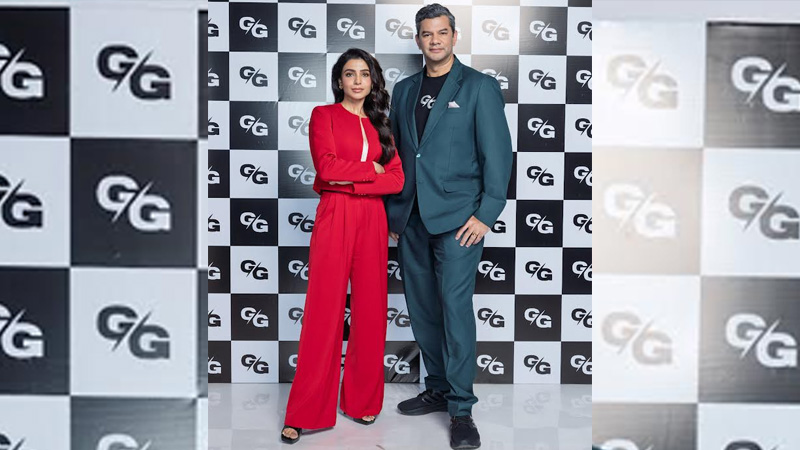
MUMBAI: Game faces on, pressure high India’s gaming ambitions are levelling up. Good Game, billed as the world’s first as-live global gaming reality show, has officially launched in India with a bold mission: to crown the country’s first Global Gaming Superstar.
Blending esports with mainstream entertainment, the show brings together competitive gaming, creativity and on-camera performance in a format that tests more than just joystick skills. Contestants will be judged on gameplay, screen presence and their ability to perform under pressure, reflecting how gaming has evolved from pastime to profession and pop culture currency.
Fronting the show are three high-profile ambassadors: actor and entrepreneur Samantha Ruth Prabhu, Indian cricket star Rishabh Pant, and gaming creator Ujjwal Chaurasia. The winner will take home Rs 1 crore ($100,000) among the largest prize pools for any Indian reality show along with the chance to represent India on a global stage.
Backed by a planned annual investment of up to Rs 100 crore, Good Game is also courting brand partners, promising a minimum reach of 500 million among India’s core youth audience. The creators position the show as a bridge between entertainment and interactive culture, offering long-format content, community engagement and commercial scale.
Auditions are now open to Indian citizens aged 18 and above, inviting amateur and professional gamers, creators and performers alike. Shortlisted candidates will be called for in-person auditions in Mumbai on 14 and 15 February, and in Delhi on 28 February and 1 March 2026.
With big money, big names and even bigger ambition, Good Game signals a shift in how India views gaming not just as play, but as performance, profession and prime-time spectacle.
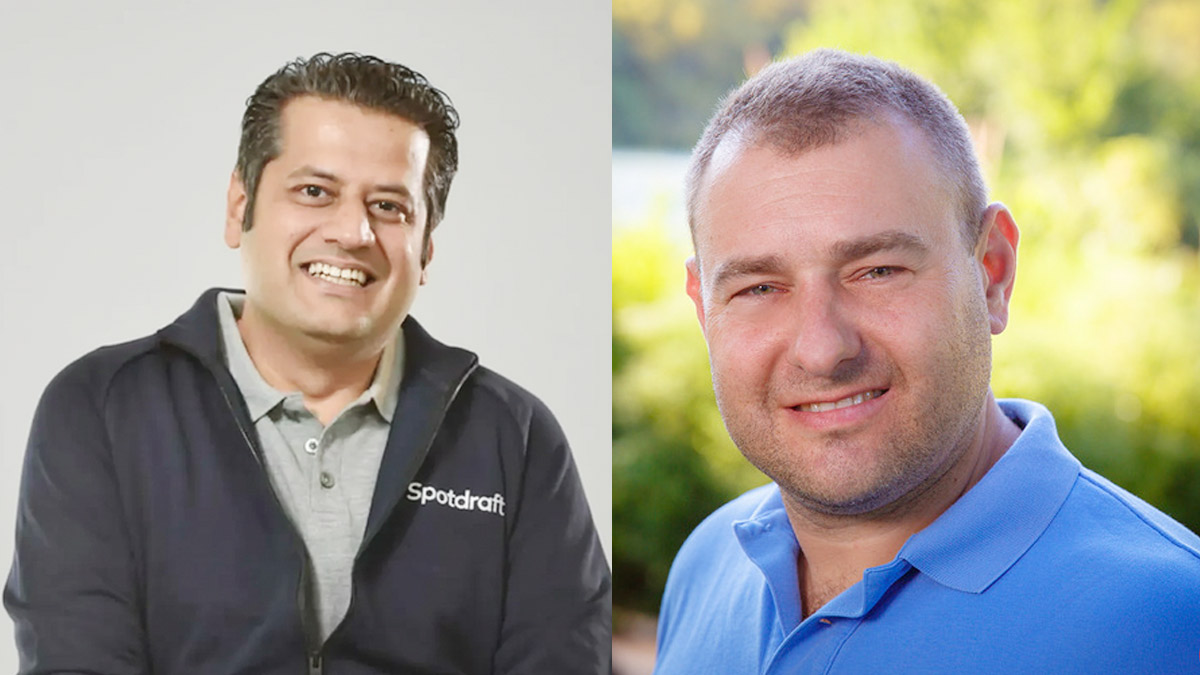
INDIA: SpotDraft has strengthened its senior ranks as it gears up for faster global expansion, naming Alon Waks as chief marketing officer and Amit Sharma as chief financial officer. The appointments follow the firm’s $54 million Series B round earlier this year and mark a push to scale across the Americas, EMEA and India.
The AI-powered contract-lifecycle-management platform has posted 100 per cent year-on-year growth in customer acquisition, counting Apollo.io, IPSY, Mixpanel, Oyster and Panasonic among its global clients. The firm processes more than one million contracts annually, with volumes up 173 per cent and nearly 50,000 monthly active users.
Waks, a veteran of Kustomer, Bizzabo, CreatorIQ, LivePerson and ZoomInfo, will steer global marketing and category positioning as legal teams adopt AI-driven tools. Sharma, who has led finance across scaling tech firms since 2016, will guide financial strategy, investor relations and market expansion.
Both hires aim to sharpen SpotDraft’s bid for a larger slice of the fast-growing legal-tech market, expected to exceed $63 billion by 2032. Co-founder and chief executive Shashank Bijapur said the company is focused on scaling go-to-market operations in the Americas, deepening leadership in EMEA, and accelerating AI capabilities for general counsels and legal-operations leaders.
Clients report shorter deal cycles and better alignment between legal and business teams. “What used to take weeks now happens in days,” said Abnormal Security senior legal operations manager Susan Koenig. DeepL head of legal operations André Barrow, said SpotDraft has helped reframe legal “from a cost centre to a generator of revenue”.
MUMBAI: Out-of-home ads were once the wallflowers of marketing seen by everyone, noticed by few. But in an age where attention has become the world’s most fought-over currency, even billboards are getting a brain upgrade. Enter LOC8, OSMO’s AI-powered attention engine, quietly reshaping the old OOH playbook by measuring not just who could have looked at an ad, but who actually did. The shift is subtle but seismic: impressions are out, impact is in and data, not gut instinct, is calling the shots.
In a landscape where marketers question every rupee spent outdoors, LOC8 is turning lampposts, flyovers and traffic islands into precision-mapped attention laboratories. By crunching dwell time, visibility zones, perceptual size and real-world obstructions, the platform is dragging OOH into a future where creativity meets computer vision and where the best ideas aren’t just eye-catching, but eye-measured. From automotive facelifts to FMCG novelty and real estate trust-building, the message is clear, outdoor has stopped shouting and started listening. Indian Television Dot Com explores more about it in an Interview interview with OSMO co-founder Nipun Arora.
On how OSMO is shifting outdoor advertising from a visibility-led medium to an attention-led one through LOC8.
Traditional OOH has long been measured by visibility and impressions i.e how many people could see an ad. OSMO, through its proprietary AI platform LOC8, is shifting that narrative more towards likelihood of being noticed. Using computer vision and machine learning, LOC8 analyzes real-world video data to measure visibility zones, obstructions, dwell time and perceptual size; bringing precision to how attention is quantified outdoors. It moves the focus from mere impressions to quality of impressions, making OOH a data-verified, attention-led medium comparable to digital in accountability.
On how marketers can use LOC8’s dwell-time, visibility and perception insights to craft more effective, emotionally resonant OOH campaigns.
LOC8 helps brands understand how people truly experience outdoor media how long they look, from what distance, and under what conditions. By quantifying dwell time, visibility duration, and perceptual size; marketers can plan campaigns that align with real human viewing behavior. This empowers creative and strategy teams to design emotionally resonant storytelling where messaging, visual hierarchy and placement are optimized for how people actually notice and process OOH creatives.
About what LOC8 has revealed through campaigns like Renault Triber and Namaste India on how categories such as auto, FMCG and real estate use attention metrics to drive outcomes.
Each category uses attention data differently but all share one common goal: to convert outdoor visibility into measurable engagement.
• Automotive | Renault Triber
For the new Renault Triber facelift, bold creative met data-led planning through LOC8. By analyzing on-ground video data, LOC8 measured real audience attention across placements factoring in visibility zones, obstructions, traffic speed and perceptual size. This enabled Renault to identify corridors that delivered maximum reach, saliency and engagement, optimizing media efficiency and ROI.
• FMCG | Namaste India
In OOH, innovation is the hook and assets are the bait. But bait often hides the hook. With Loc8’s attention metrics, we ensured the bait wasn’t a hurdle, rather it became the perfect stage for innovation to deliver its full impact! The insight proved that creative novelty, when validated by attention data, drives deeper engagement and measurable brand lift.
• Real Estate
For luxury and real estate campaigns targeting HNI/UHNI audiences, attention patterns differ especially between front and rear passengers, who are often the core audience segment for premium sites. LOC8’s ability to distinguish rear vs. front visibility plays a critical role here. It helps identify sites that offer longer viewing windows and stronger perceptual dominance from the rear seat where decision-makers are most likely seated making it a key differentiator for premium and trust-led categories. Together, these insights prove that auto optimizes for impact, FMCG for recall, and real estate for trust visibility showing how attention metrics adapt to category goals while ensuring measurable outcomes.
On how attention analytics will shape the future of brand storytelling and media planning as OOH becomes more digitised and data-driven.
As outdoor digitizes, attention analytics will inform not just where to advertise but how stories are told in public spaces. This evolution transforms OOH from a static broadcast channel into a dynamic attention ecosystem, where creativity is optimized through evidence-based insight.
On how LOC8’s data-led framework helps marketers quantify OOH impact and make outdoor a more accountable, ROI-driven medium.
LOC8 bridges the gap between intuition and evidence. By quantifying metrics like visibility duration, attention opportunity index, and visual saliency rank, it allows brands to benchmark site performance and justify investment. This data-led approach brings transparency, comparability and ROI measurement to a medium historically driven by perception.
On how OSMO ensures AI and computer vision enhance creativity rather than reduce it to numbers.
OSMO believes that technology should enhance creativity, not overshadow it. LOC8’s attention models reveal what naturally draws the human eye helping creative teams refine design cues, contrast, and visual hierarchy for greater impact. By merging art and science, LOC8 empowers creativity with intelligence.
About the creative best practices and design cues LOC8 has uncovered regarding what truly captures consumer attention outdoors.
LOC8’s visual cognition analysis has surfaced clear patterns across campaigns:
• High contrast and minimal messaging outperform cluttered designs.
• Motion cues draw significantly longer dwell times.
• The first two seconds are critical, creatives must establish focus instantly.
• Contextual alignment between the creative and its environment increases attention by over 30%.
These learnings offer a scientific foundation for creative effectiveness helping brands design OOH that’s visually magnetic and emotionally memorable.
On how attention metrics will integrate into omnichannel planning where OOH, digital and social work together for unified brand impact.
Attention can become the unifying KPI across OOH, digital and social to creates seamless storytelling continuity, where outdoor triggers digital engagement. The future of omnichannel planning lies in attention-led integration ensuring that campaigns don’t just reach audiences everywhere but truly capture and hold their focus.

Mukesh Ambani, Larry Fink come together for CNBC-TV18 exclusive

Nielsen launches co-viewing pilot to sharpen TV measurement

Netflix celebrates a decade in India with Shah Rukh Khan-narrated tribute film

Delhivery chairman Deepak Kapoor, independent director Saugata Gupta quit board

Meta appoints Anuvrat Rao as APAC head of commerce partnerships

Brnd.me enters Europe as haircare brands power global expansion

TechnoSport taps quick commerce with launch on Slikk’s 60-minute platform

These ’90s fashion trends are making a comeback in 2017
The final 6 ‘Game of Thrones’ episodes might feel like a full season
According to Dior Couture, this taboo fashion accessory is back
The old and New Edition cast comes together to perform
Phillies’ Aaron Altherr makes mind-boggling barehanded play
Uber and Lyft are finally available in all of New York State
Disney’s live-action Aladdin finally finds its stars
Mukesh Ambani, Larry Fink come together for CNBC-TV18 exclusive
Nielsen launches co-viewing pilot to sharpen TV measurement
Netflix celebrates a decade in India with Shah Rukh Khan-narrated tribute film
Delhivery chairman Deepak Kapoor, independent director Saugata Gupta quit board
Meta appoints Anuvrat Rao as APAC head of commerce partnerships
Brnd.me enters Europe as haircare brands power global expansion
TechnoSport taps quick commerce with launch on Slikk’s 60-minute platform
-
 News Broadcasting1 day ago
Mukesh Ambani, Larry Fink come together for CNBC-TV18 exclusive
-
 iWorld5 days ago
Netflix celebrates a decade in India with Shah Rukh Khan-narrated tribute film
-
 I&B Ministry3 months ago
India steps up fight against digital piracy
-
 iWorld3 months ago
Tips Music turns up the heat with Tamil party anthem Mayangiren
-
 MAM1 day ago
Nielsen launches co-viewing pilot to sharpen TV measurement
-
 iWorld12 months ago
BSNL rings in a revival with Rs 4,969 crore revenue
-
 MAM3 months ago
HoABL soars high with dazzling Nagpur sebut
-
 News Broadcasting2 months ago
CNN-News18 dominates Bihar election coverage with record viewership