
MAM
Bengal’s broadcasters battle ad slowdown


KOLKATA: Last week, if one followed the rupee-dollar crisis anything close to a heart attack was inevitable. Thanks to the economic upheaval and slowdown thereafter, the media industry is going through a rough patch.
Bengali general entertainment channels (GECs), news and other TV channels are seeing a downward trend in ad spends. The urge to splurge is giving way to an urge to curb spends and the Bengali TV ad market is expected to remain flat at last year‘s Rs 700 crore, according to media analysts.
 |
The largest chunk of this revenue, which is anything between 35-40 per cent, comes from non-banking financial institutions (NBFCs). However, that has melted down, because of a loss of investor confidence in NBFCs. The experts say that the change has come in after the Saradha Group’s chit fund scam that occurred in the beginning of the current financial year.
“Many other companies which are engaged in money marketing have reduced their ad spends too. Firstly, to stay away from the authorities’ menacing eyes and secondly, they seem to think even after spending a huge amount on advertising, investors are not gullible enough to put in their hard earned money into the chit fund schemes,” says a media buying professional who didn’t want to be named.
A slowing economy hits smaller companies first as they don‘t have enough resources to get through the downturn. And hence, the first steps taken by them is pulling the noose on marketing and ad spends.
 |
“The main spenders for ads in the electronic media are the chit fund companies. With these companies now lying low or some even going bust, the regional channels are bleeding badly. And even channels as big as 24 Ghanta and ABP Ananda aren’t spared. If one looks at the current situation in the news genre, the two popular vernacular channels – 24 Ghanta and ABP Ananda – do a monthly business of around Rs 2 crore as compared to Rs 2.5 crore garnered earlier. Hence, they are coming up with several attractive advertising packages to lure clients,” informs a media analyst.
Some of the main advertisers on these channels are Japani Oil, Chayya Prakashini, Rice Group??? . However, their spends have not managed to compensate for the loss of chit fund advertising and are not adequate enough for the news channels to meet their operational expenses. “These channels must devise their strategies to remain afloat in the market,” media managers added.
George Telegraph Group, engaged in education, earmarks around Rs 2 crore as its annual ad budget. “We allocate 75 per cent to the print media and in the electronic media, we advertise on mainly news channels and some music channels,” says George Telegraph Group director Atin Dutta. He goes on to add that the group doesn’t advertise much in the month of October because the admission season is over and there is too much clutter during the Puja.
Kolkata TV editor-in-chief Biswa Majumdar says: “Most of the TV channels whether big or small are in trouble as their ad revenues have gone down by at least 30 per cent due to the slowdown and clients not spending much on regional media.”
 |
“Within the Kolkata market wherein city-based advertisers contribute almost 25 per cent of the total revenue (Rs 700 crore), the advertising rate is Rs 1,000 per 10 seconds .It is likely to remain the same this year as well. Soon, we all would have to come out with packages. Also, there is a need for national advertising to spread out to regional channels as well,” says Akash business editor Amitabava Banerjee.
Kolkata TV‘s Majumdar says that the financial scene is so bad that till now nobody has started booking for the festive season (Durga Puja) as well. “The scene is dire with no signs of recovery,” he says.
Pipalmajik CEO and founder CM Mitra says: “When sales of the companies go down due to downturn, promotion related ads are adopted by companies to increase the topline. Retail and FMGCs are likely to spend on such promotions to liquidate their stocks.”
Also, with Digital Addressable System (DAS) in place, customers are going to opt for their preferred channels. Therefore, smaller and not-so-popular players will perish.
GECs gain as others lose
“In the current year, around Rs 550 crore would be bagged by the GECs while the rest will be split between news, movies and other channels,” asserts media analyst Mrinal Chatterjee.
“The GECs continue to dominate the canvas of Kolkata television ad market, with high production values and a robust content bank based on local programming,” he adds.
BPN India executive VP Mahesh Motwani too feels that considering the viewership trends in Kolkata, GECs will continue to attract more ads than any other TV genre.
The trend of the maha episode was started by the Late Jishu Dasgupta in his serials likeKuhasha Jhokon and Tithir Athithi on ETV Bangla in the late 90s and has been copied by other GECs like Star Jhalsa and Zee Bangla now. “Clients can spend crores to catch the attention of the TV viewers who are glued to their screens to know what would happen next!” adds Motwani.
“We Bongs don’t allow ourselves to be deprived of fish in our daily meal, so how could any fast-moving consumer goods brand manufacturing mustard paste let an opportunity go past an audience who are big time foodies?” feels consultant Sayan Chatterjee. He adds that FMCG companies would and should spend on marketing and advertising no matter how bad the economy is.
Talking about cable TV advertising, Chatterjee, who is also the convener of the Cable Shilpa Bachao Committee, said it has been on the up.
For GECs, the clients’ aim is to place spots between 7:30 pm and 11:00 pm and for news channels the preferred slot is between 7:00 pm and 9:00 pm, inform media managers.
Furthermore, with just 40 days to go for Durga Puja, undoubtedly, it is the time for local and national conglomerates to reach out to the hearts, sentiments and pockets of every Bengali family via the Bengali media.
However, this time, from all indications, it appears as if most of the players in Bengal‘s broadcast space will be in not as celebratory a mood as in previous years. Is the goddess listening?




MAM
Nielsen launches co-viewing pilot to sharpen TV measurement
Super Bowl pilot to refine how shared TV audiences are counted
MUMBAI: Nielsen is taking a fresh stab at one of television’s oldest blind spots: how many people are actually watching the same screen. The audience-measurement giant on February 4 unveiled a co-viewing pilot that uses wearable devices to better capture shared viewing, starting with America’s biggest broadcast stage.
The trial begins with Super Bowl LX on NBC on February 8, 2026, before extending to other high-profile live sports and entertainment events in the first half of the year. The goal is simple but commercially potent: count viewers more accurately, especially during live spectacles that pull families and friends to one screen.
The new approach leans on Nielsen’s proprietary wearable meters, wrist-worn devices that resemble smartwatches. These passively capture audio signatures from TV content, logging exposure to shows, films and live events without requiring viewers to sign in or self-report. In theory, fewer clicks, fewer lapses, better data.
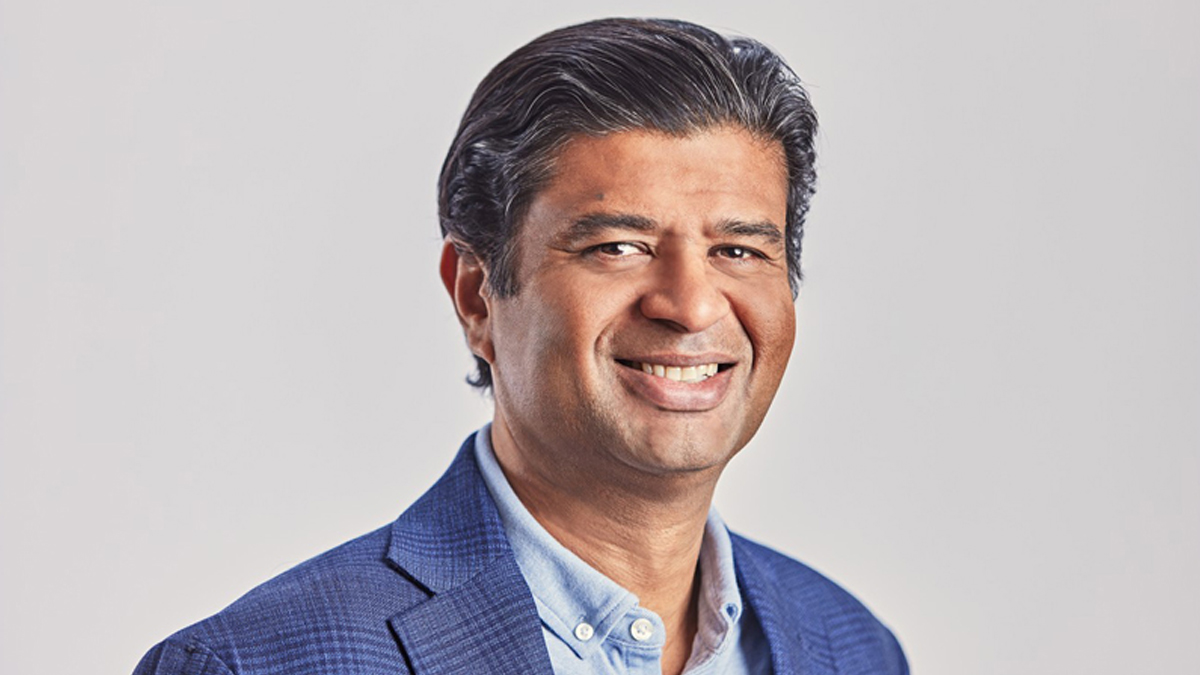
Karthik Rao, Nielsen’s ceo, cast the move as part of a broader measurement push. He said the company’s task is to keep pushing accuracy as clients invest heavily in live programming that draws mass audiences. The co-viewing pilot, he added, builds on upgrades such as Big Data + Panel measurement, out-of-home expansion, live-streaming metrics and wearable-based tracking.
Co-viewing is not new territory for Nielsen, which has long tried to estimate how many people sit before a single set. What is new is the heavier integration of wearables and passive detection to reduce reliance on active inputs from panel homes.
For now, the pilot comes with caveats. Co-viewing estimates from the trial will not be folded into Nielsen’s Big Data + Panel ratings, which remain the industry’s trading currency. Instead, pilot findings will be shared with clients a few weeks after final Big Data + Panel ratings are delivered. Clients may disclose those findings publicly.
More impact data will follow later this year. Full integration into Nielsen’s marketing-intelligence suite is slated as a longer-term play, with a target of bringing co-viewing into currency measurement for the 2026–2027 season. This is only phase one, with further co-viewing enhancements planned beyond 2026 and additional timelines to be announced.
The push fits a wider pattern. Nielsen has in recent years expanded big-data integration, adopted first-party data for live-streaming measurement and broadened out-of-home tracking. It also positions itself as the reference point for streaming metrics through products such as The Gauge and the Nielsen Streaming Top 10.
In a market where billions of ad dollars hinge on decimal points, counting who is in the room matters. If Nielsen can pin down shared viewing, the humble sofa could become prime measurement real estate. The race to count every eyeball just found a new wrist to watch.
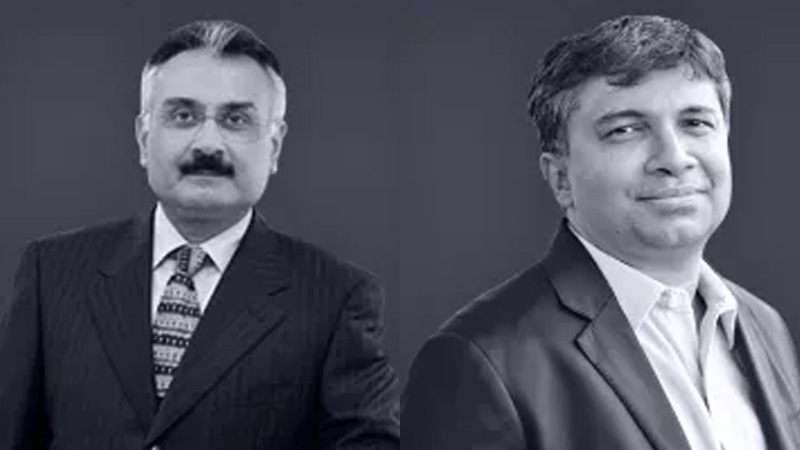
Gurugram: Delhivery’s boardroom is being reset. Deepak Kapoor, chairman and independent director, has resigned with effect from April 1 as part of a planned board reconstitution, the logistics company said in an exchange filing. Saugata Gupta, managing director and chief executive of FMCG major Marico and an independent director on Delhivery’s board, has also stepped down.
Kapoor exits after an eight-year stint that included steering the company through its 2022 stock-market debut, a period that saw Delhivery transform from a venture-backed upstart into one of India’s most visible logistics platforms. Gupta, who joined the board in 2021, departs alongside him, marking a simultaneous clearing of two senior independent seats.
“Deepak and Saugata have been instrumental in our process of recognising the need for and enabling the reconstitution of the board of directors in line with our ambitious next phase of growth,” said Sahil Barua, managing director and chief executive, Delhivery. The statement frames the exits less as departures and more as deliberate succession, a boardroom shuffle timed to the company’s evolving scale and strategy.
The resignations arrive amid broader governance recalibration. In 2025, Delhivery appointed Emcure Pharmaceuticals whole-time director Namita Thapar, PB Fintech founder and chairman Yashish Dahiya, and IIM Bangalore faculty member Padmini Srinivasan as independent directors, signalling a tilt towards consumer, fintech and academic expertise at the board level.
Kapoor’s tenure spanned Delhivery’s most defining years, rapid network expansion, public listing and the push towards profitability in a bruising logistics market. Gupta’s presence brought FMCG and brand-scale perspective during a period when ecommerce volumes and last-mile delivery economics were being rewritten.
The twin exits, effective from the new financial year, underscore a familiar corporate rhythm: founders consolidate, veterans rotate out, and fresh voices are ushered in to script the next chapter. In India’s hyper-competitive logistics race, even the boardroom does not stand still.
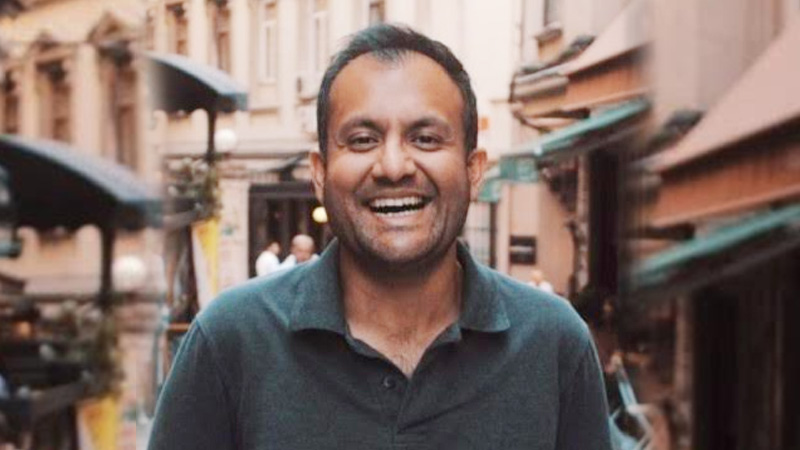
At Locofy.ai, Rao helped convert a three-year free beta into a paid engine, clocking 1,000 subscribers and 15 enterprise clients within ten days of launch in September 2024. The low-code startup, backed by Accel and top tech founders, is famed for turning designs into production-ready code using proprietary large design models.
Before that, Rao founded generative AI venture 1Bstories, which was acquired by creative AI platform Laetro in mid-2024, where he briefly served as managing director for APAC. Alongside operating roles, he has been an active investor and advisor since 2020, backing startups such as BotMD, Muxy, Creator plus, Intellect, Sealed and CricFlex through a creator-economy-led thesis.
Rao spent over eight years at Google, holding senior partnership roles across search, assistant, chrome, web and YouTube in APAC, and earlier cut his teeth in strategy consulting at OC&C in London and investment finance at W. P. Carey in Europe and the US.

Mukesh Ambani, Larry Fink come together for CNBC-TV18 exclusive

Nielsen launches co-viewing pilot to sharpen TV measurement

Netflix celebrates a decade in India with Shah Rukh Khan-narrated tribute film

Delhivery chairman Deepak Kapoor, independent director Saugata Gupta quit board

Meta appoints Anuvrat Rao as APAC head of commerce partnerships

Brnd.me enters Europe as haircare brands power global expansion

TechnoSport taps quick commerce with launch on Slikk’s 60-minute platform

These ’90s fashion trends are making a comeback in 2017
The final 6 ‘Game of Thrones’ episodes might feel like a full season
According to Dior Couture, this taboo fashion accessory is back
The old and New Edition cast comes together to perform
Phillies’ Aaron Altherr makes mind-boggling barehanded play
Uber and Lyft are finally available in all of New York State
Disney’s live-action Aladdin finally finds its stars
Mukesh Ambani, Larry Fink come together for CNBC-TV18 exclusive
Nielsen launches co-viewing pilot to sharpen TV measurement
Netflix celebrates a decade in India with Shah Rukh Khan-narrated tribute film
Delhivery chairman Deepak Kapoor, independent director Saugata Gupta quit board
Meta appoints Anuvrat Rao as APAC head of commerce partnerships
Brnd.me enters Europe as haircare brands power global expansion
TechnoSport taps quick commerce with launch on Slikk’s 60-minute platform
-
 News Broadcasting2 days ago
Mukesh Ambani, Larry Fink come together for CNBC-TV18 exclusive
-
 iWorld6 days ago
Netflix celebrates a decade in India with Shah Rukh Khan-narrated tribute film
-
 iWorld12 months ago
BSNL rings in a revival with Rs 4,969 crore revenue
-
 I&B Ministry3 months ago
India steps up fight against digital piracy
-
 iWorld3 months ago
Tips Music turns up the heat with Tamil party anthem Mayangiren
-
 MAM2 days ago
Nielsen launches co-viewing pilot to sharpen TV measurement
-
 MAM3 months ago
HoABL soars high with dazzling Nagpur sebut
-
 News Broadcasting2 months ago
CNN-News18 dominates Bihar election coverage with record viewership

