
AD Agencies
Arijit De joins Adfactors PR as director

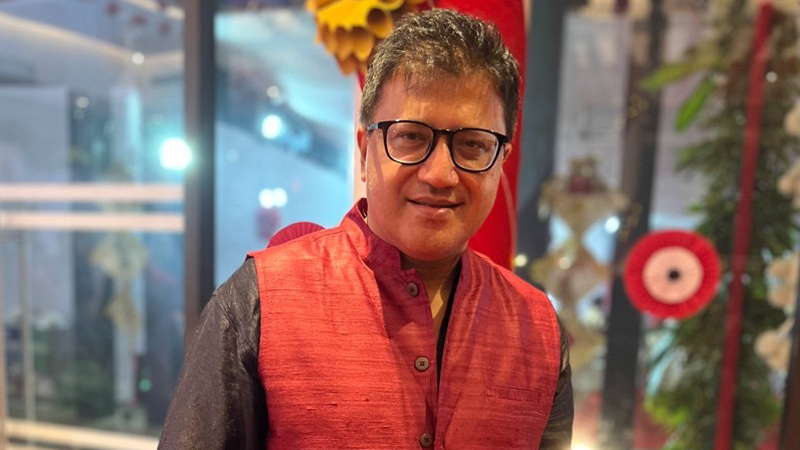
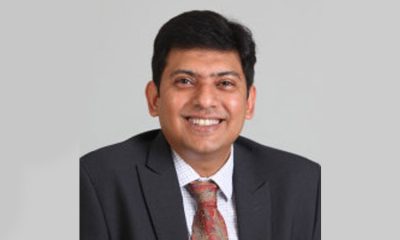
MUMBAI: Arijit De has taken up a new role as director at Adfactors PR, marking his return to frontline consulting after nearly three decades at the sharp end of communications, media and corporate affairs.
De joins India’s largest communications consulting firm following a four-and-a-half-year stint at Burson, where he served as chief client officer and was part of the India management team, advising top-tier multinational and Indian companies on positioning, narrative, issues and crisis management.
A senior strategic communications professional, De brings deep experience across financial services, conglomerates and global institutions. His career spans leadership roles at Standard Chartered, where he headed corporate communications for India and South Asia and earlier led group media relations in London; Bank of America Merrill Lynch, where he was India head of marketing and corporate affairs; and Reliance Capital, where he served as chief communications officer.
Before moving into corporate communications, De built a strong editorial career. As Mumbai bureau chief at Business Standard, he rebuilt the paper’s newsroom and covered India’s largest conglomerates, including the Tata group and the Aditya Birla group. He began his career as a reporter in the mid-1990s, covering sectors from telecoms and energy to FMCG and automobiles.
At Adfactors PR, which advises clients across more than 25 industries in 40 cities and was named one of PRovoke Media’s global “Agencies of the Decade”, De is expected to strengthen senior counsel and leadership across complex mandates.
From newsroom to boardroom and back to advisory, De’s move signals a familiar truth in Indian communications: when reputations are on the line, experience still talks loudest.








DELHI: India is staring down a junk food epidemic, and the government wants to fight back with an advertising ban. The Economic Survey, tabled in the Lok Sabha on Thursday, has pitched a radical proposal: prohibit ultra-processed food advertisements from 6am to 11pm across all media platforms.
The timing is hardly coincidental. India has become one of the world’s fastest-growing markets for ultra-processed foods: those calorie-laden concoctions of burgers, noodles, pizza and soft drinks that increasingly dominate Indian diets. The consequences are written in the waistlines of a growing number of Indians.
Excess weight among children under five has jumped from 2.1 per cent in 2015-16 to 3.4 per cent in 2019-21, the survey notes. More troubling still, over 3.3 crore children in India were obese in 2020, with projections suggesting that figure will balloon to 8.3 crore children by 2035.
The numbers for adults paint an equally grim picture. According to the 2019-21 National Family Health Survey, 24 per cent of Indian women and 23 per cent of Indian men are overweight or obese. Among women aged 15-49 years, 6.4 per cent are obese, whilst among men, 4 per cent are overweight, the survey said.
The pre-budget document doesn’t mince words about the scale of the challenge. To tackle ultra-processed foods, it advocates front-of-pack nutrition labelling for high-fat, sugar and salt foods, with warnings that restrict marketing to children and ensure trade agreements don’t undermine public health policy.
The survey also suggests restrictions on marketing infant and toddler milk and beverages, whilst flagging growing obesity among children.
The proposed marketing ban would run from 0600 hours to 2300 hours across all media, with mandatory enforcement of restrictions on marketing infant and toddler milk and beverages.
India isn’t treading new ground here. The survey points to Chile, which has integrated such laws, along with Norway and the UK, where advertisement restrictions are already in place for ultra-processed foods.
Britain recently banned junk food advertising before 9pm on television and online to reduce children’s exposure and curb childhood obesity. Further action on other marketing activities, including school and college sponsorship of events by ultra-processed food manufacturers, can be designed, the survey said.
Yet India’s regulatory landscape remains muddled. Rule 7 of the Advertisement Code prohibits misleading, unverified, or unhealthy advertisements but doesn’t define “misleading” with measurable or nutrient-based criteria, leaving interpretation subjective and inconsistent.
Similarly, the Central Consumer Protection Authority guidelines for prevention of misleading advertisements (2022) mandate that advertisements must not exaggerate health benefits or exploit children.
Yet they lack clear nutrient thresholds or a framework for identifying misleading claims in food marketing, the survey said, adding that this regulatory ambiguity allows companies marketing ultra-processed foods to continue making vague health, energy, or nutrition cues without violating any clearly defined standard, highlighting a critical policy gap that needs reform.
The stakes couldn’t be higher. India is one of the fastest-growing markets for ultra-processed food sales, contributing to chronic diseases worldwide and widening health inequalities.
The survey lays bare the commercial triumph of junk food in India. Sales of ultra-processed foods grew more than 150 per cent between 2009 and 2023. Retail sales surged from $0.9 billion in 2006 to nearly $38 billion in 2019, a 40-fold rise. It is during the same period that obesity has nearly doubled in both men and women, the survey said.
The document advocates a multi-pronged approach to tackle the rising consumption of ultra-processed foods (popularly known as junk foods), which includes burgers, noodles, pizza, soft drinks, and the like, warning it is contributing to chronic diseases worldwide and widening health inequalities.
Improving diets cannot depend solely on consumer behaviour change, the survey argues. It will require coordinated policies across food systems that regulate ultra-processed food production, promote healthier and more sustainable diets and marketing.
The gauntlet has been thrown. Whether India’s policymakers have the stomach to take on the junk food industry remains to be seen.
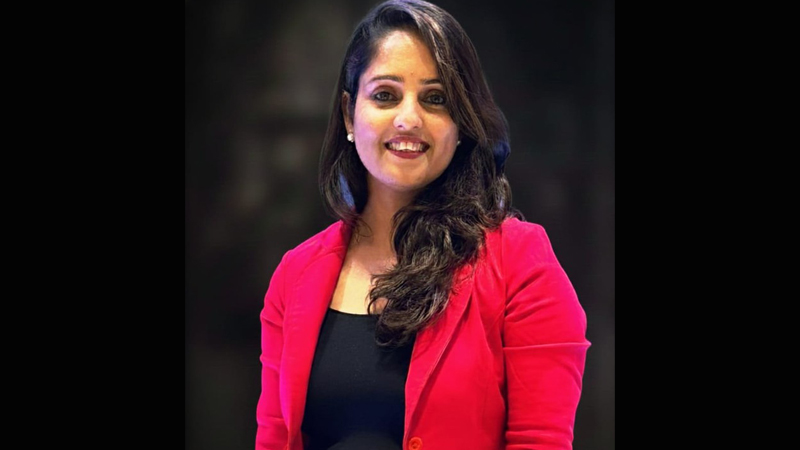
MUMBAI: PHD Media has appointed Vinita Shrivastav as vice president – business planning, taking charge of the agency’s Marico portfolio and reinforcing its strategic leadership bench. The move signals the agency’s commitment to delivering future-ready, high-impact solutions for one of India’s most iconic FMCG brands.
Vinita brings over 17 years of experience across brand strategy, integrated marketing, media planning, research, and business leadership. Recognised as Best South Asian Strategic Planner of the Year by Campaign Asia, she is known for building insight-led, scalable growth platforms across categories.
She started her career with a research foundation at TAM Media, before taking on leadership roles across Reliance and Zee. She later joined Mindshare’s core strategy team, led the marketing vertical at IN10 Media, and most recently drove the L’Oréal business at Wavemaker, delivering integrated, high-impact media and brand-building solutions across markets.
In her new role, Vinita will steer the Marico mandate, focusing on strategic innovation, business growth, and integrated, future-ready media solutions. She will collaborate closely with both Marico and PHD Media leadership to build scalable, impactful brand platforms that deliver long-term business value.
“This appointment strengthens our strategic leadership and reinforces PHD Media’s commitment to insight-led planning and execution excellence. Vinita brings the analytical depth, commercial acumen, and strategic vision to drive innovation and growth for one of India’s most respected FMCG brands,” said a spokesperson for PHD Media.
Vinita said, “I am excited to join PHD Media and lead the Marico portfolio. In today’s dynamic market, building scalable, insight-driven brand platforms is critical. I look forward to collaborating with the teams at PHD Media and Marico to deliver strategic, high-impact solutions that drive long-term business value.”
With this appointment, PHD Media underscores its focus on category-defining brand partnerships and intelligence-led planning, ensuring the agency remains at the forefront of strategic media innovation.
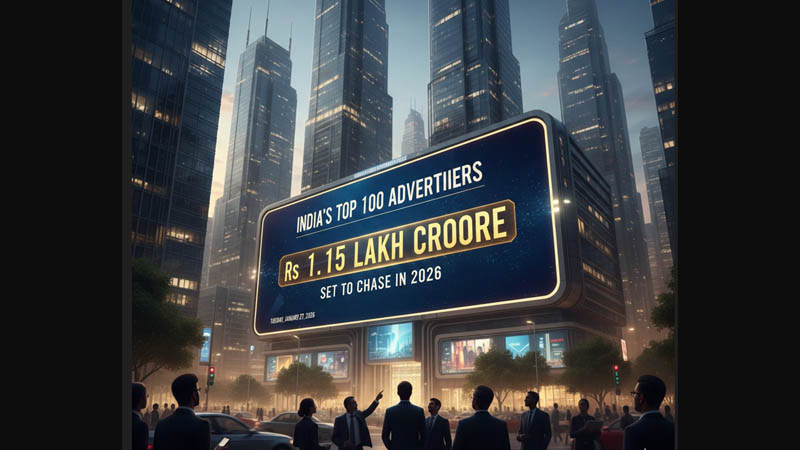
New Delhi: India’s biggest advertisers are gearing up for a spending spree. Fresh Adex estimates show marketing spends crossing Rs 1.15 lakh crore in 2026, with digital accounting for more than half of total outlays and the top 100 brands tightening their grip on the market.
Data tracking ad spends across 2024 and projected growth through 2025 suggests rising concentration at the top. Around 35 per cent of total adex is expected to come from just the top 50 marketers, underscoring the growing clout of a handful of deep-pocketed brands.
India crossed the Rs 1,00,000 crore advertising milestone in 2025, posting over 10 per cent year-on-year growth, making it the fastest-growing major ad market globally. The pace shows little sign of easing.
At the summit, FMCG remains unshakeable. Unilever continues to lead the pack, with Procter & Gamble, Reckitt, Mondelēz International, Godrej Consumer Products, ITC, Coca-Cola, PepsiCo, L’Oréal, Amul, Nestlé and Colgate-Palmolive showing no appetite for budget cuts.
Reliance Industries is expected to overtake India’s second-largest advertiser, closing in on Unilever at the top of the table. Autos are the next big battleground, with at least 25 new car and two-wheeler launches pushing Maruti Suzuki, Hyundai, Honda and Hero MotoCorp to step up spending.
Digital-first brands are now firmly entrenched among the heavyweights. Amazon, Google and Flipkart sit alongside quick commerce players Swiggy, Zomato and Zepto, reflecting a decisive shift in where the money follows attention.
Fintech is emerging as the fastest-growing category. Groww, NPCI and Angel One are scaling spends rapidly, filling the vacuum left by gaming firms, which saw the sharpest pullback in 2025.
India’s home-grown stalwarts—LIC, Asian Paints, UltraTech Cement and Havells—continue to deploy capital steadily, while pan masala advertisers remain reliably aggressive, indifferent to cycles or sentiment.
Behind the numbers lies a structural shift. Television budgets are steadily moving towards connected TV, OTT platforms, digital video and OOH screens as advertisers chase sharper targeting and measurable returns.
The conclusion is blunt: the chase for India’s top 100 advertisers will be brutal in 2026—but the real opportunity may lie just beyond them. In a slowing global economy, India’s ad engine is still accelerating.


Netflix celebrates a decade in India with Shah Rukh Khan-narrated tribute film

Delhivery chairman Deepak Kapoor, independent director Saugata Gupta quit board

Meta appoints Anuvrat Rao as APAC head of commerce partnerships

Brnd.me enters Europe as haircare brands power global expansion

TechnoSport taps quick commerce with launch on Slikk’s 60-minute platform

Jitendra Singh joins Reliance Industries as senior vice president, special projects

Tinder brings real-world dating experiences to North East India

These ’90s fashion trends are making a comeback in 2017
The final 6 ‘Game of Thrones’ episodes might feel like a full season
According to Dior Couture, this taboo fashion accessory is back
The old and New Edition cast comes together to perform
Phillies’ Aaron Altherr makes mind-boggling barehanded play
Uber and Lyft are finally available in all of New York State
Disney’s live-action Aladdin finally finds its stars
Netflix celebrates a decade in India with Shah Rukh Khan-narrated tribute film
Delhivery chairman Deepak Kapoor, independent director Saugata Gupta quit board
Meta appoints Anuvrat Rao as APAC head of commerce partnerships
Brnd.me enters Europe as haircare brands power global expansion
TechnoSport taps quick commerce with launch on Slikk’s 60-minute platform
Jitendra Singh joins Reliance Industries as senior vice president, special projects
Tinder brings real-world dating experiences to North East India
-
 iWorld3 months ago
Tips Music turns up the heat with Tamil party anthem Mayangiren
-
 iWorld12 months ago
BSNL rings in a revival with Rs 4,969 crore revenue
-
 I&B Ministry3 months ago
India steps up fight against digital piracy
-
 MAM3 months ago
HoABL soars high with dazzling Nagpur sebut
-
 News Broadcasting6 months ago
Wion marks Independence Day with global showcase of India’s spirit
-
 iWorld2 days ago
Netflix celebrates a decade in India with Shah Rukh Khan-narrated tribute film
-
 iWorld3 months ago
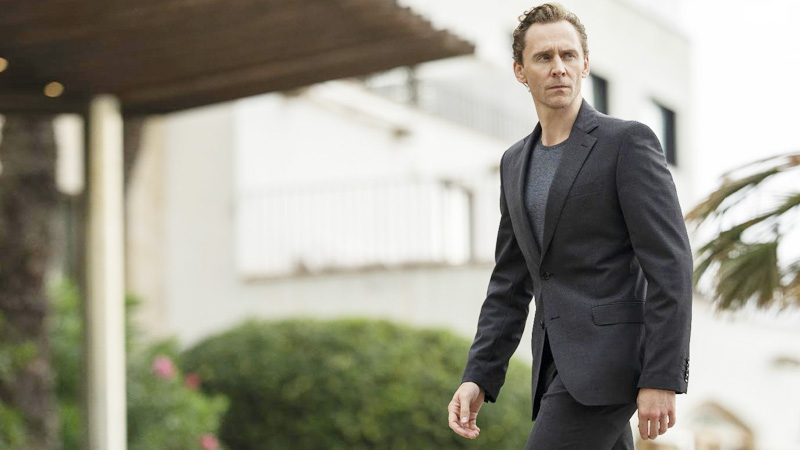
The Night Manager returns with new secrets, new spies and old scars
-
 iWorld6 months ago
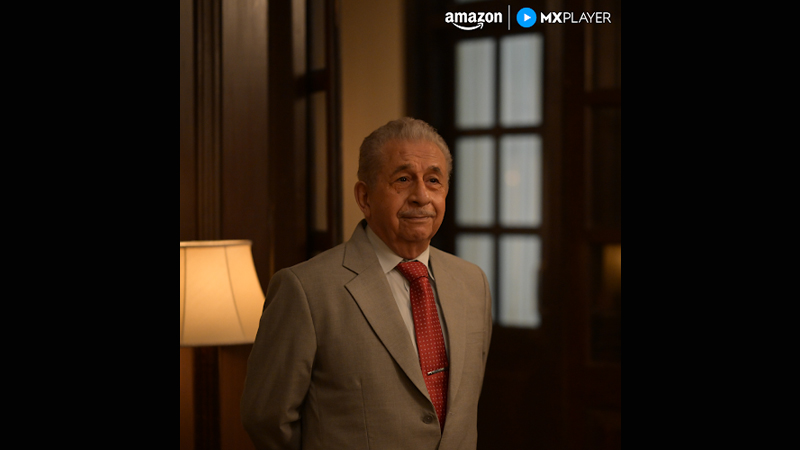
Naseeruddin Shah steps into J.R.D. Tata’s shoes in Amazon MX Player’s Made in India – A Titan Story